





 Portuguese
  English
  Spanish
  4 min of reading
  1 comment


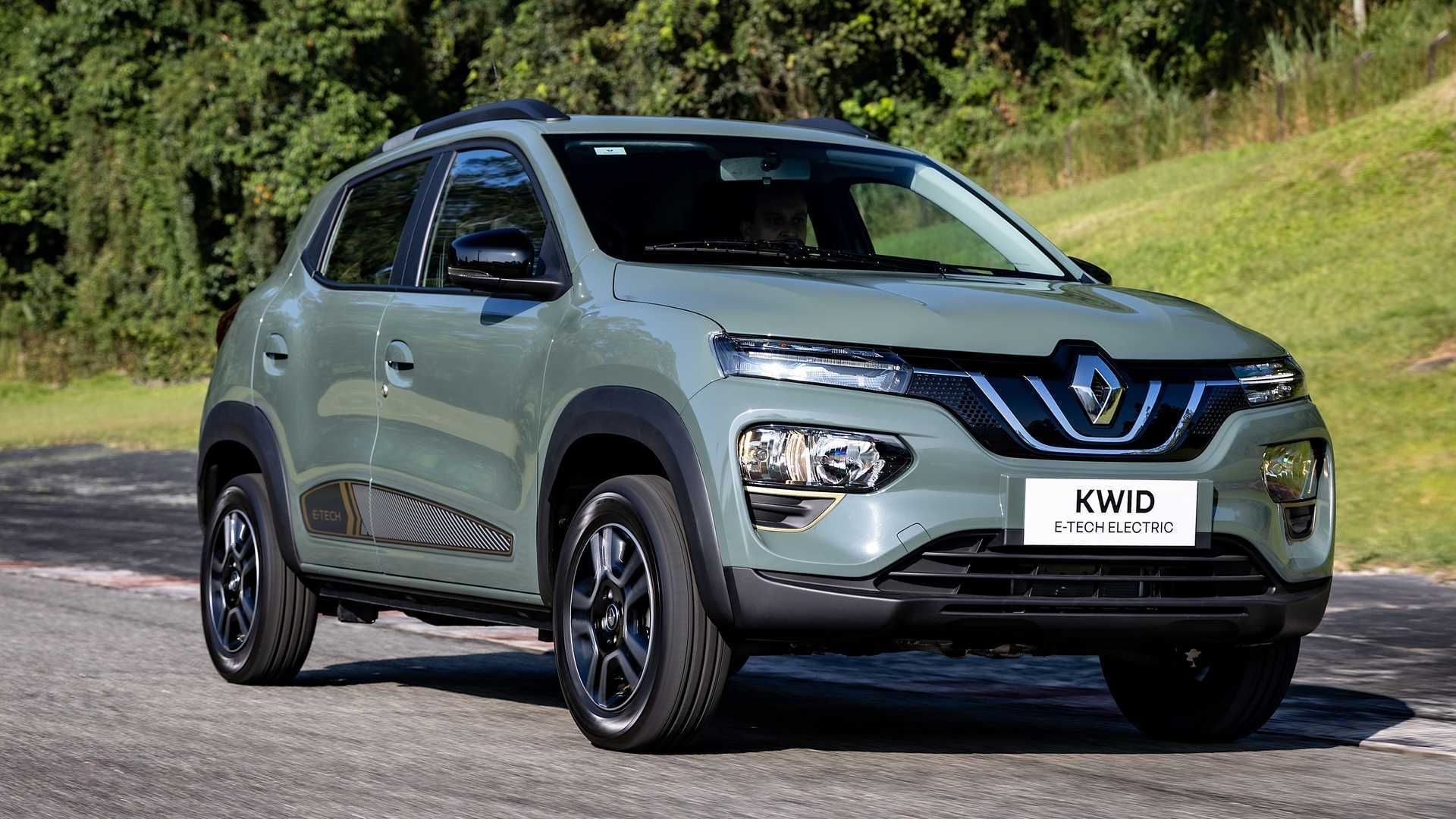


New And Used Models Start To Emerge In The National Market For Prices Below R$ 100 Thousand, Opening Space For Those Seeking To Enter The Universe Of Electrics With Lower Initial Investment.
Finding electric car for less than R$ 100 thousand is still an exception in the country. Today, among the 0 km vehicles, the Renault Kwid E-Tech occupies this space, priced at R$ 99,990.
The other options reach this range in the used car market, a phenomenon linked to the typical devaluation of the first years and the entry of more competitive models.
Below, five options that can be found up to this ceiling, with data on range (Inmetro), battery, and dimensions to guide the choice.
-
The Toyota Hilux is R$ 75.5 thousand cheaper and bets on the 2.8 turbodiesel engine with up to 204 hp and 50.9 kgfm to catch up with the VW Saveiro, which leads with 4,472 sales.
-
The new Renault Koleos has a screen exclusively for the passenger that is invisible to the driver, heated rear seats, and 29 assistance systems, but its Chinese competitors cost R$ 40,000 less and deliver more power.
-
The car stored for 38 years: when opening the barn door, what appears is breathtaking and looks like a scene from a movie!

-
Fiat works miracles in the Brazilian market, lowers the price of its 0 km hatch to R$ 69,990, reestablishes the model as the cheapest car in the country, and reignites the battle against Kwid and C3.

Renault Kwid E-Tech: Cheapest 0 Km Electric Car
Imported from China and sold in the Intense configuration, the Kwid E-Tech is currently the cheapest new electric vehicle in Brazil, with a suggested retail price of R$ 99,990.
The setup delivers 65 hp and 11.5 kgfm, powered by a 26.8 kWh battery. The official range certified by Inmetro is 185 km.
In performance, it achieves 0 to 100 km/h in 14.6 s and reaches 130 km/h. Due to its size, it is a subcompact: 3.73 m in length, 2.42 m in wheelbase, and 290 liters of trunk space.
Charging accepts AC up to 7.4 kW and DC up to 30 kW, with usual times from 15% to 80% taking mere minutes on fast charging.
BYD Dolphin Mini: Used Hatch Below R$ 100 Thousand
The Dolphin Mini, a leader among electrics in various markets, has started to appear in classifieds for prices close to or slightly below R$ 100 thousand, depending on year, version, and mileage.
In recent reference, the Fipe Table for the base configuration hovers around R$ 106.6 thousand. Still, specific ads may be listed below this in the real market.
Launched in 2024, the hatch features a 75 hp motor and 13.8 kgfm, an LFP battery of 38 kWh, and a range of 280 km (Inmetro).
It goes from 0 to 100 km/h in 14.9 s, measures 3.78 m in length, has a 2.50 m wheelbase, and offers 230 liters in the trunk. Charging works at 6.6 kW (AC) and up to 40 kW (DC).
In 2025, the model gained a five-seat version; the cheaper units tend to be the four-seat versions from the early batches.
Nissan Leaf: Classic Among Electrics
An icon of electrics, the Nissan Leaf was no longer officially imported in 2024, which increased the supply of used cars at more aggressive prices.
There are already ads for 2022 models listed around R$ 99 thousand, a value below the average of the Fipe Table for the year.
The midsize hatch uses a 149 hp motor and 32.6 kgfm, with a 40 kWh battery and range of 273 km (Inmetro).
Acceleration from 0 to 100 km/h in 7.9 s highlights its good performance. In dimensions, it has 4.48 m in length and 2.70 m in wheelbase, with 435 liters in the trunk.
For those seeking interior space and a more comfortable ride, the Leaf remains a solid option in the used electric market.
JAC E-JS1: Affordable Option In The Fipe Table
Among the models that appear in the Fipe below R$ 100 thousand, the JAC E-JS1 2023 stands out: the most recent reference indicates a value around R$ 86 thousand.
Designed for urban use, it features a 62 hp motor and 15.3 kgfm, a 30.2 kWh battery, and a range of 161 km (Inmetro).
With 3.65 m in length and 2.39 m in wheelbase, it prioritizes maneuverability and efficiency. The trunk has 121 liters.
For charging, it works with AC and DC, generally with times shorter than those of combustion compact cars during nighttime recharge routines at an outlet or wallbox.
Due to its pricing and cost of use, it is often a competitive entry point for electric mobility.
Caoa Chery iCar EQ1: Compact With Independent Suspension
Another pioneer among urban electrics, the Caoa Chery iCar EQ1 was no longer imported in 2023, but remains present in classifieds for less than R$ 100 thousand. In the Fipe 2023, the usual reference for the hatch is around R$ 88,266.
The setup uses a 61 hp motor and 15.3 kgfm, a 30.8 kWh battery, and a declared range of 197 km.
The iCar is a two-door subcompact, measuring 3.20 m in length, 2.15 m in wheelbase, and featuring a 100-liter trunk.
A technical differentiator is the independent suspension on all four wheels, a rare feature in the segment that enhances comfort on uneven surfaces.
For short trips and tight garages, it is an alternative that maximizes compactness without sacrificing equipment.
What To Evaluate Before Purchase
Despite the appeal of the price, it’s advisable to assess the usage history, battery condition, and compatible charging type of each unit.
In electrics, the range variation with climate, terrain, and driving style is part of normal use.
Therefore, the Inmetro label serves as a standardized reference, not as a fixed guarantee.
Checking the cable, adapters, and connector standard also prevents surprises in recharge routines.
For those looking for their first electric vehicle, the Kwid E-Tech 0 km remains a shortcut to avoid uncertainty regarding history.
Already, Dolphin Mini and Leaf emerge as used options with good cost-benefit when the goal is more range or more space.
E-JS1 and iCar are essentially urban choices, prioritizing compact size and low cost per kilometer.
Which of these profiles best meets your daily use — greater range for intermunicipal travel, family space, or extreme compactness for the city?









Que página poluída,quase nem da para ler.