





 Portuguese
  English
  Spanish
  6 min of reading
  1 comment


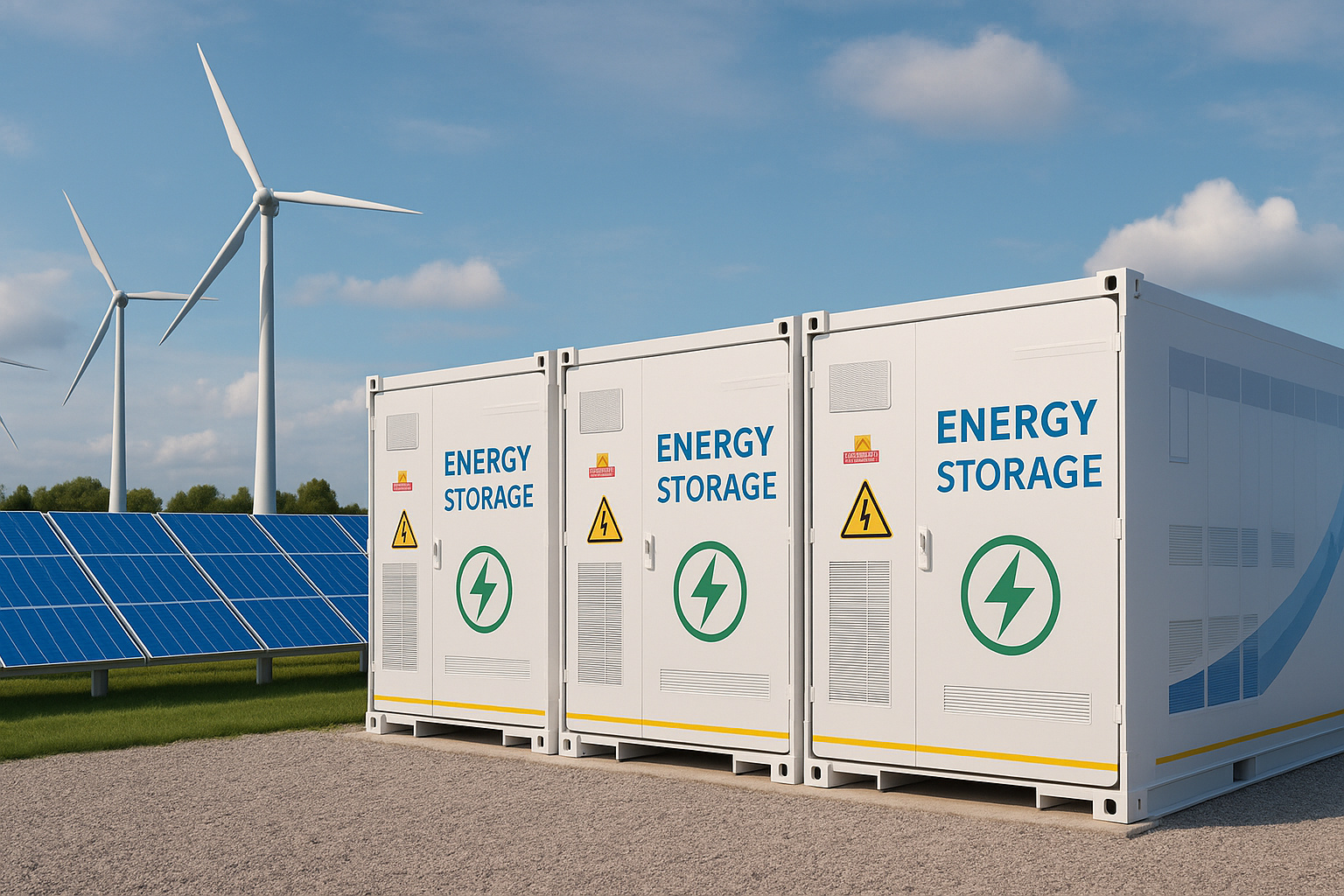


Discover How Renewable Energy Storage Transforms Sources Like The Sun And Wind Into Reliable And Sustainable Solutions For The Present And The Future.
In recent years, the world has sought more sustainable and cleaner ways to generate electricity.
Therefore, the growing concern about the environmental impacts caused by fossil fuels has led to the development of renewable sources, such as solar energy and wind energy.
However, one of the major challenges of these sources is renewable energy storage — an essential process to ensure the stability and efficiency of modern energy systems.
-
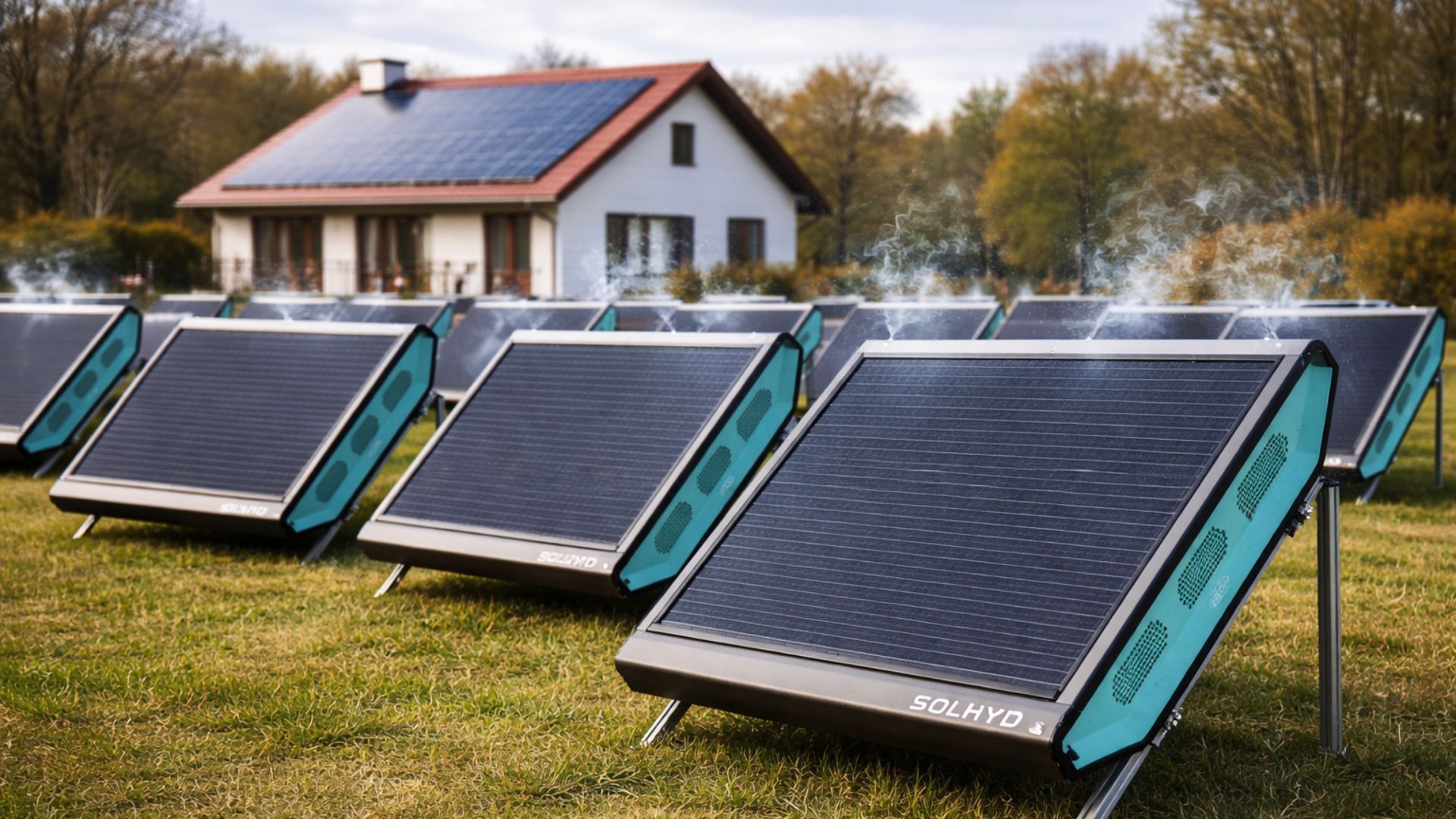
Green hydrogen at home: Belgium launches new technology that makes solar panels produce fuel from the moisture in the air, which could boost the energy transition.
-
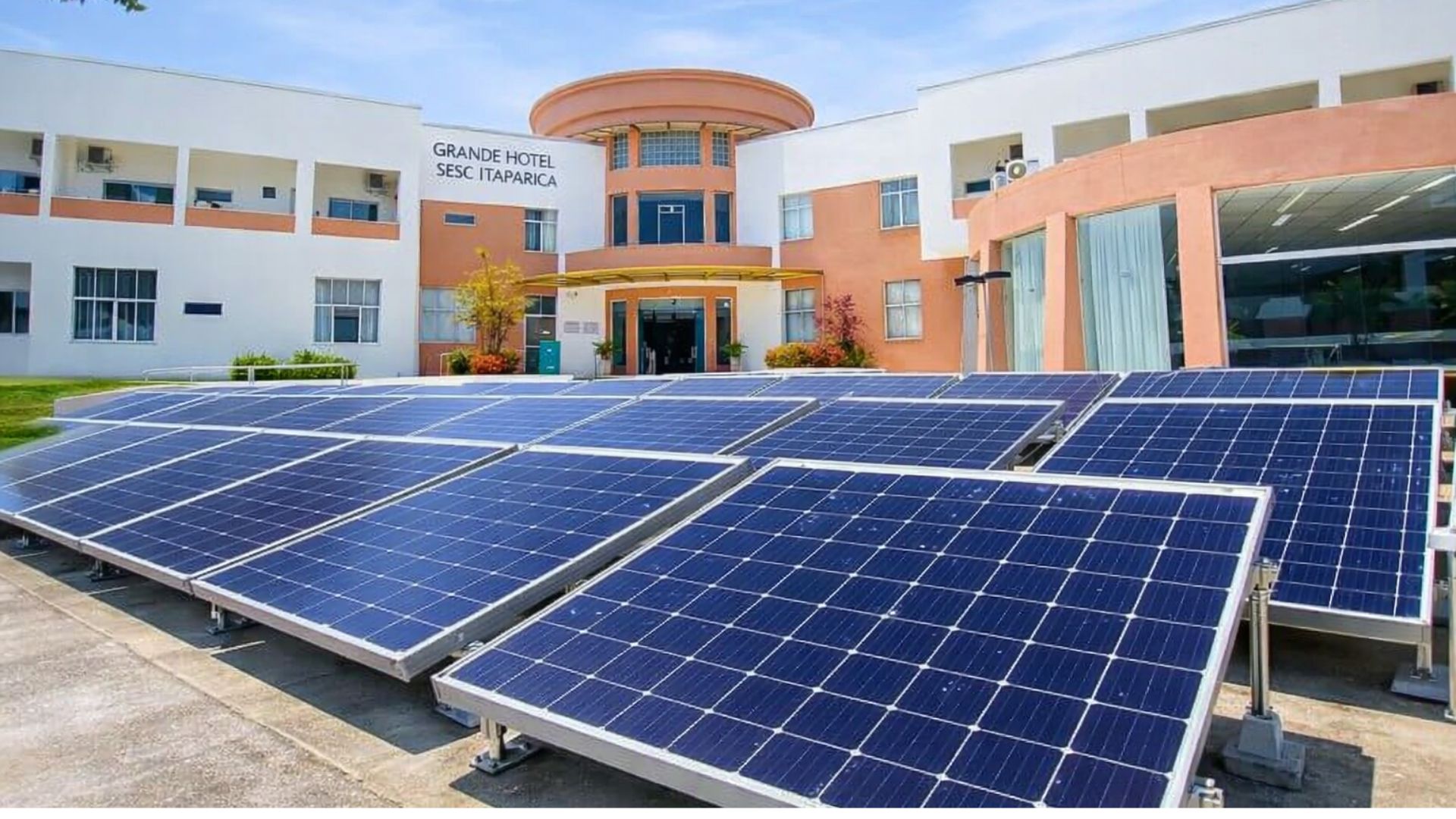
Sesc-BA bets on renewable energy with the support of EDP and drives the energy transition with a direct impact on cost reduction and the sustainability of its operations in Bahia.
-
Technology giant breaks global sustainability records: How Amazon’s leadership in renewable energy procurement transformed the global energy market in the past year.

-
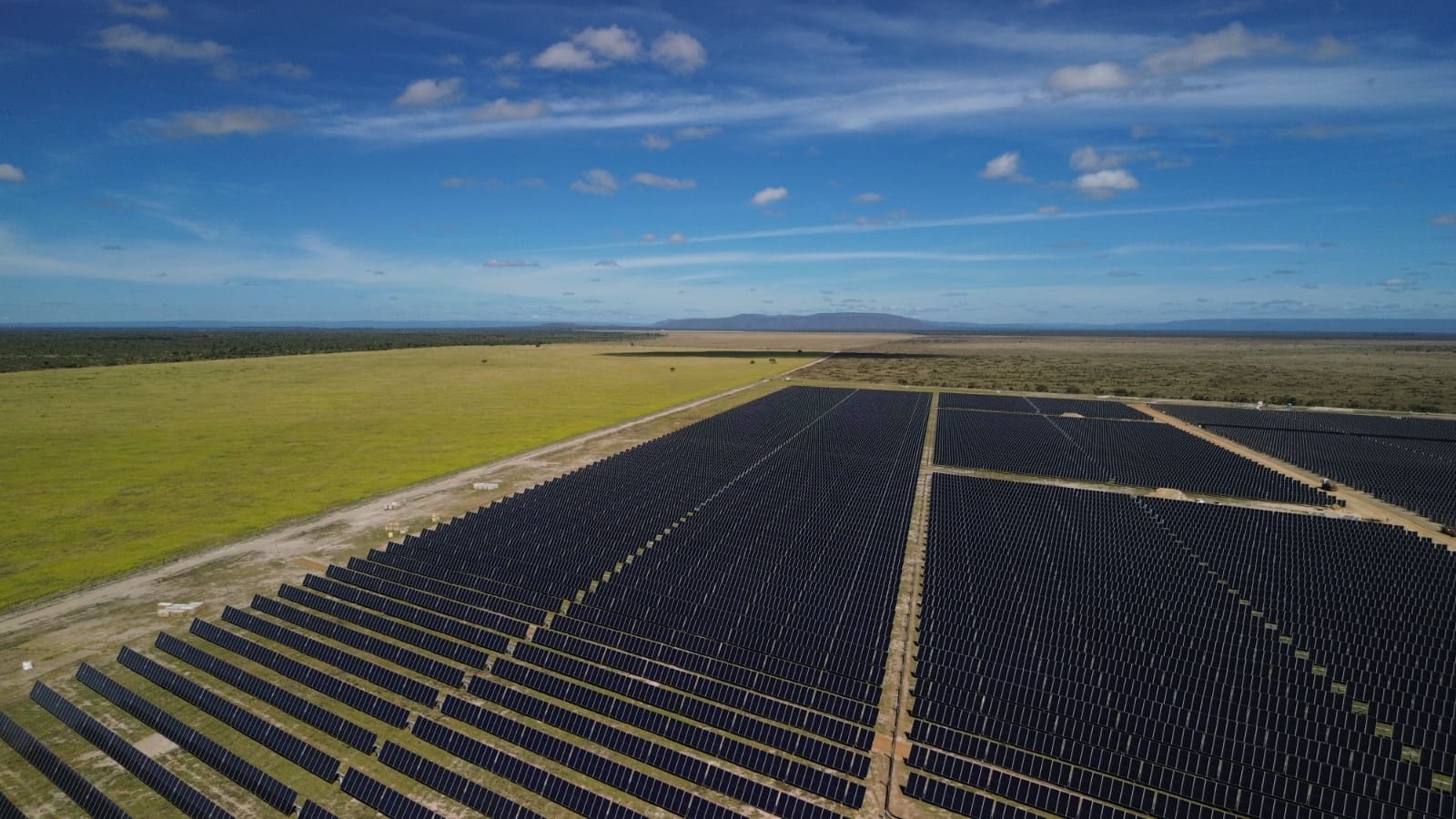
Alert in the electric sector: Atlas Renewable Energy confirms billion-dollar investment and Brazil risks losing a share of the new investment in Latin America to neighboring countries.

Thus, renewable energy storage represents more than a technological solution; it addresses climate change and acts as a key piece in the global energy transition.
Therefore, to understand its importance, we need to look to the past and understand how humanity has sought energy solutions over time.
The Historical Evolution of Energy Storage
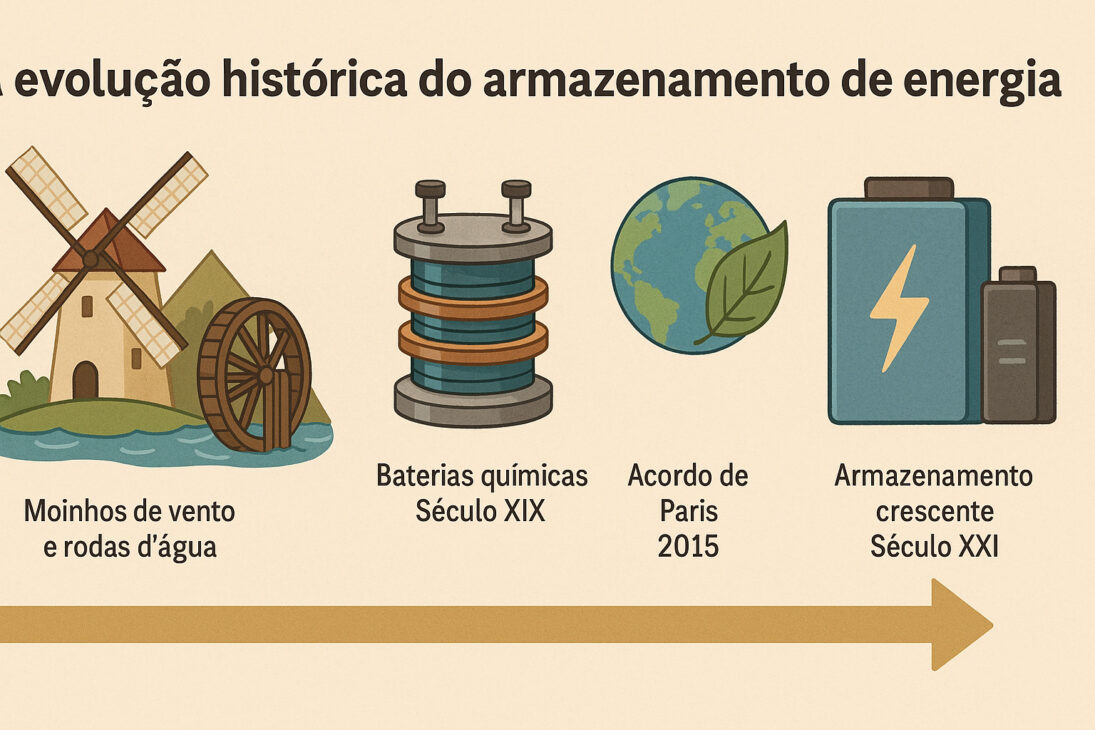
Since ancient times, humanity has sought ways to store energy.
For example, in the pre-industrial era, windmills and waterwheels already harnessed natural forces to do work.
However, the modern concept of energy storage gained traction only with the advancement of electricity and industrialization.
According to the U.S. Department of Energy (DOE), the first chemical batteries were developed in the 19th century, with Alessandro Volta in 1800.
At that time, energy predominantly came from coal, which could be consumed as needed, reducing the urgency to store energy.
In the 20th century, as the International Renewable Energy Agency (IRENA) explains, the expansion of hydropower plants and the increasing adoption of intermittent sources, such as wind and solar, highlighted the challenge of storing energy for times when production was low.
Furthermore, the need became more critical in the 21st century, especially after global agreements such as the Kyoto Protocol (1997) and the Paris Agreement (2015).
These, according to information from the United Nations (UN), spurred efforts to reduce carbon emissions and promote renewable sources.
Another factor that increased the demand for storage was the growing digitization and electrification of daily activities, as emphasized by the International Energy Agency (IEA).
These factors broadened the search for flexible and reliable systems to manage energy supply and demand.
Why Storage is Essential for Renewable Sources
Unlike thermal or nuclear power plants, which produce electricity continuously, renewable sources depend on natural conditions.
For example, the sun does not shine at night, and the wind does not blow consistently. Therefore, energy production from these sources is intermittent, which can lead to instabilities in the electrical grids.
In this scenario, renewable energy storage acts as a “reserve”.
In other words, it stores the energy generated at peak times, such as at noon in solar systems, to be used when generation decreases, such as during the night. This ensures a constant supply and avoids waste or overloads.
Additionally, storage provides greater energy independence for remote regions, which often lack extensive distribution networks.
Rural communities, villages in the forest, and islands rely on batteries for lighting, refrigeration, and communication.
Another important point, according to the IEA, is that storage facilitates the balance between supply and demand.
During low-demand times, excess energy can be stored to meet peaks in consumption, avoiding the activation of polluting emergency plants. Consequently, this reduces costs and makes the system more sustainable.
The IEA report of 2023 also indicates that the growth of storage installations increased 30% in the last five years, strengthening the reliability of networks that integrate renewable sources.
Current Technologies for Renewable Energy Storage
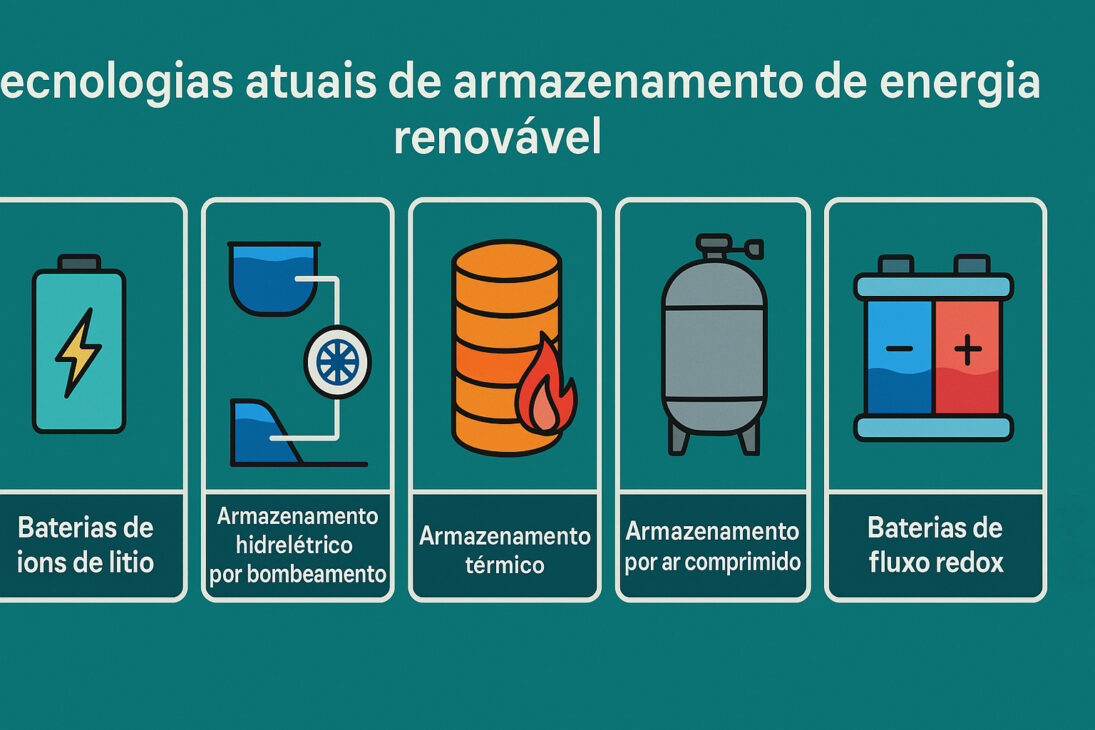
Today, various technologies store renewable energy. Lithium-ion batteries are the most common, used in both small residential applications and large plants.
According to the International Renewable Energy Agency (IRENA), other technologies include pumped hydropower storage, which uses energy to pump water to an elevated reservoir, releasing it to generate electricity when needed.
The thermal storage, widely used in concentrated solar systems, stores heat in materials such as molten salts to convert it into electricity later.
There is also storage using compressed air, which compresses air in caves or tanks, later releasing it to drive turbines.
Therefore, these alternatives ensure that intermittently generated energy is utilized continuously and efficiently.
Additionally, emerging technologies such as redox flow batteries promise greater durability and ease of recycling, as noted by the DOE.
These batteries use electrolyte liquids and can be scaled for large capacities.
Solid-state batteries are also advancing rapidly, offering greater safety and energy density compared to traditional lithium-ion batteries.
Still, choosing the ideal technology depends on factors such as cost, scale, storage duration, and environmental impact.
Solutions are increasingly adapting to the specific needs of communities, industries, and electrical systems, as highlighted in the latest report from the IEA.
Sustainability and Environmental Challenges of Batteries
Renewable energy storage strengthens the use of clean sources.
By allowing energy from the sun and wind to be stored and used when necessary, these technologies reduce dependence on polluting sources such as oil, coal, and natural gas.
On the other hand, as warned by the United Nations Environment Programme (UNEP), extracting materials such as lithium, cobalt, and nickel for making batteries can cause environmental damage and social impacts in local communities.
Therefore, developing cleaner, more durable, and recyclable technologies has become a global priority. Researchers are working on sodium batteries, solid-state batteries, and systems integrated with smart grids, as reported by the DOE and IRENA.
Furthermore, recycling and reusing used components are gaining momentum. Countries and companies are investing in policies to encourage the circular economy in the battery sector, aiming to reduce socio-environmental impacts and increase sustainability.
According to data from UNEP, over 50% of batteries currently in use still do not undergo proper recycling, highlighting the urgency of advancements in this field.
The Promising Future of Renewable Energy Storage
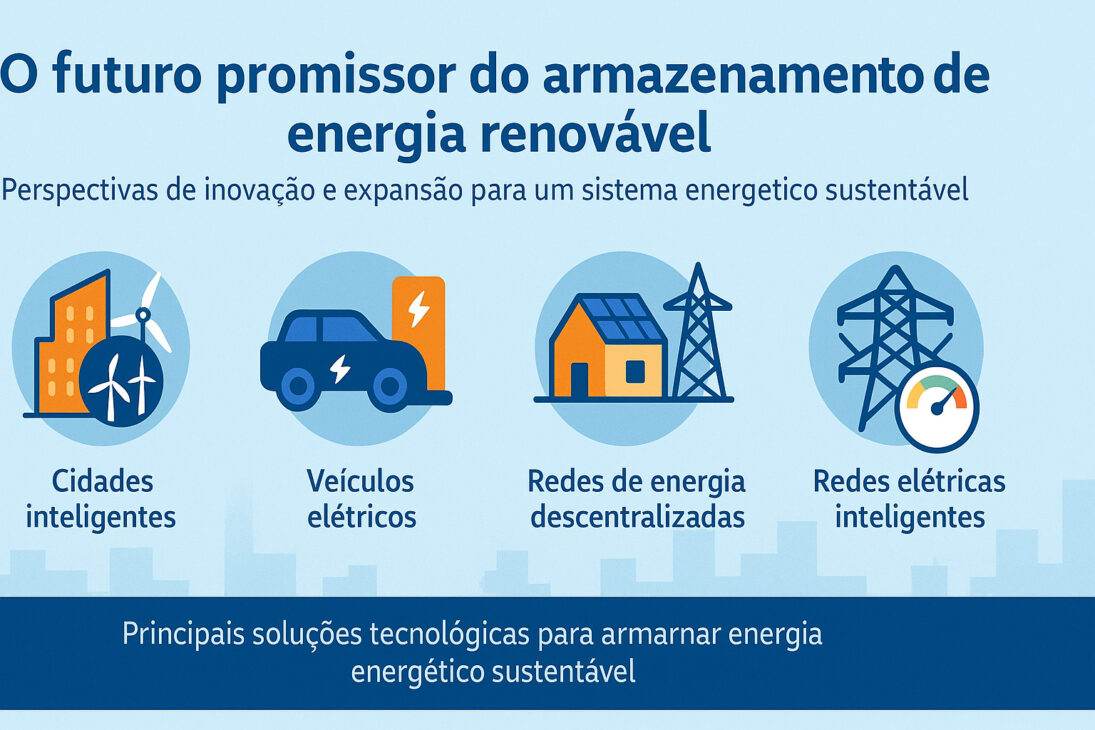
As the world moves towards a more sustainable energy model, storage takes on a central role.
The IEA predicts that in the coming years, technologies will become more accessible, efficient, and durable, allowing people, businesses, and governments to adopt clean sources with greater security and economy.
Smart cities, electric vehicles, self-sufficient homes, and decentralized energy grids are already emerging in various regions, thanks to advances in storage.
The decentralization of production and consumption is a promising trend, allowing each house, building, or company to function as a small power plant.
Furthermore, the integration between sources — solar, wind, and hydropower — combined with efficient storage systems will allow for dynamic and secure balancing of energy supply and demand.
Another relevant aspect is the development of smart electrical grids.
These grids monitor and manage consumption and generation in real time, integrating storage systems to optimize use and reduce waste.
According to the IEA report of 2024, the expansion of smart grids and storage systems is expected to triple by 2030, driving a more resilient and efficient energy transition.
A Viable and Sustainable Energy Transition
Therefore, renewable energy storage goes beyond a technical solution: it represents a pillar of the energy transition needed to tackle climate change and build a more sustainable future.
By ensuring the continuous use of clean energy, even when natural conditions fail, storage stands out as one of the greatest innovations of our time.
Thus, understanding this reality, its challenges, and opportunities is essential for anyone looking to follow the future of energy — a future that is increasingly renewable, decentralized, and accessible.











Não achei o que queria.Melhorem no conteúdo!