





 Portuguese
  English
  Spanish
  3 min of reading
  0 comments


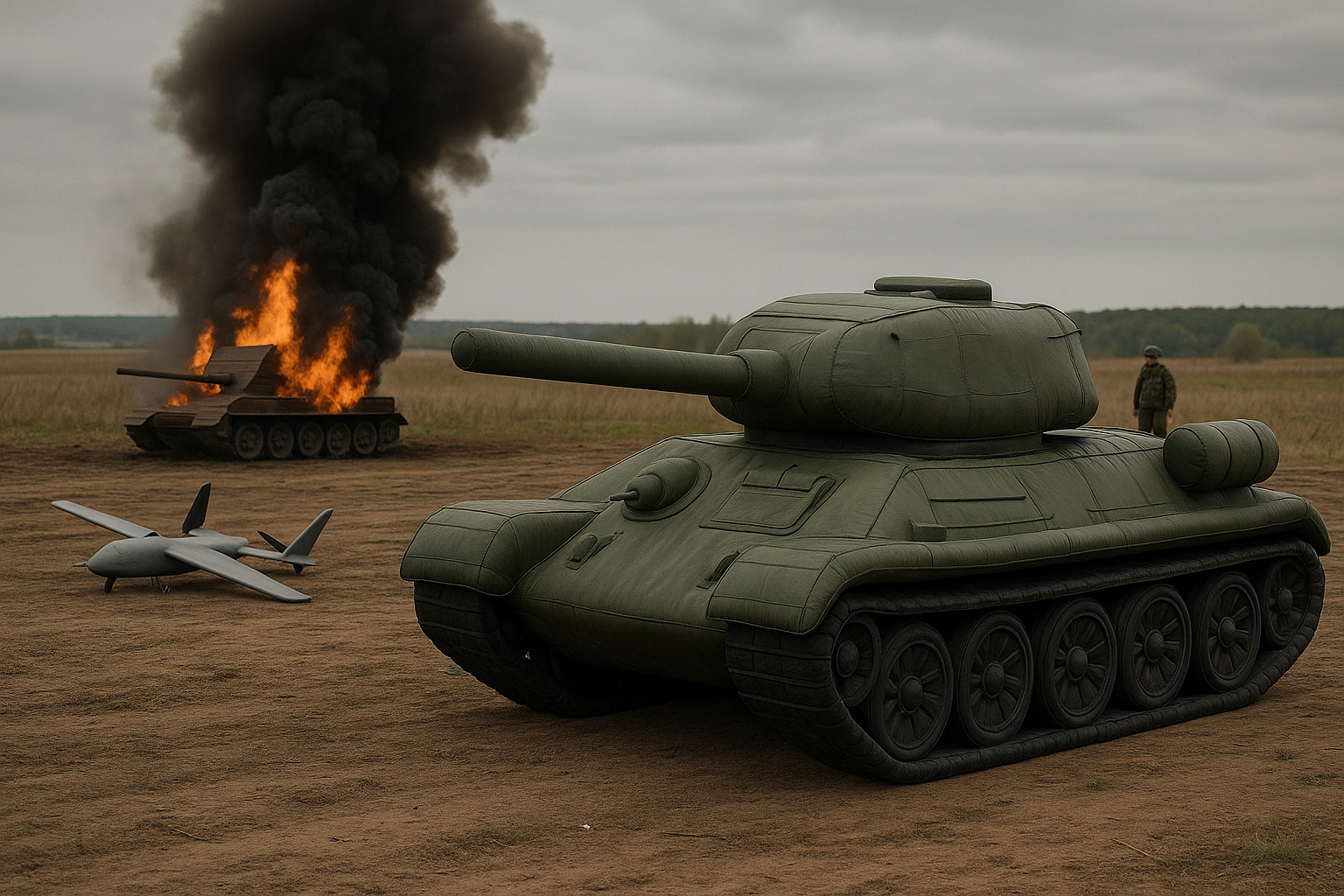
Cheap Replicas Become Strategic Tools And Cost Dear To The Enemy That Wastes High-Value Ammunition
In June 2023, a video published on pro-war channels from Russia showed a drone hitting a Ukrainian tank that exploded in flames. However, shortly afterward, a new recording debunked the scene. A Ukrainian soldier revealed that the target was nothing more than a wooden tank used as bait, created to deceive the Russians.
This case marked just one among many episodes of the war. Thus, both Russia and Ukraine use replicas on a large scale — from vehicles to fake soldiers — to confuse enemies and save resources.
Replicas That Confuse Even Experienced Military Personnel
On the front line, almost everything can be fake: radars, jeeps, trucks, grenade launchers, and even soldiers. Additionally, the copies can be inflatable, two-dimensional, or collapsible, reflecting radar signals and simulating engine heat.
-
Global summit with over 40 countries pressures Iran for a blockade in the Strait of Hormuz and warns of direct impact on oil, food, and the global economy.
-
Russia has broken the U.S. maritime blockade to send oil to Cuba and is now loading a second ship while Trump says that “Cuba is next” in a possible military action against the island.

-
Spain challenges the USA and closes its airspace for operations against Iran, raising global tension and provoking the threat of a trade rupture.
-
While no other country manufactures tanks in Latin America, Argentina activates the TAM 2C-A2 and raises a curiosity about the technological lag in the region.

Ukrainian soldiers report that, in certain types of weaponry, half of the units present on the battlefield are copies. Therefore, the logic is clear: force the enemy to spend expensive ammunition on cheap targets.
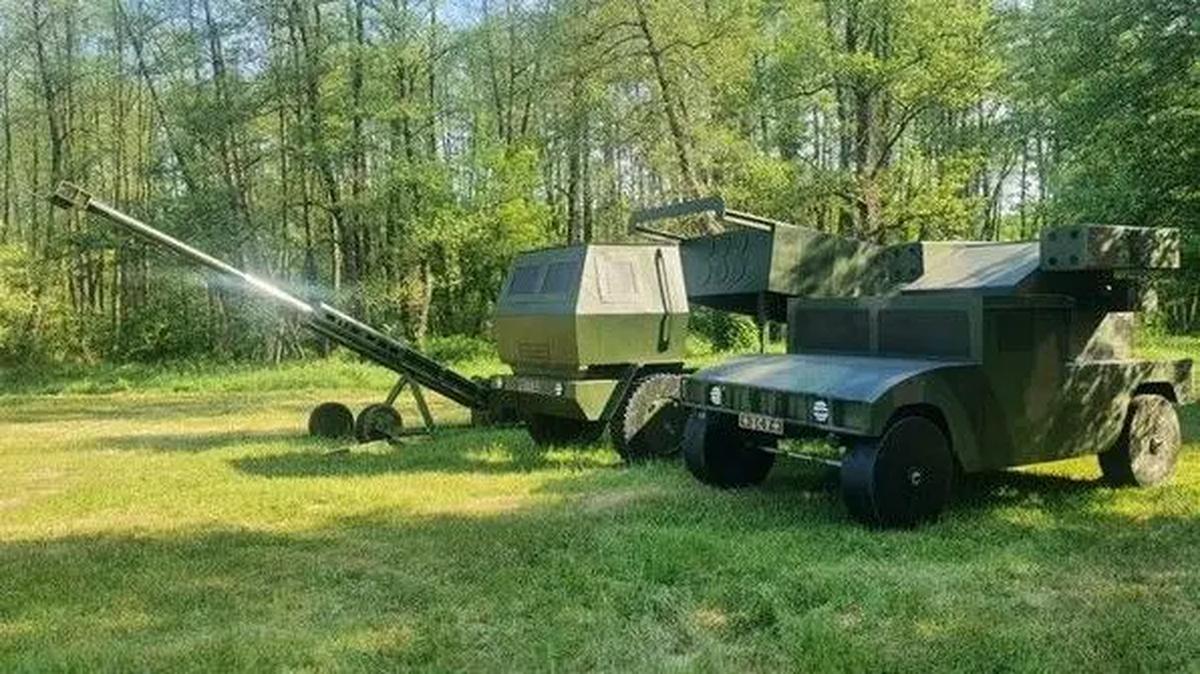
Fake M777 Howitzers and Million-Dollar Losses
One of the main targets of these replicas are the M777 howitzers, nicknamed “Three Axes.” Western allies delivered over 150 real units to Ukraine in 2022, according to the UK Ministry of Defense.
To multiply effectiveness, Ukrainian volunteers manufacture copies on a large scale. Additionally, they are quickly delivered to the troops. The group Na Chasi, coordinated by Ruslan Klimenko, has already delivered 160 replicas. Assembling each one takes three minutes, with just two people and no tools.
Another group, Reaktyvna Poshta, led by Pavlo Narozhny, keeps between 10 and 15 baits in continuous production. While each replica costs between US$ 500 and US$ 600 (R$ 2,700 to R$ 3,200), the Russian Lancet drones can reach US$ 35,000 (R$ 190,000).
The contrast in values is striking. Therefore, the replica nicknamed Tolya has become a symbol of the strategy. It withstood 14 attacks from Lancet drones. Even after damage, soldiers reassembled the model with tape and returned it to the front.
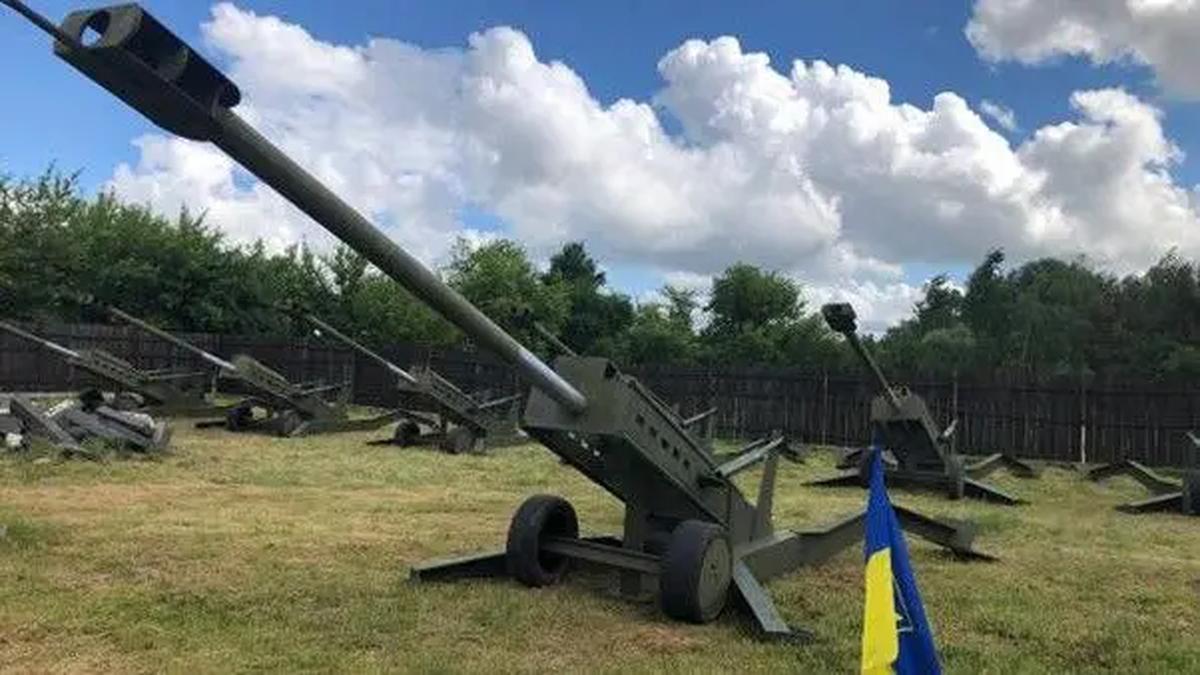
Disguises Created to Enhance the Illusion
To increase realism, the troops set up complete scenarios, including tire marks, ammunition boxes, and even improvised bathrooms. Thus, even experienced commanders have been deceived and believed they were original pieces.
The officer Carisma, from the 33rd Mechanized Brigade, highlighted in 2023 that the strategy also involves quickly replacing real artillery with replicas after firing. This way, the enemy wastes time and ammunition.
Russia Bets on Fake Drones and Dummy Soldiers
On the other side, Russia also resorts to fake weaponry. Moreover, the volume of imitations has grown throughout 2023. According to Ukrainian spokesman Yuri Ihnat, half of the Shahed drones used in attacks were fake.
These cheap versions, many made of plywood, appear on radars as real drones. Consequently, the goal is to overload Ukrainian air defenses and force the firing of expensive missiles at worthless targets.
The Russian company Rusbal manufactures inflatable, 2D, and thermal decoys, capable of simulating engine heat, radio transmissions, and radar signals. Additionally, volunteers from the Popular Front movement, in Novosibirsk, created dummy soldiers with uniforms equipped with heating cables, capable of deceiving thermal cameras.
The Old Tactic Gains New Life
Despite technological innovation, this technique is not new. During World War II (1939-1945), the Allies organized fictitious armies in England to confuse the Nazis before D-Day.
Today, unmanned drones and precision weapons have changed warfare. Still, illusion remains essential. Inflatable replicas, wooden tanks, and dummy soldiers prove that deceiving the enemy is still strategic.
As the war continues, it becomes clear that, in addition to modern weapons and lethal drones, illusion has become a fundamental part of the military arsenal. After all, each missile fired at a replica represents a strategic victory for those who rely on deception.
Do you believe that the future of warfare will be defined by advanced technology or by the creativity of strategic illusions?









Seja o primeiro a reagir!