





 Portuguese
  English
  Spanish
  4 min of reading
  77 comments


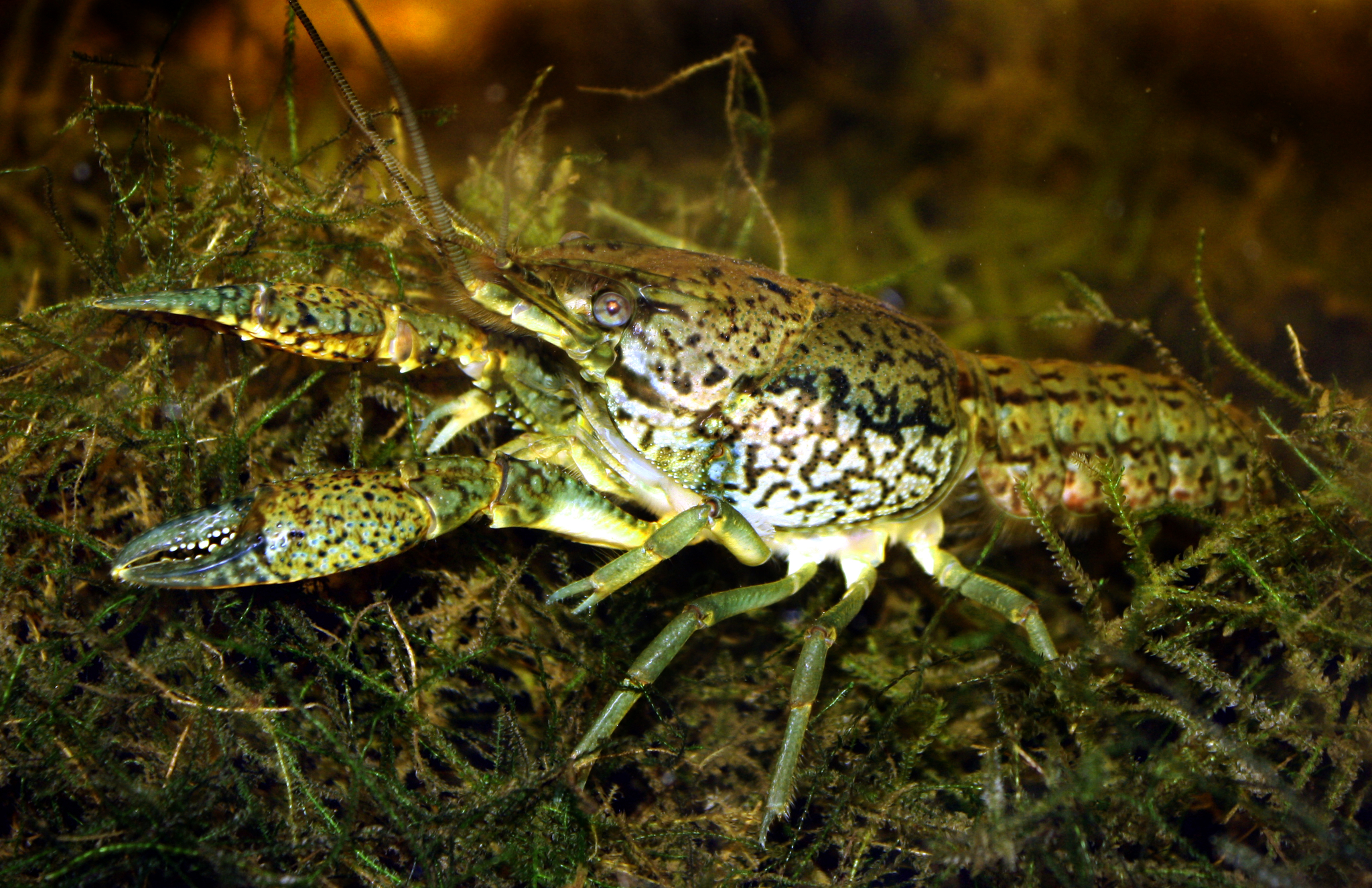


Marbled Crayfish Reproduces Without Males, Invades Rivers in Europe and Africa, and Warns Scientists Due to Cloning, Resistance, and Growing Ecological Impact.
When it appeared in the aquariums of Germany in the late 1990s, the Procambarus virginalis, known as the marbled crayfish, seemed just an intriguing and aesthetically striking crustacean. Shortly after, researchers realized that something extraordinary was happening: females were laying fertile eggs without any contact with males. Within a few days, dozens of genetically identical individuals emerged.
In 2018, a study published in Nature Ecology & Evolution confirmed that the marbled crayfish was a result of a recent mutation that made the species parthenogenetic, meaning it could reproduce by cloning, generating copies of itself and accelerating the colonization of new environments without the need for reproductive partners.
Cloning: An Explosive Ecological Multiplier
Unlike most crustaceans, which need two sexes to maintain populations, the marbled crayfish needs only one individual to establish itself in a new ecosystem.
This process has profound implications:
-
The Himalayas continue to grow to this day, with tectonic plates advancing 5 cm per year, mountains rising up to 10 mm annually, and the 2015 earthquake that killed 9,000 people may have increased the risk of an even larger seismic mega-event.

-
At an altitude of 400 km by astronauts from the International Space Station, Paris transforms at night into a golden mesh so precise that it reveals the outline of the Seine River, avenues, and entire neighborhoods like a luminous map drawn over the Earth.

-
iPhone 17 reaches historic low price with 256 GB, 120 Hz display, and drops to R$ 5,703 on Shopee, featuring A19 chip, dual 48 MP cameras, battery life of up to 30 hours, and advanced AI features.

-
Trip to Mars getting closer: Pulsar Fusion, from the UK, advances with plasma ignition in fusion engine and could drastically reduce space travel time, making crewed missions faster, safer, and economically viable.


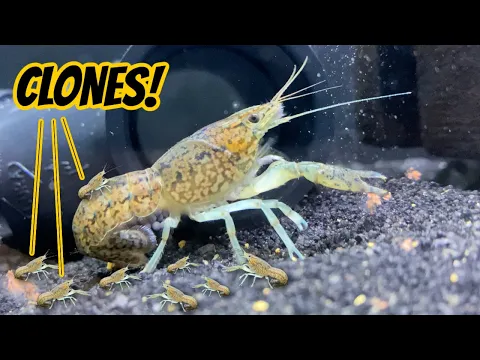
• 40 to 200 eggs per reproductive cycle (varies by density and nutrients)
• Absolute genetic cloning — all individuals have the same genome
• Rapid sexual maturity, within a few months
• Exponential population growth

In natural regions of Central Europe, researchers have already found hundreds of genetically identical individuals occupying entire water systems. This makes the species an extreme example of invasion through asexual reproduction, something rare among vertebrates and uncommon in crustaceans.
Cold Tolerance, Pollution, and Low Oxygen Levels Accelerate Invasion
Another characteristic that has turned the marbled crayfish into a problematic species is its physiological resistance. Studies show that the crustacean tolerates:
• Cold waters (Central and Northern Europe)
• Eutrophicated environments and low oxygen levels
• Polluted urban lakes and sewage ditches
• Temporary droughts, burrowing into sediment
This robustness explains why the Procambarus virginalis migrated from the ornamental world to the natural environment, establishing populations in:
• Germany (first records)
• Austria, Italy, Czech Republic, Hungary, and Croatia
• Madagascar — where the species has exploded outdoors and worries the government due to its rapid reproduction
In Madagascar, there are already reports of populations expanding hundreds of kilometers along rivers and irrigated agricultural areas, according to surveys cited by Nature Ecology & Evolution and FAO.
Ecological Concern: Competition, Disease, and Trophic Imbalance
The marbled crayfish not only threatens biodiversity through the physical occupation of habitat. It can also:
Compete with Native Species
Native crayfish in Europe and Africa are less resistant, less prolific, and require more stable conditions — putting them at an immediate disadvantage.
Alter Trophic Chains
The marbled crayfish is an opportunistic omnivore: it eats plants, fish eggs, small invertebrates, and even carrion, impacting:
• Tetras and cyprinids in cold rivers
• Populations of amphibians
• Benthic macroinvertebrates
These changes have already been reported in urban lakes in Germany and Austria.
Spread Pests and Pathogens
Like the Louisiana red crayfish, it can be a vector for the crayfish plague fungus (Aphanomyces astaci), which devastated the European crayfish Astacus astacus throughout the 20th century.
The Scientists’ Warning: “A Recent Mutation in Global Expansion”
The most unsettling aspect for the scientific community is not just the ecological invasion, but the evolutionary context. The Procambarus virginalis did not exist before the 1990s and has no known male species, meaning it is the result of a recent mutation that has spread across two continents.
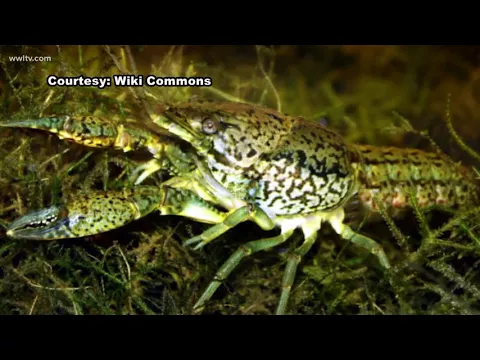
This uncommon origin has led the species to be nicknamed by some researchers as:
“A Revolutionary Organism of Modern Biology”
Not out of romanticism, but for the way it breaks evolutionary paradigms.
The Global Risk: Just One Individual
This is a rare case where the invasive potential depends on a simple equation:
1 crayfish = 1 complete population in months
Thus, several countries have already:
- prohibited the sale of the species for aquarism
- restricted imports
- initiated control campaigns
- studied genetic and ecological impact
In reports published by the European Union and IUCN, the marbled crayfish appears as a high-risk invasive species.
A Silent Ecological Warning
The marbled crayfish is not the size of a crocodile, nor does it have the fame of piranhas or tilapia. Yet, for ecologists, it represents a major concern:
a recent mutation, globalized by human action, resilient, discreet, and practically impossible to eradicate once it establishes territory.
In the end, it does not dominate ecosystems by force, but through accelerated reproduction, cloning, and resilience, a type of ecosystem invasion that modern biology is still studying to understand.









É uma proteína. É comestível? Tem potencial na indústria química? Pode virar adubo, ração?
Pensei o mesmo será que dá pra comer? Se sim, pela rapidez da reprodução é só levar pros lugares que é de pobreza extrema e criar em tanques. Sopas, farinha…
Depois do corona vírus, não há nada estranho mais nesta terra; tudo será: mutação.
É preciso encontrar alguma utilidade….tal como…ração ****…ou complemento alimentar industrializado para Países em estado de miséria absoluta atendidos por Médicos Sem Fronteiras e FAO.