





 Portuguese
  English
  Spanish
  4 min of reading
  0 comments


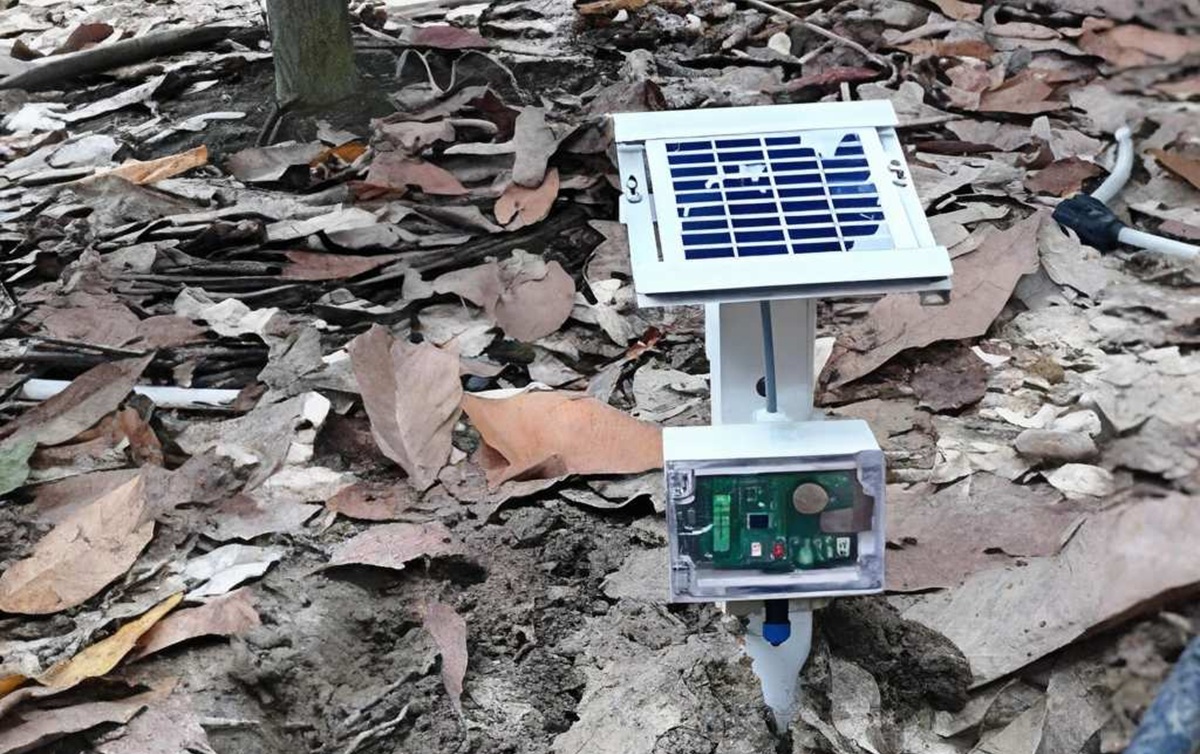
Researchers from Malaysia developed a system with five probes buried in an area of 93 square meters that can predict soil moisture with 95.49% accuracy, using artificial intelligence, solar panels, and measurements at 15 and 30 centimeters to make irrigation more efficient
Researchers from Malaysia developed a system with underground sensors capable of predicting soil moisture with 95.49% accuracy, providing more reliable support to determine the best time to irrigate and reducing unnecessary water use in agriculture.
The solution combines depth measurements, environmental data, and artificial intelligence to bring predictions closer to the actual conditions observed in the field.
The experiment was conducted in an area of approximately 93 square meters, where five buried probes monitored, in real-time, the evolution of water in the subsurface. The proposal focuses the analysis on the region where roots absorb water, rather than relying solely on visible signals on the surface.
-
Technology developed to protect military communications in the 1940s scrambled voices and today gives rise to the robotic sound that dominates current music.

-
If you look at the sky this Wednesday, you will see the Pink Moon shining at its peak at 10:11 PM, but before you get disappointed, know that the name has nothing to do with the color and instead refers to flowers that bloom at this time in the United States.

-
Discovery at USP reveals how Brazilian arnica can revolutionize the production of silver nanoparticles with less environmental impact.

-
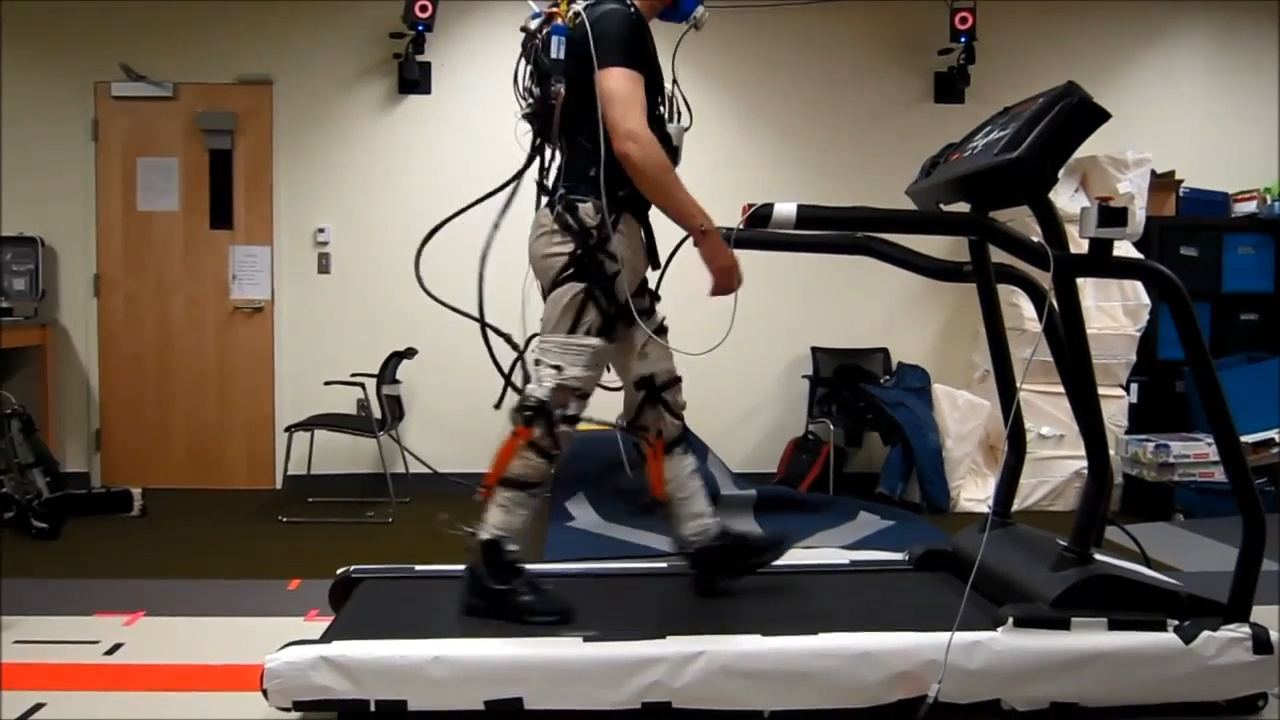
Harvard scientists have created a tissue exoskeleton that does not look like an exoskeleton, with no rigid parts and reduced weight, using flexible cables and miniaturized motors to assist the ankle and hip, reducing the effort of walking by up to 23% in controlled tests.

This difference is central because the external appearance of the land can lead to errors. The soil may appear dry at the surface layer and still retain enough water at deeper levels, or present the opposite situation, which compromises irrigation decisions when the reading is based only on surface observation.
Sensors measure soil moisture at depth
The system uses sensors buried at 15 and 30 centimeters, depths chosen to observe precisely the range where water stress begins to affect plants. Measuring at this layer allows for clearer identification of when roots encounter insufficient water.
Agriculture accounts for about 70% of the freshwater extracted globally, and part of this volume is wasted due to failures in irrigation management. In this scenario, more precise use of information can help reduce losses without increasing water availability.
The structure installed in the field not only measures the water present in the soil. The system also integrates air temperature, environmental humidity, solar radiation, and precipitation, gathering variables that help form a more complete picture of the conditions influencing soil moisture.
The underground sensors collect data every 10 minutes, while environmental conditions are recorded every 30 minutes. The entire setup is powered by solar panels, eliminating dependence on the electrical grid and enhancing usability in rural or isolated areas.
The adopted architecture is a star network. In it, the sensors send information to a central node, which then forwards the data to the cloud, in a simple configuration used to validate the concept in the field.
Artificial intelligence interprets patterns over time
To analyze the collected data, the researchers employed an artificial intelligence model of the LSTM type, which stands for Long Short-Term Memory.
This algorithm does not observe isolated measurements but learns sequences and identifies how conditions evolve over time.
This characteristic is relevant because, in the field, many effects are not immediate. Rain, for example, does not automatically turn into water available for the roots, and the model was trained to capture this interval between the climatic event and the response in the subsurface.
The result generated by the system is not a rigid prediction but a dynamic estimate of soil moisture behavior. This reading, closer to reality, tends to provide a more useful basis for deciding when to irrigate and when to avoid unnecessary water application.
However, the researchers emphasize that the quality of the data plays a decisive role in the model’s performance. Incomplete or irregular information can disrupt the patterns that artificial intelligence needs to recognize to maintain prediction accuracy.
Heavy rain still reduces system accuracy
The system’s performance drops during periods of heavy rain, when moisture rises abruptly and deviates from usual patterns. This behavior complicates predictions and shows that, even with artificial intelligence, natural variability continues to impose limits.
To reduce the impact of these deviations on model training, the Huber loss technique was applied. The method improves stability in the face of extreme errors, although it does not completely eliminate the difficulties observed in scenarios of intense precipitation.
The accuracy of 95.49% does not mean absolute correctness in all variations recorded in the field. The index indicates that, in most cases, the estimates are sufficiently close to actual conditions to guide irrigation decisions with a lower margin of error.
In practice, this allows for avoiding watering when it is not necessary and also reduces the risk of saving water at times when the plant begins to suffer from its lack. The main goal is not to achieve mathematical perfection, but to reduce relevant failures in management.
System supports human decisions and can be scaled
The solution does not directly automate irrigation. It functions as a support tool, providing forecasts and information to guide human decision-making, in an intermediate approach that can facilitate the adoption of technology by farms that have not yet advanced to fully automated systems.
The test was conducted in a specific plantation and under relatively homogeneous conditions, which limits immediate extrapolation to more complex scenarios. In larger areas, with varied soils and distinct microclimates, it will be necessary to increase the number of sensors and enhance connectivity.
The material indicates that this expansion may require more robust networks, such as LoRa or mesh systems, capable of covering extensive areas. It will also still be necessary to observe the system’s behavior in different seasons, including prolonged droughts and extreme rains.
In addition to irrigation, the technology opens up opportunities to integrate water management with factors such as fertilization, soil health, and crop growth.
The perspective is to advance from a system focused on smart irrigation to a broader precision agriculture, keeping soil moisture as a central reference for more efficient decisions.
More information at sciencedirect.








Seja o primeiro a reagir!