





 Portuguese
  English
  Spanish
  5 min of reading
  0 comments


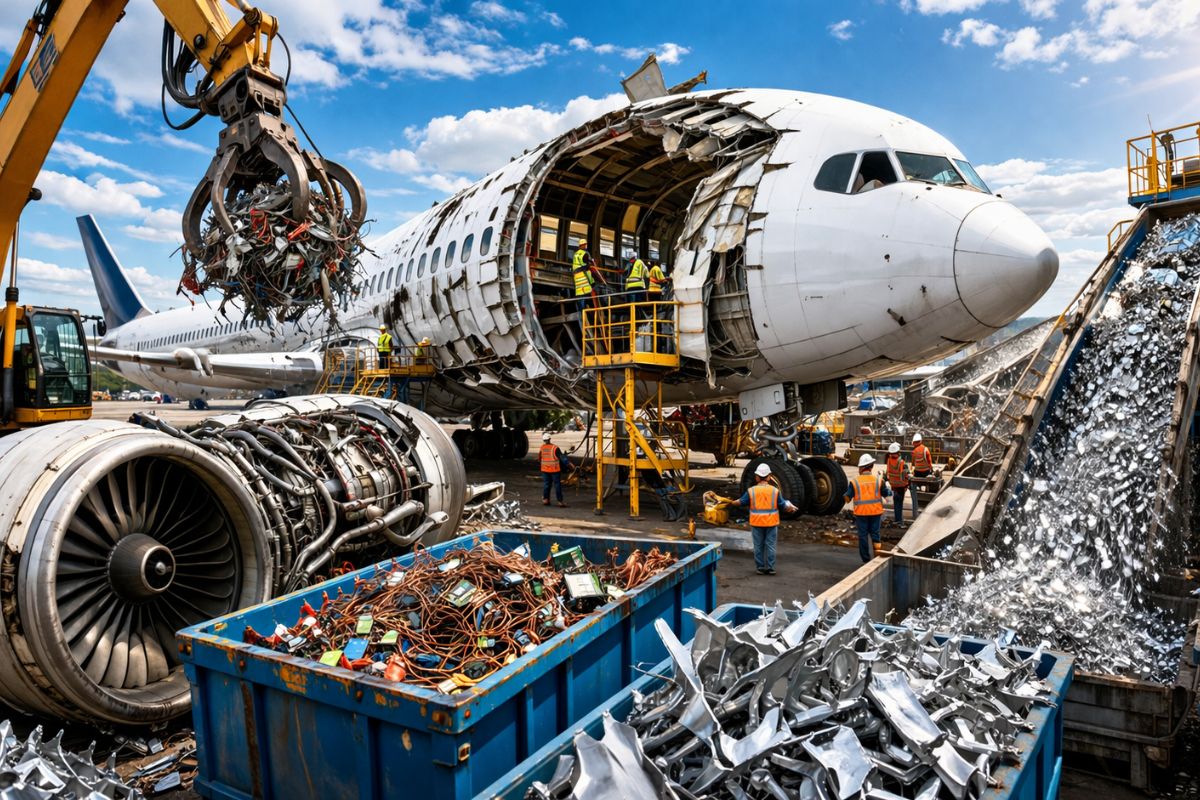
Behind what looks like scrap metal, there is a rigorous recycling line that deactivates systems, drains fluids, separates metals, and returns value to the global industry.
Behind retired aircraft, there is not a destinationless scrap metal, but rather a resource that can be worth billions of dollars waiting to be recovered. Instead of being discarded, these planes enter a controlled industrial process, where each component is dismantled, separated, and processed to recover valuable materials.
The result is a gradual transformation: from a complex machine, with millions of parts, emerges a flow of clean and reusable materials, ready to return to manufacturing. It is not immediate destruction, it is staged reuse, with different methods for each part of the aircraft.
From dry storage to dismantling plan

The process begins at storage locations, where the planes are kept in dry environments to reduce corrosion. When it is time for processing, the aircraft is towed to the recycling area with specialized equipment.
-
While NASA is completing its first crewed flight around the Moon in over 50 years with Artemis II, China has set in motion the Tianwen-2 mission to capture up to 1 kg of material from an asteroid possibly linked to the Moon and bring it back to Earth in 2027 on a 10-year journey to deep space.

-
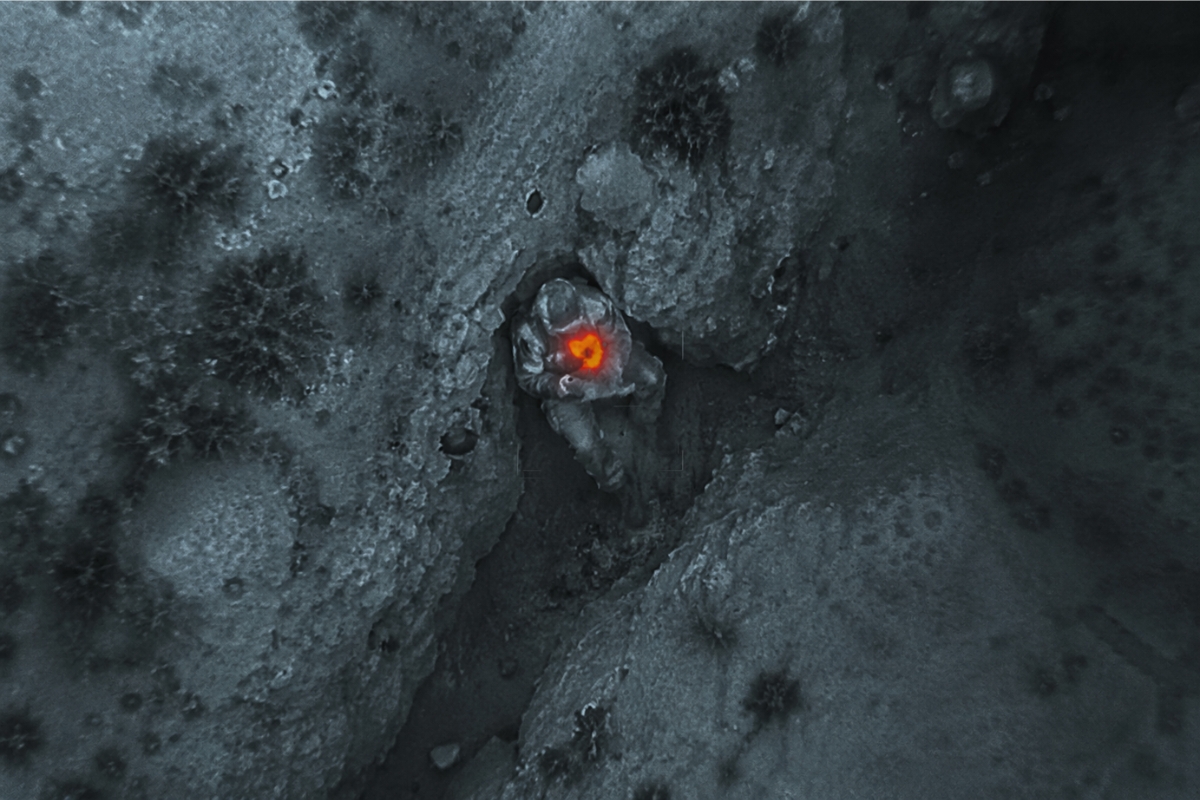
The USA would have located a downed pilot in Iran using technology capable of identifying the electromagnetic signature of the human heart from up to 60 km away.
-
China will deliver more than 2,280 electric buses to Nicaragua and transform the public transport of the entire country into a showcase of Chinese technology in the backyard of the United States in Latin America.

-
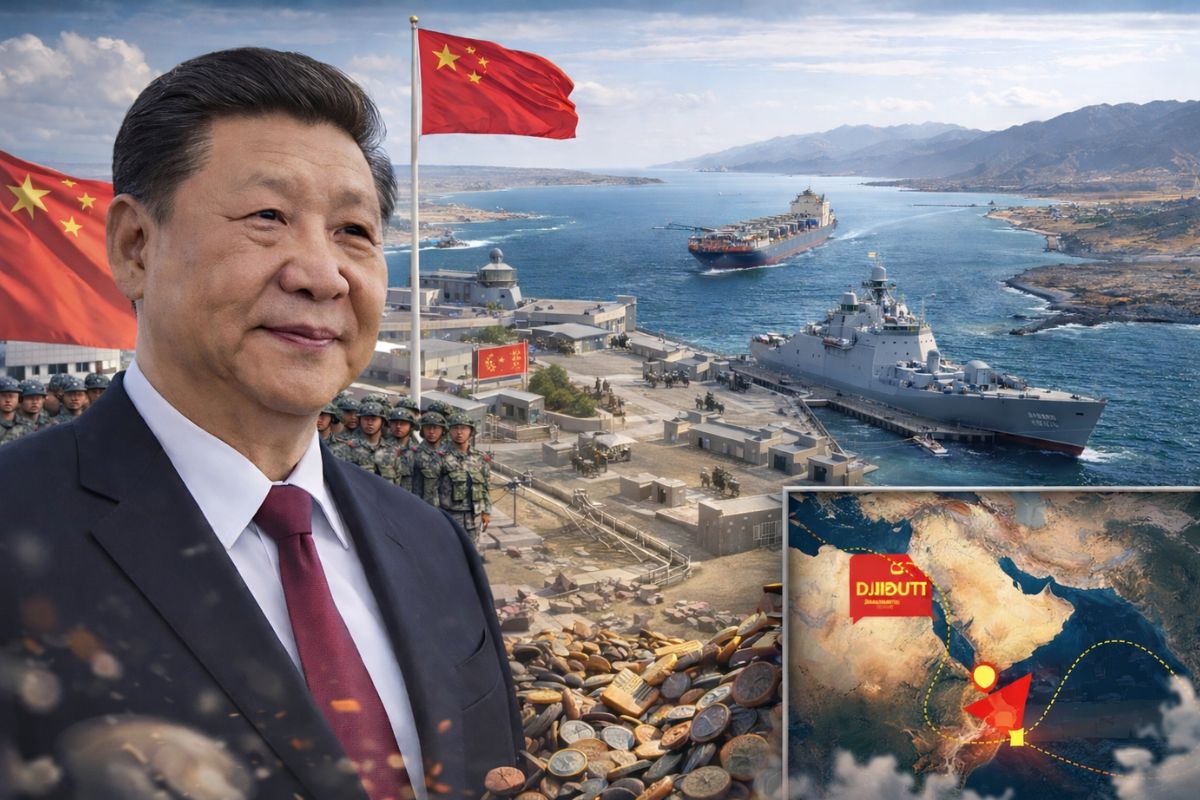
China has chosen the most strategic point on the planet to establish its first military base abroad: Djibouti controls the strait through which oil, goods, and routes connecting three continents pass simultaneously.
Before any cutting, technicians perform a complete structural inspection. Access panels are opened to examine internal sections, with special attention to the fuselage.
From this point, engineering teams develop a detailed dismantling plan, piece by piece. Nothing happens “on the fly” when the goal is to recover value and avoid risks.
Safety first: deactivate systems and eliminate residual energy
Before proceeding, all onboard systems must be completely deactivated. Technicians disconnect the main power supply and backup power sources, ensuring that no current remains in the system.
Residual charges stored in capacitors are also discharged, reducing the risk of electric shock. Only after this step does the aircraft cease to be an integrated system and become a metal structure ready for the next processing.
Total drain: fuel, hydraulics, and the risk of a spark

Before dismantling, the first practical step is to remove and collect all fluids. Large hoses are connected to the fuel tanks in the wings and fuselage, and industrial pumps extract the aviation fuel into sealed tanks.
Next, the hydraulic system undergoes a controlled pressure relief sequence, as pipes can retain pressure even when the aircraft is out of operation.
After that, the hydraulic fluid is extracted. The aircraft only proceeds when it is dry, without fuel, without pressure, and without hazardous materials, because any residue can turn a small spark into a serious incident.
The “high value” leaves first: engine, landing gear, and electronics
With the aircraft secured, the team begins to remove the most valuable components. The engines are usually the first: structural bolts are loosened with specific tools, while a crane supports the weight to prevent misalignments and sudden drops.
The engine is lowered and sent for inspection and reconditioning, with the possibility of reuse in other aircraft or industrial adaptation.
Next, the landing gear is removed, requiring hydraulic jacks to stabilize the structure. At the same time, electronic systems, navigation units, flight computers, and control modules are dismantled, labeled, and sent to warehouses.
Here it becomes clear why this is not common scrap metal: there are recoverable assets that need to be preserved before heavy cutting.
Dismantled interior: from passenger cabin to primary structure
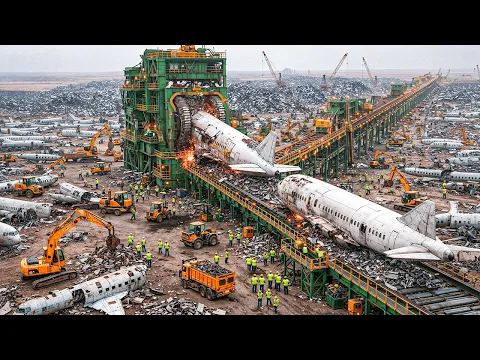

Before structural cutting, the entire interior is dismantled. Seats, luggage compartments, internal panels, wiring, and insulation materials that cannot be shredded with metals are removed.
The dismantling occurs section by section, until the interior is practically empty and the primary metal structure is exposed. It is the moment when the aircraft stops looking like an “airplane” and becomes organized raw material for the next phase.
Cutting, separation, and size reduction still in the yard

With the interior emptied, structural cutting begins. Excavators with hydraulic shears make controlled cycles over the aluminum skin and internal frames.
The wings require more effort as they are thicker and bear load, so they undergo multiple cutting cycles, especially at the root, to reach the main beams.
Afterward, large sections like wings, tail, and fuselage are organized into blocks. The size reduction continues in the yard: excavators also compress and fragment, leaving the material in manageable pieces for transport to recycling facilities.
Crushing and separation: magnet, Foucault current, and sensors
At the plant, the material enters industrial crushers, with shafts and steel teeth that continuously tear and reduce the metal.
The mixed material moves along separation conveyors: a magnet extracts ferrous metals, the Foucault current separates aluminum, and sensors identify metals like copper and titanium. Non-metallic materials go to separate streams.
What seemed like scrap metal turns into a set of separated materials with a defined destination, because each metal has its own value and process.
From arc furnace to steel ready to become a new product

The separated steel is loaded and goes to the melting area. Scrap bundles are dumped into an electric arc furnace. When the furnace is full, electrodes conduct high-intensity current and generate a high-energy thermal arc. Temperatures can reach around 2000°C, melting the metal.
Then refining begins: lime and fluxes bind to impurities, forming slag, which is removed. Sensors monitor temperature and chemical composition to maintain precise control.
Next, the molten steel goes to casting, forming billets or slabs, which can be rolled, cooled, and inspected with chemical analyses and mechanical tests. The final result is steel with consistent quality, ready to return to the industry.
Traceability and return to global manufacturing
After meeting standards and being cut to the appropriate size, the metal sections are labeled for identification, with records of metal type and production batch. This ensures traceability and efficient management in the chain.
These materials return to factories and enter the production of automobiles, industrial machines, and construction materials. In some cases, part of the recycled metal may even return to the aerospace industry. In other words, the aircraft does not disappear; it changes form and continues to exist in new products.
Did you think that a retired airplane just became scrap metal, or did you already imagine that there was such a controlled process behind this recycling?




Seja o primeiro a reagir!