





 Portuguese
  English
  Spanish
  4 min of reading
  1 comment





Retirees and pensioners no longer need to face lines to prove they are alive. The INSS confirmed that the proof of life will now be done automatically and digitally.
The INSS confirmed a historic change that promises to ease the lives of millions of Brazilians.
From now on, retirees and pensioners no longer need to travel to bank branches or service points to carry out the traditional proof of life. The procedure, which was previously mandatory and generated endless lines, will be done automatically by the government based on the cross-referencing of digital data.
For decades, the proof of life was seen as a bureaucratic nightmare. Those who did not appear at the bank risked having their benefits blocked, even in cases of severe illness, mobility difficulties, or system failures. The new rule, however, puts an end to this exhausting process and gives more dignity to the insured.
How It Worked Before?
Every retiree or pensioner had to go to the bank branch where they received their benefit or to an INSS service point once a year. Often, this requirement became a challenge, especially for the elderly with reduced mobility, bedridden individuals, or residents of rural areas.
-
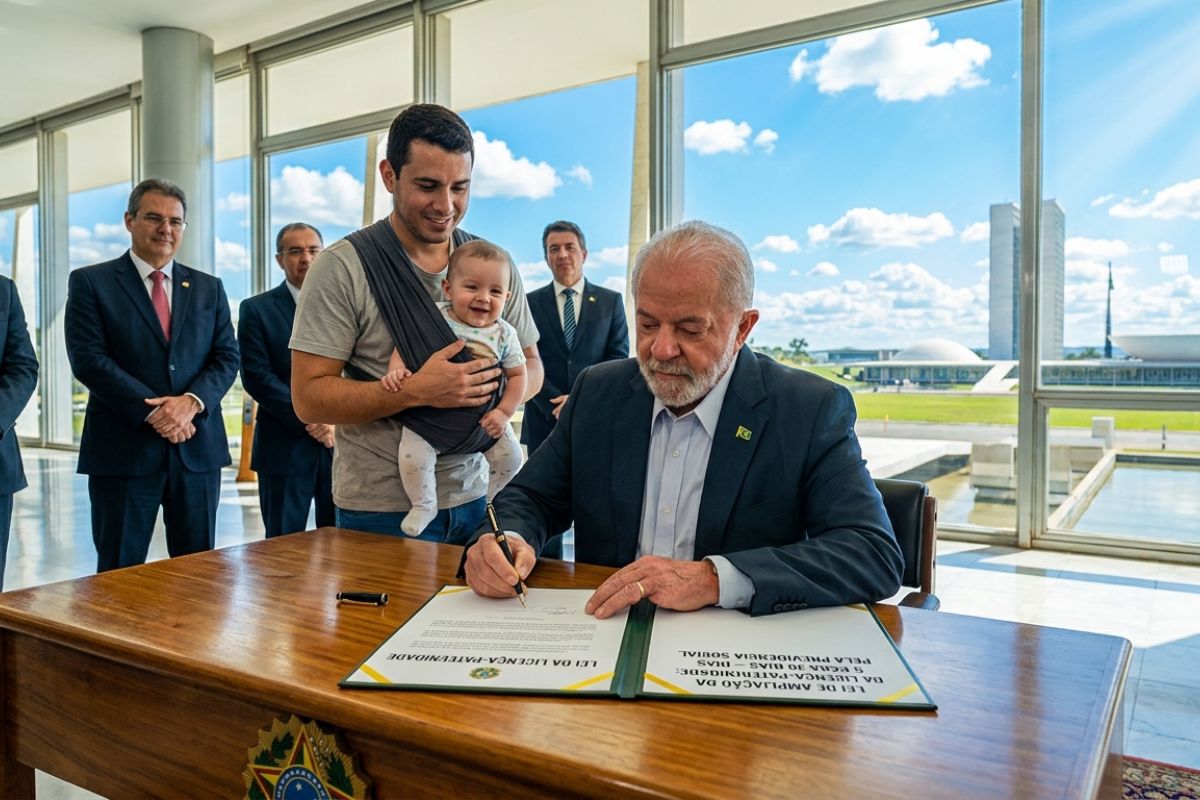
Government enacts new law: paternity leave increases from 5 to 20 days with gradual increases until 2029, and Social Security pays the paternity salary; companies no longer bear the absence cost, estimated at R$ 5.4 billion.
-
End of the 1-hour lunch break in the CLT? Current labor law maintains the break, allows for negotiated reductions, and defines rules for working hours and home office in Brazil.

-
Employee Fired After Accumulating 114 Days of Medical Leave in One Year, Labor Court Upholds Company’s Decision

-
Employee Fired While Treating Depression Wins in Court and Vale Is Required to Rehire Him Following Decision Based on the CLT and INSS Benefits


Cases of suspended benefits due to the lack of proof of life were common. The pressure on family members to accompany the elderly also generated criticism. Now, this scenario changes completely.
What Changes From Now On
According to the INSS, the proof of life will be carried out automatically, through the cross-referencing of information in official government databases. This includes records such as: consultations at the SUS, updates in the Unified Registry, signing of payroll loan contracts, voting in elections, issuance of documents, among others.


In this way, the INSS system can confirm whether the beneficiary remains active without requiring travel. The retiree no longer needs to leave home to prove anything.
And What If There Is No Activity in the System?
In rare cases where there is no recent record in any database, the INSS itself will contact the beneficiary. The idea is to ensure that no one is unjustly harmed. This communication may occur via telephone, message, or even a home visit, always with prior notice.
The government emphasizes that the retiree does not need to worry about going to the bank: the rule now is automatic validation, and only as a last resort will there be direct contact.

Relief for Millions of Beneficiaries
Currently, Brazil has about 39 million retirees and pensioners. All of them were required to undergo the in-person proof of life. Now, with the change, these citizens gain more comfort and security.
The measure also positively impacts public finances, reducing operational costs for the INSS and affiliated banks. At the same time, it reduces the risk of fraud and improves the efficiency of the administrative machine.
What Beneficiaries Need to Do
The INSS advises that retirees and pensioners simply keep their data updated. Correct information such as address, phone number, and email facilitates communication and ensures that the automatic process works without faults.
There is no need to download additional applications or fill out complicated registrations. The data cross-referencing will be carried out by the government system itself.
Experts See the Change as Progress
Lawyers and specialists in social security law state that the decision represents a milestone in protecting the rights of the elderly. The digital proof of life respects the reality of those who cannot move and prevents unjust blockages.
According to them, this is one of the most important measures taken by the INSS in recent years, as it combines technology, security, and dignity.
More Convenience and Fewer Lines
The end of the in-person proof of life also symbolizes the conclusion of an era marked by lines and bureaucracy. For years, retirees faced long waits in crowded agencies, often in fragile health conditions.
Now, the promise is for more tranquility: life goes on normally and the system takes care of validating the continuation of the benefit.
A Victory for Millions of Brazilians
The change announced by the INSS is not just a bureaucratic adjustment but a victory for millions of Brazilians who depend on Social Security.
With the proof of life done automatically, retirees and pensioners no longer need to leave home, do not face lines, and do not risk unjust blockage. In practice, this means more respect, more dignity, and less bureaucracy for those who have contributed their entire lives.
Want to stay updated on all changes in the INSS, retirement, and benefits? Keep following our articles and receive updates that directly impact your life.










Deus é fé e vida e luz