





 Portuguese
  English
  Spanish
  2 min of reading


The Creation of a Solar Panel That Works at Night Surprised a Series of Researchers
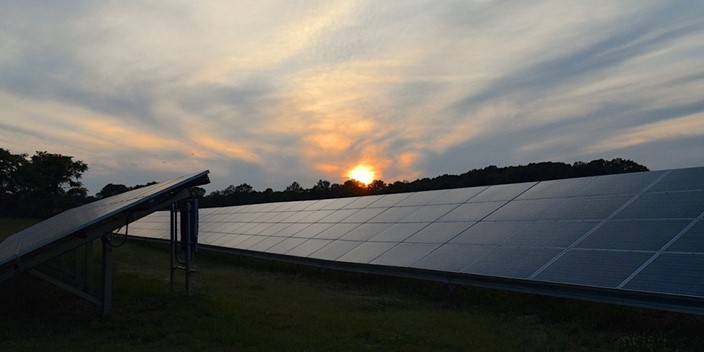
Professor Jeremy Munday from the University of California (Davis, USA) has created a “solar” panel that can generate power even when there is no trace of light, such as at night. This panel operates similarly to conventional solar panels, except the process is as if it were reversed.
Read Also:
How Munday’s Panel Works
Basically, conventional solar panels convert heat generated from capturing sunlight into energy. This means that at night, they are practically useless. The panel created by Munday uses the same principle to generate energy from heat, but utilizes thermoelectric cells that can be heated even in the absence of light.
-
The Brazilian state accelerates industrial competitiveness with a focus on the extraction of strategic minerals to boost the energy transition in Goiás.

-
A Canadian retiree creates a hydroelectric system on a real river, generating energy continuously throughout the day and demonstrating how the power of water can supply a house with stability even in a simple structure.

-
Petrobras reaffirms its commitment to the market and ensures that it will carry out the energy transition safely to maintain national sovereignty.

-
Researchers discover a possible hydrogen deposit of up to 46 million tons beneath an ancient coal basin, and the volume could exceed half of the entire global production.


“A regular solar cell generates energy by absorbing sunlight, which causes the voltage to appear across the device and current to flow. In these new devices, light is emitted, and the current and voltage flow in the opposite direction, but you still generate energy. You have to use different materials, but the physics is the same,” explained the professor.
Thermoelectric Cells in Solar Panels
Thermoelectric cells emit heat as infrared light, using an approach similar to the solar panels we know, but functioning the opposite way. Munday’s panel requires fossil fuels to operate, but these would only be supplied through industrial processes that would cease to waste energy. Thus, generating extra energy would be a way to offset these carbon emissions.
In this initial prototype stage, the invention is capable of generating 50 watts of electricity per square meter. This represents only 25% of the capacity of a conventional solar panel operating during the day. Still, this efficiency is better than wasting the full energy potential of burning fossil fuels in industrial processes.










Seja o primeiro a reagir!