





 Portuguese
  English
  Spanish
  4 min of reading
  0 comments


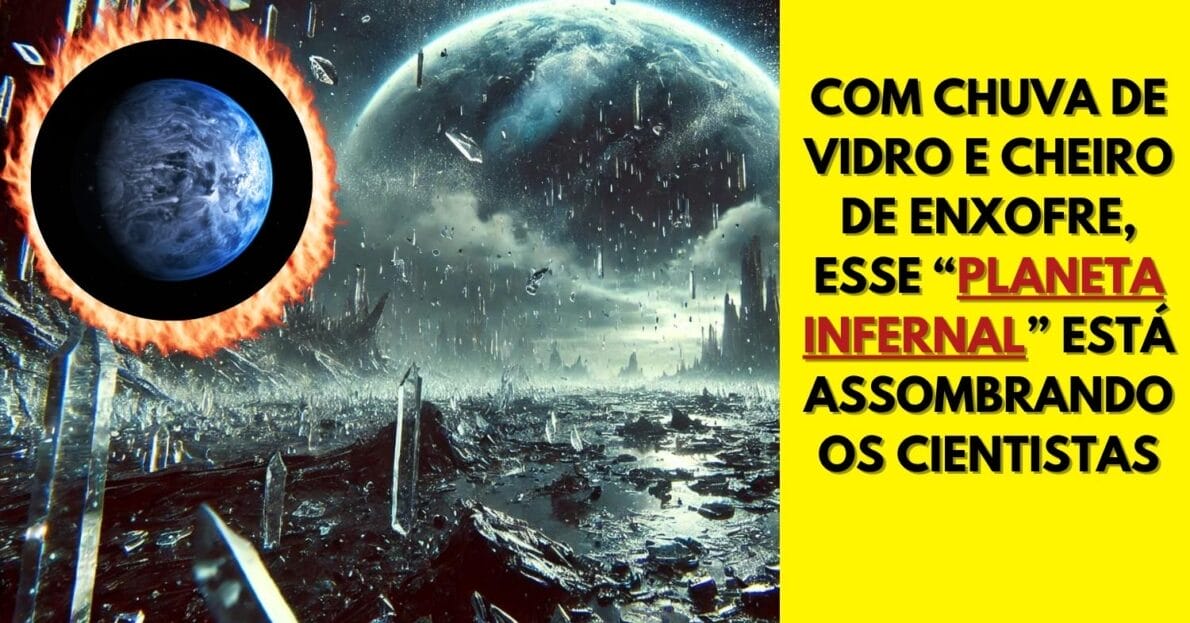
Planet With Glass Rain Surprises Scientists by Revealing Unprecedented Molecule Outside the Solar System. Check Out All the Details of This Intriguing Discovery!
Imagine a place where the wind blows at an incredible 8,000 km/h and the rain is made up of glass particles. It sounds like a science fiction scene, but this place exists and is called HD 189733b, an exoplanet the size of Jupiter that has been intriguing scientists for years. This planet with glass rain, located just 64 light-years from Earth, is redefining our understanding of worlds beyond our solar system, especially after the recent discovery of a new molecule in its atmosphere.
Never-Before-Seen Molecule Outside the Solar System Found on the Planet With Glass Rain
HD 189733b is known as a “Hot Jupiter”, which means that while it has a chemical composition similar to Jupiter, it is much closer to its star. This proximity causes its temperatures to reach scorching 926 degrees Celsius.
With strong winds and glass rain, this planet was already fascinating, but scientists discovered something even more surprising: the smell of rotten eggs in its atmosphere, caused by the presence of hydrogen sulfide, a molecule never before detected outside our solar system.
-
Seen from space, a colossal volcano nearly 5,000 meters high in Russia has released 1,600 km of smoke over the Pacific, forming “devil’s horns” of lava and revealing the brutal force of the Ring of Fire.

-
Expedition 501: Scientists drill into the ocean floor and discover a giant reserve of fresh water hidden beneath the sea, extracting nearly 50,000 liters and revealing an invisible system that could reshape the map of water scarcity.
-
Archaeologists find an intact tomb over 2,500 years old, with more than 100 preserved objects, weapons, jewelry, and human remains never touched.

-
Volcanic lava transforms into threads as fine as human hair that travel over 30 kilometers by wind and fall like cutting rain on roofs and backyards in Hawaii and Iceland.


Scientists Find Water, Carbon Dioxide and Carbon Monoxide on Planet HD 189733b
Thanks to the James Webb Space Telescope, researchers were able to identify hydrogen sulfide in the atmosphere of HD 189733b. This gas, which is also present on Jupiter, is known for its strong smell of sulfur. The discovery not only broadens our understanding of the chemistry of these giant planets but also opens new possibilities for the search for exoplanets.
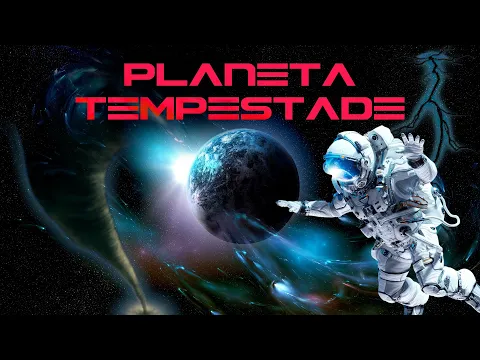

The Webb telescope, with its high-precision infrared capability, enabled the detection of this molecule for the first time on an exoplanet. In addition to hydrogen sulfide, scientists also found water, carbon dioxide and carbon monoxide in the atmosphere of HD 189733b, suggesting that these molecules may be common in other giant gas exoplanets.
Why Is the Discovery of Hydrogen Sulfide Outside Our Solar System So Important?
The detection of hydrogen sulfide in HD 189733b has considerable implications. Sulfur is a vital element for the construction of more complex molecules, just like carbon, nitrogen, oxygen and phosphorus. Studying the presence of these molecules helps us better understand how planets form and what they are made of.
Although it is unlikely that life exists on this planet with glass rain due to its high temperatures, the discovery of these complex molecules brings us closer to understanding the formation and evolution of planets in other solar systems.
Heavy Metals on HD 189733b
The data from the Webb Telescope also revealed levels of heavy metals in the atmosphere of HD 189733b, similar to those found on Jupiter. In our solar system, ice giants like Neptune and Uranus contain more metals than Jupiter and Saturn, suggesting a correlation between metal content and planetary mass.
Scientists believe that the formation of Neptune and Uranus involved more ice, rocks and metals than gases like hydrogen and helium. The new measurements from Webb support the theory that planets form through the accumulation of solid material after the initial core formation and are enriched with heavy metals.
What Will Scientists Do With the New Discovery?
With this new discovery, the team of researchers will search for sulfur signatures on other exoplanets to better understand how these compounds influence planetary formation. The planet with glass rain is a crucial benchmark, but represents only a single data point. Just as humans display unique characteristics, planets also exhibit collective behaviors that follow clear patterns.
The discovery of hydrogen sulfide and other complex molecules in HD 189733b is a significant advancement in the exploration of exoplanets. This planet with glass rain and extreme winds provides us with a glimpse of how varied and intriguing worlds beyond our solar system can be. With more data from the Webb Telescope to come, we will continue to unravel the mysteries of the universe and better understand the formation and composition of planets.
The planet with glass rain has not only broadened our scientific horizon but also reminds us that, in the vast cosmos, there is so much more to be discovered. With each new identified molecule and each new data collected, we are closer to understanding our place in the universe and the incredible diversities it hosts.






Seja o primeiro a reagir!