





 Portuguese
  English
  Spanish
 6 min of reading
  0 comments


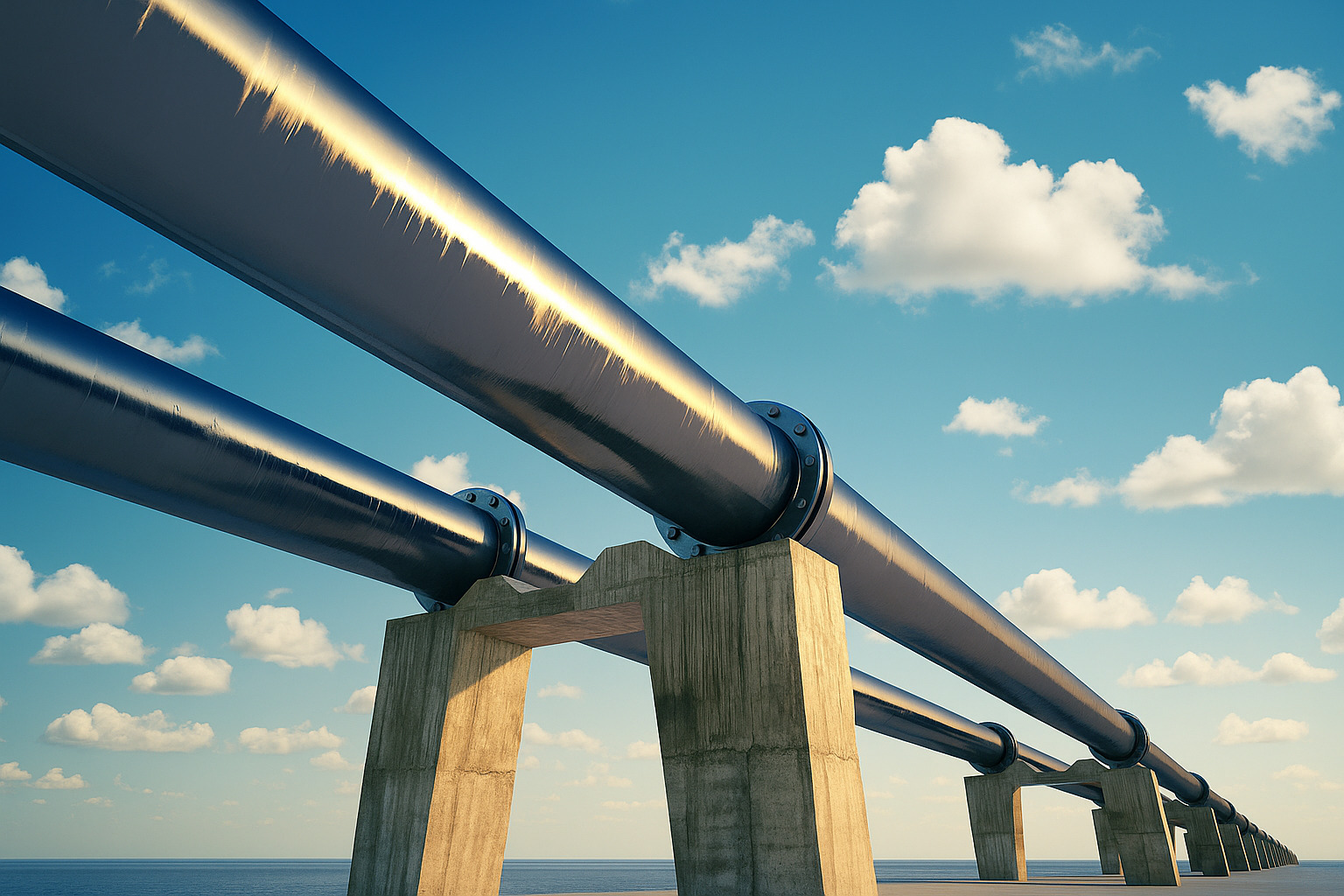
Discover How Pipeline Transportation in the Energy Transition Strengthens the Brazilian Matrix and Integrates Innovation, Efficiency, and Sustainability.
The Rio Pipeline & Logistics 2025, held at ExpoRio Cidade Nova, highlighted the strategic importance of pipeline transportation in the energy transition in Brazil.
Moreover, the event gathered authorities, experts, and industry representatives, showing how the pipeline infrastructure remains essential for transporting fossil fuels with a lower environmental impact. At the same time, it facilitates the flow of new energy sources gaining space in the Brazilian matrix.
Historically, pipelines have played a central role in the country’s energy development. Since the 1960s, with the expansion of Petrobras and the creation of large pipeline networks, Brazil built a logistics system capable of transporting oil and its derivatives from production areas to consumer centers.
-
Petrobras evaluates suspension of sales to distributors and considers canceling the cooking gas auction following guidelines from the Federal Government.
-
Lula reveals a masterstroke by Petrobras to undo a deal made by Bolsonaro, which involves the return of an important refinery that currently produces less than half of what was expected and makes Brazil dependent on international diesel.
-
A study confirms that the natural gas sector will reduce greenhouse gas emissions in Brazil by 0.5% and accelerate the energy transition by 2026.

-
Petrobras implements a severe adjustment and confirms a 55% increase in the price of aviation kerosene with a proposal for installment payments for the companies.


Consequently, these structures not only ensured efficiency in transportation, but also strengthened energy security, reducing dependence on more polluting modes, such as road transport.
Over the decades, the pipeline infrastructure kept pace with the economic growth of the country. For example, new terminals, refineries, and strategic pipelines emerged to meet the increasing demand. They also promoted regional integration and facilitated the flow of products for urban and industrial consumption.
Therefore, this history highlights that pipeline transportation has always structured Brazilian energy policy. It served as a foundation for consolidating a more efficient and secure matrix.
In recent years, the Brazilian energy sector has undergone significant transformations, reflecting a global trend of transitioning to a cleaner and more sustainable matrix. Among the most relevant regulatory changes are the approval of Law 14,948, which established the legal framework for low-carbon hydrogen, and Law 14,993, known as the Fuel of the Future Law.
Thus, these legal advancements opened unprecedented opportunities for pipeline transportation in the energy transition. They integrated clean technologies into existing infrastructure and stimulated innovation in the sector.
Hydrogen and Innovation in Pipeline Logistics
According to the Director-General of the National Petroleum Agency (ANP), Artur Watt, the hydrogen economy represents a new and promising avenue, but one that interacts directly with gas pipelines. Additionally, he noted that regulation is still in the early stages.
The expertise gathered at events like Rio Pipeline contributes significantly to developing this segment safely and efficiently. Therefore, low-emission hydrogen emerges not just as an alternative fuel, but also as a catalyst for modernizing existing pipeline logistics.
The director of the Natural Gas Department of the Ministry of Mines and Energy, Marcello Weydt, emphasized that pipelines strengthen the competitiveness of national oil and derivative production. They are taking on an increasing role in the logistics of biofuels.
He further emphasized that pipeline infrastructure supports regional supply, reducing dependence on road transport, which is more polluting and less efficient.
Weydt also highlighted the importance of pipelines in integration between countries, citing Bolivian gas that reaches Brazil via Gasbol and plans to bring natural gas from Argentina’s Vaca Muerta region to São Paulo, covering more than five thousand kilometers.
Consequently, these examples show that pipeline transportation in the energy transition strengthens international cooperation and ensures security in energy supply.
The potential of hydrogen as a clean fuel is reinforced by the fact that it can be produced from renewable sources, such as solar and wind, and transported through existing pipelines with specific technological adjustments.
Thus, the established infrastructure adapts to new energy sources without the need for major construction, making the process more sustainable and efficient.
Biofuels and Integration Between Country and City
Pipeline transportation also stands out in the movement of biofuels, strengthening the integration between the countryside and the city. For example, ethanol pipelines link agricultural production to urban mobility, serving as a model for distributing renewable fuels of the future.
Moreover, products such as tallow, renewable diesel, biomethane, and hydrogen are expected to play an increasing role in pipeline logistics. This demonstrates Brazil’s commitment to a cleaner and more efficient energy matrix.
Petrobras, represented by Angelica Laureano, director of Energy Transition at the company, stressed that the company aligns its investments with the national energy transition strategy. She highlighted that the focus is on investing in the present to ensure a sustainable future, maintaining the company’s relevance in the energy matrix and strengthening its social and economic role.
Projects such as the expansion of pipeline infrastructure to the Midwest, the logistics of the Equatorial Margin, and offshore initiatives demonstrate the company’s effort to modernize its operations with safety, efficiency, and environmental responsibility.
Additionally, the use of digital technologies, artificial intelligence, and remote monitoring in pipelines allows for anticipating problems and reducing operational risks.
Therefore, the integration between agricultural production, urban centers, and new technologies creates a virtuous cycle, where logistics efficiency reduces costs, decreases pollutant gas emissions, and increases the competitiveness of national production in the global scenario.
Safety and Operational Efficiency
Another relevant point is the fight against theft in pipelines, addressed through strategic partnerships and investments in monitoring technologies. According to Laureano, the partnership with Transpetro and the investment of about R$ 100 million per year reduced clandestine derivation occurrences by 90%.
Consequently, this improved control shows how operational safety is directly related to the efficiency of pipeline transportation in the energy transition. It ensures that fuels arrive safely, cleanly, and reliably at their final destinations.
The ANP also closely monitors fugitive emissions, which harm both the greenhouse effect and energy efficiency. Watt noted that the use of drones and satellites for monitoring is an important advancement, allowing for reducing pollution and improving the operation of the sector.
Furthermore, the replacement of more polluting hydrocarbons with less harmful alternatives, combined with increased efficiency in pipelines, aligns pipeline transportation with emission reduction objectives.
With advanced technologies, the sector can reduce losses, extend the lifespan of pipelines, and improve emergency response. This ensures environmentally safe and economically viable operations. It also meets the growing demand for clean energy sources.
Social, Economic Impacts, and the Sustainable Future
The event also highlighted the social and economic dimension of pipeline transportation in the energy transition. Moreover, pipelines connect production and consumption areas, stimulate regional development, generate jobs, attract investments, and foster research and innovations in clean technologies.
Each advancement in pipeline infrastructure has brought positive impacts on the Brazilian economy, from reducing logistical costs to ensuring the supply of fuels. This role will remain relevant as new energy sources gain space in the national matrix.
The future of pipeline transportation is directly linked to the consolidation of a diversified and sustainable energy matrix. With the expansion of biofuels, low-emission hydrogen, and other renewable sources, pipelines will play an increasingly strategic role, ensuring efficiency, safety, and lower environmental impact.
Therefore, the modernization of infrastructure, the use of monitoring technologies, and alignment with public policies on energy transition will be critical to the success of the sector.
In summary, the Rio Pipeline & Logistics 2025 demonstrated that pipeline transportation is not just a means of moving fuels, but a key piece in Brazil’s energy transition. It integrates technological innovation, logistical efficiency, environmental responsibility, and economic development.
With the expansion of biofuels and clean energy sources, pipelines establish themselves as essential infrastructure for the country. Allowing Brazil to advance sustainably toward a cleaner, modern, and competitive energy matrix.
The commitment to innovation, safety, and sustainability reaffirms that pipeline transportation will remain central to national energy policy.
Thus, by uniting historical experience, technological investment, and forward vision, the sector contributes to Brazil achieving its energy transition goals efficiently, safely, and environmentally responsibly, maintaining a strategic position in the international scenario.










Seja o primeiro a reagir!