





 Portuguese
  English
  Spanish
  4 min of reading
  0 comments


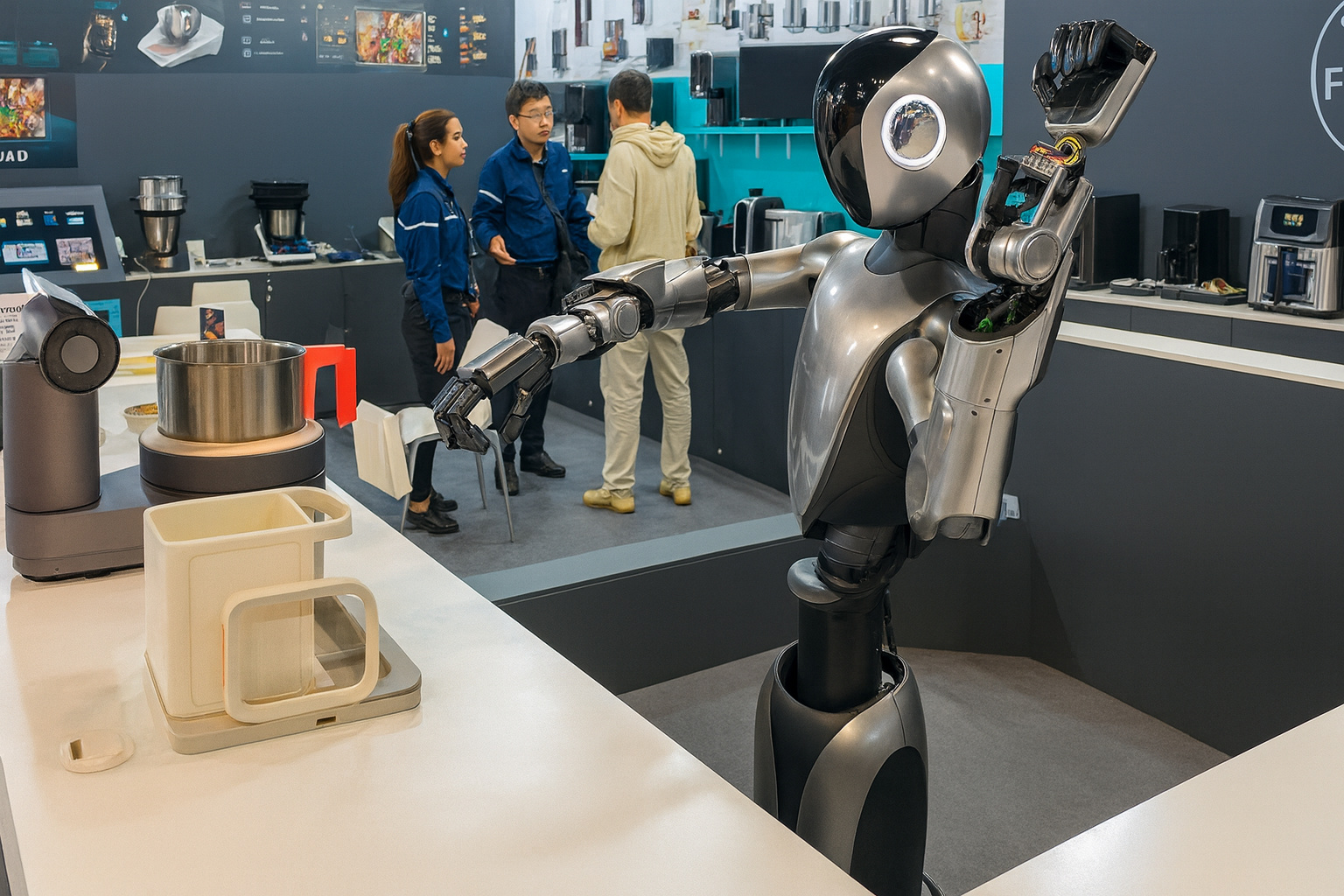
First Humanoid of Ant Group, Giant Linked to Jack Ma, the Robbyant R1 Prepares Shrimps, Acts as Caregiver and Tourist Guide, and Puts China in the Global Race for Robotics.
The Ant Group, known worldwide for being Jack Ma’s financial arm and responsible for the Alipay platform, surprised the tech sector by introducing the Robbyant R1, its first humanoid robot. The announcement marks the entry of the Chinese company into a highly competitive segment, contested by giants like Tesla, owned by Elon Musk. The model was revealed to the public at two major events: IFA 2025, held in Berlin, and the Inclusion Conference 2025, in Shanghai.
Cooking Robot Impresses at IFA 2025
The standout feature of the Robbyant R1 so far has been its culinary performance. During the IFA fair in Berlin, the humanoid prepared shrimps live for the audience, drawing attention for the delicacy of its movements and interaction with spectators.
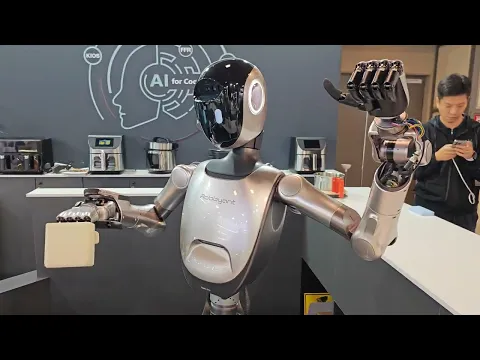

Although the culinary act is seen as an initial “trick,” the demonstration opened up possibilities for imagining more complex applications in restaurants, industrial kitchens, and even in domestic routines.
-
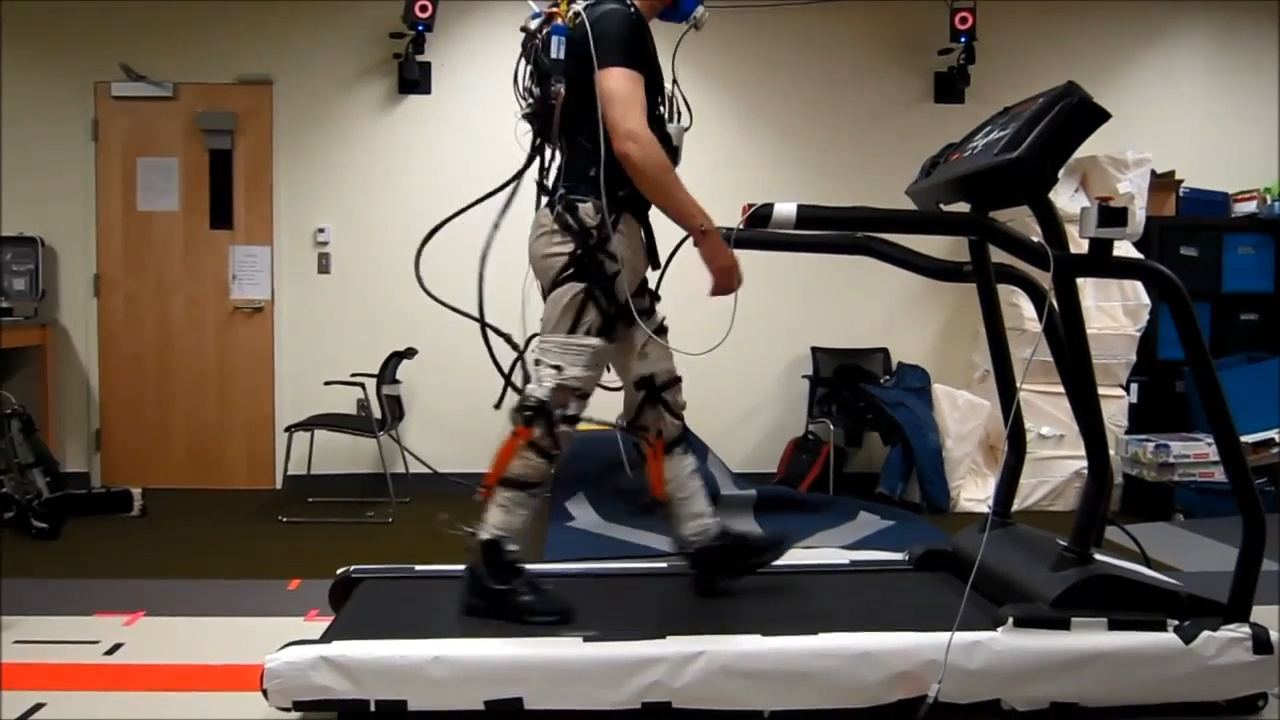
Harvard scientists have created a tissue exoskeleton that does not look like an exoskeleton, with no rigid parts and reduced weight, using flexible cables and miniaturized motors to assist the ankle and hip, reducing the effort of walking by up to 23% in controlled tests.
-
The Caspian Sea intrigues scientists as it is neither officially a sea nor a lake: the largest lake on the planet holds a hybrid crust, submerged cities, mud volcanoes, and billions of barrels of oil hidden at the bottom.

-
Why did the sky turn blood red in the west of Australia and it wasn’t sunset? Discover what is behind the change that took over the horizon for miles.

-
The most feared warplane of the United States is over 70 years old, carries 32 tons of explosives, flies 14,000 kilometers nonstop, and has just been sent to the United Kingdom amid escalating tensions with Iran.

Potential Beyond the Kitchen
According to the manufacturer, Shanghai Ant Lingbo Technology Co., the R1 is designed to go far beyond cooking. Among the envisioned functions are:
- Companion and caregiver in hospitals and nursing homes;
- Automated tour guide, operating in museums, airports, or high-traffic destinations;
- Assistant in restaurants and community centers, helping with public service.
This range of possibilities positions the humanoid as a key player in China’s strategy to gain prominence in the global robotics market.
Visible Limitations and Criticism
Despite the enthusiasm, the videos shown during the IFA 2025 revealed significant limitations.
In one of the recordings, the Robbyant R1 was seen moving a box across the counter at an extremely slow pace, raising doubts about its efficiency in tasks that require speed.
Experts emphasize that the field of humanoid robotics is often marked by ambitious promises and slow progress. Even simple tasks, such as opening a door or climbing stairs, still present complex technical challenges.
Testing in Restaurants and Community Centers
Before a commercial launch, the Robbyant R1 undergoes a controlled testing phase.
In China, it is already being evaluated in restaurants and community centers, where engineers observe its performance in direct contact with users.
This process aims to refine its capabilities, correct faults, and adjust response speed—critical points to make it useful in everyday life.
Global Competition for Humanoid Robotics
The Ant Group’s initiative comes at a time when several companies are ramping up investments in AI-powered robots. Tesla, owned by Elon Musk, is advancing the development of Optimus, introduced in 2022, but still limited in its functions.
Japanese companies like Honda and SoftBank have previously introduced humanoids, such as the iconic ASIMO, but the models did not achieve commercial success. Now, with the advancement of generative AI and machine learning, experts believe humanoid robotics may finally overcome decades of frustrations.
China in the Robotics Race
With the launch of the R1, China positions itself strategically in the sector, combining large-scale production capacity, strong state investment in AI, and a massive internal market for testing.
If it succeeds in turning the Robbyant R1 into a viable commercial product, the Ant Group could outpace Western competitors.
The robot symbolizes not only a business bet but also China’s ambition to lead the next technological revolution.
Still without a price or official launch date, the Robbyant R1 continues in development.
Even with visible limitations, it represents a milestone: the entry of one of the largest financial technology companies in the world into a sector that could redefine the relationship between humans and machines.
Whether in the kitchen, in hospitals, or in tourism, the humanoid from Ant Group shows that the race for artificial intelligence in physical form is just beginning.








-

Uma pessoa reagiu a isso.