





 Portuguese
  English
  Spanish
  4 min of reading
  1 comment


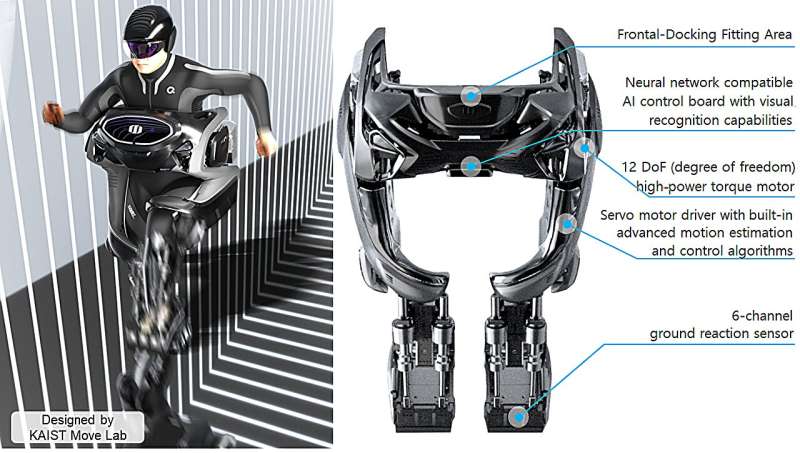


Wearable Robot Revolutionizes Helping People With Disabilities Walk While Staying In The Wheelchair. See How This Innovation Can Transform Accessibility And Mobility For Millions Of People!
Researchers at the Advanced Institute of Science and Technology of Korea (KAIST) have announced a revolutionary breakthrough in the field of assistive robotics: the WalkON Suit F1, a wearable robot developed for paralyzed individuals, which allows for direct use from a wheelchair without the need for assistance from others.
The robot was created by Professor Kyoungchul Kong, from the Department of Mechanical Engineering at KAIST and CEO of Angel Robotics, who, along with his team, is participating in the 3rd Cybathlon, an international robotics competition, four years after winning gold in 2020.
A Revolution For People With Paralysis
The WalkON Suit is a pioneering project aimed at providing mobility for individuals with complete paralysis. The device was specifically designed for users with Grade A paralysis, the most severe level according to the American Spinal Injury Association (ASIA). From the beginning, the goal was to develop a solution distinct from traditional assistive robots, which focus on rehabilitation therapy and muscle strengthening. This wearable robot mainly seeks to offer independence in daily life.
-
The USA accelerates tests on the A-10 with an adapter that allows refueling from multiple tanks, installed in a few hours, increasing compatibility with up to 5 aircraft, reducing dependence on the KC-135, and creating strategic space for Embraer’s KC-390.

-
Starlink Mini antenna reaches the lowest price ever seen in April: Elon Musk’s internet hits speeds of up to 280 Mbps and promises to work even in completely remote areas.
-
The most consumed fruit in the world is under pressure: the fusarium fungus tr4 is spreading through Cavendish banana crops, weakening plants, threatening harvests, and prompting experts to intensify research for resistant varieties.

-
Workers were digging normally and came across a 300-year-old cannon, nearly 3 meters long and weighing over a ton, buried in an old dock area in the United Kingdom.

The Advancement In Design: WalkON Suit F1
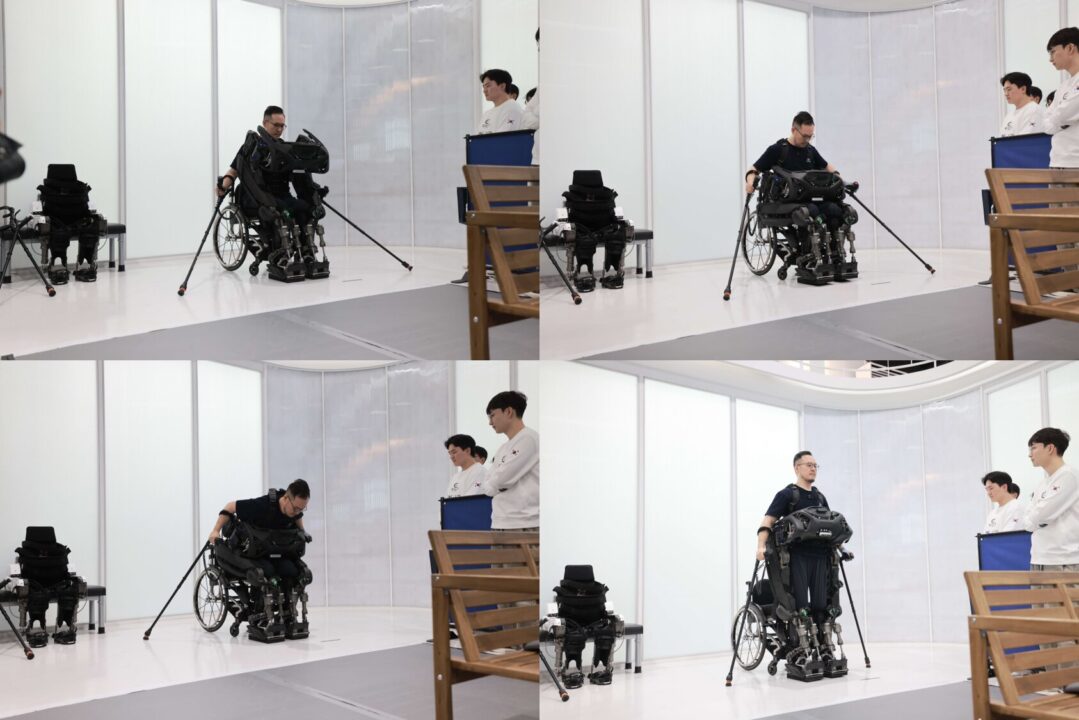
Launched in its first version in 2016 and evolving over the years, the WalkON Suit has reached the F1 model, which addresses one of the biggest obstacles faced by wearable robots: the need for external assistance to wear the equipment. This new model introduced a front fastening system, eliminating the need for a person to assist in putting on the robot. Now, the user can start using it directly from the wheelchair.
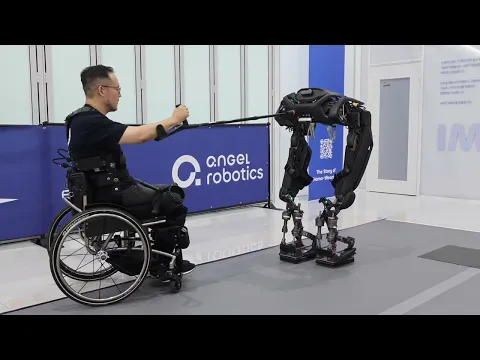
In addition to direct use from the wheelchair by people with disabilities, the WalkON Suit F1 can “walk” autonomously to the user, reducing the need for human intervention. The robot automatically adjusts the body balance in response to gravity, remaining stable even on uneven terrains or if pushed.
This allows the robot to maintain posture and move in everyday environments, including more challenging areas such as narrow passages, doorways, and even stairs.

Improvements In Technology And Performance
The WalkON Suit F1 not only brings advancements in fitting mechanics and balance but also innovates with significant technological improvements in its components. Developed in partnership with Angel Robotics, all main components of the robot, such as motor, reducer, and circuit, were manufactured in Korea. This nationalization of elements allowed for a considerable improvement in power density, which means the robot has become lighter and more powerful, increasing overall performance.
- Motors and Reducers: The output density of the robot’s motors and reducers has been doubled, ensuring more power with less weight. This improvement is essential for the user to move freely without feeling overloaded.
- Control and Fast Response: Control performance has been enhanced, tripling the robot’s response speed. Angel Robotics also implemented new software technology, allowing advanced algorithms to run without the need for expensive controllers.
- Visual Recognition and AI: To make the robot even more effective in varied environments, a visual recognition system that detects obstacles was installed, along with an AI board for neural networks. These features make the WalkON Suit F1 a practical and safe option for facing daily challenges.
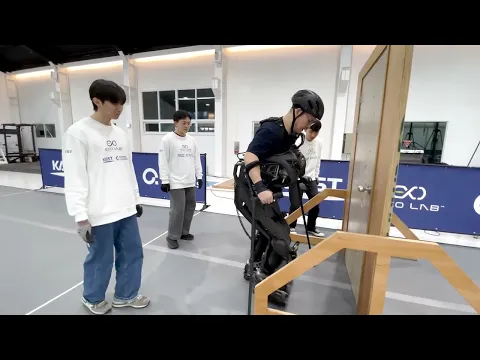
The Challenge Of The 3rd Cybathlon: Putting The Robot To The Test
The WalkON Suit F1 will be tested at the 3rd Cybathlon, an event that simulates real obstacles and tests the capabilities of wearable robots in complex tasks. The competition, taking place on October 27, is an opportunity to demonstrate the robot’s potential, and Professor Kong will be represented by the Exo Lab, his research laboratory, with doctoral student Jeongsu Park as team leader and Seunghwan Kim, a paraplegic athlete, as a competitor.
This year’s event features a series of new missions – the number has increased from six to ten – and the difficulty has also been heightened. Some of the tasks have been criticized for being excessively difficult, challenging the limits of current technologies and going beyond the common daily challenges. However, Professor Kong’s team remains optimistic about the performance of the WalkON Suit F1, highlighting that the competition is a fertile ground for innovation and constant improvement of assistive technologies.
Social And Technological Impact
The WalkON Suit F1 is not just an advancement in robotics; it symbolizes the pursuit of social inclusion and autonomy for people with disabilities. The freedom of movement provided by this wearable robot represents a milestone for the quality of life of paraplegic individuals, offering unprecedented independence and the ability to face daily activities without external support. With the success of the WalkON Suit F1, it is expected that the technology of wearable robots will continue to grow and gain popularity worldwide.
According to Professor Kong, “The WalkON Suit is the pinnacle of wearable robot technology for people with disabilities,” and he believes that the components and controls developed for this project are setting new standards for the entire assistive robotics industry.
The Future Of Wearable Robots
This wearable robot developed by KAIST shows how technology can redefine the life experience of people with disabilities, allowing for greater autonomy and accessibility. As technologies like the WalkON Suit evolve, they are expected to become increasingly common and accessible, benefiting a larger number of people and promoting a more inclusive and independent society.
Thus, participation in the 3rd Cybathlon is not just an opportunity to showcase the technological potential of Angel Robotics and KAIST, but also an important step toward expanding access to this transformative innovation.








Preço e onde compra?