





 Portuguese
  English
  Spanish
  4 min of reading
  1 comment


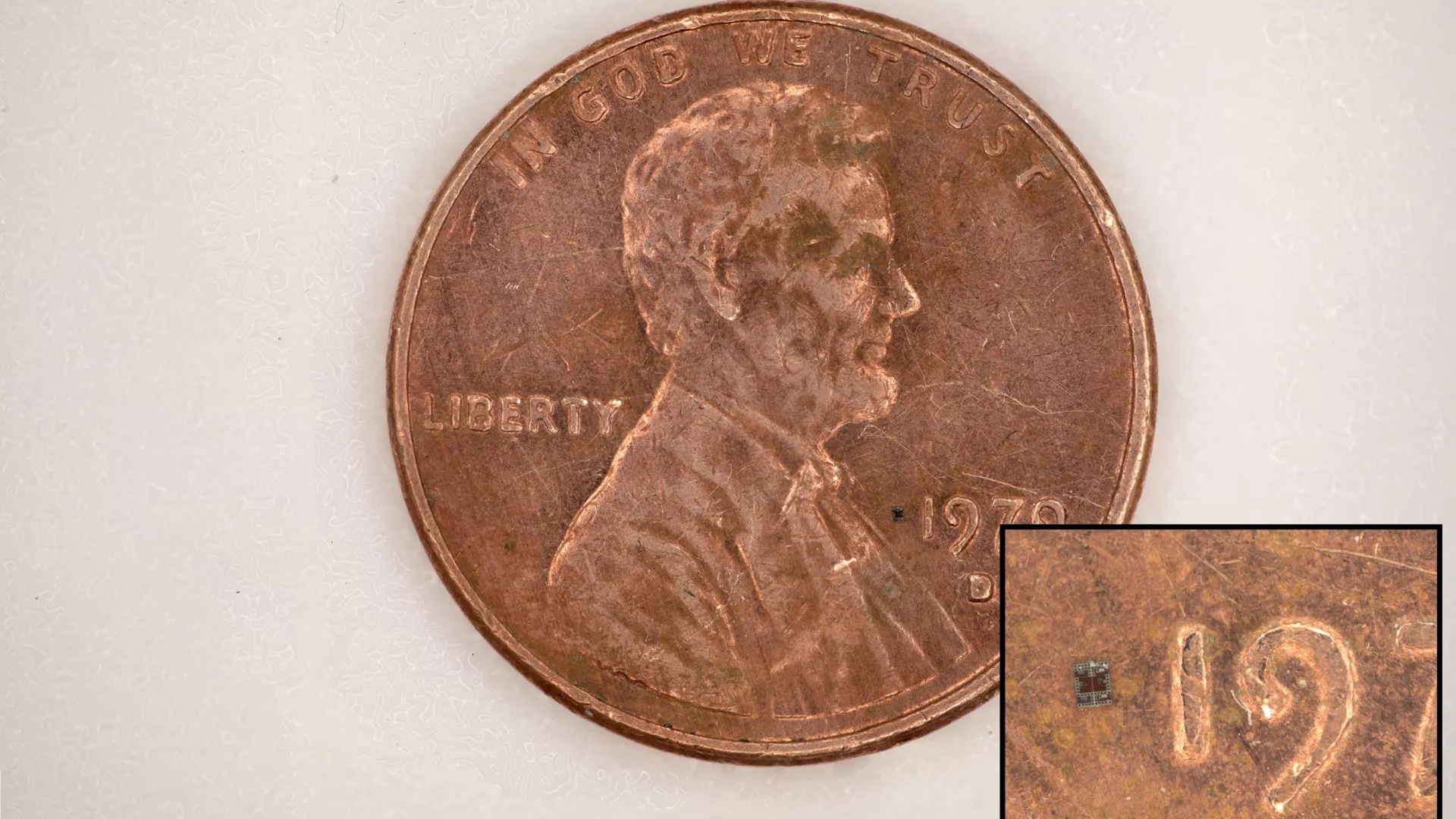


Developed by University Teams in the United States, Autonomous Microrobots of 200 Micrometers Integrate Submillimeter Computer, Sensors, and LED Light Propulsion, Opening New Possibilities for Cell Monitoring, Micro-Scale Assembly, and High-Precision Future Applications
Scientists from the Pennsylvania and Michigan universities created autonomous 200-micrometer robots capable of perceiving, deciding, and acting without external instructions, paving the way for monitoring cells and delivering drugs with unprecedented precision.
Technical Advancement That Enables Microscopic Autonomy
Researchers from the University of Pennsylvania and the University of Michigan developed the world’s smallest autonomous and programmable robots, measuring about 200 micrometers wide, roughly twice the thickness of a human hair.
These microscopic machines can perceive their surrounding environment, process information, and act independently without external instructions, a milestone sought by scientists for decades due to the severe physical limitations imposed by the scale.
-
New German Zeiss lenses arrive in Brazil promising to reduce mental effort by up to 90% and revolutionize the way we see amidst the excess of screens.

-
Scientific study identifies unique blood patterns that reveal the secret of individuals who surpass 100 years of age.

-
Princeton engineers create a flexible 3D-printed robot that eliminates motors and uses heat to perform complex movements.
-
Security alert: The proliferation of fake QR codes in public places facilitates financial scams and personal data theft.
The significant breakthrough was allowing a robot measuring only one-fifth of a millimeter to move autonomously without external assistance, overcoming challenges imposed by drag forces and viscosity intensified in microscopic liquid environments.
Electric Propulsion Powered by LED Light
To overcome the limitations of micro-scale movement, the team from the University of Pennsylvania designed a propulsion system based on LED light and operation in hydrogen peroxide solution.
The robot generates an electric field that drives ions in the surrounding solution, which drag water molecules, creating directed movement even in conditions comparable to swimming in tar.
The microrobots adjust this electric field to perform complex movement patterns and travel in coordinated groups, reaching speeds of up to one body length per second.
This collective capability demonstrates refined control of movement, expanding possibilities for coordinated tasks in microscopic environments, where precise navigation is essential for future applications.
The Smallest Computer in the World Integrated into the Robot
Autonomy required the smallest computer in the world, developed by David Blaauw’s team at the University of Michigan, integrated with the propulsion system from the University of Pennsylvania.
The researchers built a complete computer with a processor, memory, and sensors on a chip with less than one millimeter in diameter, enabling local processing on a submillimeter scale.
The robot is powered by microscopic solar panels, generating only 75 nanowatts, more than 100,000 times less than a smartwatch, requiring circuits operating at extremely low voltages.
This adaptation reduced energy consumption by over 1,000 times, allowing stable operation despite severe energy storage constraints in such small volumes.
Surprisingly Low Cost of the System
Although each robot costs about a cent for large-scale production, it could be assumed that programming and control would require expensive equipment, which was not confirmed.
According to Marc Miskin, professor at the College of Engineering at the University of Pennsylvania, the complete system costs about 100 dollars, contrary to expectations of high investment.
The team built a low-cost version using standard LED diodes, a Raspberry Pi microcomputer, and an imaging system with a smartphone camera and macro lens.
This setup has performance almost equivalent to a sophisticated microscope costing 100 thousand dollars, as the robot autonomously performs tasks without requiring constant commands.
Cell Sensing and Current Limitations
The microrobots have electronic sensors capable of detecting temperature with an accuracy of one-third of a degree Celsius, enabling detailed monitoring of the health of individual cells.
However, significant obstacles remain before application in human health, including reliance on continuous light for operation and maintenance of operational memory.
When the light is turned off, the robot shuts down, and the memory is erased; when turned back on, it restarts without remembering previous programming, a common limitation in submillimeter systems.
This restriction arises from the extreme difficulty of storing usable energy in reduced spaces, as storage capacity is proportional to the available volume.
Toxicity of the Environment and Pathways for Overcoming It
Another critical challenge is the use of a 5-millimolar hydrogen peroxide solution, toxic to living cells, making the robots unsuitable for medical applications in their current form.
The researchers acknowledge the limitation but emphasize that it is not insurmountable, as the robots are electronically integrated, allowing for actuator-free replacements.
It is enough to match the operating voltage and current needed to integrate biocompatible actuators into the existing circuits, maintaining the functional architecture of the system.
The team is actively working on building these corresponding robots and hopes to present versions with biocompatible actuators soon, expanding the potential scope of use.
Micro-Scale Assembly as a Strategic Application
Beyond health, Miskin expresses enthusiasm for using the robots for assembling components on a micro-scale, altering current paradigms of microscopic manufacturing.
Today, almost everything on a micro-scale is produced monolithically, such as circuits created from complex patterns on large wafers, requiring total reconstruction for pinpoint changes.
The introduction of small programmable agents would allow specific parts to be modified without redoing the entire system, reducing costs, accelerating iterations, and simplifying intellectual property.
According to the researchers, micro-scale is an environment full of opportunities, and the ability to program and control autonomous agents could open extraordinary doors not yet imagined, despite the cautiously optimistic outlook.





“Há cerca de trinta anos, talvez mais ou menos, assistia a um dos episódios de uma série televisiva que apresentava a ação de nanomáquinas em um procedimento cirúrgico; eu ri bastante. Hoje, tudo já parece ser possível.”