





 Portuguese
  English
  Spanish
  5 min of reading
  0 comments


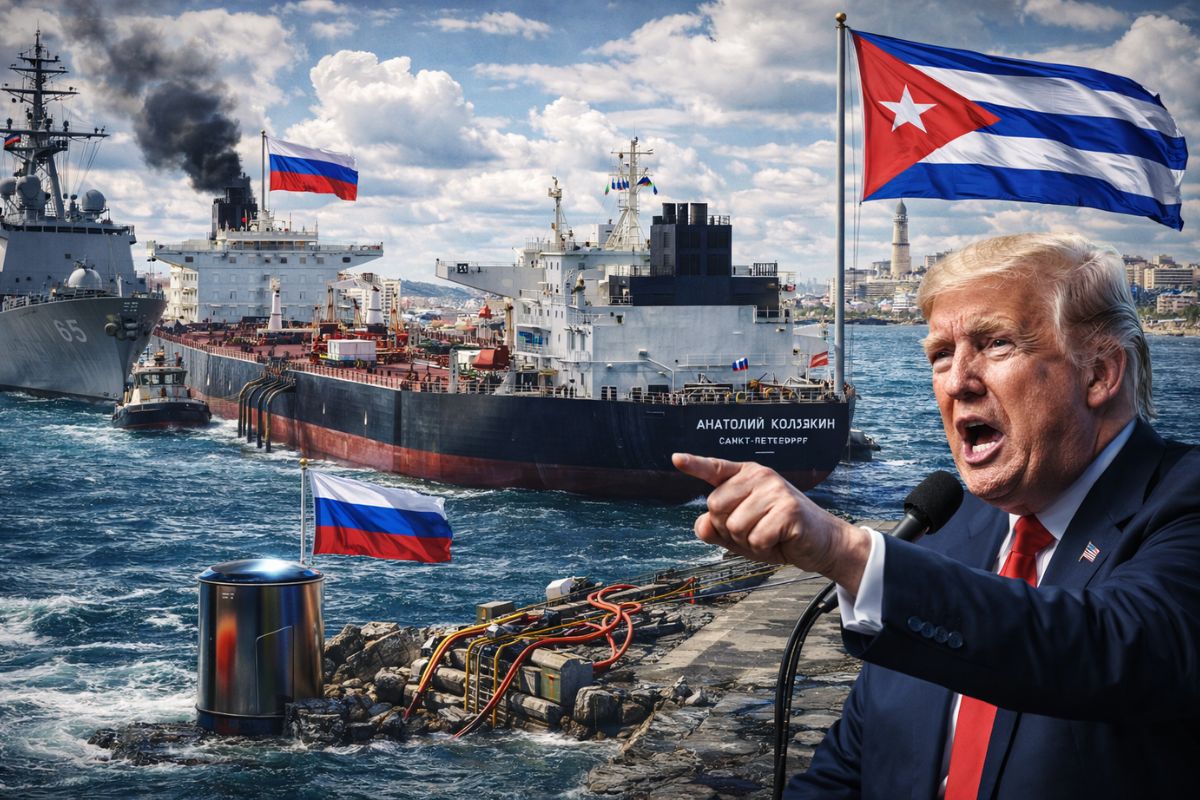
A Russian tanker carrying 730,000 barrels of crude oil docked in Cuba after three months of energy blockade from the U.S., and Russia is already loading a second ship while Trump downplays the shipment and says Cuba is “finished,” days after declaring that the island would be the next target of the United States after the war with Iran.
The oil has returned to Cuba after three months of shortages. On Tuesday (April 1), the Russian tanker Anatoly Kolodkin docked at the Matanzas terminal carrying about 730,000 barrels of crude oil, the first large shipment of oil to reach the island since the United States imposed an energy blockade following Nicolás Maduro’s fall in Venezuela in January. The arrival of the oil was met with relief by Cuban authorities and was accompanied by fishermen at the port, while journalists from around the world covered an unusual event: the supply of oil as global news.
But the first shipment of oil is just the beginning. On Thursday (2), Russian Energy Minister Sergei Tsivilev confirmed that a second oil ship is already being loaded at a Russian port and will be sent soon to Cuba. “A Russian ship broke the blockade. According to the G1 portal, the second is now being loaded. We will not abandon the Cubans,” Tsivilev declared during an energy forum in Kazan. The oil shipment comes amid Trump’s threats against Cuba, who days earlier said the island would be “next” after the war against Iran.
How the U.S. oil blockade plunged Cuba into daily blackouts and humanitarian crisis
Cuba relied on Venezuelan oil to keep its electrical system running. When the United States captured Nicolás Maduro in January 2026 and forced Venezuela to suspend oil shipments, Cuba was left without its main fuel source.
-
Spain challenges the USA and closes its airspace for operations against Iran, raising global tension and provoking the threat of a trade rupture.
-
While no other country manufactures tanks in Latin America, Argentina activates the TAM 2C-A2 and raises a curiosity about the technological lag in the region.
-
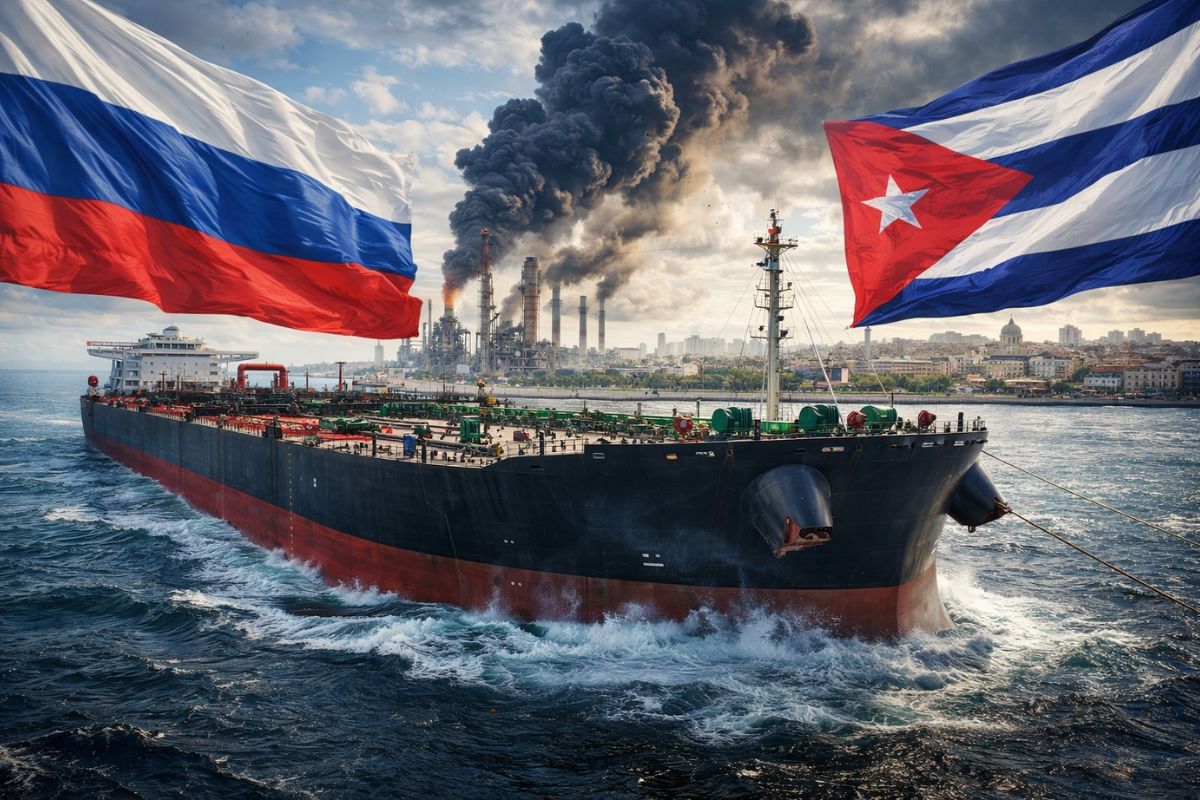
A Russian ship with 730,000 barrels of oil has just arrived in Cuba while Mexico negotiates fuel sales through private companies: the communist island is desperately seeking alternatives after losing its supply from Venezuela due to American military action.
-
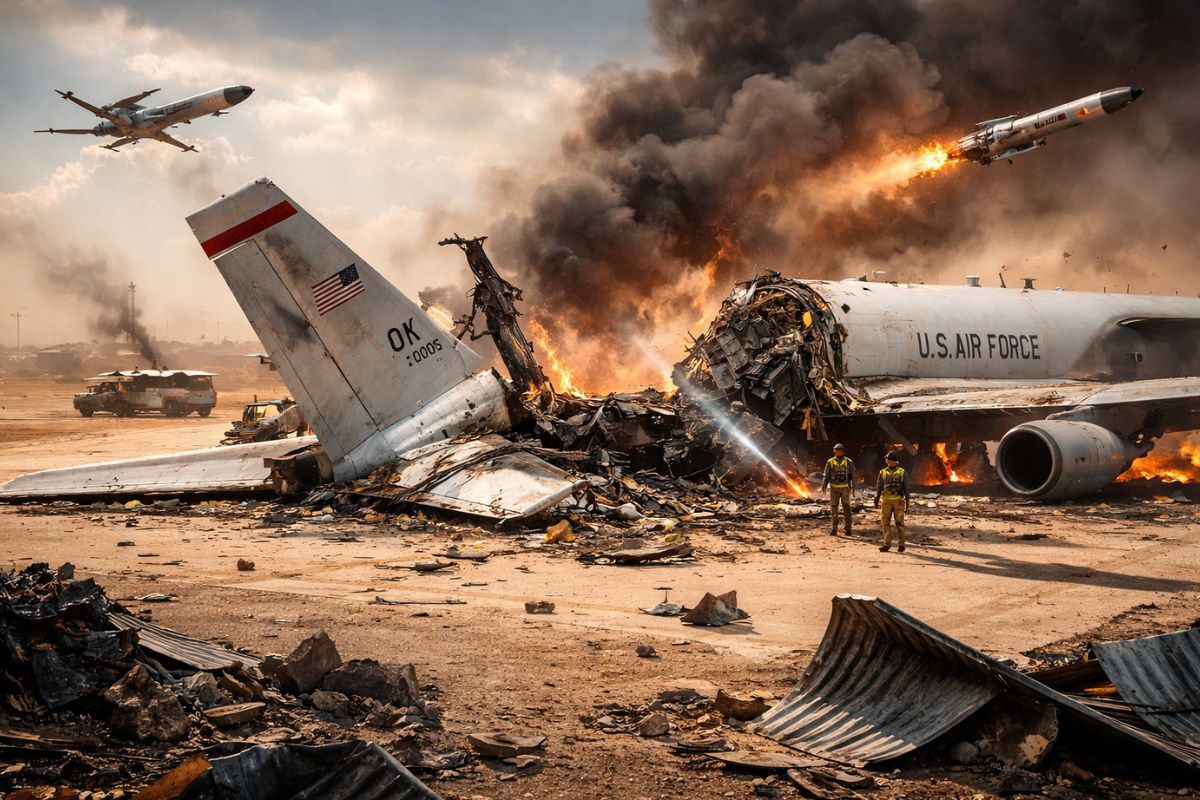
Iranian drones and missiles destroyed a 270 million dollar American spy plane in Saudi Arabia, splitting the E-3 Sentry aircraft in half and injuring 12 military personnel in an attack that exposes the vulnerability of U.S. bases in the Persian Gulf.

Trump went further: he threatened to impose tariffs on any country that sold or supplied oil to the island, which led Mexico to also suspend its shipments. The result was an energy blockade that lasted three months.
Without oil, Cuba collapsed. Daily blackouts became routine, gasoline was strictly rationed, health services were compromised, classes were canceled, and the economy practically came to a halt. Cuba needs about 100,000 barrels of oil per day to function, of which only 40,000 come from domestic production.
The rest depends on imports, and for 90 days no large oil shipment managed to reach the island.
The Russian tanker that broke the blockade: 730,000 barrels of oil and a geopolitical message
The tanker Anatoly Kolodkin departed from the Primorsk port in the Baltic Sea, carrying 100,000 metric tons of crude oil equivalent to about 730,000 barrels.
The ship belongs to the Russian state-owned company Sovcomflot and is included in U.S., European Union, and United Kingdom sanctions lists due to the war in Ukraine. Nevertheless, the Trump administration allowed the oil tanker to dock in Cuba, a decision that generated perplexity among allies and analysts.
Cuban Deputy Foreign Minister Carlos Fernández de Cossío summarized the situation: “The arrival of a tanker to a country has probably never generated as much news as the Russian one to Cuba is a sign of the brutal siege that Cubans face.”
Cuban Energy Minister Vicente de la O Levy publicly thanked Russia for the oil, describing the shipment as “a valuable cargo arriving amid the complex energy situation”. The 730,000 barrels of oil are expected to supply Cuba’s power plants for at least a week.
Trump says Cuba is “finished” and that the island is the next target of the U.S.
Trump’s stance on oil for Cuba fluctuated within days. In January, the American president wrote in capital letters on social media: “NO MORE OIL OR MONEY GOING TO CUBA ZERO!” Days before the arrival of the Russian ship, Trump declared that Cuba would be “next” after the war against Iran was finished—a threat that Secretary of State Marco Rubio reinforced by stating that the White House wants “new leaders” in Cuba.
But when the Russian tanker approached Cuba, Trump changed his tone. “If a country wants to send oil to Cuba now, I have no problem with that, whether it’s Russia or not,” the president said aboard Air Force One.
The White House spokesperson, Karoline Leavitt, stated that the U.S. will evaluate oil shipments “on a case-by-case basis” for humanitarian reasons, but without a formal change in sanctions policy. Trump himself downplayed the arrival of the oil: “Cuba is finished. They have a bad regime. Whether an oil ship arrives or not, it doesn’t matter.”
A second oil ship is already being loaded: Russia does not intend to stop
On Thursday (2), the Russian Energy Minister confirmed at a forum that a second oil ship is already being loaded and will be sent to Cuba soon.
The decision was made after a meeting in St. Petersburg with Cuban representatives, and Tsivilev made it clear that Russia does not intend to abandon its historical ally. Kremlin spokesman Dmitri Peskov said that Cuba’s “desperate” situation does not leave Russia indifferent and that Moscow will “continue working on this.”
Russian oil shipments to Cuba are not just a humanitarian issue—they are a geopolitical message.
Russia demonstrates that it can project influence in the Caribbean, just a few hundred kilometers from the U.S., while ignoring American pressure for a ceasefire in Ukraine and providing intelligence to American adversaries in the Middle East. Oil for Cuba is, in this context, both fuel and provocation.
Russian oil in Cuba: temporary relief in a crisis with no solution in sight
The 730,000 barrels of oil that arrived in Cuba on Tuesday give the island about a week of breathing room.
A second oil ship is on the way, but Cuba needs 100,000 barrels per day and no one knows how many shipments Russia will be able or willing to maintain, nor how long Trump will allow the ships to pass.
The oil has arrived, but the crisis continues. The blockade has not been officially lifted, Trump’s threats against Cuba remain, and the island remains caught between the relief of a Russian tanker and the uncertainty of a future that depends on the will of two presidents playing geopolitical chess over a country without power.
Do you think the shipment of Russian oil to Cuba is a humanitarian gesture or a geopolitical move? And what do you think about Trump allowing the Russian ship while maintaining the blockade against other countries? Leave your opinion in the comments.






Seja o primeiro a reagir!