





 Portuguese
  English
  Spanish
  4 min of reading
  0 comments


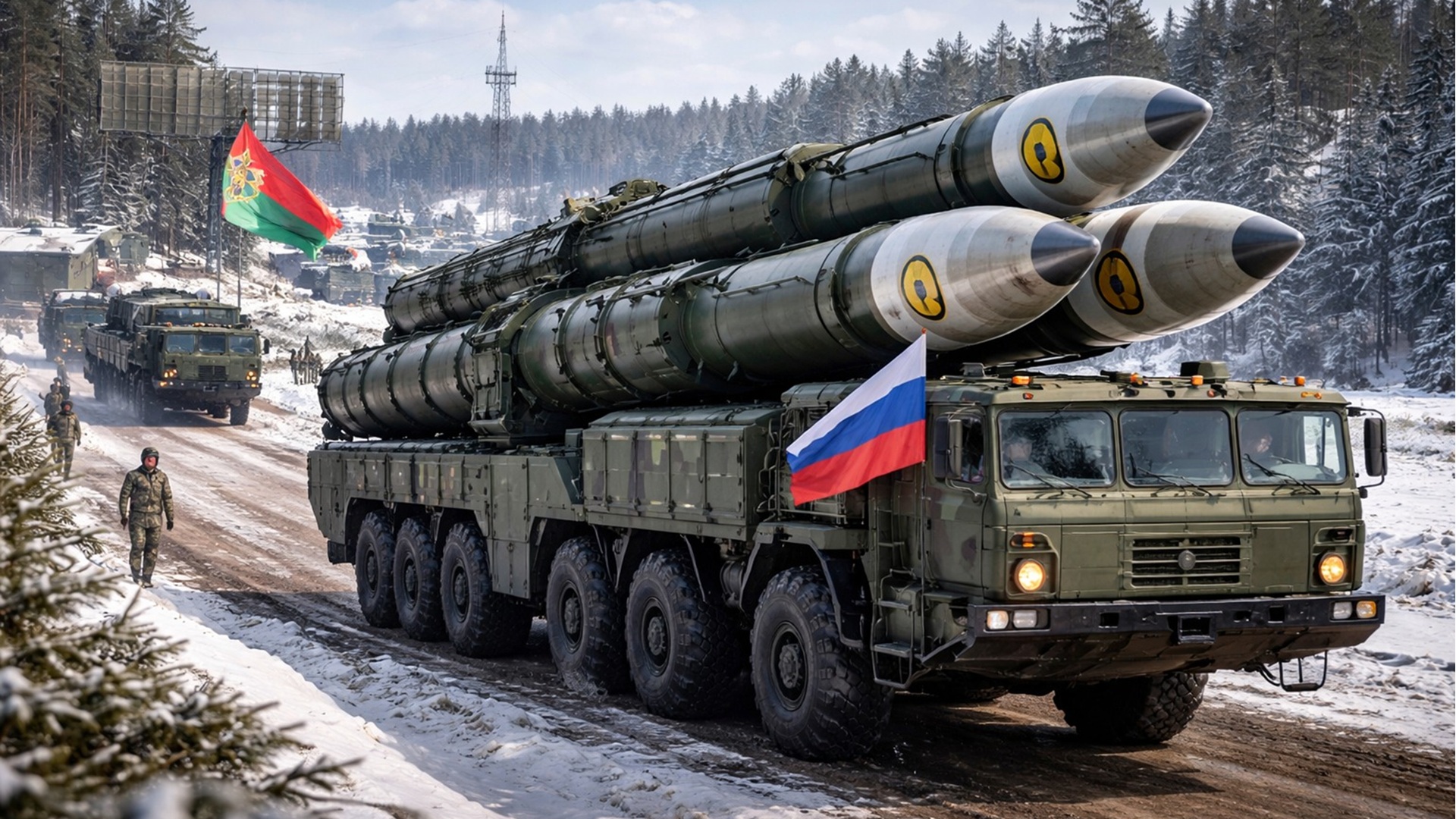
Delivery of the Oreshnik System to Belarus Occurs After Russian Accusation of Drone Attack, Raising Military Tensions, Reducing Alert Time for Europe, and Expanding Diplomatic Concerns
Russia announced the delivery of the nuclear-capable Oreshnik missile system to Belarus after alleging a Ukrainian attack with 91 drones, raising regional tensions, reducing alert times for European capitals, and expanding military and political concerns in Europe.
Missile Delivery Signals New Phase of the Conflict
Russia claimed to have begun deploying a new nuclear-capable missile system to Belarus, in a move that escalates tensions in the war with Ukraine and raises immediate concerns among European countries.
The announcement came on Tuesday, a day after Moscow accused Ukraine of launching a large drone attack against President Vladimir Putin‘s residence, an allegation promptly denied by Kiev.
-
Scientists believed that this marsupial had disappeared 6,000 years ago, but an expedition found two living specimens in a remote forest in New Guinea with a finger that no other animal on the planet possesses.

-
Extreme drought lowered the level of a reservoir in Iraq and revealed an entire city that is 3,400 years old, with walls, palaces, and over 100 clay tablets from an empire that almost no one knows about.

-
Astronomers have found signs of a planet hidden for decades in forgotten telescope data, and if it really exists, it will be the first new world in the solar system in over 170 years.

-
Scientists have caught a star 450 light-years from Earth, only 200 years old, spewing gas and energy in bursts, and no one knows for sure what is happening with it.

The timing of the statement was interpreted as politically sensitive, as it coincided with increasing fears of military escalation and the potential reduction in the time needed for missiles to reach European Union capitals.
According to Russian officials, the launch and positioning of the missiles represent a more precise alert, suggesting operational readiness and reinforcing the message that Moscow is willing to move into a new phase of the conflict.
Military Video Exposes Movement of the Oreshnik System
The Russian Ministry of Defense released video footage showing the Oreshnik missile system being transported through a snow-covered forest, accompanied by armed troops and supporting military vehicles.
The images also display soldiers camouflaging vehicles with green nets and hoisting a flag at an air base in eastern Belarus, near the Russian border, reinforcing the symbolic and strategic nature of the release.
Moscow describes the Oreshnik system as being nuclear-capable, but did not provide additional technical details regarding range, power, or type of warhead, keeping sensitive information under military secrecy.
Belarusian President Alexander Lukashenko stated that 10 Oreshnik systems would be installed in the country, expanding military cooperation between Minsk and Moscow in a context of regional tension.
Russian Confirmation and Implications for Europe
During a meeting with senior military commanders, Vladimir Putin confirmed that the missiles were now in active service, solidifying the deployment as an operational decision and not just a political announcement.
At the same meeting, the president reiterated his intention to annex more Ukrainian territory, including the city of Zaporizhia in southern Ukraine, maintaining Russia’s position on territorial objectives.
Analysts assess that, if confirmed, the deployment would carry significant symbolic weight, reducing the time required for a Russian missile to reach parts of the European Union from Belarus.
Belarus shares borders with several NATO member states, and the installation of nuclear-capable systems in this region has direct military implications and significant political effects on European alliances.
The release of the video was seen as a clear message to the outside world and simultaneously as preparation for the Russian public for a possible escalation of conflict in the upcoming stages.
Allegations of Drone Attack Raise Questions
The announcement of the missile deployment followed Russia’s claim that Ukraine launched a large drone attack against Putin’s residence in the Novgorod region on the night of Sunday.
Foreign Minister Sergei Lavrov stated there would be retaliation and declared that the targets had already been selected, adding that 91 Ukrainian drones participated in the operation.
However, the Kremlin did not present public evidence to support the accusation. Presidential spokesman Dmitry Peskov said no evidence would be released because all drones had been shot down.
Peskov refused to explain the absence of debris, which raised further doubts, especially given the usual pattern of releasing visible damage following confirmed attacks in Russian territory.
Residents in the region told the independent outlet Sota that they did not hear any explosions or anti-aircraft fire, and there were no official alerts or verified videos showing smoke or structural damage.
Kiev’s Reaction and Focus on Diplomacy
Ukraine vehemently denied the accusations. Chancellor Andrii Sybiha stated that Russia fabricated the story and urged other countries not to react to the allegations presented by Moscow.
Sybiha declared that, nearly 24 hours later, no plausible evidence had been presented, and criticized India, Pakistan, and the United Arab Emirates for expressing concern over what he deemed unfounded reports.
Ukrainian military commanders acknowledged that Russian kamikaze drones frequently fly over sensitive locations in the country, indicating an environment of constant surveillance and heightened operational tension.
An official from territorial defense unit 112 stated that their team shot down two drones on Saturday near the state residence in Koncha-Zaspa, south of Kiev, in a localized defensive operation.
Despite the tense situation, Kiev continues its diplomatic efforts. The episodes occurred after a two-hour meeting in Florida between Volodymyr Zelenskyy and Donald Trump, dedicated to a 20-point peace plan.
No agreement was reached regarding the Donbas region, which Moscow demands to control. Zelenskyy rejected territorial concessions and proposed a demilitarized zone, contingent on a ceasefire of at least 60 days.
The Ukrainian president stated that Russia would be spreading false information in response to diplomatic advances and confirmed a meeting with European leaders on January 6 in France, at a conference organized by Emmanuel Macron.







-

-

4 pessoas reagiram a isso.