





 Portuguese
  English
  Spanish
 10 min of reading
  0 comments


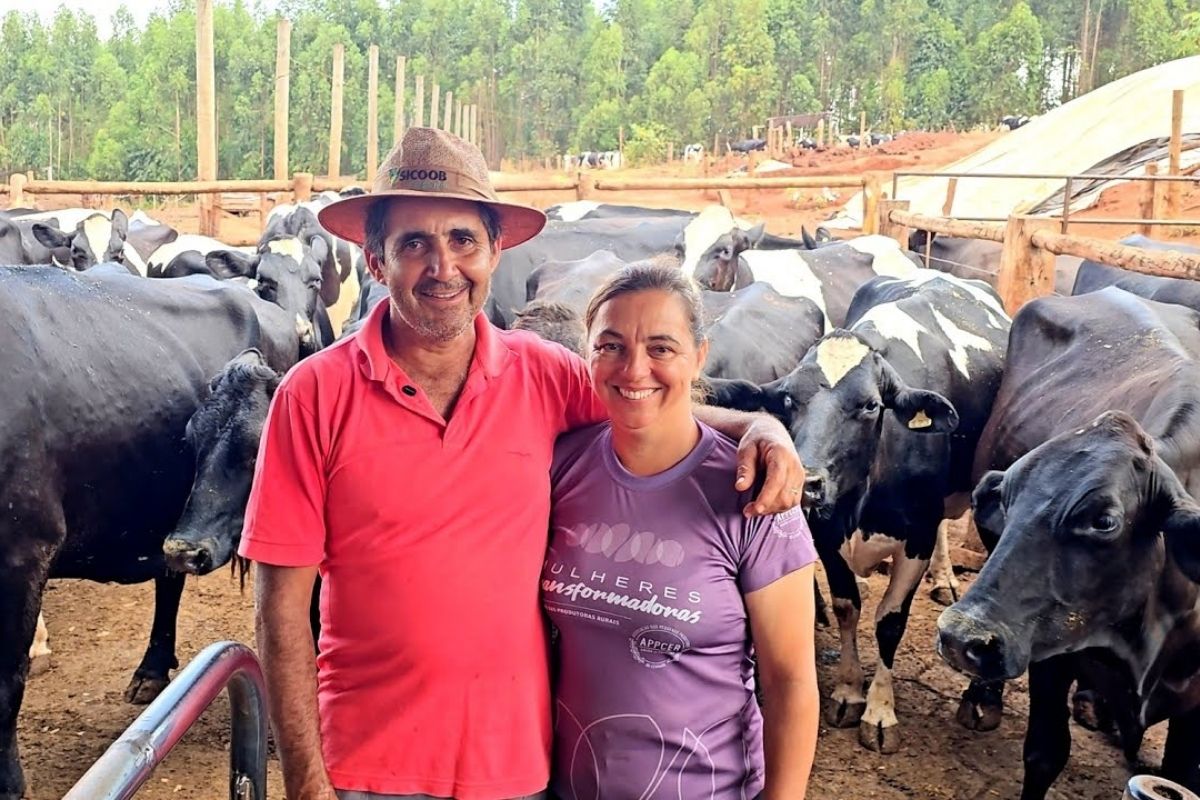
In The Cerrado Of Patrocínio, In The Community Of Morro Alto, A Farmer Shares How He Ended Up Owing 12 Minimum Wages, Built A 30 M² House In 90 Days, Planted Coffee In 1996, Negotiated Land With A Mining Company And Structured Milk With Holstein Cattle And Insemination Today He Collects Up To 1,300 Liters And Supports
The farmer Valdeir built his own turnaround in Patrocínio, Minas Gerais, in the community of Morro Alto, combining coffee and milk in a typical model of family farming. The story includes dismissal, debt, daily negotiation with creditors, and technical decisions in the field and the barn that changed the household’s income standard.
Alongside his wife Ângela, he describes a sequence of milestones with date, number, and practical consequence: 12 minimum wages of debt, a 30 m² house built in 90 days, the first coffee planted on January 6, 1996, the purchase of 5 hectares, and later a land swap with a mining company that brought the couple to the area where they now work with coffee, milk, Holstein cattle, and drip irrigation.
Dismissal Right Before The Wedding And The Debt That Was Already In Place

The breaking point begins when Valdeir, even before marrying, is let go from his job on a farm where he was already living.
-
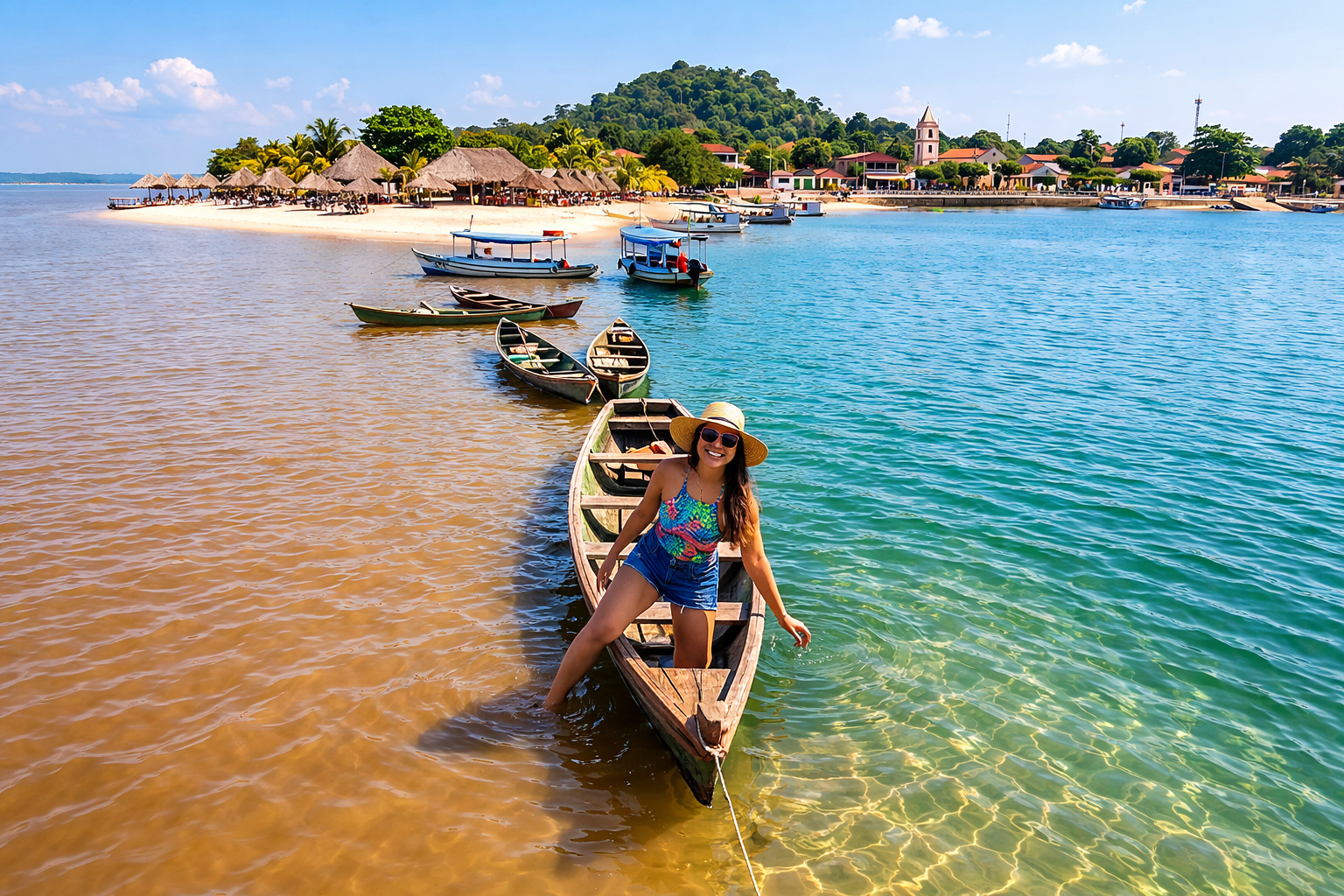
The village where two rivers run side by side without mixing in Santarém and Alter do Chão reveals some of the most beautiful freshwater beaches on the planet.
-
Brazil’s nuclear submarine with a speed 5 times greater than normal advances after nearly 50 years and R$ 40 billion spent.

-
A Brazilian island charges R$ 0.50 to receive visitors and prohibits any new residents.
-
Why was the Great Wall of China built? The truth that many are unaware of!


He pinpoints the episode precisely: he had been at the farm for six months and there were three months left until the wedding when “the guy fired him.”
With no house ready, the priority becomes finding accommodation, even with accumulated bills.
He describes that he already carried a debt of 12 minimum wages, contextualizing the time by the minimum wage value: R$ 100.
The dismissal did not eliminate the need to pay.
On the contrary, it increased the urgency because he was already “running from creditors” while trying to stabilize the family life that was about to begin.
30 M² House In 90 Days And The Payment Method That Avoided Collapse

The farmer summarizes the solution as a survival project: he built a house in 90 days, with 30 m² of construction, and lived there for three months.
During that time, he reports that he was called back to the farm, which allowed him to reorganize income and debt at the same time.
The payment strategy appears as a fixed routine: “every third day, I will bring the money.”
He mentions that he delivered amounts regularly for six consecutive months until settling the debt.
The relief of finishing the debt comes as a psychological and financial turning point because it freed up cash to transform effort into rural assets.
The Income That Came From The Crops And Breeding On The Farm

Within the farm where he worked for 4 and a half years, he describes a system that did not depend only on salary. There was the possibility of planting and raising livestock, which provided a margin to pay bills.
He mentions breeding such as pigs and chickens and crops like corn, rice, and beans, with a central idea: reduce food expenses to have money left for commitments.
A detail he uses to illustrate that time is the sale of eggs, treated as relevant monthly income.
The reasoning he presents is that commercialization helped balance the budget when the base salary was still low, and the discipline of “taking one out” to eat while saving the rest for bills defined the financial rhythm.
Coffee In 1996: 1 Hectare, 55 Bags, Bag At R$ 300 And Purchase Of 5 Hectares
The most significant leap in the story appears with coffee. Valdeir marks the date: January 6, 1996, when he planted 1 hectare.
The productivity cited for this beginning is straightforward: 55 bags. During the same period, he points out two indicators of price and context: “the dollar was R$ 1” and the bag was sold for R$ 300.
With that, he claims to have purchased 5 hectares of land. In the logic of the farmer, coffee was not just an agricultural crop.
It was a tool for acquiring land, with earmarked money to turn crops into land, and land into work autonomy.
Land Swap With A Mining Company And Arrival At The Current Area In Patrocínio
After buying and working on the initial area, he recounts a market event that changed the property map: “the mining company arrived” and needed the land.
The outcome was a land swap, and the exchange resulted in the area where the family now manages coffee and milk.
At this point, the narrative gains a dimension of territory and permanence.
The couple establishes roots in Patrocínio, Minas Gerais, and the work becomes “on their own,” with the feeling that the house they acquired, for someone who had nothing, turns into almost a “mansion” within their own rural reality.
Family Farming: Couple, Children, Grandchildren And Succession Within The Farm
The farmer organizes the family in numbers: he and Ângela, two children, one working with them and another already married and moved out.
He also mentions three grandchildren, with “one grandchild on the way.” This depiction is not decorative. He explains the operational capacity of the business, because the main workforce is family.
The son, Paulo, appears as a key player for the future. Valdeir states that he completed agricultural technical school and later agronomy, finishing his training without owing “R$ 1,” with the phrase that summarizes the origin of the financing: “all taken from the cow’s breast,” meaning paid for with their own milk.
Ângela, The Move From Paraná And The Permanent Establishment In Patrocínio
Ângela brings another chronological axis. She states that she is from Paraná and says she has lived for 35 years in the Patrocínio region.
The migration appears linked to coffee: she came to “pick coffee,” with ups and downs until the decision to stay permanently.
She details the stages: in 1988, presence only during harvest; in 1990, returning to stay; dating for 3 years and 8 months; marriage at the end of 1995, nearing 30 years of union.
The narrative adds depth to the portrait of a farmer who builds wealth without inheritance, through work and permanence.
Coffee From 2017 Onward: Drought, Frost, Bienniality And The Productivity Curve
In coffee, the account enters into management and performance per hectare.
Valdeir points out a plantation from 2017 and calculates its age: in 2025, between 8 and 9 years.
The first harvest from this area occurs in 2020, with 20 bags per hectare.
Afterward, he describes the climatic shocks that lowered production: “a period of drought, frost, this mess.”
Then, he mentions that 2020 and 2021 did not yield, 2022 was little, and 2023 rose to 40 bags per hectare.
The word that organizes the behavior of the crop is technical: biennial, with one year higher and another lower, requiring cash planning and management.
Drip Irrigation And The Jump From 40 To 65 Bags Per Hectare
The productive turning point comes with investment in irrigation. In 2023, he says he installed drip and in the following cycle, he reports going from 40 bags to 65 bags per hectare.
Then, he cites fluctuations: “it yielded 50,” then “it yielded 60,” and in the current cycle, “it yielded more than 40,” maintaining a range of 40 to 60 as the expected average.
The farmer summarizes the investment returns with a statement: in the second year, “it had already paid for itself.”
He also describes risks and maintenance of the system: saracura puncturing hoses to drink water, dogs that bite in their hunting impulse, and rats that gnaw in the midst of the bushes.
It’s the kind of detail that turns irrigation into a routine, not an automatic solution.
Varieties, Spacing And Mechanization: Coffee As A System, Not As A Bet
The report gains consistency in crop parameters.
Valdeir cites specific varieties: Catuaí 99, Catucaí 785/15, and mentions IBC12 as a future planting.
He also talks about another variety on his son’s land, without locking in a name, but reinforcing that the region has a diversity of materials.
He provides spacing information: 1.80 m between rows and 70 cm between plants.
And describes the current harvest as mechanized, with “some manual picking” when necessary and ground collectors.
For the younger crops, he states that the first and second harvests are manual, with about 15 people for two weeks in a scenario of “scarce” labor, where it’s necessary to schedule workdays in advance, and even then there is no guarantee.
Certifications, Control And The Sale Of The Benefited Bean
Here, the farmer details bureaucracy and standards.
He claims to have Fair Trade and another certification, 4C, in addition to a connection with the Association of Small Producers of Patrocínio do Cerrado, which he describes as a union of families and technical support.
He cites specific items of requirement: rodent control, water analysis, water tank cleaning, leaf analysis, and soil analysis, as well as PPE and agronomist support paid for within the monitoring system.
He also states restrictions on pesticides, mentioning that glyphosate is an example of a product that he cannot use due to certification rules.
In sales, he describes the flow: he delivers the green but benefited coffee, with a machine that processes it, and he takes it ready for negotiation.
Roasting, according to him, is only for home consumption. In the sensory standard, he mentions 84 to 85 points, categorizing it as special coffee.
Milk: Start In 2008, Decision To Breed His Own Cattle And The Current Scale
In milk, the timeline begins in 2008, when he started milking “for ourselves” and made cheese.
Later, he states that in 2012 and 2013 he decided to stop buying cattle and raise his own herd, focusing on selection.
He recounts a tight phase due to lack of silo and capital, which led him to sell animals and cites a number that illustrates the scale of the story: he has sold “about 100 heads.”
Today, he says he takes care of about 150, including animals from his father and brother, in a system that grows but requires control.
Holstein Breed, Insemination Since 2013 And The Challenge Of Expensive Barns
The farmer defines the genetic base as Holstein, “not so pure,” in a process of refinement.
Since 2013, he states he has been working with insemination, without the use of bulls. He also reports culling cows due to reproductive failures, even after vaccination and hormone treatment, because keeping an animal without pregnancy affects the finances.
Regarding structure, he explains why he does not build a barn now: he estimates a cost close to R$ 1 million and emphasizes the decision not to reinstate large debts.
The greatest pressure, he says, comes during the rain, when the risk of mastitis increases and mud becomes a problem. To mitigate this, he describes having concreted part of the management area.
Production, Lots, Milking And The Routine That Starts At 4:30 AM
The daily production is clearly evidenced by the final number he upholds: 1,300 liters of milk.
He organizes the herd into lots, describing functions: lot 3 for late lactation, treatment, and recently calved; lot 2 intermediate; lot 1 leading. In the leading lot, he cites 24 to 28 cows averaging 30 kg per animal.
The routine is described as continuous work: he arrives around 4:30 AM and leaves near 6 PM, “with pleasure and satisfaction,” supporting two families directly from milk.
He also explains the hygiene protocol: mastitis testing, pre-dipping with iodine, drying, and post-dipping with barrier products, as well as the care not to confuse the product’s coloration with blood.
There are still unforeseen infrastructure issues, such as power outages during milking, mentioned as part of rural daily life, with a mention of generators as a solution for continuity.
Silo, Leasing And The Cost Of R$ 155 Per Ton
In feeding, the farmer states he produces his silo in nearby leased areas and cites an annual volume of 1,200 to 1,300 tons.
The total cost mentioned for the previous year is objective: R$ 155 per ton, already including labor, machinery, fuel, rent, and use of automotive equipment to reduce dependency on the team.
He compares this with market prices, which ranges from R$ 250 to R$ 300 per ton, reinforcing the logic that producing requires more work but protects margins.
This is the same logic that appears in coffee: controlling what can be controlled from the gate inward.
Price Of Milk, Delivery To Nestlé And The Discipline Not To Cut Feed In The Worst Moment
Valdeir says he delivers milk to Nestlé and also connects the company to coffee through certification. Regarding price, he states that remuneration varies by quality, dairy, and volume.
For the payment of the cited month, he points to an average of R$ 3 and some change, recalling that he once faced a period of R$ 2.70 and that it has now improved again.
He also describes a common mistake that, according to him, undermines results: when prices fall, the producer cuts food, and milk production decreases; when it improves, he tries to compensate by providing feed all at once.
His defense is a constant standard and cost management, focusing on input negotiation, corn planting, and technical discipline.
Faith, Rest And The Limit To Grow Without Losing Life
The farmer connects the routine to faith and territory.
He states that he is Catholic, says he is the coordinator of a nearby little church, and reports that Ângela serves as the caretaker.
He also asserts that, regardless of religion, it is necessary to set aside time for God.
As for rest, the couple describes a practical agreement: at least one week per year away, with the support of an assistant so that they do not stop the milk operation.
And when it comes to growing, he issues a warning that mixes technical and real-life aspects: increasing by 20% to 30% with a barn and third milking might be possible, but it requires starting the day at 3 AM and ending at night, and that “there is no life” in that.
The decision here is to maintain the system in a way that preserves the enjoyment of the activity.
In The Cerrado Of Patrocínio, the story of Valdeir and Ângela shows how a farmer transforms debt into method, method into land, and land into consistent production of coffee and milk, without shortcuts and with numbers that tie each step of the turnaround.
Do you, as a farmer or the child of a farmer, believe that what changes life the most is the discipline of paying bills, the technical investment in the field, or the decision to diversify with coffee and milk at the same time?






-

-

-

-

-

52 pessoas reagiram a isso.