





 Portuguese
  English
  Spanish
  5 min of reading
  1 comment





Wage Difference in Latin America Places Neighboring Country of Brazil at the Top of the Regional Ranking After Conversion to Dollar, With Value That Almost Doubles the Brazilian Minimum and Rekindles Debate on Income, Purchasing Power, and Brazil’s Economic Position on the Continent.
The minimum wage paid in Uruguay appears as the highest in Latin America when converted to dollars, according to an international survey based on official data from governments in the region.
With a remuneration equivalent to US$ 629.04, about R$ 3,241.63 in approximate conversion, the South American country leads the regional ranking, while Brazil occupies only the 14th position, with a minimum of R$ 1,621 after a recent adjustment.
The difference stands out because Brazil has the largest economy in Latin America, but still maintains one of the lowest minimum wages compared to neighboring countries.
-
China, Brazil, and India together control the largest rare earth reserves on the planet and are now at the center of a geopolitical dispute that could determine who will dominate technology and the global economy in the coming decades.

-
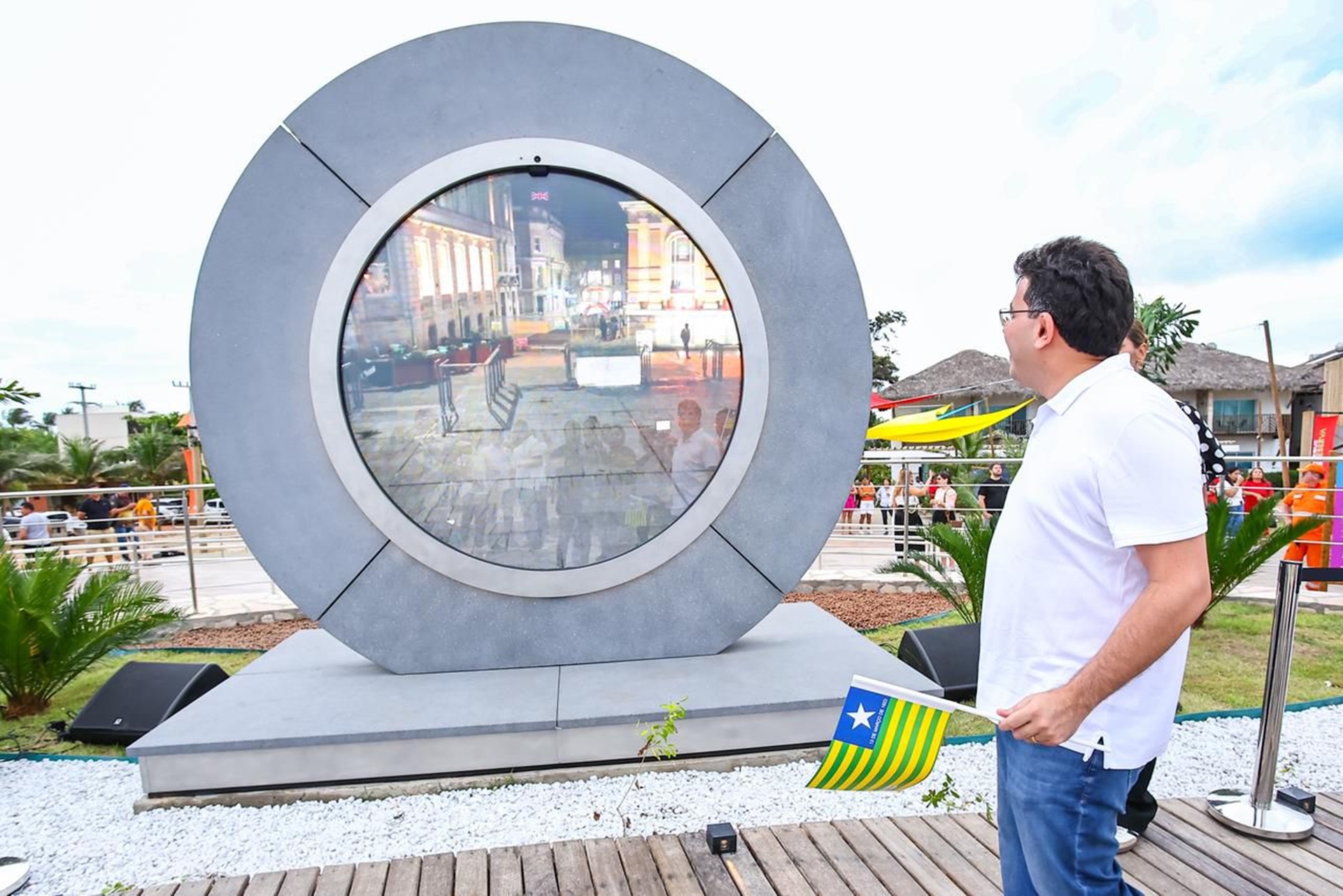
While thousands continue to lack water and sewage on the coast of Piauí, the government inaugurates a R$ 5.5 million international portal in Barra Grande and bets on global visibility.
-
Lula’s government opens 13,000 positions for teachers in Brazil and creates more than 24,000 federal jobs, with an impact of R$ 5.3 billion by 2026.

-
A Chinese electric vehicle technology giant wants to invest up to R$ 200 million in a city in Santa Catarina, and the mayor returned from China with a signed document that guarantees the immediate opening of a CNPJ and the start of operations in Brazil.


The contrast reinforces the debate about income, cost of living, and families’ purchasing capacity in the region.
Uruguay Leads Minimum Wage Ranking in Latin America
The cited survey uses data from the Secretaría del Trabajo y Previsión Social of Mexico and compares national minimum wages after conversion to dollars.
In this scenario, Uruguay appears at the top of the regional list, surpassing larger economies and more populous labor markets.
With a value equivalent to US$ 629.04 per month, the Uruguayan minimum practically doubles what is currently paid in Brazil when considering direct conversion to the North American currency.
The remuneration also surpasses that of various Latin American countries traditionally regarded as references in labor policies.
Experts often note that the Uruguayan minimum wage has undergone gradual increases over the last decades, driven by collective bargaining and wage appreciation policies adopted by the government and by tripartite councils composed of representatives from the State, workers, and employers.
These sectoral negotiations have a direct influence on the update of the national floor and also on the wages of different professional categories, which helps explain the country’s prominent position in the regional ranking.
Chile and Mexico Appear Right Behind in the Latin Ranking
The second place in the Latin American ranking is held by Chile, whose minimum wage is equivalent to US$ 565.95 when converted to dollars.
The country has implemented gradual increases in the national floor in recent years, driven by labor reforms and internal political negotiations.
Next is Mexico, with a minimum wage equivalent to US$ 536.62, the result of a recent policy of more intense adjustments initiated at the end of the last decade.
The country had previously occupied lower positions in the regional ranking but has quickly advanced after successive increases approved by the federal government.
This movement has elevated Mexico from sixth place to third in the Latin American comparison, consolidating a significant jump in the real value of the national minimum wage.
When observing the complete list, several countries in the region appear ahead of Brazil.
In practice, this means that workers in smaller economies receive, proportionally, a higher minimum wage when the calculation is converted to dollars.
Brazil Appears Only in the 14th Position of the Regional Ranking
Even with periodic adjustments, Brazil appears only in the 14th position of the Latin American ranking, falling outside the group of the ten countries with the highest minimum wage in the region.
The current amount, fixed at R$ 1,621, is well below the leaders of the list when compared using the same methodology.
The Brazilian position is ahead of only a few Latin American countries, including Argentina and Nicaragua, according to the data cited in the survey.
The result is noteworthy as it involves the largest economy in the region.
Despite the size of the Brazilian market and the country’s economic weight on the continent, the value of the national floor remains distant from various Latin American economies in comparative terms.
Brazilian Economy Leads Latin America in GDP Size
While it occupies a modest position in the minimum wage comparison, Brazil appears as the largest economy in Latin America, according to estimates from the International Monetary Fund.
According to the World Economic Outlook report released by the IMF, the country recorded a Gross Domestic Product estimated at around US$ 2.13 trillion in 2023, a figure that keeps Brazil in the regional economic lead.
In approximate conversion to Brazilian currency, this amount exceeds R$ 10 trillion, consolidating a significant difference compared to other Latin American economies.
The contrast between the size of the economy and the minimum wage often appears in debates about social inequality and income distribution in the country.
Although the national floor is updated annually, experts often highlight that the real impact of the adjustment depends on factors such as inflation, cost of living, and economic productivity.
Salary Comparison Rekindles Debate on Purchasing Power
The comparison between Latin American countries reveals significant differences in the salary structure of the region.
In some cases, nations with smaller economies present higher minimum wages when converted to dollars, resulting from specific labor policies and different income appreciation strategies.
In Brazil, the minimum wage serves as a reference for millions of formal workers and also for social security and assistance benefits.
For this reason, any adjustment in the national floor has a direct impact on public accounts and family budgets.
The comparative analysis between countries in Latin America also tends to consider other factors beyond the nominal minimum wage, such as cost of living, internal purchasing power, inflation, and labor market structure.
Even so, international rankings based on conversion to dollars continue to be used as a reference to assess wage differences between the region’s economies and to measure the level of basic remuneration offered to workers.









Pois é. Se o salário minimo está uma pelanca e a direita ataca o governo por tê-lo aumentado -lo, imaginem se não tivesse sido reajustado acima da inflação nos últimos quatro anos., Bora votar no Flávio Wonka no final do ano para ver aonde vai parar a nossa posição no ranking!