





 Portuguese
  English
  Spanish
  3 min of reading


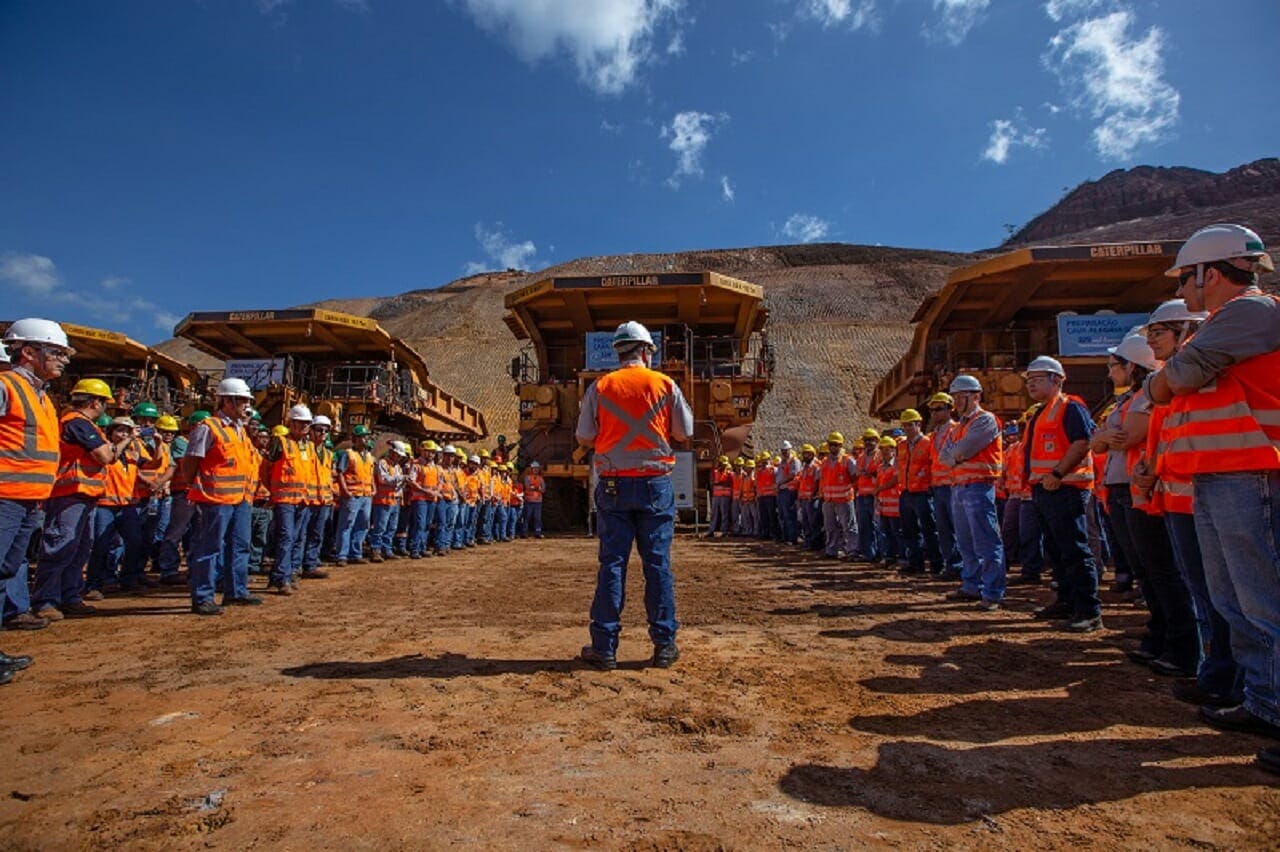
Samarco Announced Its New Billion-Dollar Investment Focused on Expanding Its Iron Ore Pellet Capacity in 2025. The Company Aims to Reach 60% of the Capacity It Had in 2015 and Generate Thousands of Jobs.
The board of directors of Samarco, which has been in judicial recovery since 2021, approved last week an investment of R$ 1.3 billion for the company to double its iron ore pellet production capacity by the first quarter of 2025. This way, the company will reach 60% of the production capacity it had before the collapse of the Mariana dam (MG) in 2015.
Understand How Samarco’s Investments Will Be Divided
Currently, the company operates with 30% of its total capacity, which is approximately 9 million tons of iron ore pellets per year, using one concentrator and one pelletizing plant.
According to the company, the funds will be used for operational readiness and the development of a new filtering plant for the dry stacking of tailings. Of the total, R$ 560 million of Samarco’s investment will be allocated to the filtering plant and improvements in the concentrator, focusing on reducing the generation of ultrafines by 4%. An additional R$ 753 million will be used for asset maintenance.
-
The shot backfired: the United States sanctions intended to curb China ended up creating a record revenue boom for Chinese chip manufacturers, with growth of up to 247% in a single year.

-
With a dependency of up to 80% on gas imported from the United States, Mexico responds with a robust energy strategy, betting on shale gas, creating a scientific committee, and preparing to expand natural gas production to reduce vulnerability and strengthen its energy security in the coming years.

-
Goodbye to the classic stamp in the passport and welcome to total digital control: the new border system of the European Union is already in operation with mandatory biometrics, and those who download the Travel to Europe app before their trip can save time.

-
How much does a minimum wage employee really cost in 2026? The amount can reach close to R$ 3,000 and surprises business owners.

The company plans to achieve a capacity of 18 million tons of iron ore pellets by 2025. To make this possible, it will use two concentrators and two tailings filtering plants from the Germano Complex (MG), one slurry pipeline, and two pelletizing units at the Ubu Complex (ES). All structures have corrective operational licensing obtained in October 2019, according to Samarco.
Samarco Aims to Close 2023 with 9 Million Tons of Iron Ore Pellets and Generate 3,000 Jobs by 2023
Of the total approved investment, R$ 248 million will be applied this year, and the remainder will be approved during 2024. This amount will also be included in the total to be invested this year, which sums R$ 1.6 billion.
It is worth noting that this amount includes other areas that will receive funding. Announced back in June, the total investment of R$ 1.6 billion to be made this year exceeds the amount of R$ 1.3 billion from last year. According to Samarco, the total planned for 2023 also includes investments in the de-characterization of the pit and the Germano dam (MG), business sustainability, new jobs, and innovation projects.
The company also stated that it maintains as its primary focus the complete fulfillment of reparations, the safety of structures, and the de-characterization of the pit and Germano dam, which are in advanced stages.
In a statement, Samarco added that, in parallel, the impending approval of the judicial recovery plan will allow for the optimization of the company’s capital structure, further improving its investment capacity. Samarco expects to close 2023 with a production of 9 million tons of pellets and fines of iron ore, which will represent a 10% increase compared to last year’s production.
Public Prosecutor’s Office Requests Mediation Hearing Between Samarco and ES Residents
The Federal Public Prosecutor’s Office requested the 4th Federal Civil and Agrarian Court of the Judicial Section of Belo Horizonte to hold a mediation hearing between residents of municipalities in Espírito Santo and Samarco, along with its partners Vale and BHP Billiton.
The Association of Rural Producers and Artisans of Espírito Santo, the Association of Residents of Bairro Colatina Velha, and the Association of Residents of Vila Lenira, from Colatina (ES), accuse Samarco of improper treatment of water drawn from the Doce River for human consumption and demand compensation of R$ 120 billion for 585,000 people.




Seja o primeiro a reagir!