





 Portuguese
  English
  Spanish
 4 min of reading
  2 comments


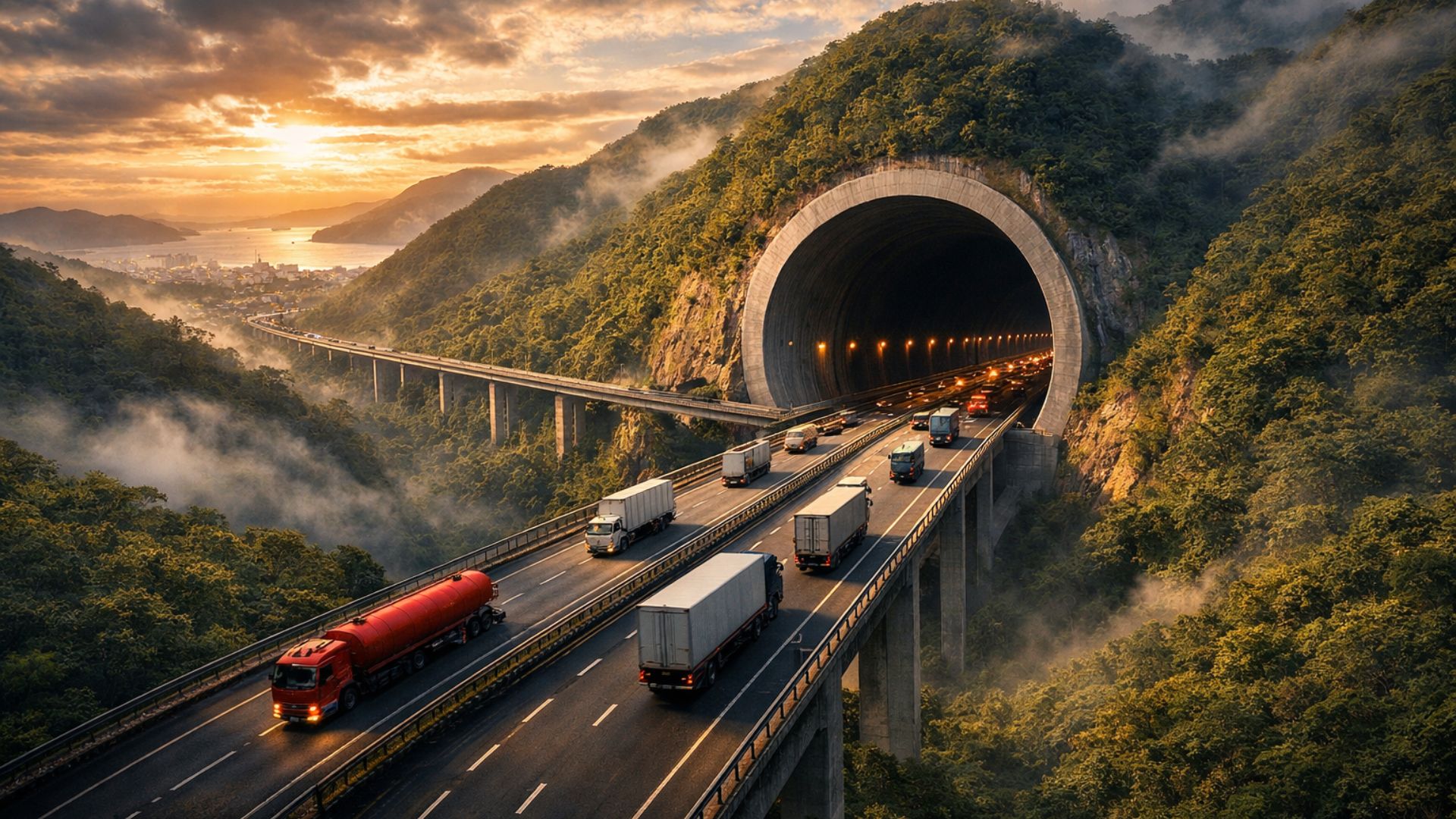


Project Redesigns the Crossing of the Mountain Range with New Layout, Extensive Tunnels, and Focus on Operational Safety.
The government of São Paulo and the concessionaire Ecovias Imigrantes are advancing in the planning of the third lane of the Imigrantes Highway (SP-160), a new connection between the plateau and the Baixada Santista designed to increase the capacity of the Anchieta-Imigrantes System.
The layout includes a set of tunnels totaling approximately 17 kilometers, equivalent to about 80% of the route, and includes a tunnel measuring nearly 6 kilometers, designed to be the largest road tunnel in the country.
The new lane, approximately 21.5 kilometers long, is in the technical detailing phase.
-
Created by George Lucas with over $1 billion, a futuristic museum in the shape of a spaceship with 1,500 curved panels is about to open in Los Angeles and will house one of the largest private collections of narrative art in the world.
-
Couple shows how they built a retaining wall on their property using 400 old tires: sloped land turned into plateaus, tires are aligned, filled, and compacted with layers of soil, with grass helping in support and at almost zero cost.
-
Engineer explains drainage during the rainy season: the difference between surface water and deep water, ditches, gutters, and water outlets on the road, as well as drains and drainage mattresses, to prevent erosion, aquaplaning, and flooding at the construction site today.
-
With 55 floors, 177 meters in height, a 15-meter walkway between the twin towers, ventilated facade, and 6,300 m² of leisure space, Ápice Towers already has one tower completed and another nearly at the top.
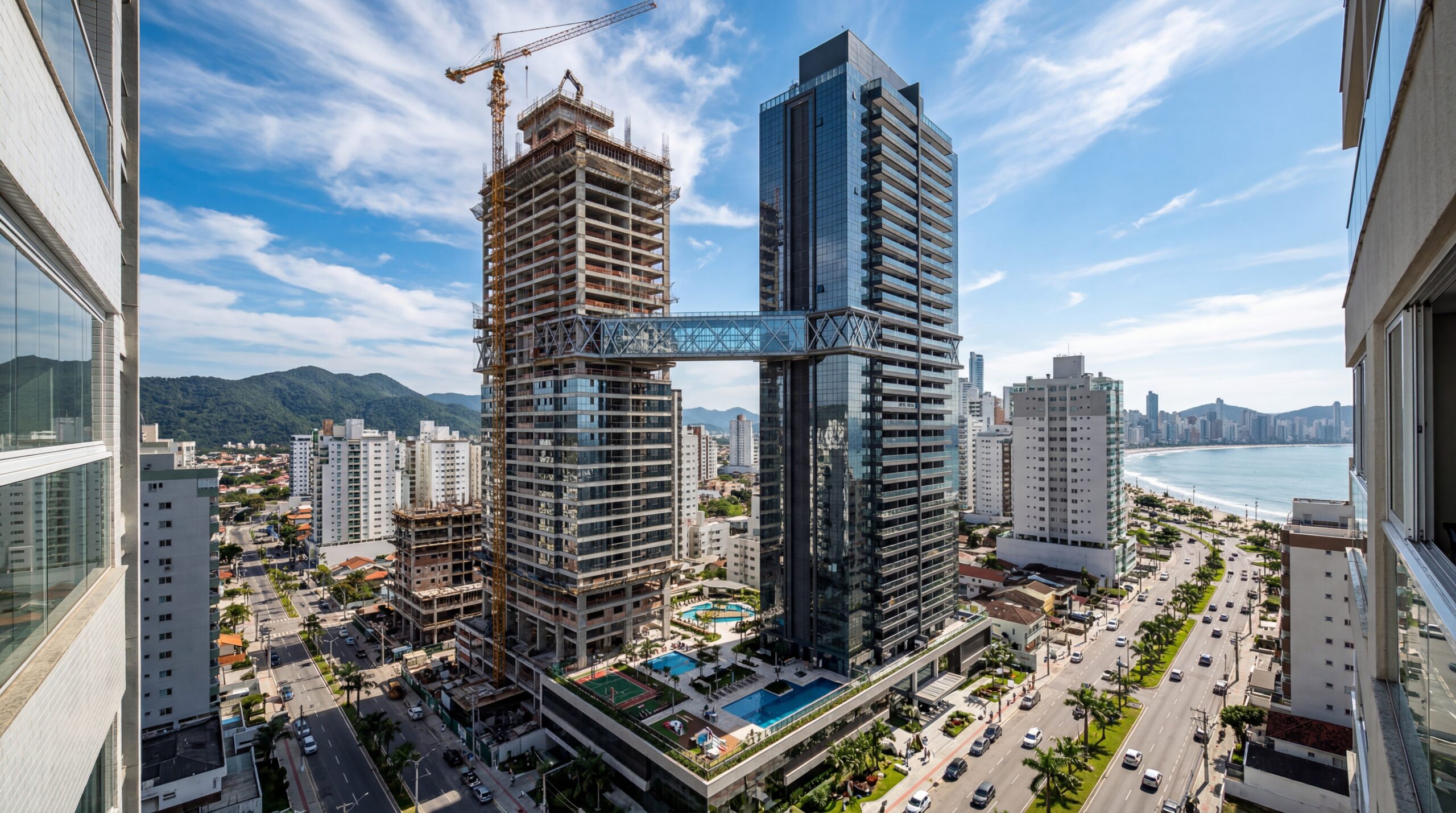

The basic project has already been completed, and the executive project is ongoing, a stage that precisely defines engineering solutions, construction methods, and operational parameters.
The most cited delivery forecast is 2031, although the schedule depends on the progress of the project phases and environmental licensing.
Layout of the Third Lane of the Imigrantes Between Plateau and Baixada
The design presented for the third lane starts from km 43 of the Imigrantes Highway, in the mountain section, with easy access for those arriving via the Rodoanel Mário Covas (SP-021).

On the other side, already in Baixada, the connection is expected to occur at km 265 of the Cônego Domênico Rangoni Highway (SP-055), near the industrial hub of Cubatão.
Along the way, the proposal combines underground sections with elevated structures.
In addition to the 17 kilometers of tunnels, the project considers approximately 4 kilometers of viaducts, a solution adopted to overcome the topography of the Serra do Mar and reduce direct surface interventions along the corridor.
6 km Tunnel and Subterranean Works in the Serra do Mar
The most remarkable section of the package is the tunnel measuring approximately six kilometers, mentioned by Governor Tarcísio de Freitas as the longest among road tunnels in Brazil.
Due to this size, the structure becomes the central element of the project, both for the technical challenge and for the need to incorporate safety, ventilation, and operation systems compatible with long underground segments.
The emphasis on a predominantly tunnel layout also responds to the sensitive nature of the region through which the highway traverses the Serra do Mar.


By concentrating most of the route underground, the project seeks to limit the opening of new paths and work fronts in vegetation areas, keeping the corridor more “contained” from a physical standpoint.
4% Incline and Truck Logistics to Cubatão
Another point highlighted by the concessionaire is the average incline expected to be about 4%, designed to provide more stable circulation conditions for heavy vehicles.
In practice, the geometry of the layout seeks to make the flow of trucks and buses more predictable and safe on the descent to Cubatão, a strategic area due to its proximity to the industrial hub and access to the Port of Santos.
Because of this design, the third lane is born with a logistical vocation: it was conceived to meet the demand for cargo transport between the Metropolitan Region of São Paulo and Baixada.
At the same time, the new connection will function as an operational alternative within the system, expanding the maneuverability margin during peak periods.
Parallel Emergency and Safety Tunnels in the Anchieta-Imigrantes System

By operating majorly underground, the project incorporates an extra layer of safety.
Ecovias Imigrantes informs that the underground section will feature parallel emergency tunnels, designed to serve as an alternative route in cases of serious occurrences and to allow for quicker evacuation in critical situations.
These galleries will also facilitate access for rescue teams, a point considered essential on a highway with long underground segments.
The design aims to reduce response time when there is a breakdown, fire, or any event that requires isolation of a section, offering dedicated paths to support operations.
Billion-Dollar Investment and Current Stage of the Executive Project
The estimates released for the investment vary depending on the source and the timing of the statements.
Some public information mentions an amount of around R$ 6 billion, while the governor has already mentioned a figure close to R$ 8 billion in more recent statements.
As this is a project still in development, the numbers may fluctuate until the executive project is finalized and the execution contracts are defined.
At the current stage, the concessionaire is focusing efforts on technical detailing and preparing the necessary steps for environmental licensing.
This set of deliveries usually determines when the project can, in fact, enter large-scale construction, especially in projects with extensive tunnels and special artworks.
With a layout designed to redistribute the flow of trucks, reinforce safety in mountain sections, and create an additional connection to Cubatão, the third lane promises to change how the Anchieta-Imigrantes System absorbs peak demand; in your view, what should be the priority when the construction starts to impact the daily life of those using the mountain, cargo logistics or tourism in Baixada?







Precisa de investimento na malha ferroviária. Tirar caminhões e ônibus isso sim. Acho que sairia até mais barato
É preciso fazer ligação de São Paulo para as praias de Mongaguá, Itanhaém, Peruíbe, ou seja continuará a mesma coisa, Praia Grande ficará travada.