





 Portuguese
  English
  Spanish
  3 min of reading
  0 comments


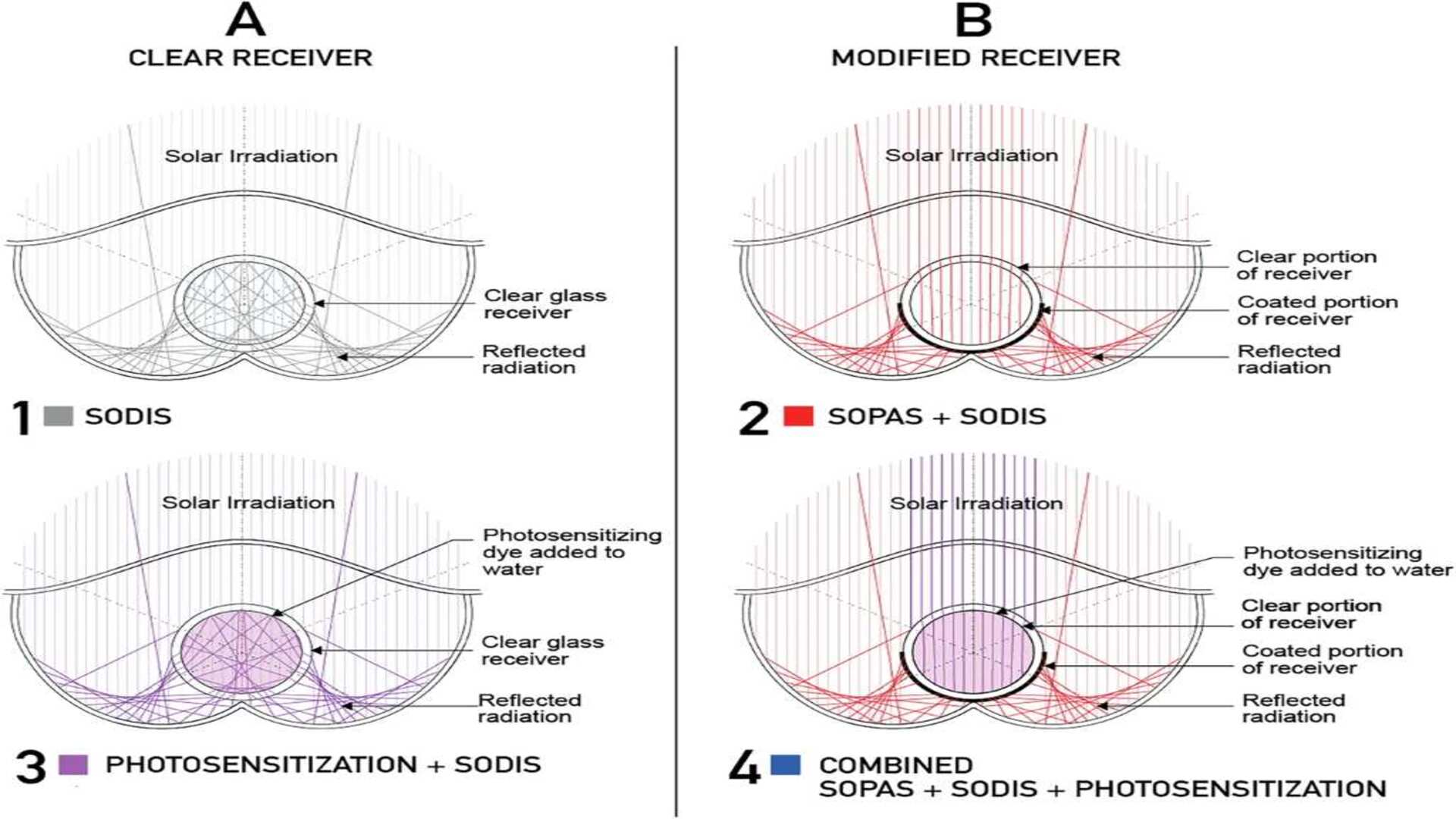
The procedure uses an organic hydrogel and food dyes to accelerate solar evaporation and eliminate contaminants, ensuring access to clean water in a sustainable and efficient manner.
Researchers have developed an innovative system that uses sunlight and a common food dye to produce clean water efficiently in less than half an hour.
The method is based on the use of an organic-based hydrogel that, when exposed to solar radiation, accelerates the evaporation and purification process of contaminated sources. This technology represents a significant advancement for communities with limited resources, offering a low-cost solution for household water treatment.
Innovation based on accessible materials
The core of this technology lies in the use of a specific food dye that acts as a potent absorber of solar light. By combining this pigment with a hydrogel structure, scientists have managed to capture a wide spectrum of solar energy, rapidly transforming it into heat. This thermal process allows clean water to separate from contaminants, salts, and pathogens through accelerated evaporation that occurs on the surface of the material.
-
New bicycle bell alerts pedestrians from 22 meters away and works with noise-canceling headphones.
-
US secret drone with stealth technology and flying wing design spotted in high-altitude operation over Greece.

-
Brazil accelerates the development of a Brazilian rocket to launch small satellites and achieve space autonomy.

-
With hypersonic missiles priced like a Tesla, China is betting on a simple and devastating strategy to pressure the U.S.: mass production, saturating defenses, and turning cost into a weapon of military superiority.

Unlike conventional solar distillation systems, which tend to be slow and bulky, this new approach optimizes energy transfer. The hydrogel allows only a small layer of liquid to be heated at a time, which drastically reduces the waiting time for the end user.
Thanks to this efficiency, it is possible to generate considerable volumes of clean water using compact and easy-to-transport devices for remote areas.
Temporal efficiency and sustainability of the process
Test results show that the system can complete a total purification cycle in just 28 minutes under direct sunlight conditions. During this interval, the device manages to eliminate heavy metals, microplastics, and other harmful agents, ensuring the production of clean water suitable for human consumption. The speed of the process far exceeds other biological or solar filtration methods previously developed in academia.
Sustainability is another fundamental pillar of this invention, as the use of food dyes ensures that no toxic chemicals are introduced into the environment.
The materials used are biodegradable and economical, which facilitates their large-scale production without requiring complex industrial infrastructures. By relying solely on sunlight, the clean water device operates autonomously, without the need for electricity or fossil fuels.
Practical applications and future of the technology
The potential impact of this method is global, especially in regions affected by natural disasters or lack of basic services. The system is designed to be used by people without technical training, allowing anyone to obtain clean water safely in their own home.
The simplicity of the design also reduces maintenance costs, as the hydrogel can be reused in multiple purification cycles without losing its absorptive properties.
Currently, scientists are working to scale up the prototypes to meet the needs of larger family groups. The goal is to integrate this clean water method into emergency kits distributed by humanitarian organizations worldwide.
With this innovation, science demonstrates that everyday materials can be the key to solving one of humanity’s most urgent challenges: universal access to safe water resources.
Click here to access the study.





Seja o primeiro a reagir!