Portuguese
  Spanish


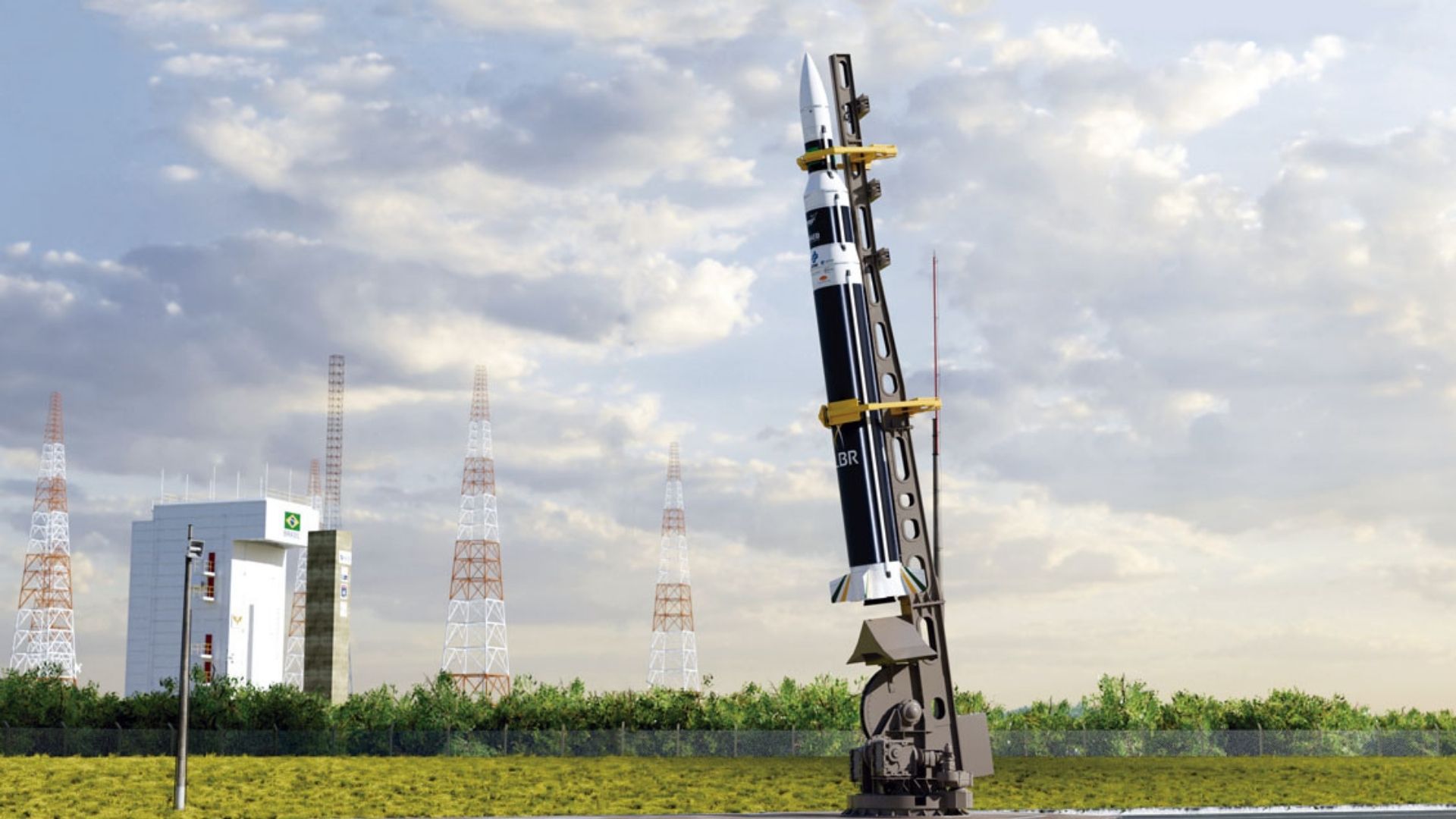

The IAE project uses S50 carbon fiber engines to ensure efficiency and low cost in low orbit missions.
According to a report from Revistapesquisa, Brazil is advancing in the development of the VLM-1, a satellite launch vehicle specifically designed to place small payloads in low Earth orbit.
The project is led by the Institute of Aeronautics and Space (IAE), linked to the Aerospace Science and Technology Department (DCTA), in partnership with the German Aerospace Center (DLR).
The main focus of the Brazilian rocket is to meet the growing global demand for launches of cubesats and microsatellites, consolidating national technological autonomy in the aerospace sector.
-
Canada Makes Historic Decision to Purchase New German Submarines in $70 Billion Defense Program, Replacing Aging Victoria-Class Fleet by 2033

-
4,000-Year-Old Stone Circle Discovered Near Belfast, Unveiling Prehistoric Ritual Complex in Irish Countryside

-
Brazilian Innovator Transforms 1962 Mercury Comet with Nissan Leaf Electric Motor, Achieving 125 km Range for Under $6,000
-
China Tests Giant 582-Ton Magnets to Contain Plasma Hotter Than the Sun’s Core, Aiming to Cut Superconductor Costs and Generate First Electricity from “Artificial Sun” by 2030


Solid fuel architecture and propulsion
The VLM-1 project is based on a propulsion system divided into three stages, using engines loaded with solid propellant. The first two stages use the S50 engine, which has a carbon fiber structure to reduce weight and increase the efficiency of the Brazilian rocket. The third stage employs the S44 engine, responsible for the final insertion of satellites into the desired orbit with precision.
The S50 engine represents a milestone for national engineering, as its production involves complex processes of filament winding and high-strength composite materials.
This technology allows the Brazilian rocket to withstand the extreme pressures and temperatures generated during fuel combustion without compromising structural integrity. Collaboration with German experts aids in validating control and navigation systems, ensuring that the vehicle meets international safety requirements.
Ground tests and flight preparation
Before the inaugural launch, the IAE conducts a series of static firing tests to evaluate the thrust and stability of the engines.
These static tests are crucial for identifying potential failures in the S50 engine and the ignition systems of the Brazilian rocket under controlled conditions. The infrastructure necessary for these tests is located in São José dos Campos, where teams of engineers monitor hundreds of performance parameters simultaneously.
The testing campaign also includes simulating stage separation and the aerodynamics of the fairings that protect the satellites during ascent.
The schedule for the Brazilian rocket includes qualification flights that will certify all electronic and mechanical subsystems before commercial missions. Each successfully completed stage brings the country closer to full mastery of the launch cycle, allowing for the strategic use of the Alcântara Launch Center in Maranhão.
Commercial impact and technological sovereignty
The ability to launch satellites weighing up to 150 kg places Brazil in a competitive niche in the international space market. The Brazilian rocket offers a low-cost solution for companies and research institutions developing constellations of small satellites for Earth observation or communications.
Currently, the market relies on large rockets that carry small payloads as rideshares, which limits options for launch dates and orbital inclination.
In addition to the economic aspect, mastering this technology strengthens national security and the ability to independently monitor the environment.
The development of the Brazilian rocket stimulates the production chain of the defense industry, generating skilled jobs and innovation in advanced materials. With the completion of this project, Brazil reaffirms its position as a relevant player in the global aerospace landscape, capable of offering launch services from its own territory.
Click here to access the study.