





An experiment in the Canadian Arctic tested whether pumping seawater over the ice during winter could thicken the layer, increase its brightness, and alter the melting rate throughout the season.
Scientists pumped seawater over the frozen surface of the Canadian Arctic during winter and managed to form an ice layer up to 32 centimeters thicker than that observed in untreated areas.
The experiment took place in the 2024 and 2025 season, near Cambridge Bay, in the territory of Nunavut, Canada.
The team monitored the ice throughout the entire growth period in winter and also during the early stages of melting in spring and summer.
-
Producing 2.644 million units and growing 3.5% in the year, Brazil’s vehicle production advanced in 2025, in a market where registrations reached 2.69 million and exports soared more than 30% in the country.

-
Generating 495 billion reais and surpassing the 455 billion from the previous year, the bar and restaurant sector in Brazil grew in 2025, with an increase that, when adjusted for inflation, was much more modest, at less than 1% in the country.
-
Grinding 195.8 thousand tons with a 14.6% decrease for the year, but receiving more beans, Brazil’s cocoa grinding fell in 2025 in a rare contrast, in a sector where the industry processed less but purchased more raw material in the country.
-
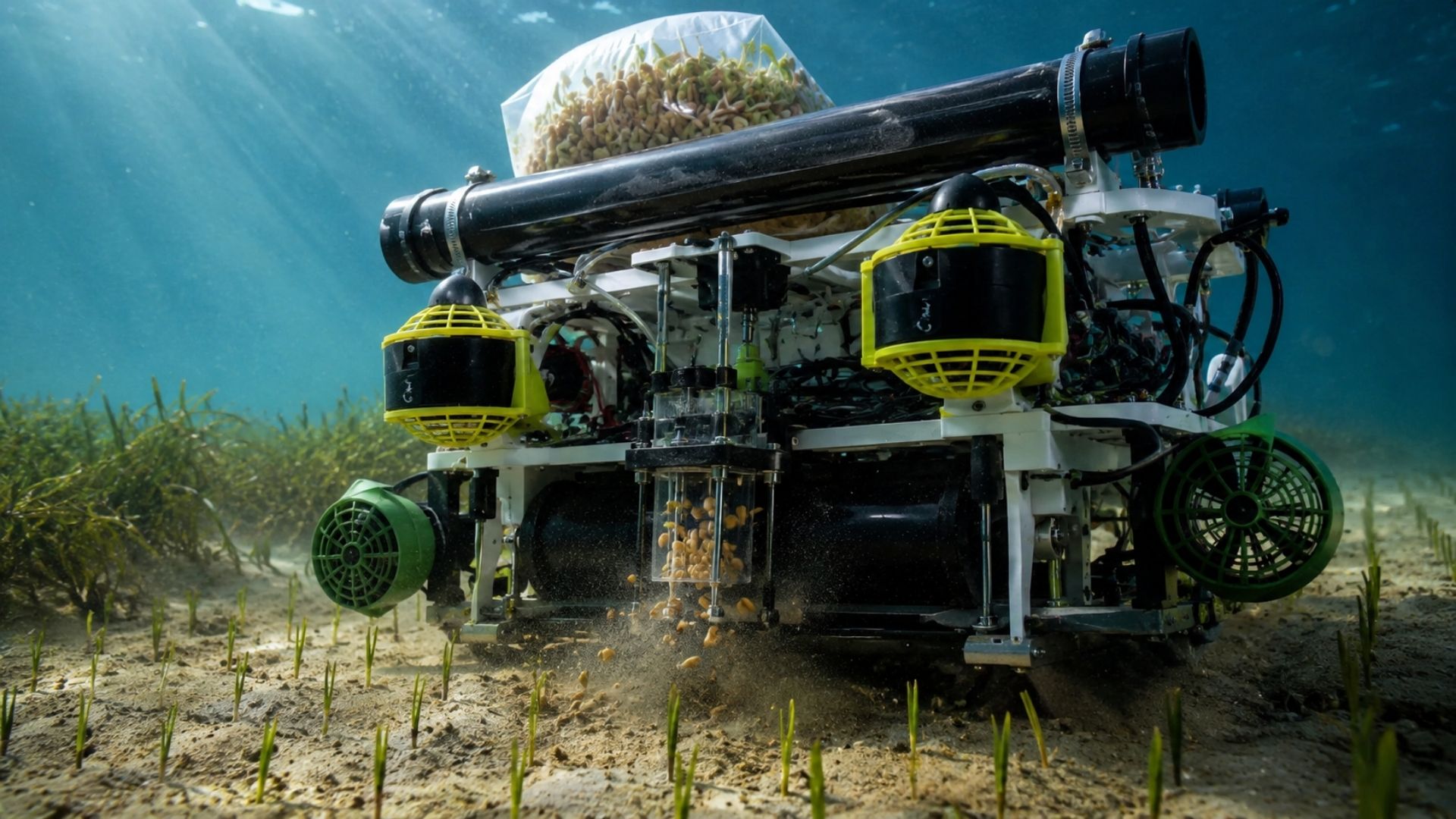
A robot weighing only 23 kilograms plants 60 seeds per minute on the seabed and carries 20,000 seeds in a 20-liter bag to try to restore the underwater meadows that the planet has lost.




Published in 2026 in the scientific journal Earth’s Future, the research is presented as the first field test that observed, over a complete season, the effects of artificial flooding on the growth and melting of Arctic sea ice.
The technique starts from a straightforward idea.
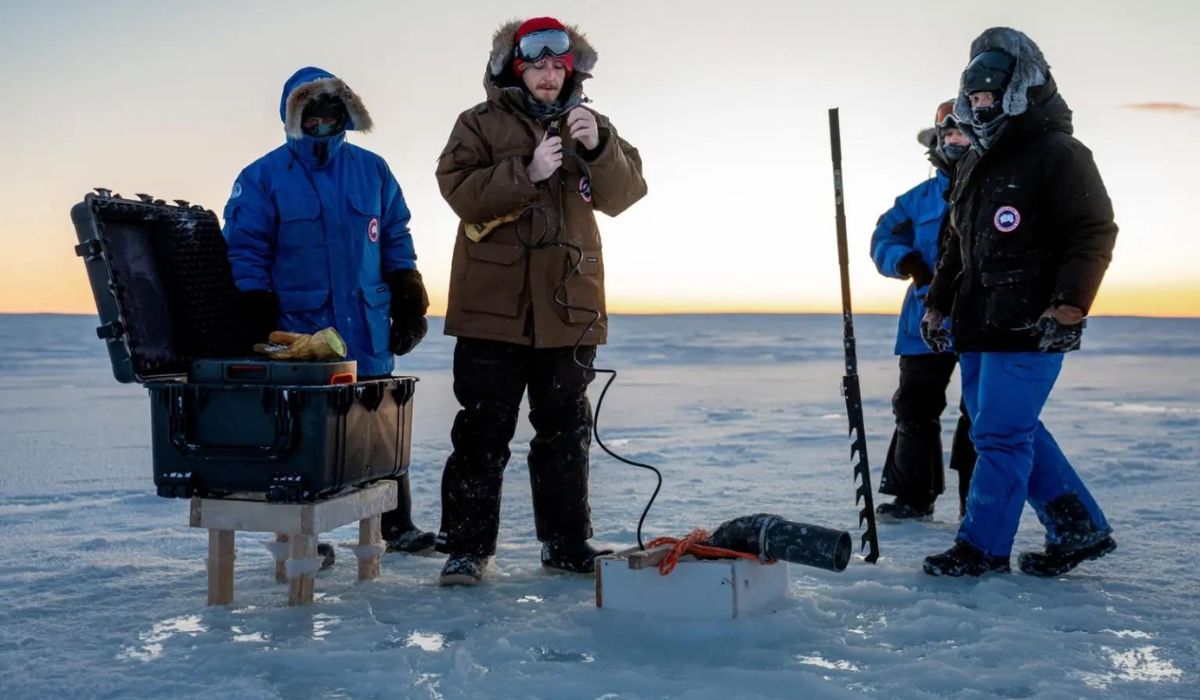
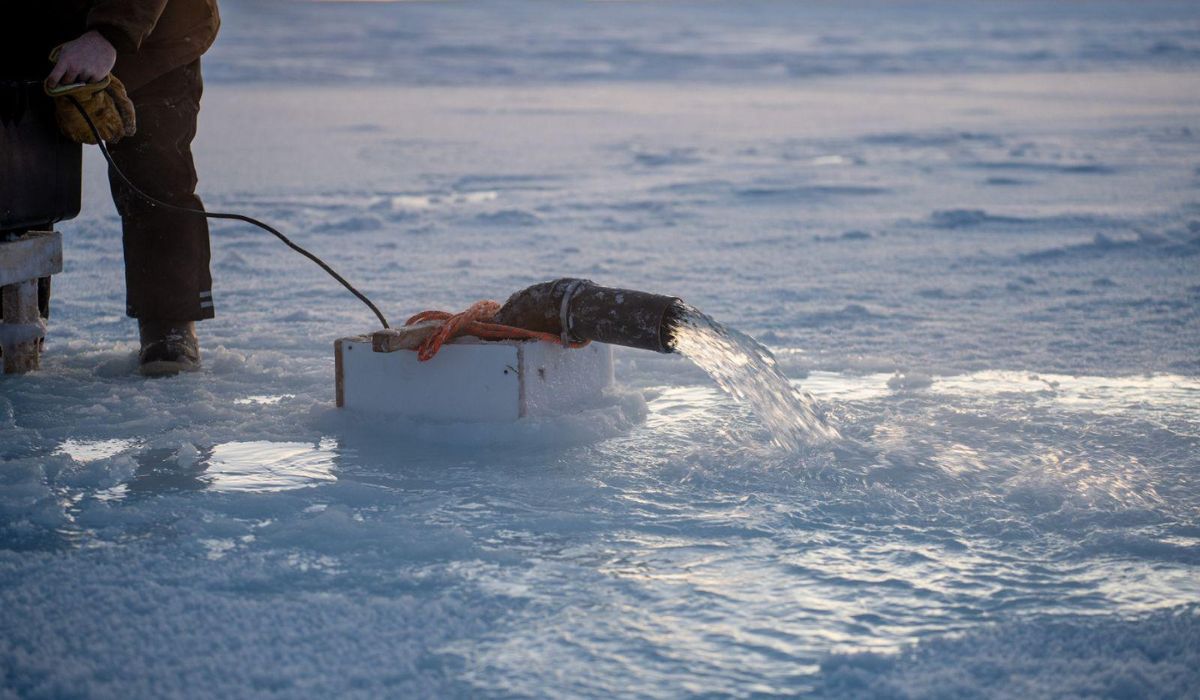
Pumps draw salty water from beneath the ice and bring it to the surface, where the winter cold allows the liquid to freeze again.
Instead of manufacturing ice in machines or bringing water from elsewhere, the method temporarily rearranges the water already present in the ocean.
The intention is to accelerate the thickening of the frozen cover during the colder months.
The results show that the procedure physically works in limited areas.
Experiment in the Arctic covered an area of one square kilometer
The researchers marked out a work area one kilometer long by one kilometer wide.
Within this space, they separated eight areas for pumping and three control regions that did not receive water. The sum of the effectively flooded surfaces reached approximately 0.25 square kilometers.
This means that only a part of the total research area underwent treatment.
Some sectors received water only once, in December or January.
Others were flooded twice, with combinations of pumping in December and February or in January and February.
In general, the areas subjected to two pumpings showed a greater thickness gain than those treated only once.
The research was led by the organization Real Ice and brought together members of the Centre for Climate Repair, affiliated with the University of Cambridge, as well as researchers from other institutions and collaborators from the Cambridge Bay community.
Sea water froze over the existing layer
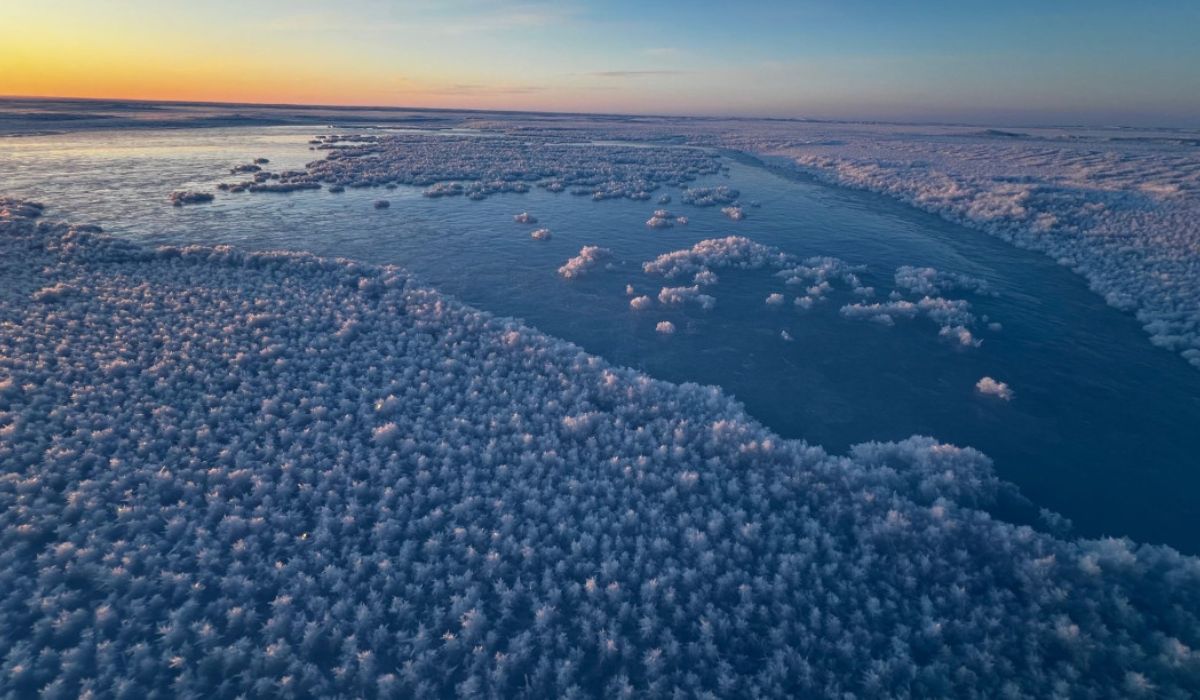
The Arctic sea cover naturally grows during the winter when the air temperature drops and the water on the ocean surface freezes.
The experiment aimed to accelerate this process.
After the water was pumped up, it spread over the surface and came into contact with sufficiently low temperatures to return to a solid state.
A large part of the additional thickening occurred right after each pumping episode.
In the areas treated in December, 13 of the 14 additional centimeters recorded over the season appeared immediately after the intervention.
In the sectors flooded in January, 17 of the 21 centimeters gained also emerged right after the application.
Meanwhile, the areas treated twice accumulated differences of approximately 30 and 32 centimeters compared to the control ice.
The numbers do not indicate that the entire ice sheet gained exactly the same height.
The maximum value of 32 centimeters was found in certain areas subjected to the most intense treatment.
Treated ice became up to 32 centimeters thicker
In mid-May 2025, before the more intense onset of melting, researchers compared the treated ice with sectors that remained without intervention.
In the control areas, the average thickness had evolved from about 53 centimeters at the beginning of December to 161 centimeters at the end of the growth season.
The flooded sectors had a layer up to 32 centimeters thicker.
At the same time, the snow cover over these regions was between one and 13 centimeters thinner.
This difference in snow is relevant because the white layer acts as a thermal insulator.
A thick cover can reduce the loss of heat from the ocean to the atmosphere and, thus, decrease freezing at the bottom of the ice.
It is not yet fully established how much of the result came from the direct freezing of the water placed on the surface and how much is related to changes in snow, temperature, and heat transfer.
The authors state that further work will be needed to clarify these mechanisms and understand why the treated areas exhibited different properties during the melting period.
Comparison with 50 years applies only to Cambridge Bay
The study compared the increase of approximately 30 centimeters with historical records of sea ice thickness in Cambridge Bay.
According to this analysis, the difference corresponds approximately to the accumulated thinning observed locally over the last 50 years.
The comparison does not mean that the experiment has reversed five decades of climate change throughout the Arctic.
Nor does it indicate that the ice has permanently returned to conditions recorded in the past.
The intervention occurred in specific plots and its effects were monitored during a single complete season.
Therefore, the expression “recover 50 years” describes a thickness equivalence in relation to a local historical series.
It does not represent the recovery of lost area, total ice volume, or environmental conditions of previous decades.
Treated area remained brighter during the thaw
With the arrival of spring, the areas that received water remained visually brighter than the control sectors.
The scientists monitored this difference with images obtained by drones, on-site observations, and satellite records.
The greater brightness suggests that the treated surface could reflect more solar radiation.
This reflective capacity is known as albedo.
Light surfaces return a larger portion of solar energy, while dark areas, like the open ocean, absorb more heat.
Despite this relationship, the researchers did not directly measure the albedo of the areas during the study.
The work evaluated the brightness in the images but did not present a complete quantification of the energy reflected by the surface.
For this reason, it is still not possible to accurately state how much the color change reduced the ice warming.
The team itself intends to investigate in future research the relationship between flooding, frozen layer structure, brightness, and energy balance.


Slower melting was observed indirectly
Sensors installed in the ice recorded temperature profiles that allowed for estimating the melting rates.
The calculations indicated that the treated areas probably lost thickness more slowly between the end of May and mid-June.
The conclusion was also consistent with the brightness observed in the images.
When the surface began to darken around June 20, the estimated rate of melting increased.
At the beginning of July, two treated areas still had ice with at least 40 centimeters of thickness around the sensors.
The control sector, on the other hand, was almost completely melted.
The authors acknowledge that they did not directly monitor all melting rates at each point.
Part of the evaluation was constructed from the measured temperatures, the appearance of the surface, and the conditions observed at the end of the season.
Historical data from Cambridge Bay indicate an average thinning of approximately three centimeters per day during the melting weeks in June and July.
According to the study’s calculations, a layer initially 30 centimeters thicker could remain for about seven to ten additional days, without considering other effects.
Research continued after the 2024 and 2025 season
The article compiles the results of the first campaign monitored from winter to the melting period.
The team reported in May 2026 that new fieldwork was already underway in the 2025 and 2026 season.
This later stage is part of a broader effort of modeling, laboratory experiments, and real-world testing.
Until the release of the first article, however, there were no peer-reviewed results from the new campaign.
The progress occurs while the Arctic sea ice cover remains below historical averages.
On March 15, 2026, the maximum winter extent reached approximately 14.29 million square kilometers, statistically tied with 2025 as the smallest maximum recorded since the beginning of satellite observations in 1979.


This is a mistake. Humans should not interfere with nature. It’ll have unforseen consequences.
You’re kidding me right? Humans have been interfering with nature for millennia and especially in the last couple of hundred years and the consequences are now well known… this is just reversing some of the damage from that interference…
It’s wild that people can’t see that even though it’s obvious as the nose on their face.