Discovery made by four teenagers revealed cave paintings preserved for millennia and transformed the understanding of human creativity in the Paleolithic
On September 12, 1940, four young people explored a hidden opening in a hill in Montignac, in the French region of Dordogne.
Marcel Ravidat, Jacques Marsal, Georges Agniel, and Simon Coencas advanced through the underground galleries using improvised lighting.
Shortly after, figures of large animals appeared on the rocky walls. The discovery of the Lascaux Cave would change the studies on prehistoric art.
-
A 17-year-old teenager was buried about 2,500 years ago with more than 4,000 gold pieces, but DNA analysis of the Golden Man revealed evidence that elite Scythian families passed power and prestige between generations and controlled territories and resources.

-
Brought to Australia to eliminate insects in crops, bird spreads through cities, invades nests, and becomes a threat to native birds after 160 years
-
Saint with a dog’s head intrigued Christians for centuries: understand why Saint Christopher gained a cynocephalic appearance, traversed medieval art, and was eventually banned in Orthodox icons
-
Priest allegedly cast a curse on Irish team, last champion died and Mayo ended a 75-year drought with historic title over Kerry


According to the French Ministry of Culture, the find inaugurated a new stage in the knowledge of rock art and human cultural origins.
An opening in the hill hid the paintings
Marcel Ravidat initially noticed a deep hole in the rugged terrain of the region. Four days later, he returned to the site accompanied by the three friends.
The group widened the passage and descended through the narrow access. Then, the teenagers traveled approximately 30 meters inside a dark gallery.
The improvised lighting gradually revealed the first paintings. Animals began to appear on the rocky surfaces as the young people advanced into the cave.
Marcel had identified the opening. Jacques, Georges, and Simon, in turn, participated in the exploration that would go down in the history of archaeology.

Galleries preserved hundreds of images
The interior of Lascaux held hundreds of paintings and engravings produced by ancestral communities.
The representations mainly showed large prehistoric animals. Lines, colors, and different positions revealed a technical mastery considered extraordinary by researchers.
For millennia, the environmental conditions of the galleries protected the images from external interference. Thus, a considerable part of the details remained preserved.
The collection also demonstrated a complex visual organization. The figures did not just represent animals but evidenced aesthetic sensitivity and symbolic thought.
The discovery, therefore, dispelled the idea that the artistic production of that period was exclusively rudimentary.
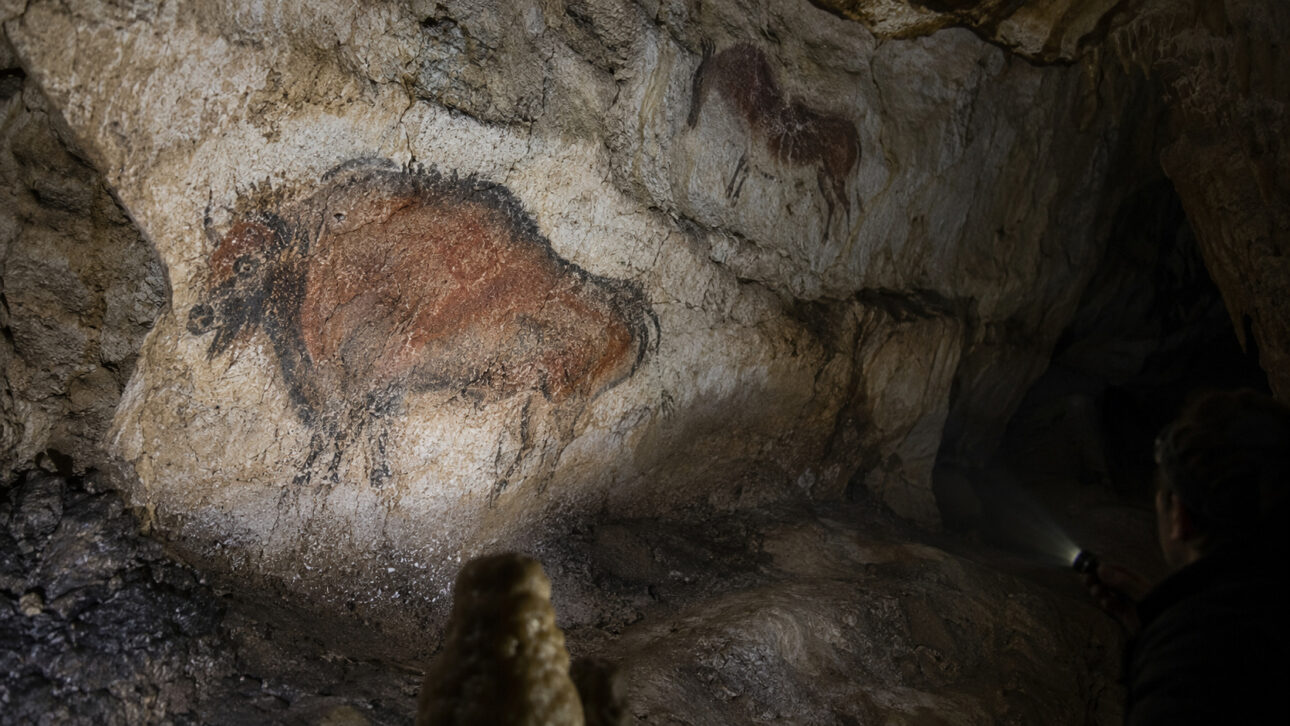
Lascaux changed the studies on prehistoric art
Before the discovery, many experts underestimated the creative capacity of prehistoric European populations.
The Lascaux paintings, however, required a profound revision of these interpretations. The collection revealed a sophisticated, planned, and symbolically charged artistic expression.
Consequently, researchers began to recognize that visual thinking was already widely developed during the Paleolithic.
The impact also reached art history. Traditional concepts about the first human aesthetic manifestations needed to be reconsidered in light of the evidence found.
Thus, Lascaux became a worldwide reference for studies on cave art, prehistoric creativity, and human cultural evolution.
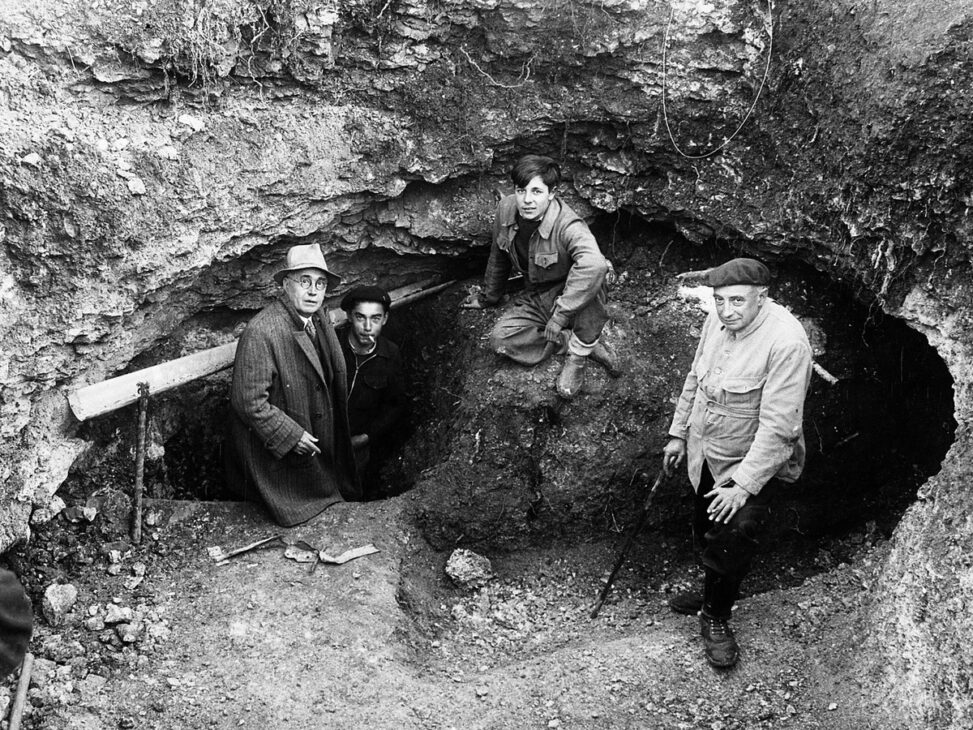
Tourism threatened the cave’s balance
The importance of the discovery was quickly recognized. On December 27, 1940, Lascaux was classified as a French Historical Monument.
The cave was opened to the public in 1948. Subsequently, however, the intense flow of visitors altered the delicate environmental balance of the galleries.
Faced with the risk of deterioration, French authorities closed the original space to the public in 1963.
Since then, access remains controlled. The measure seeks to protect the paintings and preserve one of the main artistic testimonies of prehistory.
Currently, Lascaux continues to help researchers understand how ancient populations developed complex forms of visual communication and symbolic expression.
And you, would you have the courage to enter through an unknown opening and explore a completely dark cave?