





 Portuguese
  English
  Spanish
  4 min of reading
  0 comments


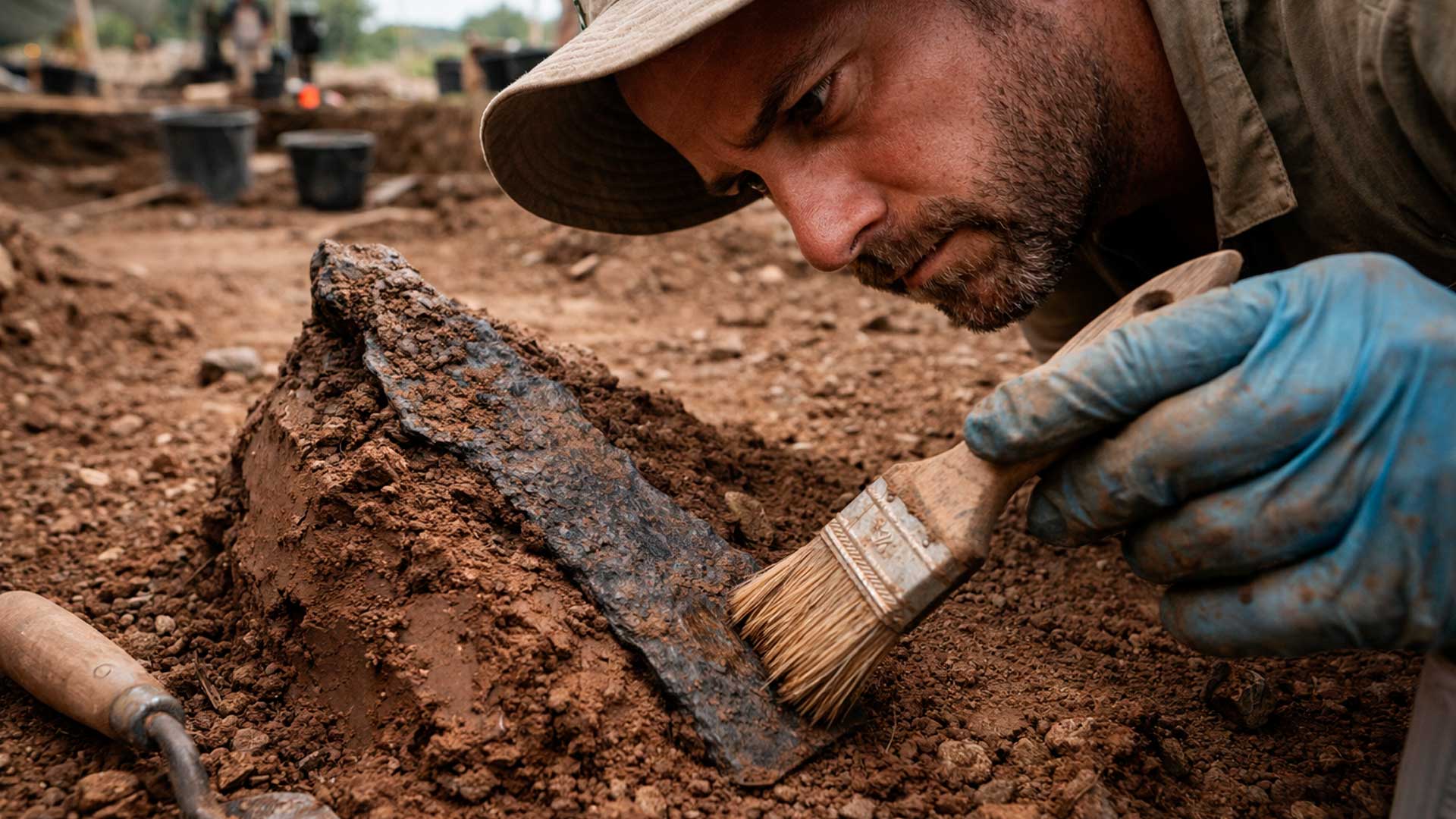
An artifact about 20 centimeters found in southwest China is reopening the debate about how far the technical knowledge and adaptive capacity of ancient civilizations extended.
An object discovered at the archaeological site of Sanxingdui, in southwest China, has begun to challenge traditional interpretations of the Bronze Age. The piece has been identified as an artifact made from meteoric iron, a rare and unexpected material for this period.
The find gained traction after chemical analyses indicated an unusual composition, with over 90% iron and about 7.41% nickel.
This combination is considered highly suggestive of extraterrestrial origin, as nickel in high concentrations typically appears in metallic meteorites.
-
The Moon has essential rare earth minerals for 99% of the electronics you use in your daily life and a future fuel that is almost nonexistent on Earth: now the race to explore the satellite has turned into a global competition among more than 70 countries.

-
The humanoid robot G1 has gained a new digital brain that has transformed it into a true domestic worker: it learns by observing the environment, interprets objectives, and executes complete tasks without receiving step-by-step instructions.

-
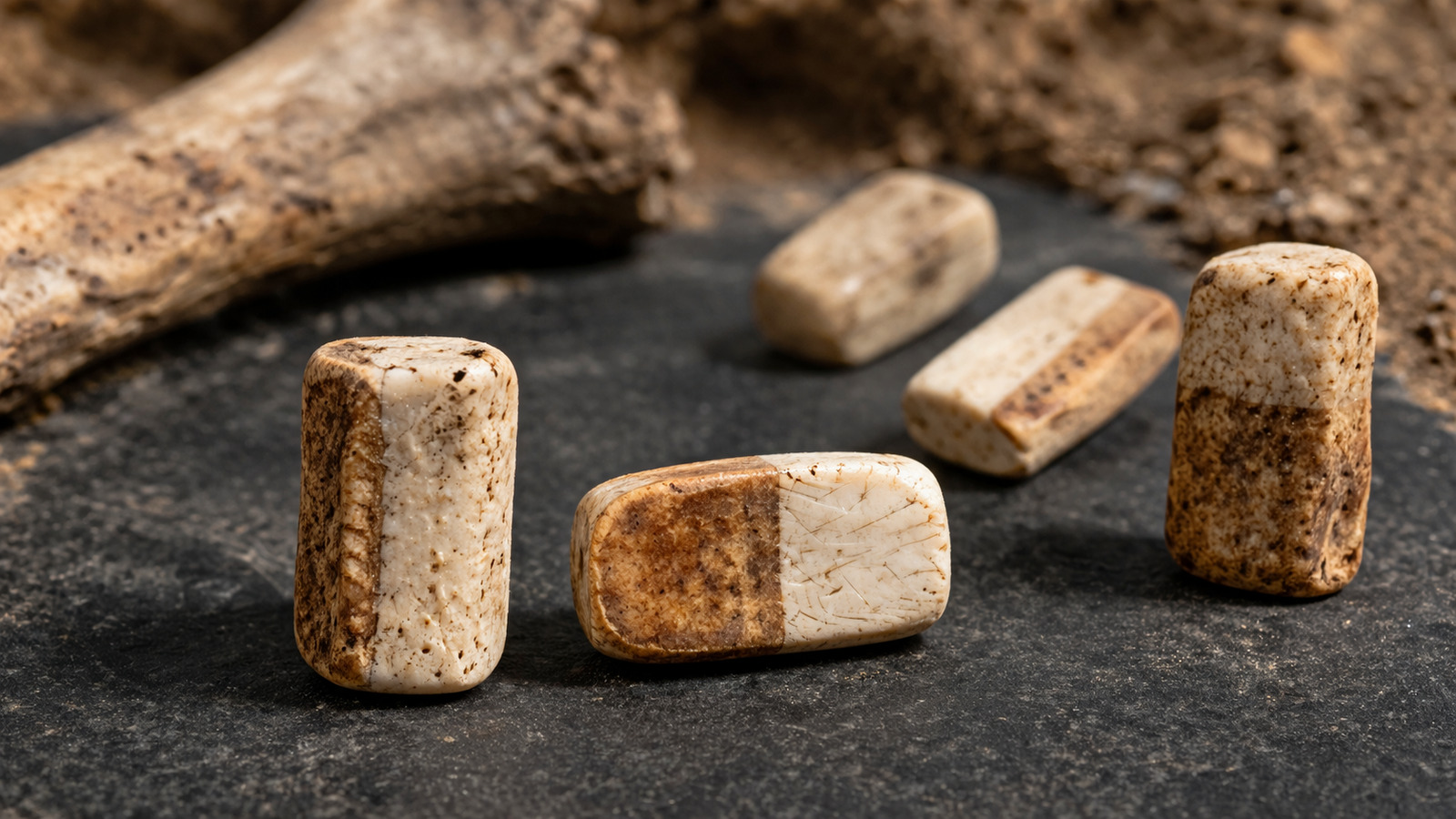
They seemed like common bones, but scientists were surprised to find a relic over 12,000 years old that dates back to before the Bronze Age.
-
With an almost perfect ring of 70 km visible from space, known as the “Eye of Quebec” and over 100 km in length, the Manicouagan Crater in Canada reveals the colossal mark left by a giant asteroid and has become one of the most impressive formations ever identified on the Earth’s surface.

The object, cataloged as K7QW-TIE-1, was located in a sacrificial pit and is dated between 3000 and 1200 BC. The case was detailed in a study published on the Science Direct platform and repositioned Sanxingdui at the center of discussions about ancient technology.
Why the meteoric iron found in Sanxingdui attracts so much attention from archaeologists and could change the historical reading of the period
In practice, what makes the discovery so important is the fact that many Bronze Age societies had not yet mastered the regular production of iron. In this context, finding a tool made from this material indicates a solution outside the known technological standard.
Meteoric iron arrives on Earth through the fall of iron and nickel-rich meteorites. Instead of relying on advanced furnaces and complex smelting techniques, ancient peoples could utilize fragments already available in nature and shape them with simpler methods.
This helps explain why the use of the material does not necessarily prove that that civilization mastered metallurgy. The find suggests, above all, keen observation, repurposing of rare resources, and artisanal skill to transform an unusual fragment into a useful or ritual object.
How the tool may have been produced even without advanced furnaces and without established iron metallurgy

During the Bronze Age, it was most common to work with copper and tin. Iron, when it appeared, was still an exception in many regions, especially as raw material for elaborate artifacts.
In the case of meteoric iron, there was a decisive advantage. This material could be shaped by cold hammering, eliminating the need for extreme melting temperatures, something that would be beyond the technical reach of many groups at that time.
This possibility shows that the object from Sanxingdui is not only rare but also consistent with a scenario of technical creativity. Ancient artisans may have recognized the properties of the metal and adapted their work to the limitations of the time, without needing to master the entire metallurgical process that would only become more common later.
The shape of the artifact also draws attention. The piece resembles an elongated axe, which raises hypotheses about practical, symbolic, or ceremonial use, especially since it was found in a sacrificial context.
Rarity of meteoric iron helps explain why objects like this are so valuable and rarely appear in excavations
Meteoric iron artifacts are rare for a simple reason. They depend on an uncommon natural event, the fall of meteorites, and also require that the fragments be found, recognized, and utilized by humans.
Not every meteorite provides useful material for manufacturing. Moreover, many ancient societies may not have identified practical value in this type of metal, which further reduces the number of pieces produced.
Therefore, when an object like the one from Sanxingdui appears, it becomes a significant archaeological evidence. The rarity of the material, combined with the historical context of the discovery, reinforces the idea that it is a unique and highly valuable scientific artifact.
Sanxingdui is already considered one of the most important sites for the study of ancient Chinese civilizations. This new case enhances the relevance of the site by suggesting that its inhabitants or artisans had access to much less common raw materials than previously thought.
Discovery reinforces the importance of Sanxingdui and opens new questions about practical knowledge and technology in ancient civilizations
The main consequence of this find is that it broadens the view of the capabilities of ancient civilizations. Instead of seeing these peoples as technically limited, the discovery points to a sophisticated practical knowledge, based on observation, experience, and experimentation.
There is also an increasing possibility that other ancient objects were made from extraterrestrial materials but have not yet been correctly identified. New laboratory analyses on ancient pieces may reveal more similar cases in the coming years.
This does not mean rewriting the entire history of metallurgy at once, but it forces researchers to revisit old certainties. The object K7QW-TIE-1 shows that the relationship between technology, nature, and culture in the past may have been much more complex than traditional models suggested.
In the end, the discovery published on March 31, 2026 reignites a fascinating debate about the origin of materials, the circulation of knowledge, and human inventiveness in ancient times. And when an artifact from the Bronze Age seems to literally come from the sky, archaeology gains one of those rare moments when a single piece changes the entire tone of the historical conversation.
Does this find really change what is known about the Bronze Age, or is it still too early to draw larger conclusions? Leave your comment with your opinion on the Sanxingdui case. In discoveries like this, controversy is often as important as the piece found.




Seja o primeiro a reagir!