Portuguese
  Spanish


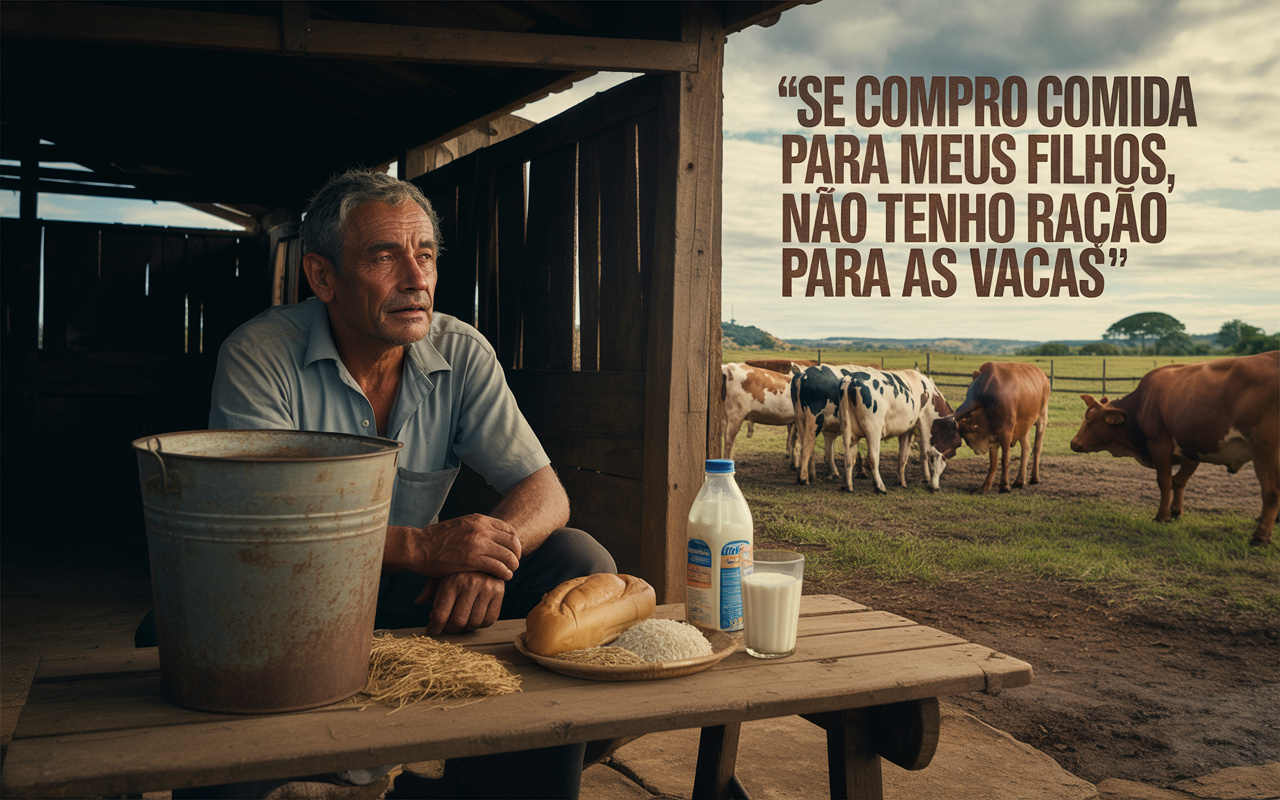

Milk Crisis in Paraná Puts Producers on the Brink of Collapse: “If I Buy Food for My Children, I Don’t Have Feed for the Cows,” Warns One of the Affected.
The milk production chain in Paraná is experiencing such a deep crisis that rural producers claim they are facing unimaginable dilemmas: “If I buy food for my children, I don’t have feed for the cows.” This dramatic statement, made during a public hearing at the Legislative Assembly of Paraná, exposes the economic collapse that many farmers are facing today.
The scenario is complex: competition with imports of powdered milk, high costs of inputs such as feed, electricity, and fuels, along with increasingly tighter margins, have led many producers to the edge of giving up. And the crisis is not just economic; it is existential: thousands of families in the countryside depend on this activity to survive.
The Origin of the Drama: Importing Powdered Milk and Prices Plummeting
At the hearing in the Alep (Paraná), producer Meysson Vettorello, from Santa Tereza do Oeste, spoke frankly about the situation: “The milk producer today is bleeding. The day will come when he will have to choose whether to buy food for the family or feed for the cows.”
-
Brazilian Honey Supplying U.S. Supermarkets Faces Price Hike and Job Threats Amid New Tariff Round

-
Drought in France Threatens Beet Crops, Raising Fears of Sugar Price Surge Across Europe
-
French village switches from oil to giant miscanthus for heating, cutting annual costs from €20,000 to €4,300

-
Brazilian Agribusiness Sets Record with $169 Billion in Exports in 2025


This type of outburst, although shocking, reflects a reality confirmed by pending bills in the state:
- Bill 888/2023 proposes to ban the rehydration of imported powdered milk, preventing this product from being transformed into liquid milk and sold as local.
- Bill 417/2025 requires that industries inform in advance the price they will pay per liter of milk before collection.
Both initiatives aim to give greater predictability and bargaining power to producers, who are often at the mercy of market fluctuations and competitive pressure.
Rising Costs, Disappearing Margins
The problem is not just the price of milk, but the cost to produce it. The basic inputs for dairy farming in Paraná are feed, medicines, energy, and transportation — all are escalating. In this scenario, a cow requires feed, maintenance, and care that increasingly burden the producer’s finances.
When the price paid per liter of milk barely covers these costs, there is little — or nothing — left to compensate the farmer or support his family.
The import of powdered milk, often cheaper, enters the domestic market with a competitive advantage, further pressuring prices.
According to reports gathered at the hearing, many producers are already operating in the red, accumulating debts and losing assets.
The Human Effects: Families at the Limit
Agribusiness is often seen as a robust sector, but within it, family milk producers are among the most vulnerable. They do not just deal with cows; they manage children, bills, and expectations.
When the cost of production exceeds the return and decisions like “buying food for my children” or “feeding the cows” arise, the crisis transcends the economic: it becomes moral and social. Many families are considering abandoning the activity, shifting to other crops, or even leaving the countryside in search of income.
This exodus would represent not only the end of rural tradition but also local food shortages and a greater weakening of regional food supply chains.
The Legislative Response: Law as Aid or Hindrance?
The Legislative Assembly of Paraná reacted promptly, convening meetings to discuss solutions and legislative proposals. In the speeches of deputies, mayors, and producers, the urgency for measures resonates:
- Barriers to predatory imports
- Transparency in negotiations between dairies and producers
- Tax incentives and strategic subsidies
But there is a risk: slow bureaucracy and industry lobbying may render good intentions meaningless. In other words, legislating is not enough; implementation and oversight are crucial.
As Paraná grapples with this issue, other producing states have already faced similar crises, with cases of producers abandoning the activity in the face of zero margins. Brazil, a country that exports soybeans, meat, and grains, sees its dairy sector weakened by decisions that depend not only on producers but also on public policies, international trade, and regulation.
The Risk of Repeating Extreme Scenarios, Producers Succumbing is Real. And a Strategic Chain like Milk Cannot Be Ignored in Times of Global Food Insecurity
Vettorello’s statement: “If I buy food for my children, I don’t have feed for the cows,” encapsulates in few words the desperation of those living intensely on the border between producing food and surviving.
The milk crisis in Paraná demands urgent responses: it is no longer time for talk but for concrete action. And the whole of Brazil must closely monitor this situation because what happens on small farms also affects the urban consumer’s plate.
And you, reader: Would you accept that a crisis leads the producer to this dilemma? Or do you think the state needs to intervene forcefully to ensure the survival of rural activity and food in our country?