





 Portuguese
  English
  Spanish
  4 min of reading
  0 comments



Economists Project a Lower Selic, but High Interest Rates Should Keep Credit Expensive and Sustain Gains in Fixed Income.
Inflation in Brazil is expected to slow down over the next few months and create room for the Central Bank to reduce the basic interest rate, the Selic, by the end of 2026.
The projection, made by economic consultancies and large fund managers, indicates cuts of up to three percentage points.
Still, high interest rates are expected to continue impacting expensive credit and keeping fixed income as one of the most attractive investments in the economy.
-
India announces a plan of $3.06 billion to bring aviation to forgotten regions: 100 new airports, $1.07 billion in subsidies, and regional routes guaranteed for 10 years, from 2026 to 2036, away from the centers.

-
Brazil blocked a proposal from the United States at the WTO that would make the exemption from tariffs on digital products like streaming and ebooks permanent, favoring American tech giants at the expense of developing countries.

-
IPTU exemption for seniors in 2026: see how to secure the benefit.

-
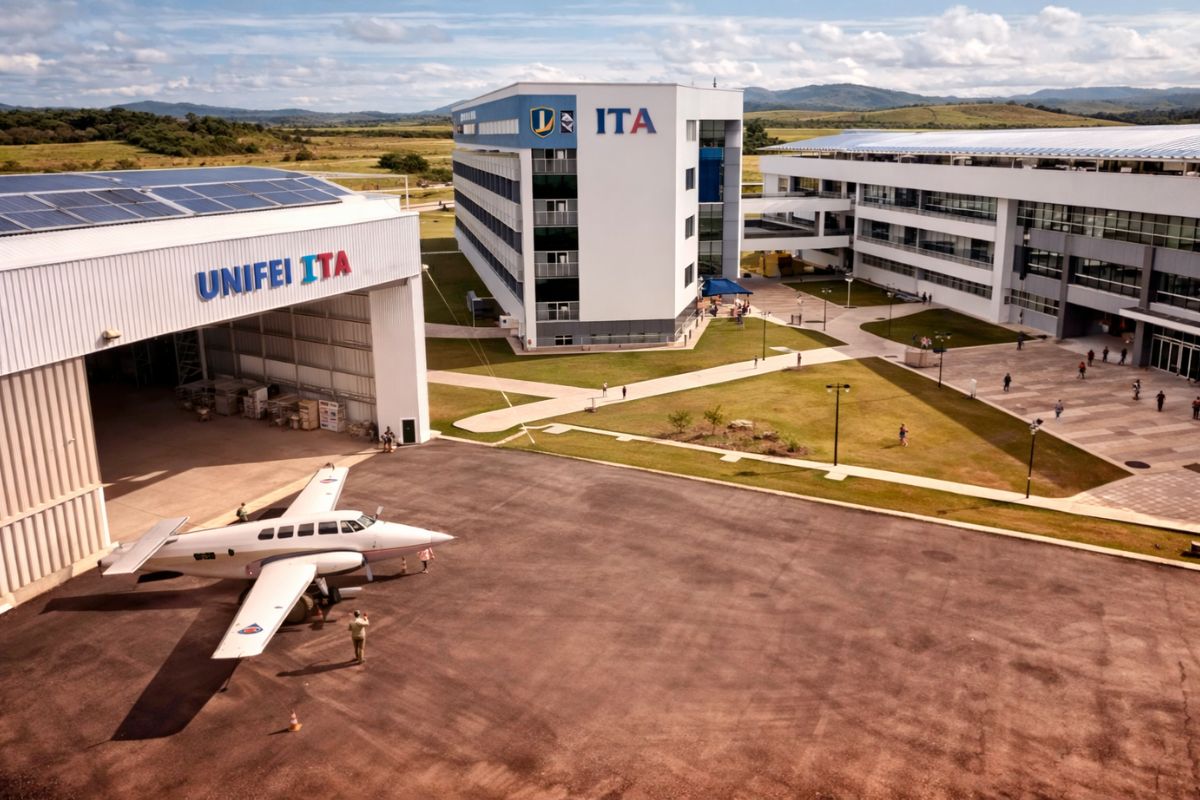
The institute that trained the greatest aerospace engineers in Brazil has just opened its first campus outside São Paulo after 75 years: ITA Ceará will have R$ 445 million, new courses in energy and systems, and classes are expected to start in 2027.
The estimates take into account the national macroeconomic scenario, the commitment to fiscal adjustment, and external factors.
Despite the expectation of gradual relief, experts warn that the drop in the Selic will not be sufficient to significantly lower financing for homes and vehicles.
How Much Can the Selic Drop, According to the Market
Currently at 15% per year, the Selic is expected to end 2026 around 12%, according to the Central Bank’s Focus Bulletin released last Monday (15).
The report gathers the average projections of about a hundred economists from the financial market.
Consultancies like Anbima, XP, and Bradesco Asset are among the most optimistic. All project a reduction of up to three percentage points over the next year, bringing the Selic to the level of 12% per year.
Even so, the Central Bank has not signaled when the cuts should begin.
The market is divided between January, March, or even April as the starting point for the reduction cycle.
Selic Cut Schedule Still Divides Analysts
Anbima projects a cautious start, with a cut of 0.25 percentage points in January, followed by more intense reductions throughout the first half.
“After that, there will be another cut of 0.25 percentage points, then one of 0.50, and then two more cuts of 0.25 that will bring the Selic to 12% at the end of next year,” says the entity.
On the other hand, Itaú Asset believes that more significant cuts should only occur starting in March.
“The scenario will be a cut of 0.25 percentage points, whether in January or not. I think the Central Bank can choose,” said Bruno Serra, head of the January fund family at Itaú Asset.
Inflation is Falling, but Still Above Target
Focus also projects lower inflation in 2026, with an average rate of 4.1%.
The number, however, remains far from the center of the official target, set at 3% per year.
According to economist Thais Zara from 4intelligence, price behavior will remain under pressure.
“In 2025, food prices at home fell significantly, which is not expected to repeat in 2026,” she says.
“We will have a year closer to historical levels, which will keep inflation pressured.”
GDP Growth and Exchange Rate Also Count
In addition to inflation, projections indicate more modest economic growth.
The GDP is expected to grow by 1.8% in 2026, below the 2.25% estimated for this year.
The exchange rate is also a concern.
The expectation is for the dollar to be R$ 5.50 next year, which could pressure prices and limit more aggressive cuts to the Selic.
Can Election Year Influence Interest Rates and Inflation?
Projections consider that fiscal adjustment will continue throughout 2026 and 2027.
“Our working premise is that there will be fiscal adjustment [in 2026],” says Fernando Honorato from Anbima.
“We see continuity in the macroeconomic agenda with fiscal adjustment advancing in 2027.”
According to him, the international environment represents the main risk.
“There’s the decision from the American Supreme Court regarding tariffs imposed by the U.S. on the world, the replacement of the Fed chair, midterm elections over there, and the artificial intelligence bubble,” he lists.
Still, Honorato notes that the electoral impact tends to be limited.
“The last six electoral cycles did not affect prices until about three months before the elections.”
High Interest Rates Keep Credit Expensive for Homes and Cars
Even with the Selic falling, high interest rates continue to make credit expensive in Brazil. Mortgage financing, vehicle loans, and personal loans still have high rates.
For those looking to buy a property, experts recommend increasing the down payment.
“In a scenario of high Selic, the initial installments tend to be higher, compromising family income for a considerable period,” explains Natalie Verndl from Corecon-SP.
In the case of vehicles, the recommendation is to wait or pay in cash.
“The depreciation of the vehicle, combined with long financing, can lead the consumer to pay for years for an asset that has already lost value,” she warns.
Fixed Income Continues as the Main Beneficiary
On the other hand, the scenario of high Selic strongly favors fixed income.
Fixed-rate securities, such as Tesouro Selic, continue to offer attractive returns, while savings accounts lose competitiveness.
Thus, even with inflation slowing down, conservative investors still find high interest rates an opportunity for profitability with lower risk.









-

Uma pessoa reagiu a isso.