





 Portuguese
  English
  Spanish
  6 min of reading
  0 comments


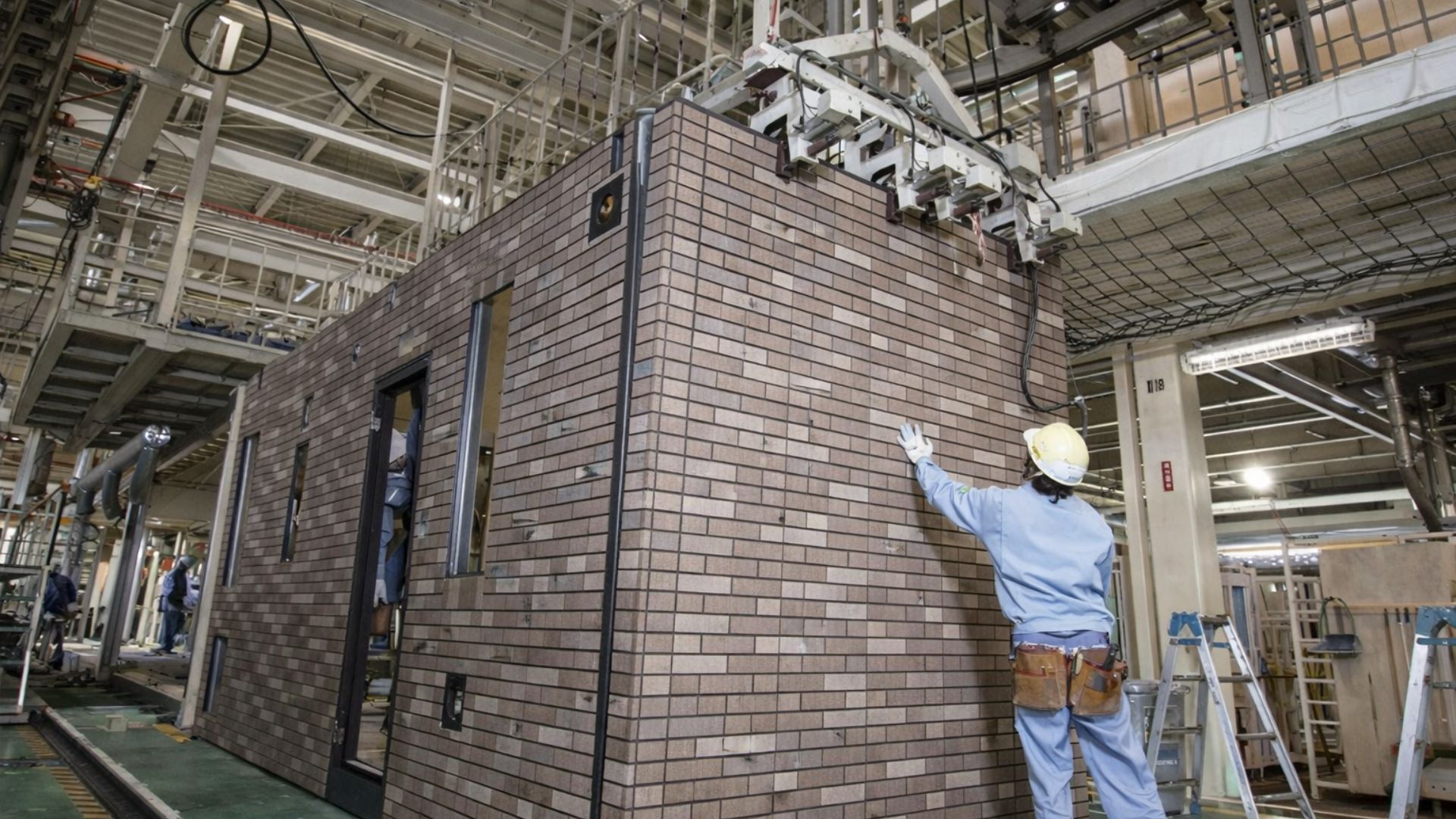
Japanese Residential Construction Moves To Industrial Model Where Houses Are Produced Almost Complete Inside Factories, With Robots, Structural Modules, And Rapid Assembly On Site, Reducing Exposure To The Weather, Execution Errors, And Uncertainties Typical Of Traditional Construction.
In Japan, part of residential construction no longer starts with bricks, concrete, and teams spread across the site.
Instead, the house comes almost ready from an industrial line, in structural modules that arrive at the lot with walls, floors, frames, and part of the installations incorporated.
In the case of SEKISUI HEIM, a brand of the Sekisui Chemical group, the promise is to concentrate the more sensitive work inside the factory and reduce the on-site stage to a rapid, planned, and controlled assembly, with roof installation on the same day that the units are positioned.
-
The Federal Revenue Service now automatically cross-references everything you declare with data from banks, credit cards, brokerage firms, and insurance companies, and any discrepancy between your income and your expenses triggers an alert in seconds.

-
Amid global tensions, Brazil blocks the United States’ proposal at the WTO and paves the way for a trade crisis and possible retaliations.

-
Shopee opens the largest logistics warehouse in Brazil in Guarulhos: 220,000 m² on Dutra, contract signed before construction, pays R$ 45/m² and accelerates deliveries at scale, putting pressure on Mercado Livre and Amazon.
-
After mistakenly transferring R$ 50,000 via Pix, a man will receive the amount back along with R$ 10,000 for moral damages from the recipient.


Modular Construction Changes The Logic Of Traditional Construction Sites
This logic alters the central point of the work.
In conventional construction, the site usually concentrates decisions, adjustments, and corrections throughout several stages subject to rain, execution failures, supplier delays, and rework.
In the unit construction system adopted by the Japanese company, many of these variables migrate to a factory environment, where processes, tools, and inspections can be repeated with more regularity and less weather interference.

Sekisui Chemical itself presents this model as a way to shorten the period the structure is exposed to the weather.
In its corporate materials, the group emphasizes that SEKISUI HEIM houses are produced using an industrialized method of units and that on-site assembly can be completed in a single day, which helps protect the property right at the start of installation.
The company also claims that this format allows for functions and specifications aligned with the design to be delivered right from the factory.
Rapid Assembly Reduces Exposure Of Structure To The Weather
The argument is not limited to speed.
By reducing the gap between the arrival of the structure and the upper closure, the method seeks to mitigate a recurring problem in open construction: the exposure of components to moisture before the final covering.
In this arrangement, operational gain appears precisely in the compression of the most vulnerable phase of construction, without it necessarily meaning that the entire house is completed within 24 hours.
Industrial Robots Enter The House Production Line
To support this level of standardization on an industrial scale, automation has entered the process as a production tool.
A case study released by Kawasaki Robotics describes the application of industrial robots on the assembly line of the factory in Kyushu, in Tosu City, Saga Prefecture.
According to the manufacturer, the adoption of robotics addressed two practical fronts: reinforcing a rigorous quality control and tackling the combination of an aging workforce with a labor shortage.

Kawasaki’s documentation details that these housing units are produced as structural boxes that are then transported and connected on the site.
In international versions of the same case, the company states that the modules can leave the factory with a high degree of finish, including external and internal walls, floors, stairs, windows, and frames.
Thus, the local phase is concentrated on lifting, joining the pieces, and final connections between the modules.
Planning Replaces Improvisation On Site
This layout changes the hierarchy of complexity.
Instead of concentrating the risk of error on the lot, the system requires that compatibility occurs beforehand, still in planning.
Each unit must respect manufacturing, transportation, and lifting limits, as well as arrive on site with interfaces already planned for fitting.
In this context, repeatability is not a productive detail but the axis of the model.
Without it, rapid assembly loses efficiency, and industrial gain disappears.
Unit Construction Method Has Existed Since 1971
There is a historical component that helps explain why this approach operates with a logic close to manufacturing.
Sekisui Chemical informs that it launched the first SEKISUI HEIM housing in 1971 and, from the beginning, developed the business based on the Unit Construction Method, presented by the group as an advanced factory construction solution.

Recent corporate reports maintain the same definition and treat the housing company as a specialist in this method.
This history also helps to understand why the use of robots does not appear, in this case, as an isolated piece of technological marketing.
Kawasaki states that it brought to housing a logic already established in automotive lines, using automation to stabilize tasks sensitive to human variation and increase process efficiency.
This move makes sense in a sector where small differences in execution can accumulate in fittings, squaring, finishes, and performance over time.
Industrialized Houses Can Use Steel Or Wood
Another relevant point is that industrialization is not associated with a single material.
Sekisui Chemical states that it works with modular production in the factory for both houses with metal structure and wood models.
What remains constant is not the main input but the transfer of work to a controlled environment, focusing on comfort, safety, and adherence to project specifications.
Quality Control Goes From The Construction Site To The Factory
On the production plan, this method reorganizes the schedule of the work and also the way quality is measured.
Instead of mainly relying on scattered inspections on-site, the system relies on repeatable checks within the factory, where jigs, equipment, and routines can be calibrated with more precision.
Kawasaki itself points to rigorous quality control as the explicit reason for introducing robots into the SEKISUI HEIM line.
This industrialization of housing is not a recent experiment in the Japanese market but a result of decades of development in prefabricated housing in the country.
Academic studies on the Japanese industry indicate that companies in the sector have advanced in automation and mass production by combining standardization with customization at scale.
In the case of Sekisui Heim, research cites the unit method as an example of a construction treated more as a manufacturing process than as traditional open-air construction.
At the same time, the case of SEKISUI HEIM helps to show that the expression “factory-made house” does not describe just a property assembled outside the site.
It points to a broader shift in the logic of residential construction: less improvisation on-site, more prior definition, and more integration between design, production, and transport.
When the structure arrives ready to be lifted and closed quickly, the construction ceases to be a long sequence of open steps and begins to operate as the installation of an industrialized product, even if it depends on a base, logistics, and final connections on-site.
In the Japanese context, where industrialized housing already has tradition, this model serves as a showcase for a deeper transformation in the sector.
The interest lies not only in the appeal of assembling units in one day but in what this reveals about the reorganization of the work of building.
The factory assumes the most critical part, the site loses operational prominence, and predictability becomes as important as speed.








-

-

-

-

10 pessoas reagiram a isso.