





 Portuguese
  English
  Spanish
  7 min of reading
  0 comments


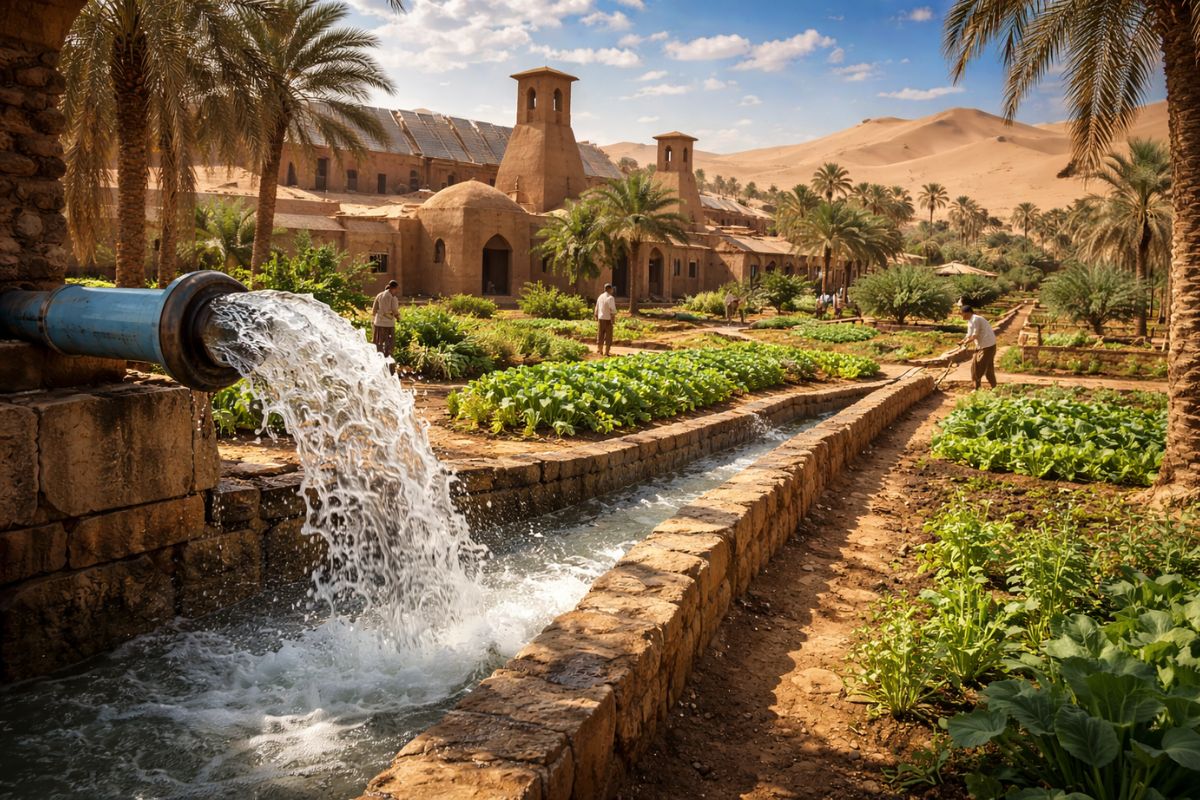
Deep Wells Are The Starting Point Of A Bold Attempt In The Dakhla Oasis, In The Western Desert Of Egypt, Where Families Want To Create An Ecovillage Combining Fossil Water, Permaculture, Traditional Techniques, And Adaptation To Extreme Heat.
The deep wells define survival in the Dakhla Oasis, one of the driest landscapes on the planet. In the eastern Sahara, where the norm is to record zero millimeters of rain in a year and the last significant precipitation would have occurred about 13 years ago, any life project depends entirely on water drawn from underground.
It was precisely for this reason that a group of families from Cairo decided to start there when planning an ecovillage based on permaculture. The proposal is to unite ancestral oasis practices with contemporary ecological design, but the local reality raises an inevitable question: to what extent can a sustainable settlement exist where everything relies on fossil water and deep wells?
Ancient Water Sustains Life In The Middle Of The Sahara
In Dakhla, water does not come from rain. It flows from a deep and ancient aquifer. The oasis sits on top of the Nubian Sandstone Aquifer, described at its base as the largest fossil aquifer on the planet.
-
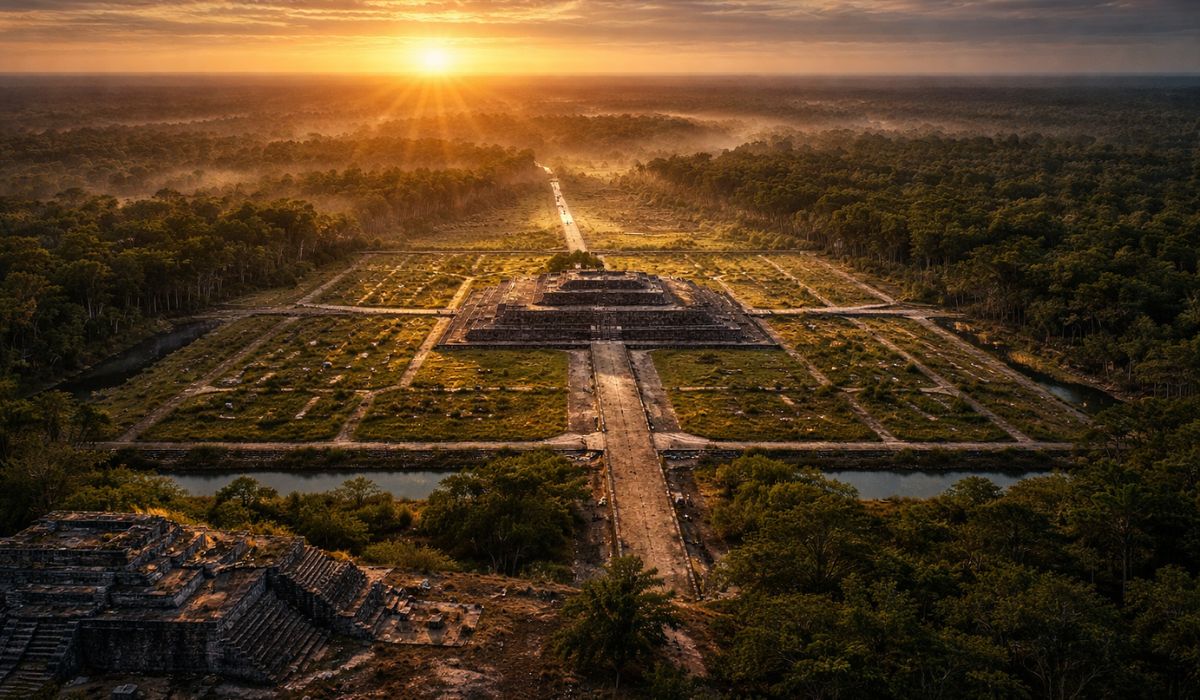
In Mexico, a 3,000-year-old Maya site with the dimensions of an entire city may have been built as a colossal map of the cosmos, created to represent the order of the universe and reveal how this people organized space, time, and rituals.
-
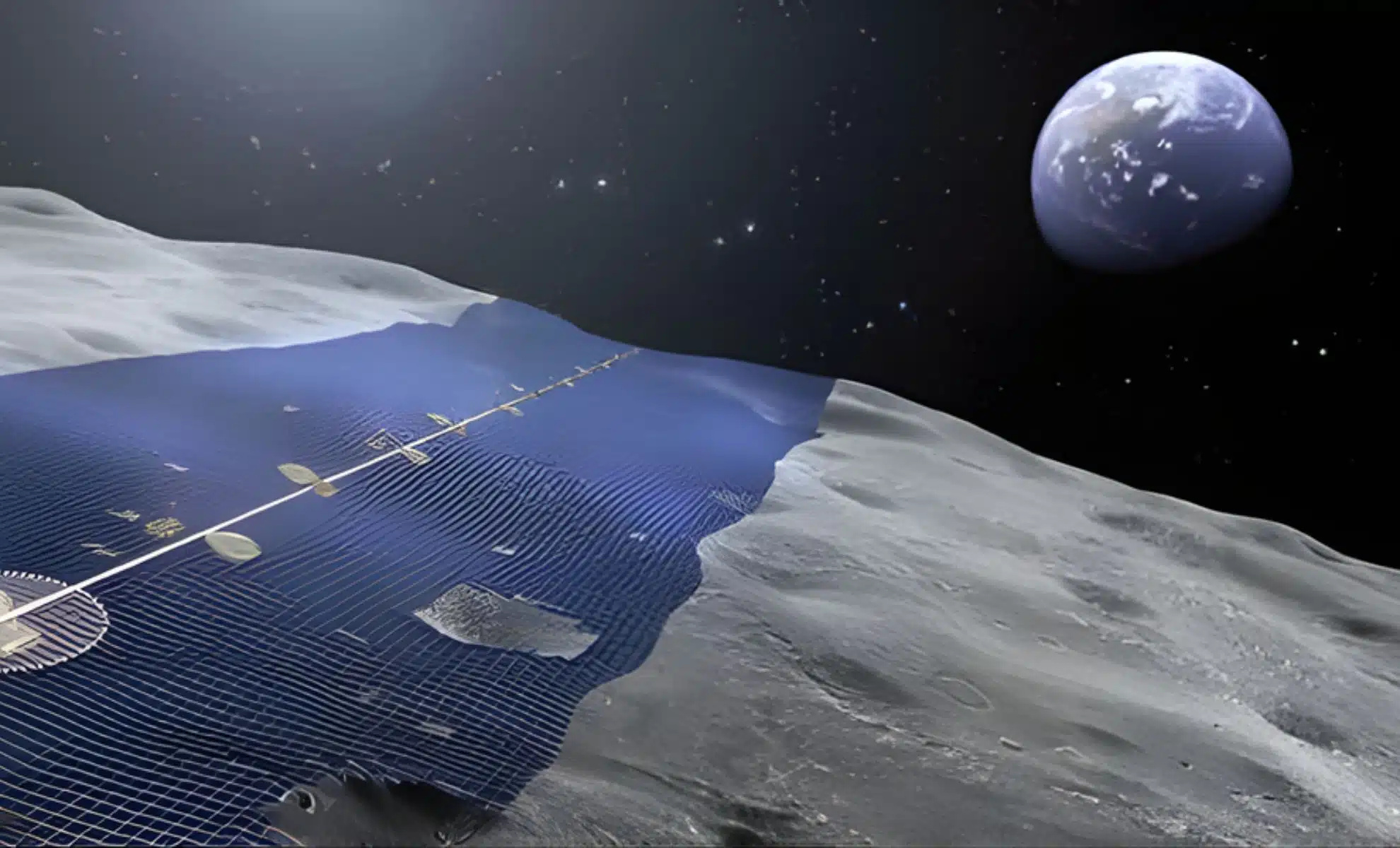
Japan wants to build a solar ring of 10,900 kilometers on the Moon to continuously send energy to Earth.
-
Weighing almost 1 ton, with temperatures of up to 3,000°C, the ability to launch 10,000 fragments within a radius of 1 km, capable of penetrating concrete and melting steel, Turkey’s terrifying bomb emerges as one of the most destructive non-nuclear weapons ever presented.

-
After a submarine disappeared beneath the “Doomsday Glacier,” scientists announce a new monstrous machine capable of operating at 3,000 meters depth to return to the heart of the ice and investigate a threat that could raise sea levels worldwide.

This means that the water stored there was deposited in another climatic era and is not being replenished by current rains, because there is practically no precipitation in this part of the desert.
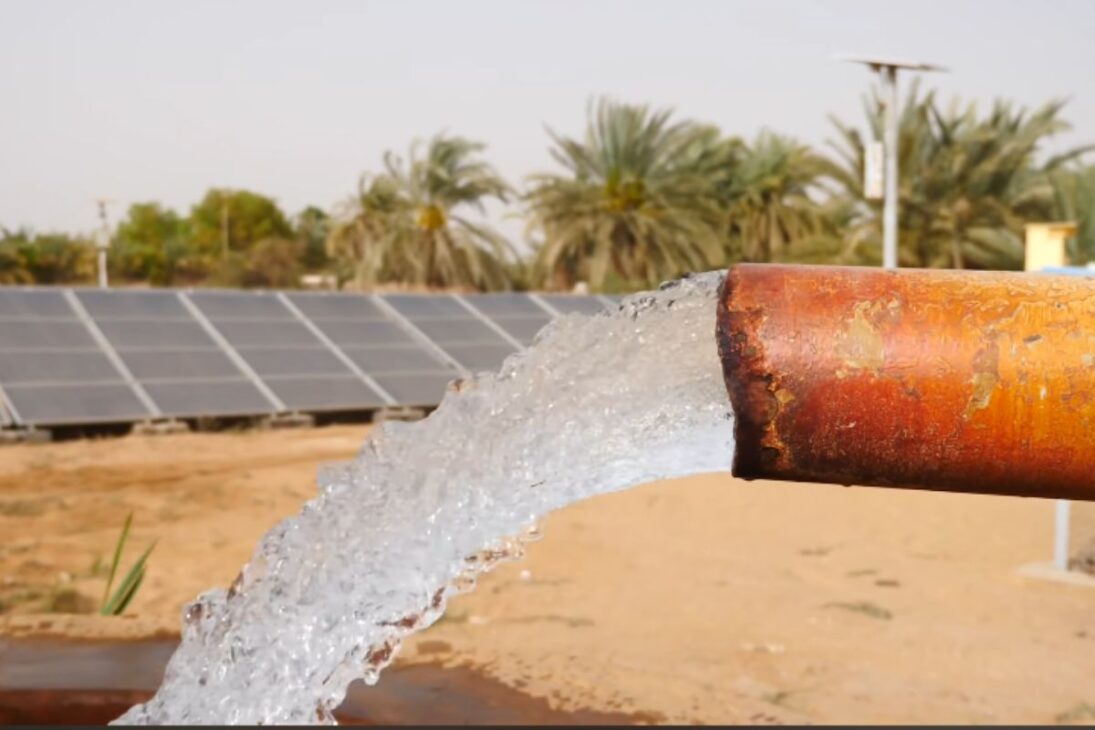
One of the most impressive examples observed on-site was one of the government wells, powered by solar energy, with a 1,300-meter depth and a production of 200 cubic meters of water per hour while the sun shines on the panels.
The water comes from the ground at 40 °C, hot to the touch, as if it were a thermal spring. Without these deep wells, Dakhla would be nothing but sand.
Oasis Lives Off An Enormous, But Finite Reserve
The relative abundance of water helps explain why the oasis has existed for millennia, but it does not eliminate the central problem.
It is a non-renewable reserve. According to the base, radiocarbon analyses estimate that the water from this aquifer is between 100,000 and 1 million years old.
At the same time, the volume is still gigantic. The International Atomic Energy Agency is cited as responsible for the estimate that this groundwater would be equivalent to almost seven times the Great Lakes of the United States or about 500 years of Nile River flow.
This reduces the feeling of immediate collapse, but does not erase the underlying issue. The water sustaining the present is not replenishing at the pace of human use.
Deep Wells Brought Advancement And Also New Doubts
The presence of deep wells has completely changed the scale of occupation of the oasis. Before electric pumps, water usage followed a different rhythm.
With modern technology, cultivated area has grown exponentially, and consumption has too. The result is a constant lowering of the water table.
According to the material, the water level is dropping at a rate of about 50 meters every 10 years.
Local drillers reported that the deepest government well in the oasis reaches 1,700 meters, while there is still water available at 150 meters in some spots.
The informal projection presented on-site suggests at least 300 years of availability at the current rate, possibly more, depending on the total depth of the aquifer. It is a long time on the scale of a human life, but short when it comes to real permanence.
Iron, Heat, And Salt Transform Irrigation Into A Constant Challenge
It is not enough to find water. It must be usable. In Dakhla, the water has a high iron content, which complicates modern irrigation systems significantly.
The residue clogs emitters and pipes, making it difficult or even unfeasible for many farmers to use conventional drip or spray irrigation.
For this reason, the dominant practice is still flood irrigation, with water flowing through open channels to the crops.
The problem is that this model consumes large volumes and also contributes to the emergence of salty areas in the lower parts of agricultural zones.
The productive landscape depends on deep wells but also suffers from the ecological cost of intensive water use.
In some properties, alternative solutions are starting to emerge. A smaller farm, 30 acres, used a system with an electrified magnet attached to pipes to neutralize the iron and thus allow for drip and spray irrigation with much less water consumption. This same property maintained new date and mango orchards irrigated by drip.
Ecovillage Tries To Unite Local Tradition And Ecological Design
The ecovillage project arose from the desire of families from Cairo to leave the metropolis and seek a more sustainable rural life.
The proposal is to combine traditional knowledge of the oasis with more recent principles of ecological design, observing patterns of water, agriculture, architecture, energy, and organization of the settlement.
The idea sounds simple in discourse, but becomes extremely complex when it comes into contact with the desert.
Designing an ecovillage in Dakhla is not just about drawing houses and gardens, but deciding how to live for decades in a place where everything depends on deep wells, energy, and careful land management.
Ancestral Architecture Shows How To Face 49 °C
If water is the first big challenge, heat is the second. During the most severe heat waves, the temperature can exceed 49 °C, and it was precisely at this point that the traditional architecture of the oasis proved to be an essential reference.
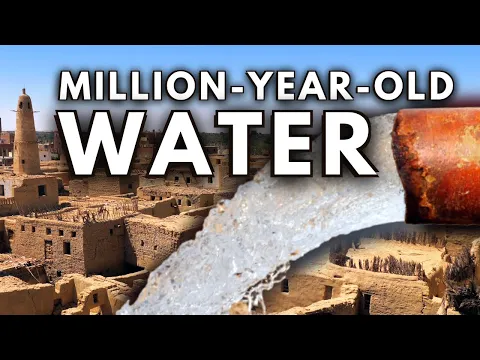
The ancient village of Al Qasr, regarded as the oldest in the oasis and inhabited for about 1,400 years, exhibits impressive solutions.
The buildings are constructed with adobe blocks coated with clay, very close to each other, creating narrow, shaded alleys protected from the wind. There were also systems for capturing and directing the wind that helped with passive cooling.
According to the base, the interior of this protected labyrinth can be on average 15 °C cooler. In such an environment, architecture is not aesthetics: it is survival.
Oasis Occupied For Millennia Still Teaches How To Live In The Desert
The Dakhla Oasis has been continuously inhabited since 6,000 B.C., which means about 8,000 years of continuous human presence.
This gives the place enormous historical weight and shows that life in the desert has never relied solely on modern technology.
Today, the oasis comprises 16 villages, with a total population of about 90,000 people within an area of 1,000 km².
In many places, ancient architecture still inspires newer constructions, but the material also highlights that several modern buildings ignore the traditional logic of the desert.
This exchange of knowledge between past and present may determine whether the new ecovillage will be resilient or just another fragile experiment in the Sahara.
Wind And Sand Dominate The Design Of The Landscape

In many permaculture projects, water is usually the dominant pattern. In Dakhla, wind fiercely competes for this role.
The dunes are constantly moving and can invade agricultural lands. The base describes the sand almost like a winding river that migrates through the landscape.
At the project site, there were dunes up to 18 meters high formed by the wind after the abandonment of ancient fields.
Excavators worked to level these dunes and restore agricultural areas. Windbreaks appear as crucial pieces to reduce wind force and contain the advance of sand.
In the Sahara, designing an ecovillage requires thinking about both deep wells and how the wind reshapes the terrain day by day.
Local Agriculture Already Practices Solutions Close To Permaculture
Visits to farms in the region showed that many practices already strongly resemble the principles of permaculture, even without using that name.
In orchards near houses, one could see polycultures with date palms, olive trees, mango trees, and citrus coexisting in dense, shaded systems protected from the wind.
Attention was also drawn to the integration of prickly pear hedges, nitrogen-fixing trees, and cover crops.
In one of the properties, traditional pigeon towers completed a low-maintenance productive cycle, providing meat and manure for fertilization.
The strongest lesson may be this: the innovation of the ecovillage does not depend only on new technologies, but on recognizing that the oasis has already developed intelligent responses over the centuries.
A Sustainable Future Depends On Very Tough Choices
Egypt concentrates about 97% of the population in just 3% of the territory, primarily around the Nile Valley. This pressures the country to expand settlements in areas like the western desert oases.
Dakhla, therefore, is not just an isolated case of life in the desert, but part of a national equation of water, food, housing, and population growth.
It is at this point that the ecovillage project gains greater importance. It tries to answer how a settlement can last in an environment of extreme climate, non-renewable water, intense winds, and growing pressure for resources.
The deep wells allow for a start, but alone do not guarantee permanence. The future of the place will depend on the ability to combine water conservation, adapted architecture, agricultural diversity, and social organization compatible with the limits of the desert.
Dakhla Shows How Far The Human Attempt To Live The Impossible Goes
The Dakhla Oasis impresses precisely for bringing together extremes. There is brutal heat, almost no rain, ancient water, agriculture in the midst of sand, and a long history of human occupation in conditions that seem improbable. The attempt to establish an ecovillage there makes all this even more challenging.
In the end, the experience shows that surviving in the Sahara requires much more than technology. It requires reading the landscape, respecting ancestral knowledge, and making stringent decisions about how to use each resource.
In Dakhla, deep wells open the possibility of living. The rest depends on knowing how to live with limits.
And you, do you think an ecovillage in the Sahara can really be sustainable for centuries using fossil water and deep wells?






-

Uma pessoa reagiu a isso.