





 Portuguese
  English
  Spanish
 3 min of reading
  0 comments


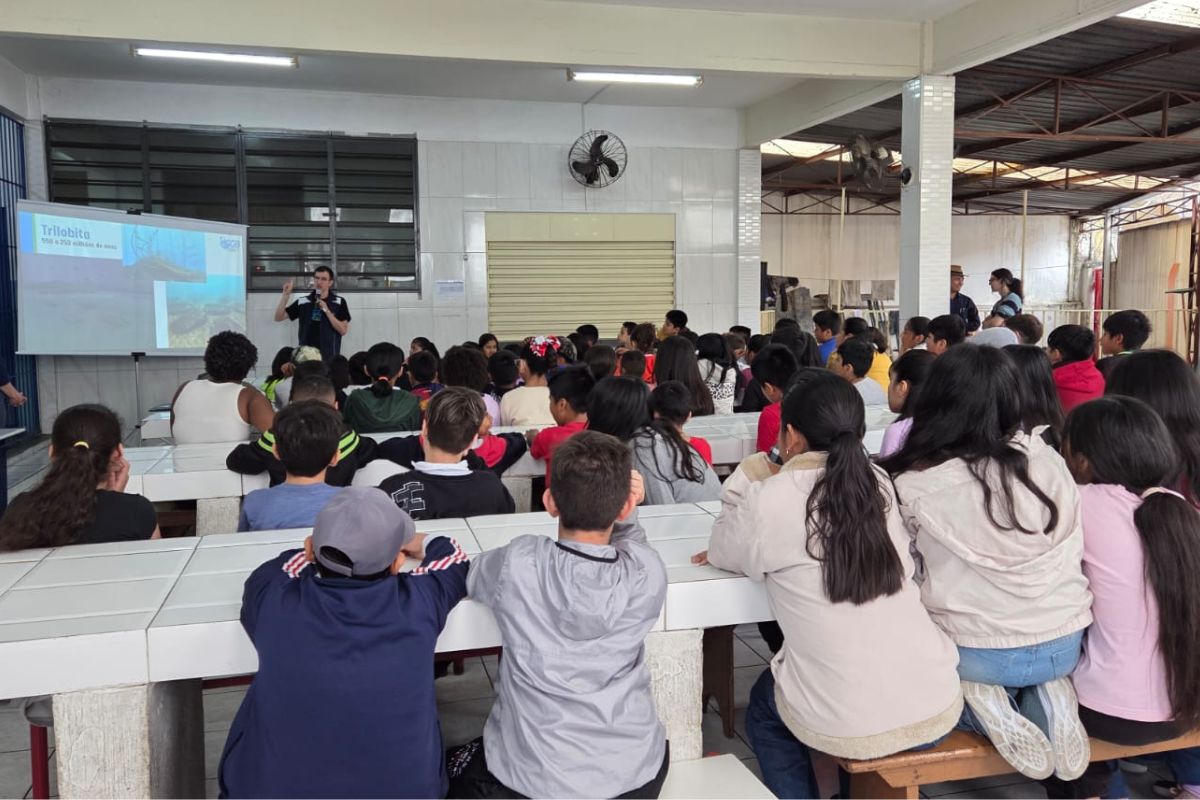
With SGBeduca, the Geological Service of Brazil Brings Practical and Accessible Geoscience Experiences to Children and Young People Across the Country, Strengthening National Scientific Education
The SGBeduca has stood out as one of the most effective science communication initiatives in Brazil, bringing the population closer to geoscientific knowledge in a light, interactive, and accessible way, according to a report published.
During the month of September, the Geological Service of Brazil (SGB) intensified its educational actions in several regions of the country, conducting practical activities, lectures, and workshops that sparked the curiosity of children, young people, and teachers.
In schools, museums, and cultural spaces, the program provided unique learning experiences about fossils, relief, minerals, and natural processes that shape the planet.
-
They were brilliant! Scientists discover that our ancestors in China were already making super advanced tools 160,000 years ago, changing everything we knew.
-
Scientists unveil 3 million years of climate secrets hidden in the ice of Antarctica.
-
Ancient farmers created “aggressive plants” that changed nature forever.
-
Astronomers find a “backward” solar system that ignores all the rules of space and leaves scientists scratching their heads!


The actions involved different age groups, from elementary school to university, and reinforced SGB’s commitment to environmental and scientific education.
With the support of geologists, technicians, and researchers, the program reached hundreds of students in states such as São Paulo, Goiás, Santa Catarina, Minas Gerais, and Rondônia.
The objective is clear: to popularize geoscience and strengthen the bond between science, society, and sustainability.
Educational Workshops and Experiences with Fossils Promote Geoscientific Learning
In São Paulo, SGBeduca conducted practical activities for over 150 sixth-graders from Domingos Faustino Sarmiento State School, in partnership with the Institute of Geosciences at the University of São Paulo (IGC-USP).
The lecture given by geologist Francisco Campos addressed fossils, the evolution of life, and extinction events throughout Earth’s geological history.
After the presentation, students participated in workshops led by technicians Eliane Moreira and Juliana Lourenção, where they were able to handle fossil samples and understand the importance of the paleontological record.
In Goiânia, the program conducted activities at the Externato São José School, where sixth-graders learned about erosive processes and participated in the “IV Knowledge Redesign Showcase.”
The Sandbox, an augmented reality sand box that simulates terrestrial relief, was one of the main attractions, allowing students to visualize phenomena such as soil permeability and the impact of rain on the terrain.
SGBeduca and Scientific Dissemination in Museums and Interactive Cultural Spaces
During the 19th Spring of Museums, SGBeduca expanded its presence in reference cultural spaces.
At the Museum of Earth and Culture of Morro Grande (SC), from September 25 to 27, geologist Andrea Sander and paleontologist Bruno Horn led fossil replica painting workshops and an updating course in geosciences for 42 teachers from municipal and state networks.
At the Museum of Mines and Metal Gerdau, in Belo Horizonte (MG), the public had access to interactive activities, including the use of the Sandbox and a virtual and augmented reality box focused on explaining geological risks.
The fossil workshops, open to children and adults, were led by researchers Patrícia Jacques, Juliana Moraes, and Washington dos Santos, consolidating SGB’s role as an important promoter of scientific education through sensory and practical experiences.
Augmented Reality, Accessible Education, and Sustainability Guiding the Future of Geosciences
At the SGBeduca Space in Porto Velho (RO), activities took place on September 16 and 17, receiving 50 children from the Municipal Institute of Education Engineer Francisco Erse.
The students interacted with the giant sloth sculpture, participated in painting workshops, and got to know the Sandbox.
The following week, students from Sapiens School and Adventist School attended the lecture “The Geology of Things” and handled minerals and rocks to understand their application in everyday life.
On September 24, 27 Biological Sciences students from the Federal University of Rondônia (UNIR) visited the Regional Lithotheque of Porto Velho, getting to know mineral samples and the program’s children’s space created to bring young audiences closer to Earth sciences.
At the location, the video “Safer Community” highlighted the importance of preventing geological and environmental risks.
These actions reinforce the mission of SGBeduca to promote inclusive, participatory, and sustainable education that values the Brazilian natural heritage and stimulates critical thinking from the early stages of schooling.




Seja o primeiro a reagir!