





 English
  Francês
  Alemão
  Italiano
  Japonês
  Norueguês
  Portuguese
  Spanish
  3 min of reading



Siemens Expects Approval For Its New Router With Anatel For Next Month. The Expectation Was Commented On This Tuesday, 24, By Global Executive Sander Rotmensen During The Siemens Innovation Forum
Siemens is awaiting approval from Anatel for its new industrial 5G router in September. The company is bringing to the country the Scalance MUM856-1 router, an exclusive device that allows for connecting local industrial applications to a public mobile network (5G, 4G, and 3G). The expectation is that the new product will already have usage approval from the National Telecommunications Agency (Anatel) in the coming month of September.
Read Also
- Construction Works of 12 Plants at Neoenergia’s Oitis Wind Farm Between Piauí and Bahia Continue Full Steam Ahead Generating Many Job Opportunities in the Region
- Venezuela Engages in Battles With The United States and Colombia to Recover Titles from State Oil Company PDVSA and Not Lose Its ‘Golden Goose’
- Pronatec Offers 775 Spots in Free Online Courses (EAD) for Professional Qualification With Certificates on This Day, August 23
- Heineken, The Multinational Leader in Beer Production, Calls For Candidates Without Experience From All Areas Across Brazil For Home Office And On-Site Job Vacancies In Its Factories; Salary of R$ 7,8 Thousand
The expectation was commented on by the Director of Industrial Equipment for Wireless Communication at Siemens, Sander Rotmensen, during a panel held at the Siemens Innovation Forum this Tuesday, which discussed the arrival of new technology in the Brazilian market.
“The Scalance MUM856-1 is the first product from the company focused on 5G technology and at this moment we are working towards its approval with Anatel. Our expectation is to finalize this process next month,” said Rotmensen. “Siemens already has several initiatives with 5G globally for use in private networks. These are projects with different partners, and internally we are working to implement the new technology across our entire operating ecosystem,” commented the executive.
-
Abandoned house for 15 years disappears in the woods, shocks owner with unrecognizable scenery and is reborn in an intense transformation after almost 90 hours of work in just 10 days.

-
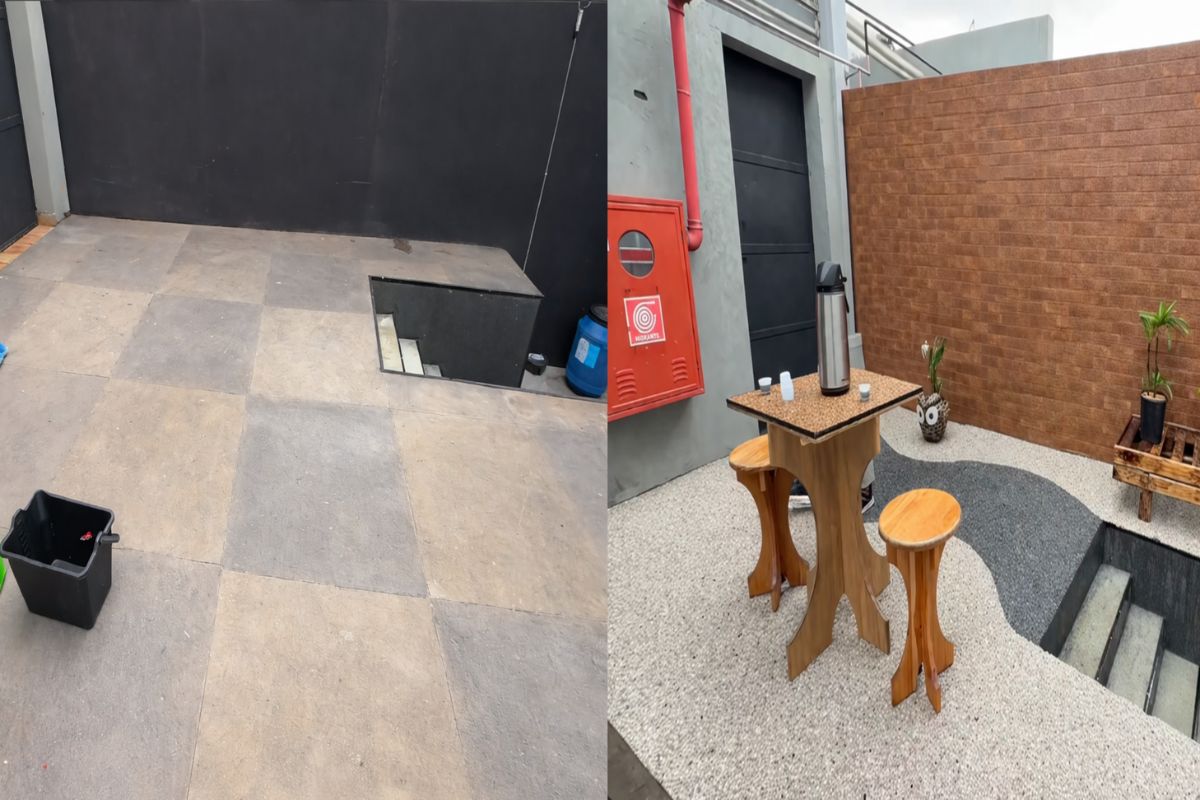
In just three hours, a natural stone floor transforms the entrance of the house with an organic effect, immediate drainage, and a sophisticated non-slip finish that doesn’t puddle water, dries quickly, and impresses with the final result.
-
‘Interlocking brick’ made of earth arrives in the construction industry with cost reductions of up to 40% on the project.

-
Espírito Santo will receive the largest engineering project in its history with the duplication of BR 262, which will have 50 viaducts, 28 bridges, and 2-kilometer tunnels cutting through the most challenging mountainous region of the entire state.


Designed for industrial use, Siemens’ new router can be used to monitor and perform remote maintenance on plants, machines, control elements, and other industrial devices flexibly and with high data rates. The device arrives to meet the growing industrial demand for this type of solution.
During the panel, Rotmensen cited the tests that the company has been conducting with 5G around the world. The main one was the private network implemented in 2019 at the Automotive Showroom and Test Center in Nuremberg, Germany, in an initiative carried out in partnership with Qualcomm Technologies.
Private 5G Network Is Important For Siemens To Maintain Brazil’s Competitiveness And Reduce Costs Compared To Other Countries
The Siemens Innovation Forum panel on the new technology also featured the participation of the Manager of Spectrum, Orbit, and Broadcasting at Anatel, Agostinho Linhares, who emphasized the importance of the country having a private 5G network. “We are working to finalize the regulation of the bands and make 400 megahertz available for private networks. This will be essential to maintain Brazil’s competitiveness and lower costs compared to other countries,” stated the representative of Anatel.
According to Linhares, Brazilian companies can already request a frequency band of 2.3 gigahertz as an entry point for 5G in the Brazilian market, and the expectation is that starting in October, the frequency bands between 3.7 and 3.8 gigahertz for private networks will already be available. “Our intention is to have a menu of bands offered to the market,” he says.
The fact that regulation in the country allows for private networks for 5G makes the Brazilian market similar to that of Germany. This similarity was remarked upon by the Director. “With these characteristics, any initiative carried out with 5G in Germany could simultaneously be brought to the Brazilian market. Our perspective is that Brazil will be at the forefront of wireless innovation efforts directed at the industry,” said Sander Rotmensen.
The panel on industrial 5G was moderated by the Director of Factory Automation at Siemens, Rafael Dias.










Seja o primeiro a reagir!