





 Portuguese
  English
  Spanish
  5 min of reading
  0 comments


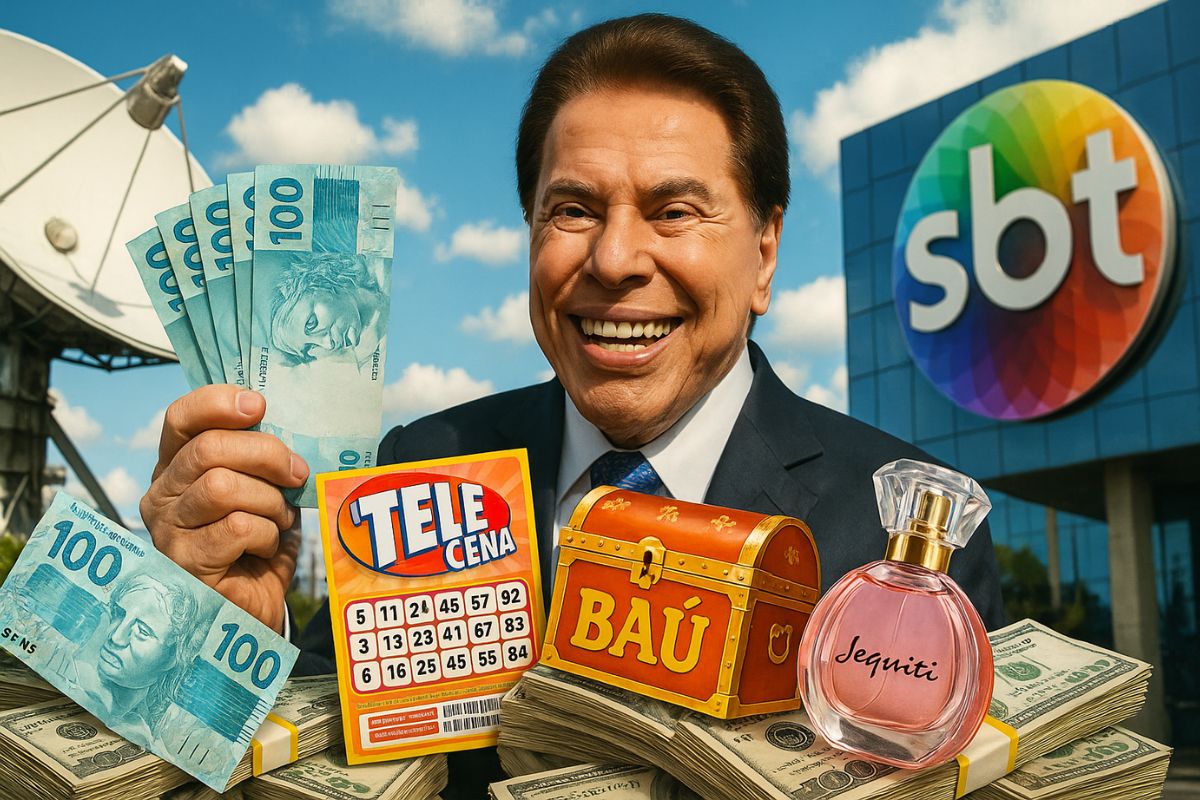
Inspired by Silvio Santos, SBT built its own monetization model that exchanged advertisers for direct sales to the public, while Globo focused on advertising; the logic described by Flávio Augusto helps to understand why Baú, Tele Sena, and Jequiti formed a cash machine
The discussion about Silvio Santos usually revolves around charisma and audience, but the structural point lies in the business model. Silvio Santos did not compete with Globo in the game of big advertisers: he created an ecosystem of proprietary products appearing in the shows, converting attention into direct and predictable revenue. Flávio Augusto summarizes the contrast: while Globo maximized advertising with reach and production standards, SBT maximized margin and control by selling Baú da Felicidade, Tele Sena, and Jequiti to the viewer.
For Flávio Augusto, this changes everything in the relationship with risk and cash flow. When the audience buys from you, the money comes in every month, without depending on a sponsor’s ‘signature’. The result was a cycle in which SBT used TV as a showcase for its own business, reducing exposure to media cuts and increasing cash predictability.
Globo x SBT: Two Ways to Turn Audience into Money
In Globo’s model, the strength lies in national coverage, production standards, and large advertising contracts. Flávio Augusto emphasizes that this scale attracts the biggest brands and sustains heavy investments in cast and sets, reinforcing the wheel of audience and branding.
-
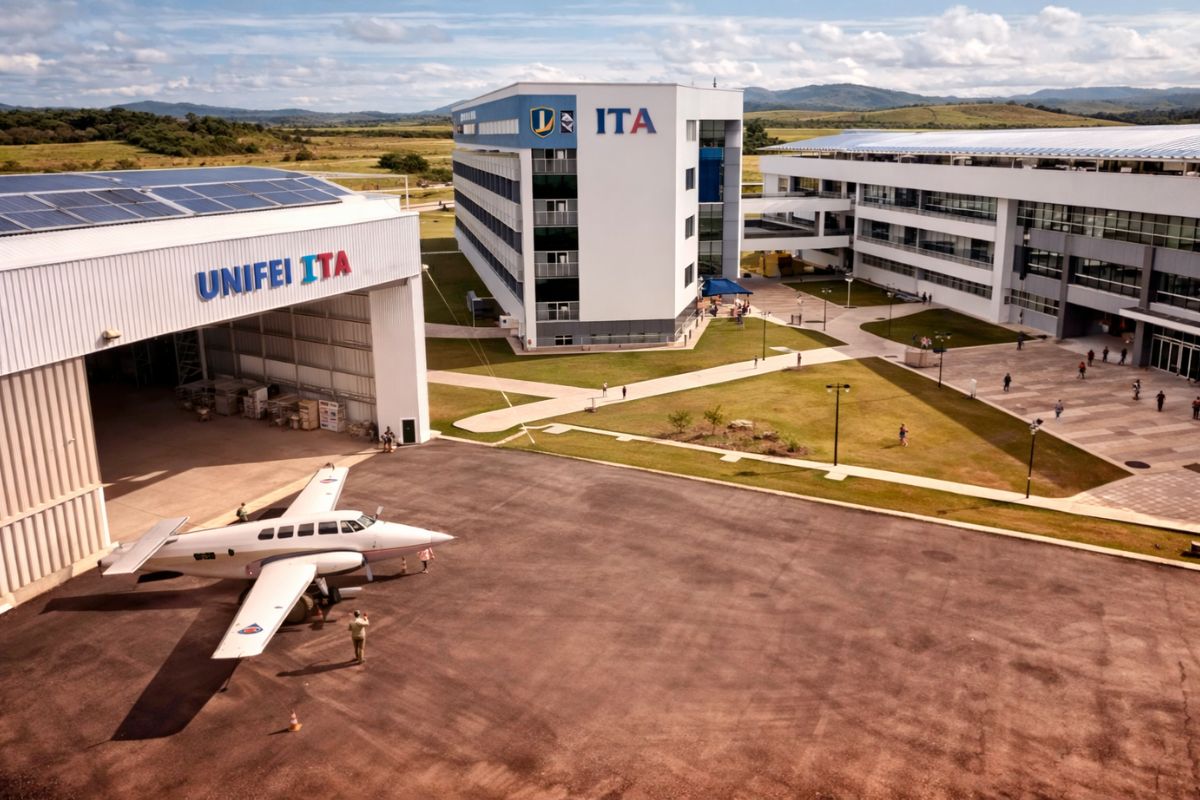
The institute that trained the greatest aerospace engineers in Brazil has just opened its first campus outside São Paulo after 75 years: ITA Ceará will have R$ 445 million, new courses in energy and systems, and classes are expected to start in 2027.
-
Luciano Hang, owner of Havan, goes to Juiz de Fora after the tragedy in February, brings R$ 1 million, hands out R$ 2,000 cards, and donates up to R$ 15,000 to victims in the region.

-
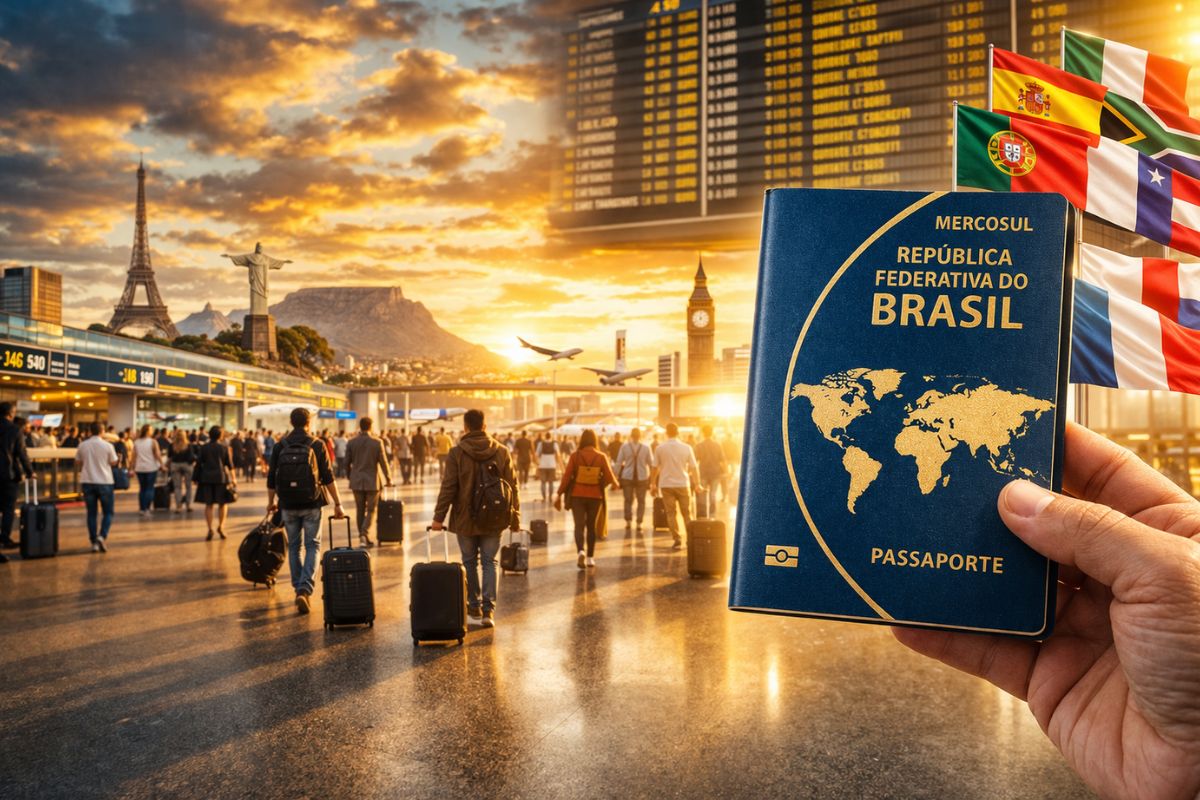
The Brazilian passport allows legal residence in dozens of countries without the need for a prior visa, and most Brazilians are unaware that they can apply for residency directly upon arriving in nations in South America, Africa, and even Europe.
-
Petrobras sends a message to Brazilian truck drivers after fuel collapse and reveals plan to have 100% domestic diesel.


The logic is to sell attention to third parties.
At SBT, Silvio Santos pursued another strategy: selling proprietary products to those who were already watching. Instead of relying on external campaigns, the screen became a channel for immediate sales.
Flávio Augusto highlights that this shielded revenue from boycotts and mood swings of advertisers, keeping cash control in the hands of the broadcaster.
How Silvio Santos Converted Program into Product Showcase
Baú da Felicidade combined savings bonds with product redemption, tying monthly payments to an entertainment experience on stage.
Tele Sena and Jequiti followed the same philosophy of direct offers, with on-air calls, simple instructions, and clear value promises. Silvio Santos presented, explained, and created buying rituals, reducing friction and increasing conversion.
Flávio Augusto describes the margin mechanics: recurring revenue (monthly payment), financial gain on cash while the money is with the company, prizes and raffles to maintain engagement, and exchange for products with margin when there was redemption.
The stage was a live funnel, and the host’s credibility did the rest.
Cash Flow, Risk, and Control: Why the Direct Model Attracts Entrepreneurs
Selling to your own audience concentrates risk in execution, not in sponsorship.
For Flávio Augusto, this is the key difference: those who rely solely on media need third-party marketing contracts; those who live off their own product lines control price, narrative, and timing.
When the money comes from the end customer, predictability improves and bargaining power increases.
There are costs and headaches. Managing products requires operation, inventory, service, and compliance.
Flávio Augusto acknowledges the trade-off: advertising is lighter operationally, but products provide autonomy. SBT chose autonomy, with TV as the engine for distribution and conversion.
Smart Hybrid: Why Advertising Didn’t Leave the Scene
Even with its own product, Silvio Santos did not abandon advertising. The hybrid reduces volatility, monetizes peaks of audience, and diversifies sources.
Flávio Augusto notes that Globo, on the other hand, experimented with media for equity and investments, but without integrating direct sales into programming as a pillar. They are distinct strategies for capturing value from the same audience.
The operational lesson is simple and powerful: when content and offer are in the same place, conversion rates increase. Silvio Santos understood sequence, timing, and language of the masses.
He transformed stage segments into buying triggers, with emotional appeal and clear instructions.
What Influencers and Creators Can Learn from Silvio
Flávio Augusto translates the lesson to digital: do not rely on a single sponsor. Design your product, use content to educate the audience, and create clear buying routes.
Those who control the product control margin, narrative, and cash. Advertising can complement, but it should not be the only pillar.
For those who already have an audience, it’s worth mapping high-frequency offers (recurring, subscription, education, community) and high-margin offers (premium items, limited classes, events).
Television taught the discipline of call to action. Silvio Santos showed that entertainment can be a responsible sales pipeline, with reputation as a core asset.
Limits and Disadvantages: Where Each Model Stumbles
Advertising: depends on market mood, brand criteria, and economic cycles. Flávio Augusto warns that the creator tends to ‘flatten the discourse’ to fit guidelines, losing authenticity and differentiation power.
There is a concentration risk if a few contracts represent most of the revenue.
Proprietary product: requires robust operation, service, and channel orchestration. Without disciplined execution, the funnel clogs.
There must be compliance in savings bonds and governance in cosmetics, for example. Silvio Santos won this equation because he treated TV as a distribution asset and the backstage as an industry.
Silvio Santos proved that a broadcaster can earn directly from the stage, with proprietary products converting audience into predictable cash, while Globo maximized advertising.
Flávio Augusto sends a message to today’s creators: make content an ethical, recurring sales channel under your control. The hybrid model is resilient, but autonomy arises when the customer buys from you.
In your view, what is the greatest asset of Silvio Santos’ model: the host’s trust, the design of the products (Baú, Tele Sena, Jequiti), or the integration of the offer into the content? If you are monetizing audience today, how much of your revenue comes from advertising and how much comes from your own product? Share in the comments how you balance these two worlds.








-

Uma pessoa reagiu a isso.