





 Portuguese
  English
  Spanish
  5 min of reading
  0 comments


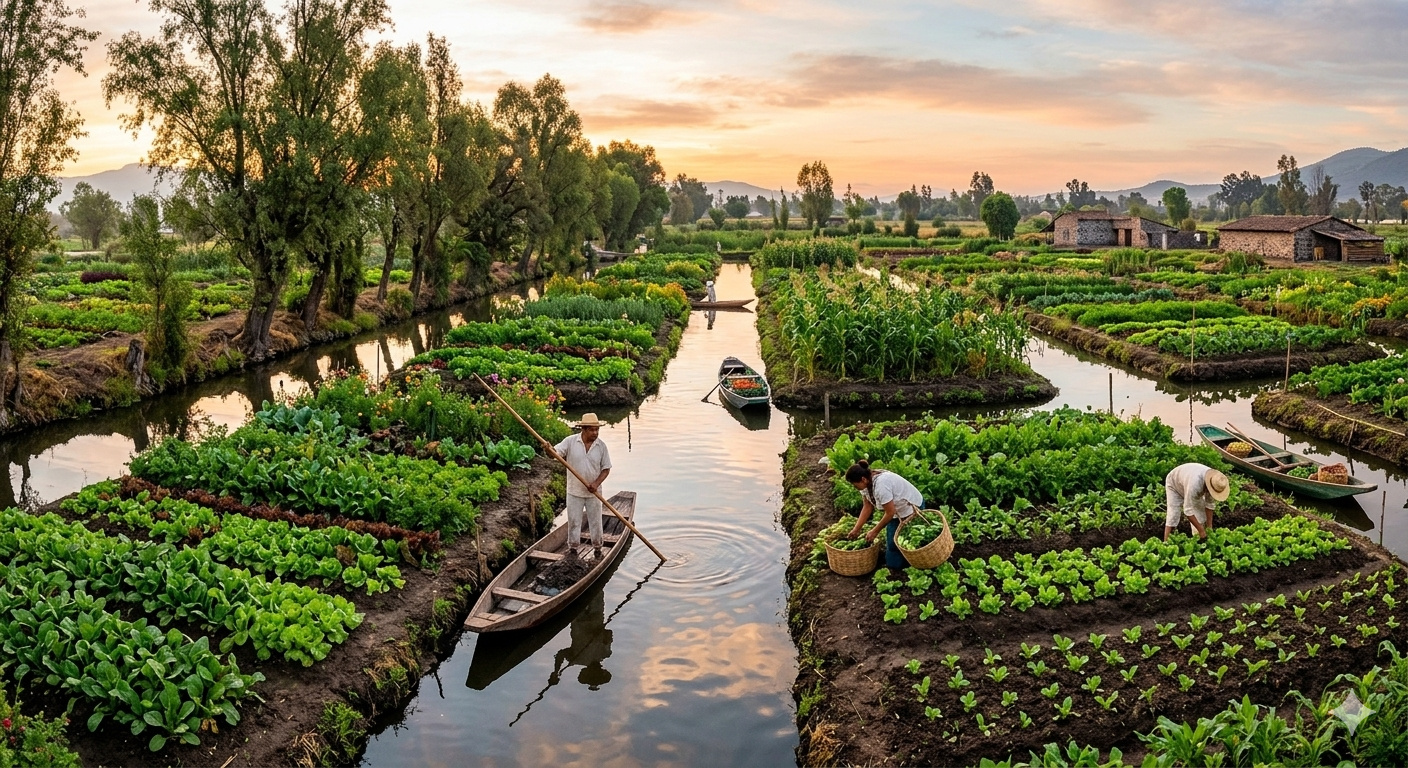
Since the Aztecs, farmers in Mexico use artificial islands surrounded by channels to create a productive system that still challenges modern agriculture.
Even before the arrival of Europeans in America, Mesoamerican civilizations developed one of the most sophisticated agricultural systems ever recorded. The so-called chinampas, created by pre-Columbian peoples and widely used by the Aztecs, are artificial islands built in flooded areas that allowed for intensive food production for centuries.
This model is still present in the region of Xochimilco, in Mexico City, where farmers maintain the traditional practice. The system has been recognized by the Food and Agriculture Organization of the United Nations (FAO) as one of the Globally Important Agricultural Heritage Systems (GIAHS), due to its productive efficiency, sustainability, and historical relevance.
The continued use of chinampas over hundreds of years has transformed the model into a global reference for agriculture adapted to aquatic environments.
-
Scientists are looking for volunteers to live for free for a month in a refuge in the Italian Alps at an altitude of 2,300 meters, with accommodation, food, and a payment of 400 euros to participate in a health study.

-
A 19-year-old is ripped from a mobile home by an F2 tornado, thrown 398 meters, survives with minor injuries, and enters the Guinness World Records in one of the most extreme cases ever recorded in meteorology.
-
An impact crater has turned into agricultural land in Finland, and its almost perfect outline creates a circular design so strange that it resembles a landscape from another planet viewed from space.
-
Embraer proves that the KC-390 Millennium achieves 100% reliability in tests in the Arctic, operating in extreme cold in Sweden with short takeoffs, quick deployment, and simultaneous transport of heavy vehicles and troops.


Artificial islands are built with sediments, organic matter, and aquatic vegetation
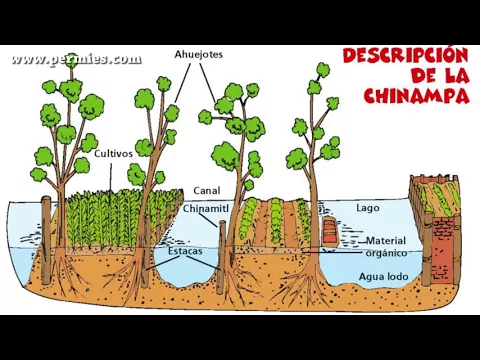
The chinampas are formed through a manual process that involves creating raised platforms in shallow areas of lakes or flooded zones. Farmers accumulate layers of sediments taken from the bottoms of the channels, mixed with organic matter and aquatic vegetation.

This material is piled up to form a stable surface above the water level, allowing for direct cultivation on these structures. Trees, such as the ahuejote (a local willow species), are often planted at the edges to reinforce the stability of the island and prevent erosion.
The result is a cultivation system surrounded by channels, where the soil remains constantly moist and fertile, reducing the need for artificial irrigation.
System allows multiple harvests per year with high agricultural productivity
One of the most impressive aspects of chinampas is their productivity. According to historical studies and modern analyses, this system allows for several harvests throughout the year, due to the continuous fertility of the soil and the constant availability of water.
The combination of rich organic matter and permanent moisture creates ideal conditions for plant development. This allows crops such as corn, beans, squash, vegetables, and flowers to be cultivated with high yields in relatively small areas.
This level of productivity was one of the factors that sustained large urban populations during the Aztec period, especially in the ancient city of Tenochtitlán, built on flooded areas.
Channels around the chinampas function as a source of nutrients and natural irrigation
The channels that surround the chinampas play a central role in the functioning of the system. In addition to providing constant water to the soil, these channels accumulate nutrient-rich sediments.
Farmers periodically remove this material from the bottoms of the channels and apply it to the chinampas, continuously renewing the soil’s fertility. This process replaces the need for external fertilizers and maintains the productive system over time.

This dynamic creates a closed nutrient cycle, in which organic waste and sediments are reused within the agricultural system itself.
System integrates aquatic and terrestrial biodiversity in productive balance
The chinampas function not only as cultivation areas but as integrated ecosystems. The interaction between water, soil, and vegetation creates an environment that favors biodiversity.
In the channels, it is common to find fish, amphibians, and other forms of aquatic life, while the cultivated areas host insects and microorganisms that contribute to biological balance.
This model reduces the need for external inputs, such as chemical fertilizers and pesticides, as the system itself maintains part of the natural pest control and nutrient cycling.
Practice was essential to sustain Tenochtitlán, one of the largest cities of the pre-Columbian world
During the height of the Aztec Empire, chinampas were fundamental in feeding the population of Tenochtitlán, one of the largest cities in the world at the time, located where Mexico City is today.
The ability to produce food on a large scale in flooded areas allowed urban growth in an environment that, at first glance, would be considered unfavorable for agriculture.
Historical accounts indicate that the system was highly organized, with networks of channels that also served as transport routes, facilitating the flow of production.
FAO recognition highlights system as a global example of sustainable agriculture
The recognition of chinampas as a global agricultural heritage by the FAO reinforces the importance of this system not only from a historical perspective but also as a model of sustainability. According to the organization, chinampas represent:
- Efficient use of natural resources;
- High productivity on a small scale;
- Integration between production and environmental conservation.
This set of characteristics makes the system relevant in current debates about food security and sustainable land use.
Urban pressures threaten the continuity of chinampas in the region of Xochimilco
Despite its relevance, the system faces significant challenges. The urban expansion of Mexico City has directly impacted the chinampa areas, reducing their extent and altering environmental conditions.
Problems such as water pollution, decreased water levels, and changes in land use have affected the viability of the system in some areas. Nevertheless, local initiatives and conservation programs seek to preserve this traditional practice.

The maintenance of chinampas depends both on environmental protection and the continuity of knowledge passed down through generations of farmers.
Chinampa system shows that intensive agriculture can exist without environmental degradation
The functioning of chinampas challenges the logic that high agricultural productivity necessarily depends on intensive external inputs. By combining traditional knowledge, natural resource management, and ecological integration, the system demonstrates that it is possible to produce efficiently without compromising the environment.
This characteristic has sparked interest among researchers and institutions seeking alternative models for food production in scenarios of environmental pressure and resource scarcity.
In your opinion, could systems like this inspire new forms of production in modern agriculture? Share your thoughts in the comments.






Seja o primeiro a reagir!