





 Portuguese
  English
  Spanish
  7 min of reading
  0 comments


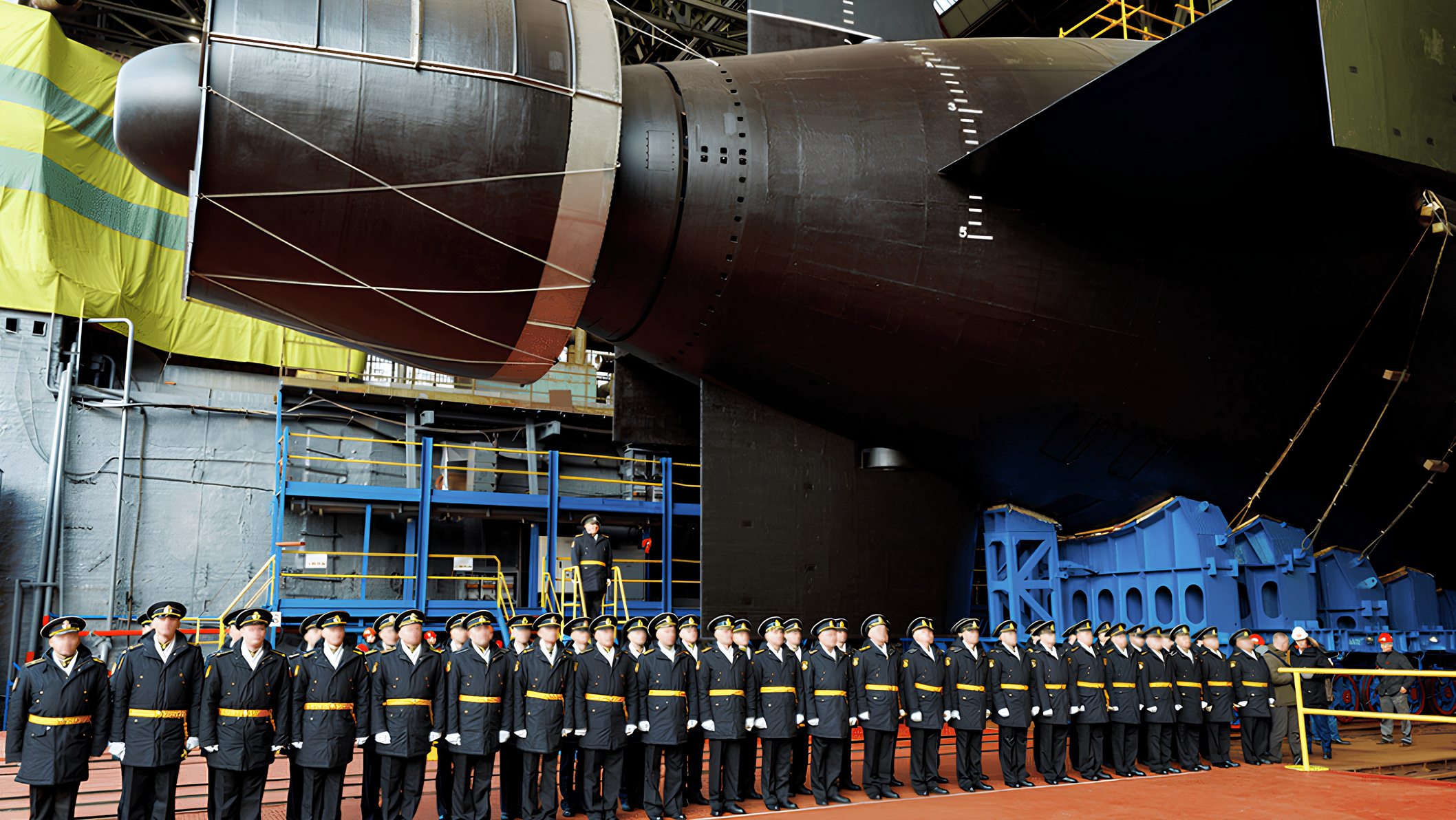
Poseidon: Nuclear Torpedo Autonomous From Russia Capable of Hitting Coastal Cities Without Interception Enters Operational Phase With Submarine Khabarovsk
On October 28, 2025, Russian President Vladimir Putin announced that Russia had successfully tested the Poseidon, an autonomous nuclear-powered torpedo developed to serve as a strategic underwater weapon. The announcement came during a visit by Putin to a military hospital in Moscow, where he was speaking with wounded soldiers from the war in Ukraine. At the time, he stated that the system had completed a successful test with the nuclear reactor activated.
A few days later, on November 1, 2025, a new milestone underscored the program’s importance: the nuclear submarine Khabarovsk appeared for the first time in the water at the Sevmash shipyard in Severodvinsk. The vessel was specifically built to carry Poseidon torpedoes and represents the first submarine designed from the ground up for this strategic mission.
This development marked the operational debut of a weapon that military experts describe as one of the most unusual nuclear systems in the world. The Poseidon was designed to attack coastal cities or naval bases after traveling thousands of kilometers along the ocean floor with no clear possibility of interception.
-
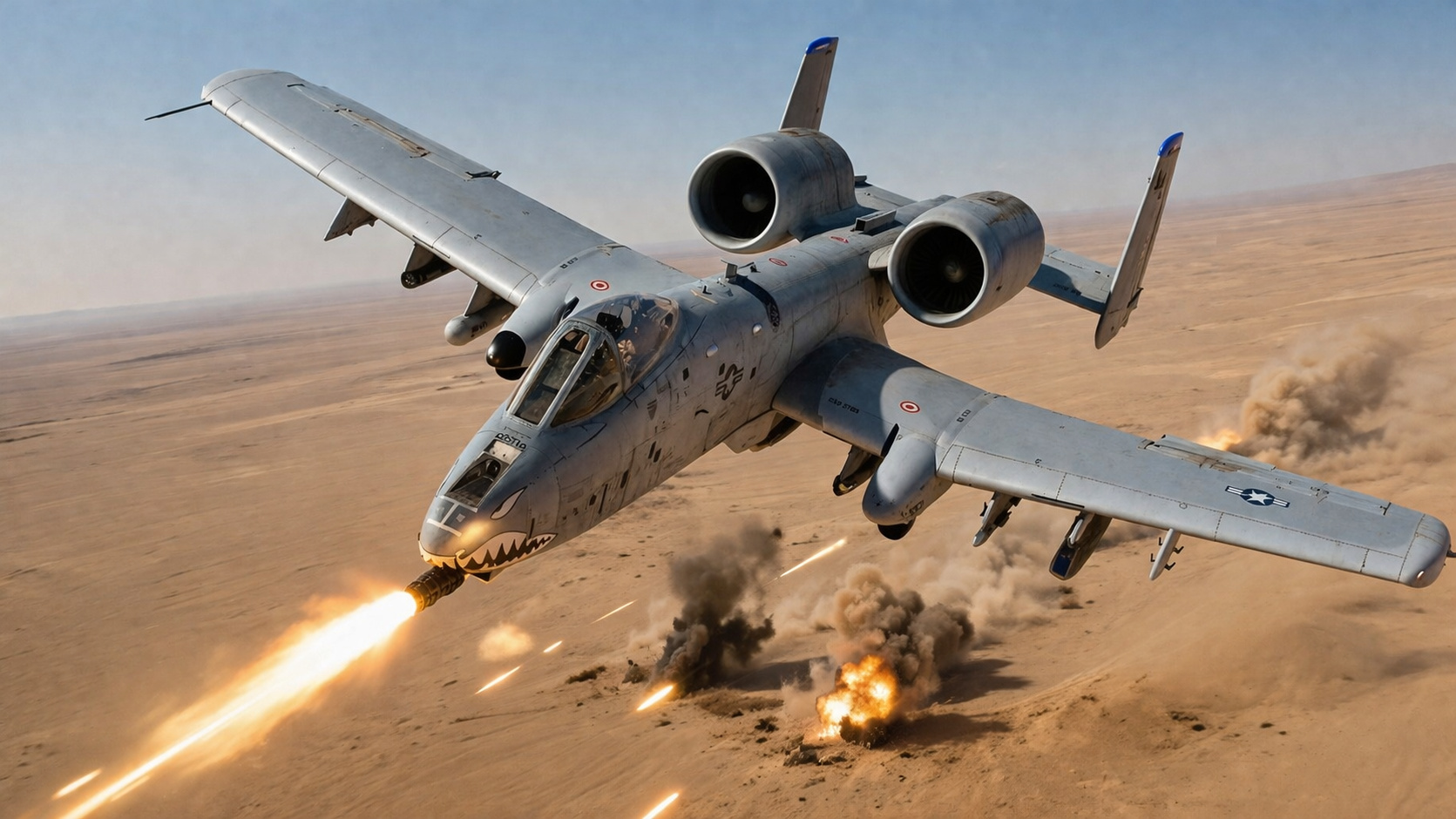
Few people know, but “mega burst” attacks from the A-10 in the Middle East are intriguing analysts and even experienced former pilots of the U.S. Air Force.
-
Manufactured in Brazil and exported to Saudi Arabia and Malaysia, the ASTROS system is renamed as Fogos in 2026, gaining AI, cruise missiles with a range of 300 km, and air defense costing R$ 3.4 billion, transforming a launcher from the 1980s into the most ambitious multidomain platform in Latin America.
-
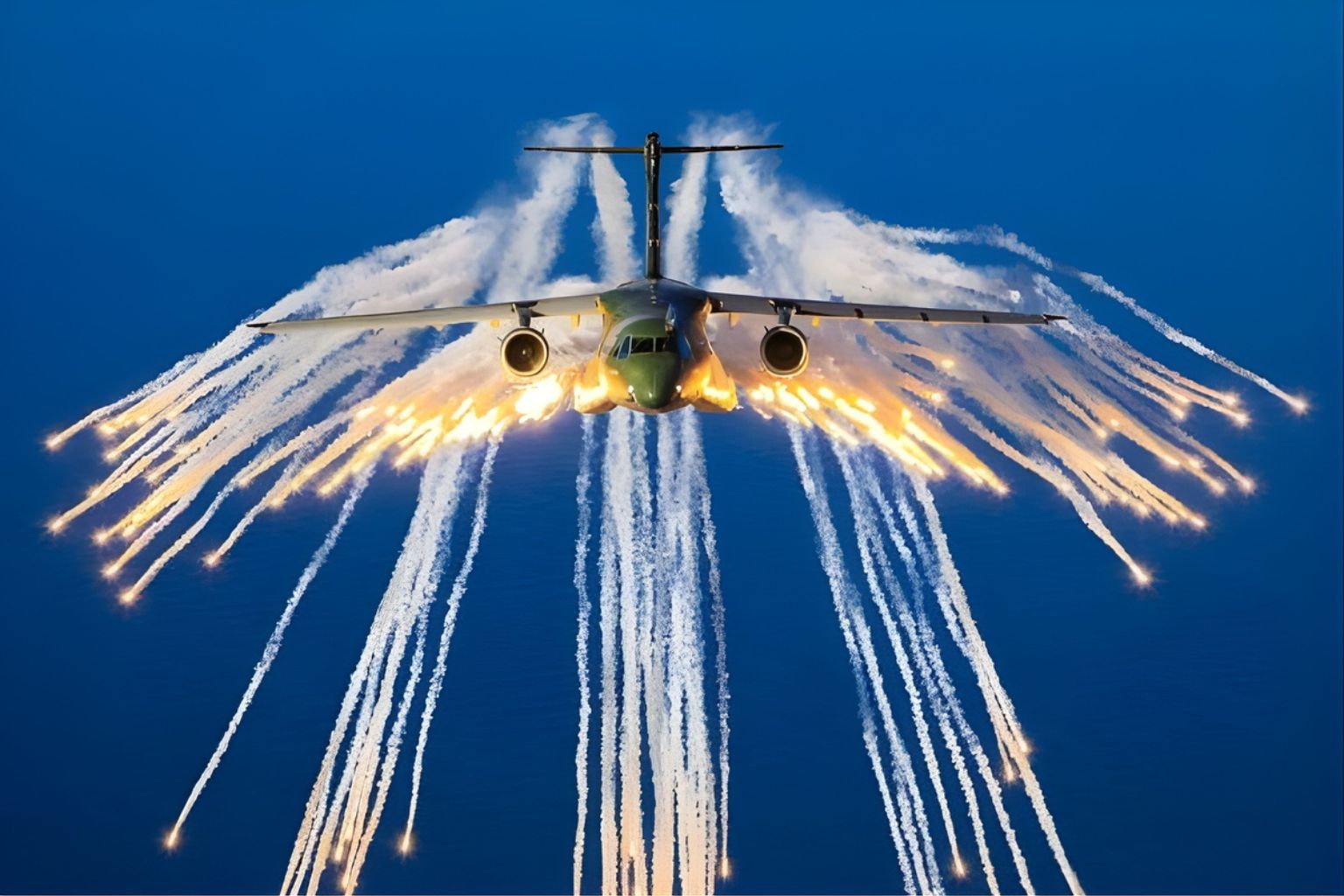
The largest military aircraft ever produced in Brazil, the KC-390 Millennium can carry up to 26 tons, refuel fighter jets in flight, and has already been exported to Europe and Asia, placing the country in the select group that designs and sells large military aircraft worldwide.
-
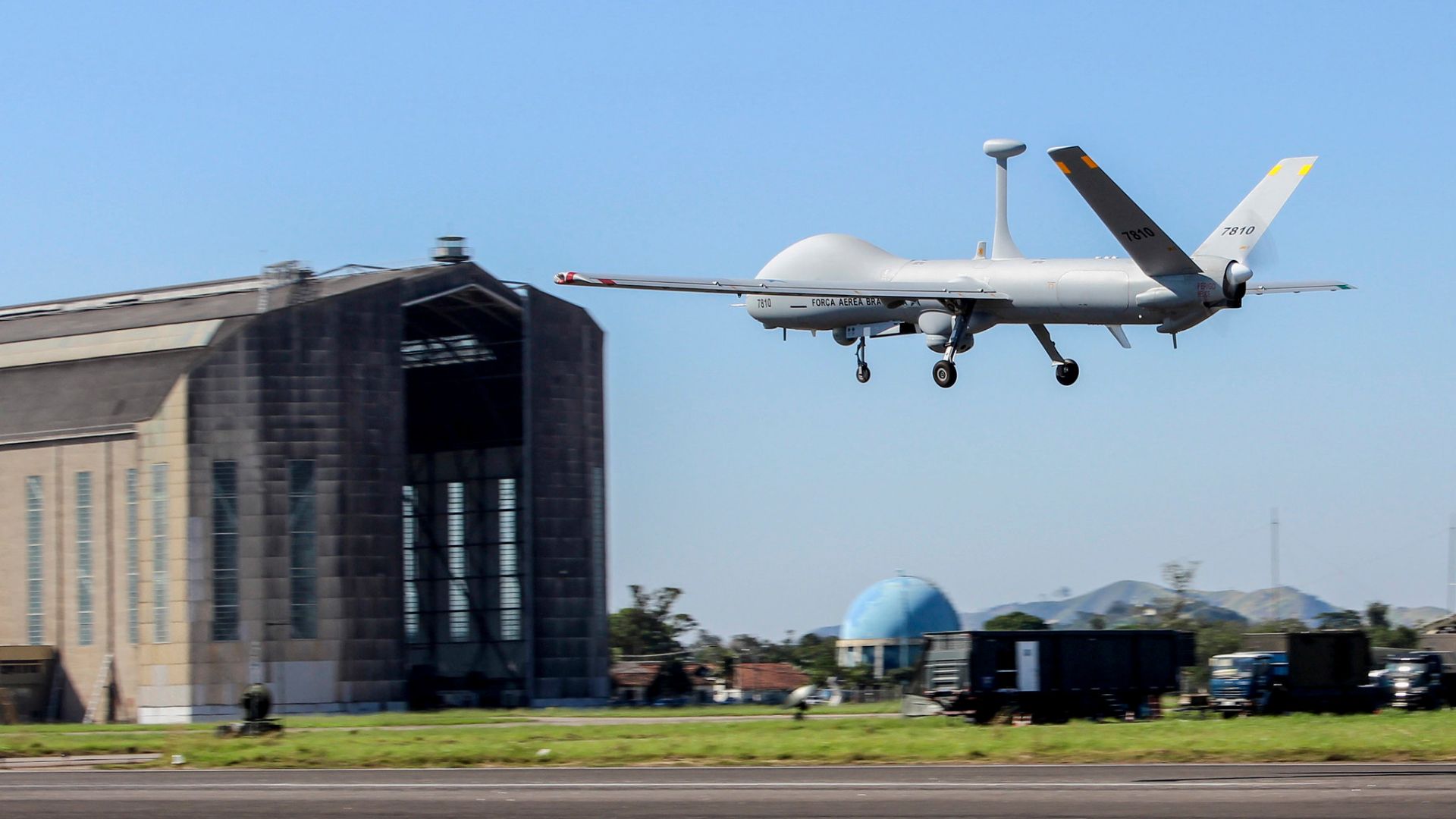
FAB loses Hermes 900 drone during multinational exercise in Mato Grosso do Sul and is left with only one active aircraft, raising concerns about operational fragility and strategic response capability.

What Is the Poseidon: Nuclear Autonomous Torpedo Capable of Crossing Entire Oceans
The official name of the system is 2M39 Poseidon, while the NATO identification code is Kanyon. In Western strategic assessments, it often receives an informal nickname: “Apocalypse Drone”, referencing its destructive potential and the concept of long-range autonomous operation.
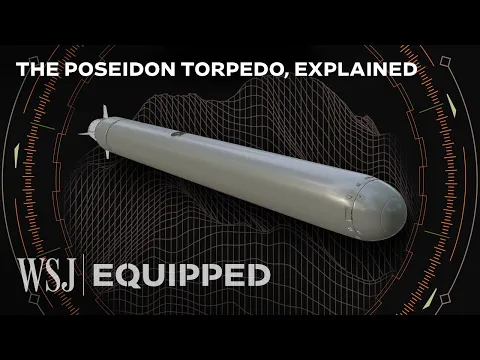
The Poseidon is an unmanned underwater vehicle with nuclear propulsion. Its size is impressive: the torpedo measures between 20 and 24 meters in length, dimensions comparable to those of small conventional submarines from World War II. Its estimated weight is approximately 100 tons, with about 2 meters in diameter.
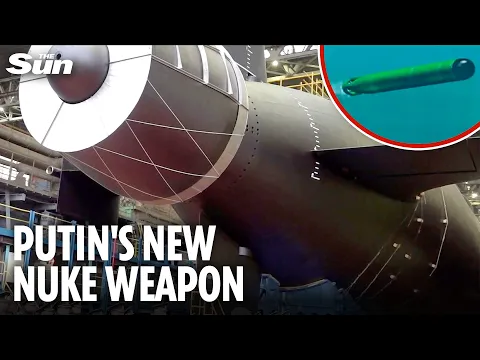

The weapon carries a thermonuclear warhead whose estimated yield varies widely in public analyses. Some estimates mention up to 100 megatons, although many independent analysts consider values between 2 and 10 megatons to be more plausible.
For historical comparison, the nuclear bomb dropped on Hiroshima in 1945 had a power of about 15 kilotons — equivalent to just 0.015 megatons.
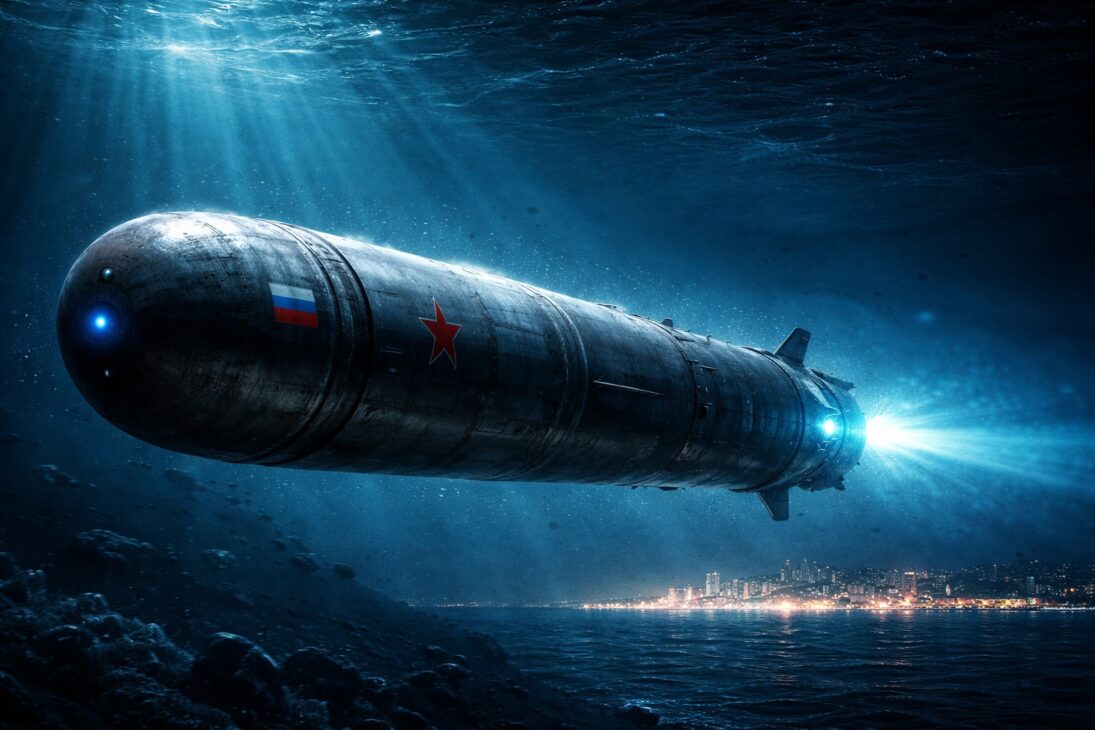
Once launched from a carrying submarine, the Poseidon operates fully autonomously. Its internal nuclear reactor provides it with practically unlimited range, allowing the weapon to cross entire oceans before reaching the designated target.
Speed, Depth, and Range of the Poseidon Nuclear Torpedo
Performance estimates for the Poseidon indicate maximum speeds between 54 and 70 knots, which corresponds to approximately 100 to 130 km/h underwater.
This would make it faster than most attack nuclear submarines currently in service. For comparison, a Virginia class submarine from the U.S. Navy typically operates at around 25 knots.
Another important factor is operational depth. Analysts estimate that the Poseidon can operate at around 1,000 meters deep, a limit that exceeds the safe operational envelope of most Western submarines.
This combination of high speed, great depth, and nuclear autonomy creates an extremely difficult strategic vector to track with current anti-submarine warfare systems.
Why the Poseidon Concerns Military Strategists and NATO Defense Systems
For decades, Western nuclear deterrence strategy has been built on a fundamental premise: any strategic weapon that follows a predictable trajectory can, in theory, be intercepted.
This is why the United States has invested billions of dollars in missile defense systems like Aegis, THAAD, and Patriot.
Ballistic missiles follow parabolic trajectories detectable by radar. Cruise missiles fly at altitudes trackable by sensors. Nuclear submarines can be located by their acoustic signatures.
The Poseidon does not fit into any of these categories.
It operates at depths where NATO’s long-range sonar systems have limited coverage. During the Cold War, the American SOSUS network, composed of hydrophones installed on the ocean floor, was extremely effective in detecting Soviet submarines that generated constant noise.
But an autonomous vehicle moving slowly in stealth mode at great depth generates a different acoustic profile. When this object operates close to 1,000 meters deep, tracking capability becomes much more limited.
Currently, there is no interceptor in Western naval doctrine designed specifically to destroy an autonomous nuclear torpedo operating at those depths.
Origin of the Poseidon Program and Reaction to the End of the ABM Treaty
The existence of the Poseidon was publicly revealed for the first time in November 2015, when Russian television cameras briefly captured a classified document during a meeting between Vladimir Putin and military officials.
The document mentioned the Status-6 project, described as a multipurpose oceanic system capable of carrying a nuclear warhead over long underwater distances. Some analysts believe the leak was accidental. Others consider it was deliberately allowed as a strategic signal to the West.
Putin formalized the development of the system in March 2018, when he introduced a series of new Russian strategic weapons during a state of the nation address. The project, however, had begun much earlier. The development of Poseidon dates back to December 2001, just one month after the United States officially withdrew from the 1972 ABM Treaty, which limited anti-missile defense systems.
The Russian goal was to create a nuclear vector that could completely bypass any air-based missile defense system.
Accidents and Tests During the Development of the Poseidon Nuclear Torpedo
The Poseidon program faced an uneven trajectory during its testing phase. Between 2016 and 2024, at least 13 tests were recorded, according to records compiled by the Nuclear Threat Initiative. Of these, only a few were considered partially successful.
One of the most well-known incidents occurred in August 2019, when an explosion at the naval testing ground in Nyonoksa, in the White Sea, killed five Russian nuclear scientists.
The accident generated a temporary spike in radiation detected by monitoring sensors in Norway, suggesting that the incident was related to tests involving experimental nuclear systems.
The test conducted in October 2025 was considered a milestone because, according to Putin, the Poseidon was launched from a submarine with the nuclear reactor active during transit.
Submarine Khabarovsk: Dedicated Platform to Launch Poseidon Torpedoes
The first submarine adapted to carry Poseidons was the Belgorod, delivered to the Russian Navy in 2022. However, this vessel was originally an Oscar II class submarine, which underwent a deep conversion to accommodate the new torpedoes.
The Khabarovsk represents a different approach. Designed by the Rubin Design Bureau in St. Petersburg and built at the Sevmash shipyard since 2014, it was conceived from the outset as a dedicated platform for Poseidon.
The submarine is estimated to be between 113 and 140 meters long, displacing 10,000 to 12,000 tons and featuring a pump-jet propulsion system, a technology also used in Russian strategic submarines of the Borei-A class. This system significantly reduces the vessel’s acoustic signature.
The Khabarovsk was designed to carry up to six Poseidon torpedoes in launch tubes at the bow, in addition to conventional 533 mm torpedoes for self-defense. The estimated patrol autonomy is 90 to 120 days, with an approximate crew of 100 military personnel.
Strategic Limitations of the Poseidon Nuclear Torpedo
Despite its impressive capabilities, the Poseidon has an important limitation: its strategic speed compared to ballistic missiles. An intercontinental ballistic missile launched from Russia can reach the United States in about 40 minutes.
In contrast, a Poseidon launched from a submarine in the Arctic could take several days to reach the American coast, depending on the route and speed utilized.
This is why many analysts classify the system as a “late second-strike” weapon. This means that the Poseidon was not designed for an immediate attack, but rather to ensure nuclear retaliation even in extreme scenarios.
Poseidon as a New Dimension of Strategic Nuclear Deterrence
The Russian strategic doctrine presents the Poseidon not as a substitute for ballistic missiles but as a complement to the so-called nuclear triad.
Traditionally, this triad consists of three main vectors:
- intercontinental ballistic missiles in land silos
- strategic bombers
- submarines launching ballistic missiles
Each of these vectors has known countermeasures. Silos can be preemptively destroyed. Bombers can be intercepted by fighters. Submarines can be tracked by sonar networks.
The Poseidon creates a fourth strategic vector that operates in a domain where there is virtually no active defense infrastructure: the ocean floor.
The U.S. Navy possesses systems like Aegis, THAAD, and Patriot to intercept airborne missiles, as well as attack submarines and P-8 Poseidon aircraft for anti-submarine warfare.
However, none of these systems were designed to intercept an autonomous nuclear torpedo powered by a nuclear reactor operating at great depths. In a January 2026 analysis published by Naval Institute Proceedings, U.S. Navy officials acknowledged the challenge.
According to the report, there are currently no operational interceptors or rapid-response systems designed to deter an autonomous nuclear torpedo at extreme ocean depths. This is precisely the strategic problem that Poseidon was created to exploit.






-

-

-

-

-

8 pessoas reagiram a isso.