Portuguese
  Spanish




Mercado Livre announced an investment of R$ 57 billion in Brazil in 2026 with the opening of 14 new distribution centers in the fulfillment model. The logistical expansion increases the network to 42 units and reinforces the company’s bet on Brazilian e-commerce, which still has penetration below 17%.
Mercado Livre plans to invest R$ 57 billion in Brazil in 2026, consolidating the country as its main global market. The funds will be allocated to expanding the logistics network, strengthening the marketplace operation, and advancing Mercado Pago, the company’s financial arm. As part of the plan, the company expects to open 14 new distribution centers in the fulfillment model, increasing the network from 28 to 42 units in the country, a growth of 50%.
Brazil accounts for about 52% of Mercado Livre’s total revenue, which explains the concentration of investments in the country. According to the company’s executive vice president of e-commerce Fernando Yunes, the increase in investments follows the company’s growth pace and the still high potential for expansion of Brazilian e-commerce, whose penetration is in the range of 16% to 17%, well below other international markets.
What Mercado Livre intends to do with R$ 57 billion in 2026
The R$ 57 billion investment announced by Mercado Livre includes both capital contributions and operational expenses and will be distributed across three main fronts. The first and most visible is the logistical expansion, with the opening of 14 new distribution centers in the fulfillment model, where the company stores, packages, and ships products from sellers directly to the end consumer. The network will jump from 28 to 42 units in Brazil.
-
Brazilian Startup Turns Coffee Grounds into Plant-Based Leather, Cutting Water Use by Over 50 Times for High-Impact Sustainable Fashion

-
Eco Invest Auction Aims to Unlock $10 Billion in Investments, Focusing on Green Fertilizers, Critical Minerals, Batteries, and AI for Clean Industry in Brazil

-
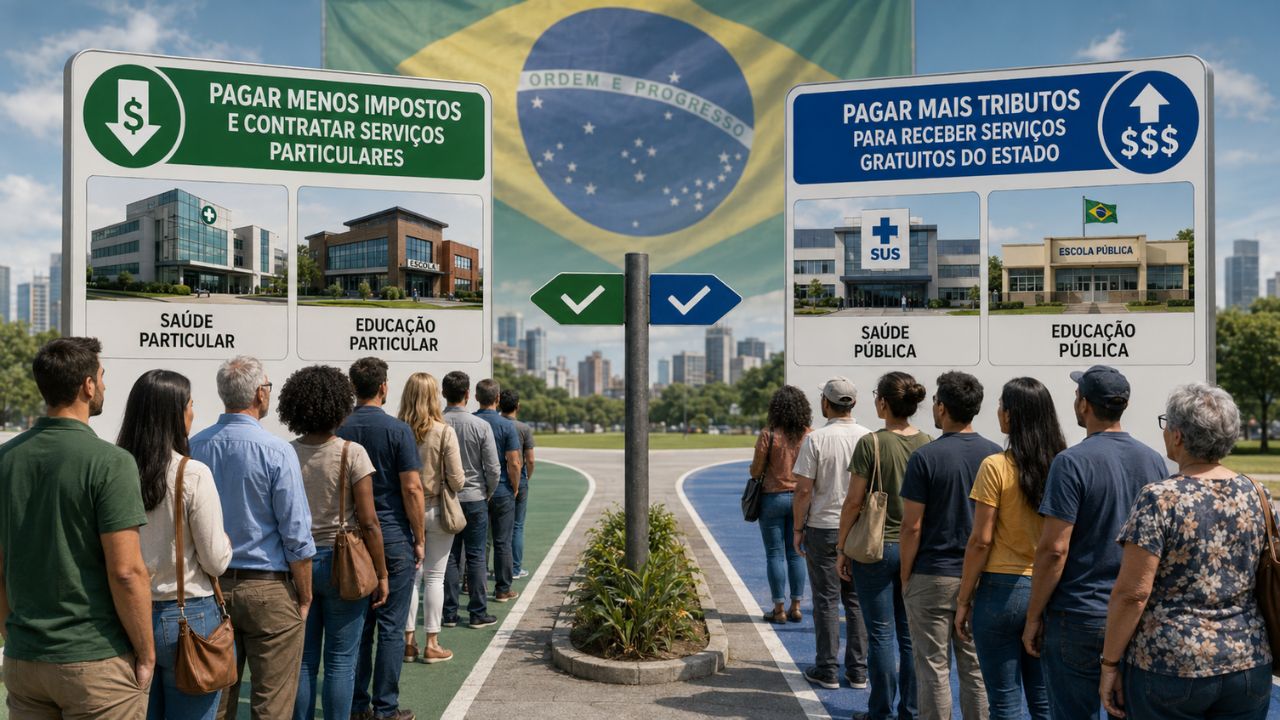
Half of Brazilians Prefer Lower Taxes with Private Health and Education, While 44% Opt for Higher Taxes for State-Provided Services, Datafolha Survey Reveals

-
Brazil’s Most Expensive Toll Rises to R$ 40.60 on Route from São Paulo to the Coast, Nearly Matching Bus Fare to Santos



The second front is strengthening the marketplace, focusing on expanding the product assortment and advancing in categories that are still under-digitized, such as food and beverages. The third is Mercado Pago, which is expected to remain one of the company’s main investment fronts, with the expansion of credit offerings for consumers and small and medium-sized enterprises.
The logistical expansion of Mercado Livre in Brazil
The opening of 14 new distribution centers represents a 50% growth in Mercado Livre’s logistics network in Brazil. The goal is to increase processing capacity in existing units and open operations in new regions of the country, reducing delivery times and improving the consumer experience.
The logistical expansion is considered by the company one of the fundamental pillars to drive e-commerce growth in Brazil. According to Fernando Yunes, it is the combination of more assortment, better experience, and faster logistics that should accelerate the migration of consumption from offline to online.
Recently, Mercado Livre had already opened a mega distribution center in Criciúma, in southern Santa Catarina, signaling that the expansion to regions outside the São Paulo-Rio de Janeiro axis is among the priorities.
The role of Mercado Pago in the investment strategy
Mercado Pago, the financial arm of Mercado Livre, is expected to receive a significant portion of the R$ 57 billion planned for 2026. The focus is on expanding credit for consumers and for the 5.8 million small and medium-sized enterprises operating within the company’s ecosystem in Brazil.
According to Yunes, Mercado Pago’s credit models are more mature and use behavioral data and sales history within the platform to calibrate risk, allowing for safer expansion of offerings.
The granting of credit has a direct effect on Mercado Livre’s sales, as it expands purchasing capacity at the time of purchase and supports the growth of small and medium entrepreneurs selling on the platform.
Why Brazil is the most important market for Mercado Livre
Brazil accounts for approximately 52% of Mercado Livre’s total revenue, making it the company’s most relevant market in all of Latin America. The concentration of investments in the country reflects both the size of the Brazilian operation and the growth potential that the company sees in the local e-commerce.
With e-commerce penetration still in the range of 16% to 17%, Brazil is significantly below more mature markets. For Mercado Livre, this represents a concrete opportunity to capture increasingly larger shares of retail that still occurs exclusively in the physical world.
The company acts as an economic engine for 5.8 million small and medium-sized Brazilian enterprises, which in 2024 generated R$ 381 billion through the company’s ecosystem, an amount equivalent to 3.2% of Brazil’s GDP.
What the expansion of Mercado Livre means for Brazilian e-commerce
The R$ 57 billion investment from Mercado Livre in 2026 signals that the company believes in a prolonged cycle of e-commerce growth in Brazil. The strategy combines three elements that, according to the company itself, are essential to accelerate the digitization of retail: expanding the product assortment, improving the shopping experience, and faster delivery.
For the Brazilian consumer, the practical effect of Mercado Livre’s logistical expansion tends to be faster deliveries and access to more product categories.
For sellers, especially small and medium enterprises, the advancement of Mercado Pago and the expansion of credit can represent more working capital and greater growth capacity. Mercado Livre’s bet on Brazil is, in Yunes’ words, a demonstration of confidence in the country’s future and in the potential of e-commerce and financial services.
With R$ 57 billion in investments, 14 new distribution centers, and the expansion of Mercado Pago, Mercado Livre is making its largest bet in Brazil so far. The strategy aims to capture the potential of an e-commerce market that still has ample room for growth and that already moves billions within the company’s ecosystem.
What do you think of Mercado Livre’s investment in Brazil? Do you believe that the logistical expansion will improve the shopping experience in Brazilian e-commerce? Leave your opinion in the comments and share it with those who follow the digital market.