





 Portuguese
  English
  Spanish
  6 min of reading
  21 comments


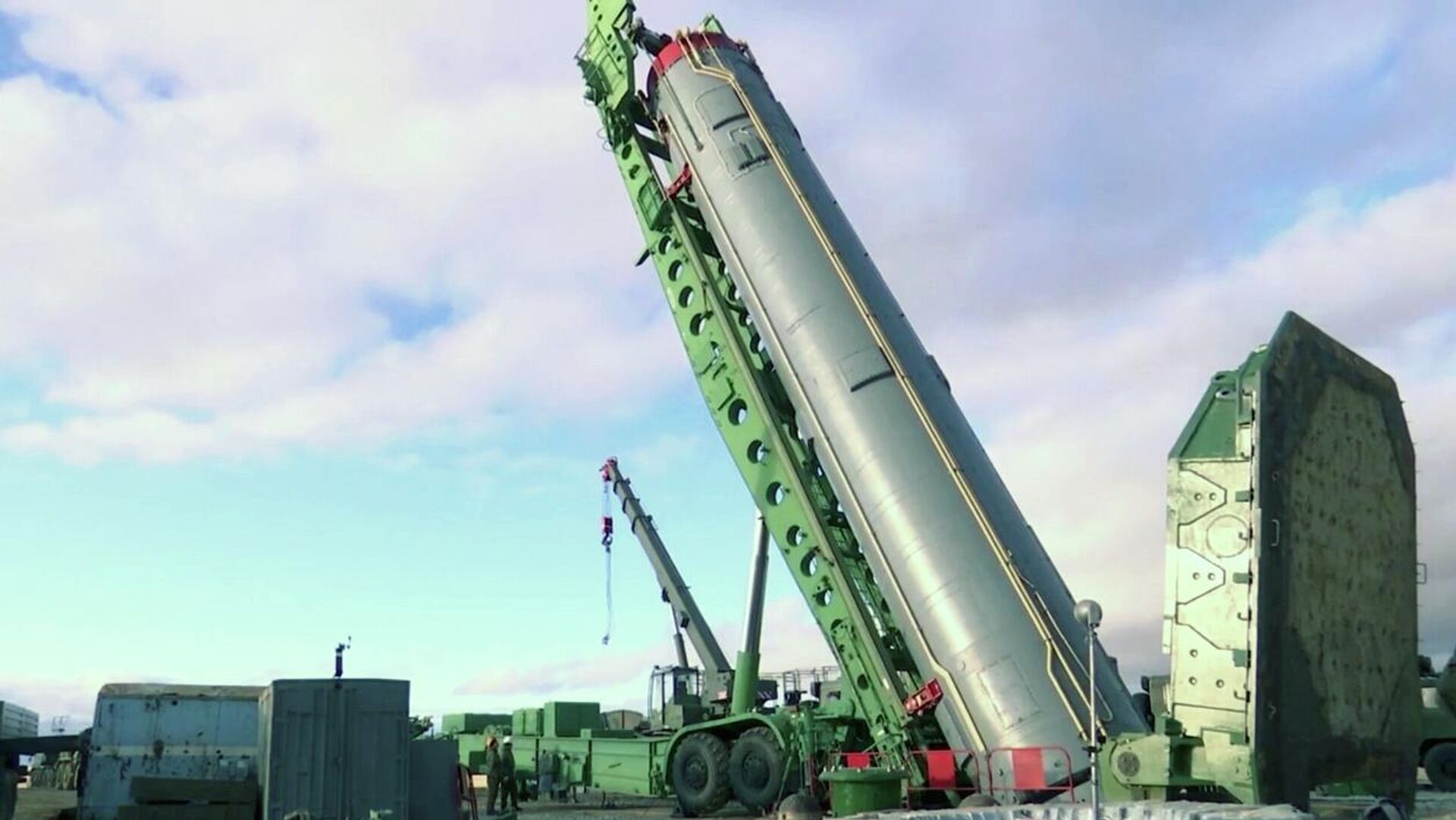


With Speeds Exceeding Mach 20 and Intercontinental Range, the Russian Avangard Uses Maneuverable Hypersonic Glide Vehicle to Challenge Missile Defense Shields.
In December 2019, the Ministry of Defense of the Russian Federation officially announced the operational service entry of the strategic system Avangard, integrated into Russia’s Strategic Missile Forces. The initial deployment occurred in the Orenburg region, in the southern part of the country, using intercontinental ballistic missiles as a launch vector. The information was disclosed by the Kremlin and subsequently analyzed by reports from the U.S. Department of Defense and the Congressional Research Service. The system represents a structural shift in the logic of nuclear deterrence by incorporating a maneuverable hypersonic glide vehicle capable of flying in the upper atmosphere at speeds exceeding Mach 20, the equivalent to more than 24,000 km/h.
The Avangard is not just a conventional warhead attached to an intercontinental ballistic missile. It is a boost-glide system, in which a rocket propels the vehicle to suborbital altitudes, after which the glider separates and reenters the atmosphere on a controlled trajectory, performing lateral maneuvers and altitude variations before hitting the target. According to official Russian data, the system can strike targets at distances greater than 18,000 kilometers, a feature that positions it as a strategic intercontinental weapon.
The Evolution of Strategic Hypersonic Vehicles Until the Arrival of the Avangard System
The concept of hypersonic glide vehicles is not new. Studies on boost-glide vehicles date back to the Cold War when the United States and the Soviet Union researched alternatives to predictable ballistic trajectories.
-
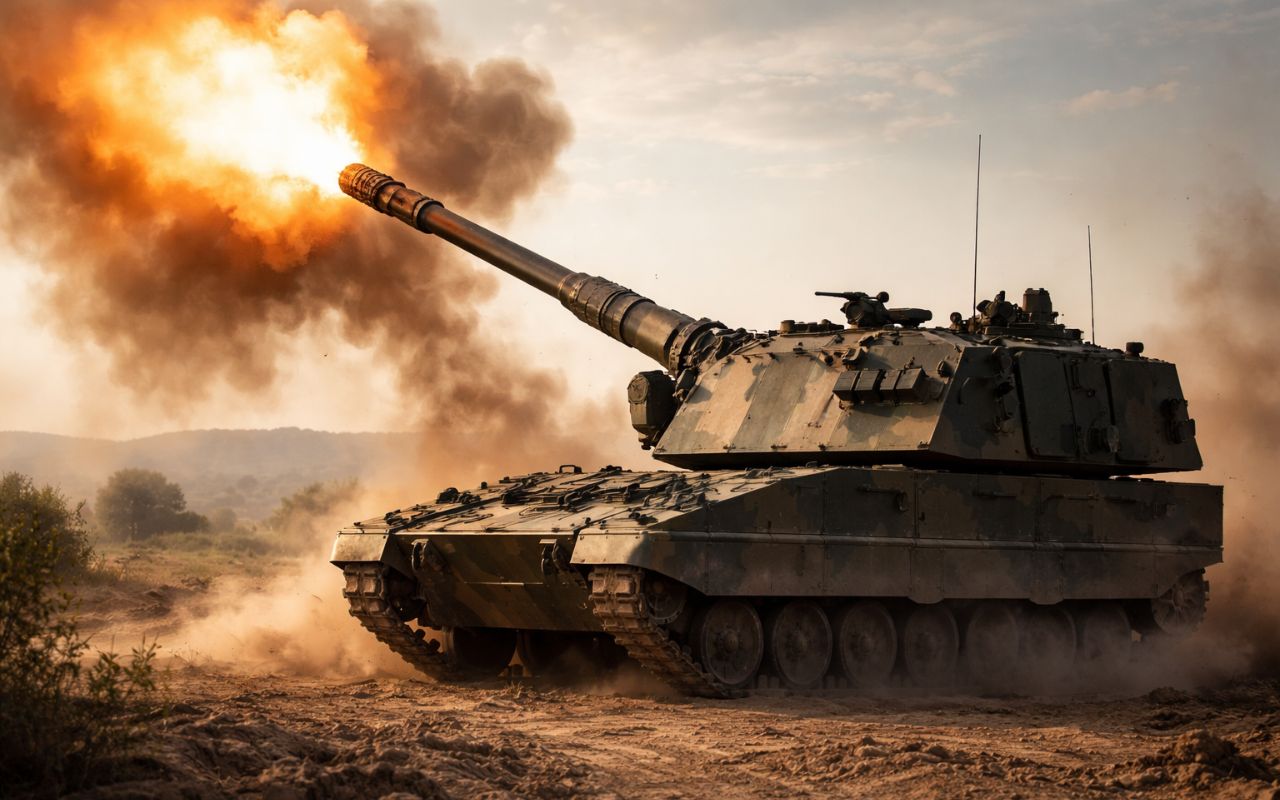
The German “steel monster” weighing 55 tons fires up to 10 projectiles per minute at over 40 km and avoids counterattacks on the battlefield by moving quickly to escape enemy attacks; meet the Panzerhaubitze 2000.
-
USS Gerald R. Ford, the largest aircraft carrier in the world, returns to sea after a fire in the laundry in the Red Sea; repaired in Crete, it resumes missions of Operation Epic Fury against Iran.

-
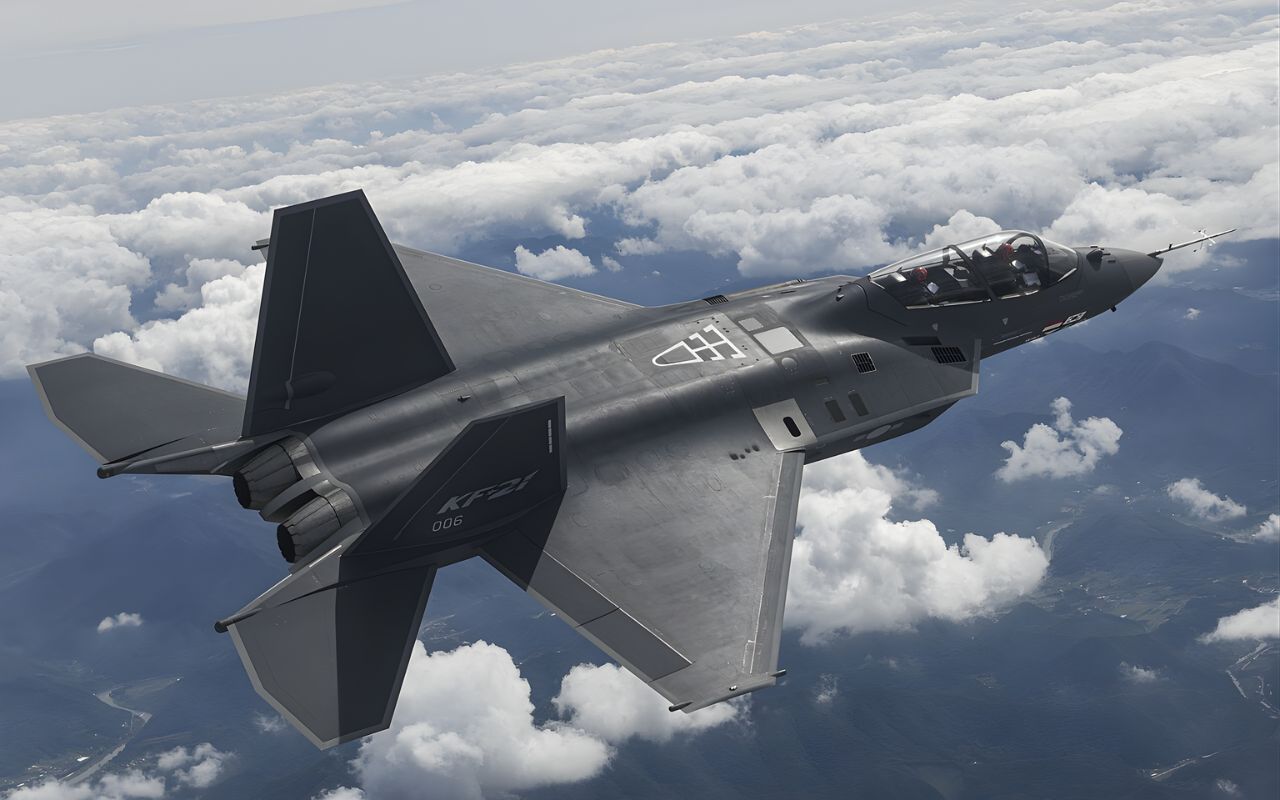
Military power: South Korea’s new KF-21 fighter jet will be a key component in replacing the aging aircraft of the air force, placing the country on the map of air military powers.
-
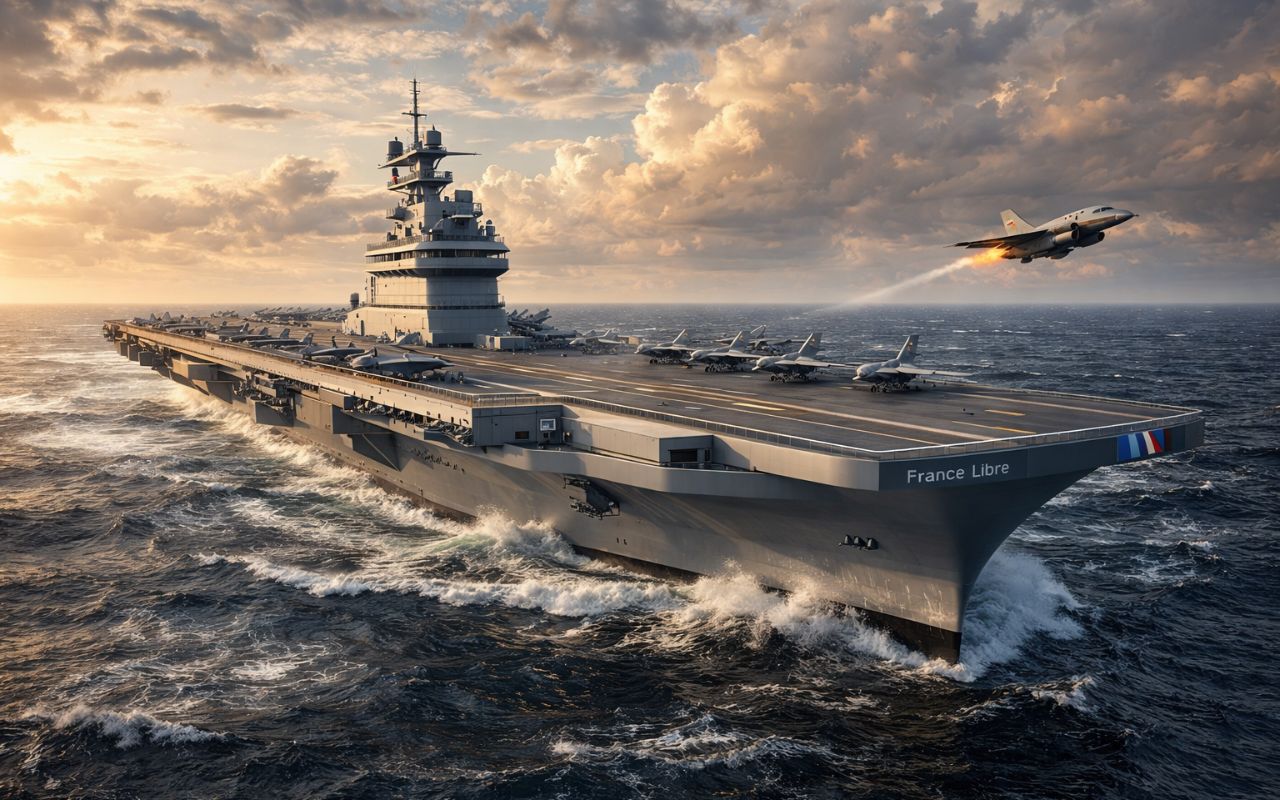
With 310 meters, 80 thousand tons, and capable of operating for 45 years, the new nuclear aircraft carrier France Libre will be the largest in France and will enter service in 2038.

In the classic model of intercontinental ballistic missile, the warhead follows a nearly predictable parabolic trajectory after the boost phase. This predictability enabled the development of missile defense systems based on kinetic interception outside the atmosphere or during the terminal phase.
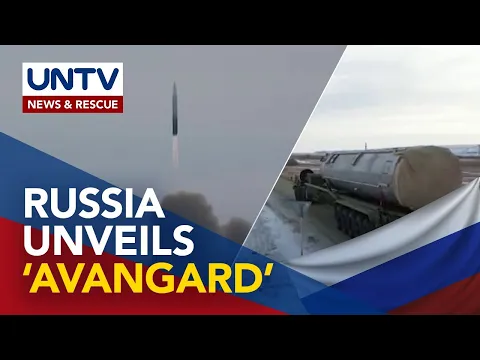

The distinguishing factor of the Avangard is its ability to sustain flight in the upper atmosphere, approximately between 50 and 100 kilometers in altitude, an area often described as the boundary between atmosphere and space.
In this regime, the vehicle experiences sufficient atmospheric density to generate aerodynamic lift, yet still in a low-resistance environment compared to lower layers.
According to the Russian Ministry of Defense, the Avangard can perform evasive maneuvers during hypersonic flight, altering its trajectory both laterally and vertically.
Reports from the U.S. Department of Defense confirm that vehicles of this type significantly complicate interception by traditional missile defense systems, such as the Ground-based Midcourse Defense, which is designed to intercept warheads on predictable trajectories in exo-atmospheric space.
Launch Process and Operation of the Boost-Glide System
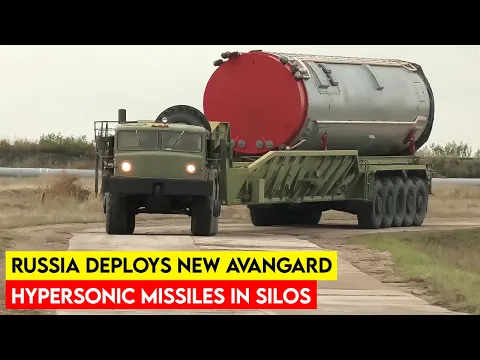
The Avangard is launched by an intercontinental ballistic missile, initially the UR-100N UTTKh, known in the West as SS-19 Stiletto, according to information disclosed by Russia. There are plans for future integration with the RS-28 Sarmat missile, a new-generation ICBM with high payload capacity.
The process occurs in three main stages. In the boost phase, the missile accelerates the system to hypersonic speeds and suborbital altitudes.
Once the glider separates, the atmospheric gliding phase begins. At this stage, the vehicle enters the upper atmosphere at speeds exceeding Mach 20, generating extremely high temperatures on the outer surface, possibly above 2,000 degrees Celsius.

To withstand these conditions, the vehicle requires ablative or advanced composite materials resistant to high temperatures.
Although technical details have not been officially disclosed, independent analyses indicate the use of materials similar to those employed in reentry vehicles and high-temperature aerospace technologies.
Unlike a conventional warhead following a predictable ballistic trajectory, the hypersonic glider can alter course during flight. This maneuverability, combined with extreme speed, drastically reduces defensive systems’ reaction time.
Hypersonic Technology, Aerodynamic Control and Physical Challenges
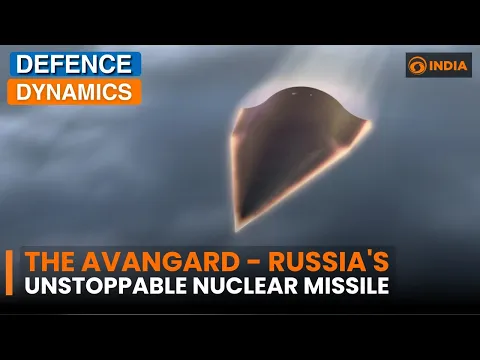
Flying at Mach 20 involves facing intense aerothermic phenomena. The compression of air ahead of the vehicle generates heat from friction and shock, forming a plasma layer around the structure. This plasma can interfere with communications and sensors, a phenomenon known as communication blackout.
Controlling a vehicle under these conditions demands advanced inertial navigation systems and control algorithms capable of operating under extreme temperatures and intense vibrations.
The hypersonic flight regime also involves complex aerodynamic instabilities, necessitating sophisticated control surfaces or aerodynamic vectoring.
The Avangard belongs to the category of boost-glide vehicles, unlike hypersonic cruise missiles based on scramjet technology, which utilize sustained supersonic combustion. In the case of the Avangard, speed is attained during the initial phase by the rocket, being maintained during gliding by accumulated kinetic energy.
According to the U.S. Congressional Research Service, the main strategic advantage of these systems lies in the combination of extreme speed and maneuverability, complicating trajectory modeling by radar systems and interception algorithms.
Strategic Scale, Nuclear Capability and Geopolitical Impact
The Avangard was declared operational by Russia at the end of 2019, with units deployed in the Orenburg region. It is a strategic system integrated into the Russian nuclear arsenal. Although the exact number of deployed units is not widely disclosed, Western analysts indicate that the system initially equips a limited number of missiles.
It is essential to differentiate between national industrial production capacity and operational deployment. Russia confirmed the production and integration of the system on a limited strategic scale, with no official data released regarding annual production.
The Avangard is not a conventional export system but an integral part of the Russian strategic nuclear arsenal.
Geopolitically, the introduction of hypersonic vehicles like the Avangard was interpreted as a response to the development of missile defense systems by the United States and the expansion of missile defense shields in Eastern Europe.
The underlying strategic logic is based on maintaining second-strike capability, a central element of the nuclear deterrence doctrine.
Reports from the U.S. Department of Defense and NATO recognize that maneuverable hypersonic vehicles reduce the effectiveness of interception systems designed for conventional ballistic trajectories. This has led to increased investments in space-based hypersonic tracking sensors and next-generation defense systems.
Technological Limits, Future Implications, and the Hypersonic Arms Race
Despite the declared capability, hypersonic systems face significant technical challenges. Precise control in hypersonic regime, structural resistance to extreme temperatures, and reliability in real operational environments are critical factors.
Furthermore, the integration of these systems into international arms control treaties remains complex.
The New START, a treaty to limit strategic arms between the United States and Russia, considers nuclear warheads and strategic vectors, but the development of new technologies such as boost-glide vehicles adds layers of uncertainty concerning strategic stability.
Meanwhile, the United States and China are also investing in hypersonic systems. The U.S. program includes the AGM-183 ARRW and other experimental projects, while China is developing the DF-17 with a hypersonic glider. The Avangard, however, was one of the first strategic hypersonic systems declared operational by a nuclear power.
The hypersonic arms race alters the calculus of defense and attack by reducing response times and increasing trajectory unpredictability. The boundary between atmosphere and space becomes a critical operational domain, requiring new low-orbit sensors and persistent detection systems.
The Avangard symbolizes this transition to a new phase of strategic military engineering, where extreme speed, advanced aerodynamic control, and integration with intercontinental vectors redefine the architecture of nuclear deterrence. More than just a missile, the system represents the convergence of advanced aerospace technology and high-impact geopolitical strategy.
In a global scenario of technological reconfiguration, the introduction of maneuverable hypersonic vehicles marks a turning point in contemporary military engineering, shifting the axis from ballistic predictability to controlled aerodynamic uncertainty at speeds exceeding Mach 20.









Não conseguiram ganhar a guerra contra um país, muito menor que eles
Realmente subestimaram a Ucrania. Mas se você considerar que eles tomaram 20% do território e não irão mais devolver (até o Trump apoia isso) eles venceram sim a guerra
Esse Putin e um **** e COVARDE. A quatro anos ataca uma nação minúscula e desarmada, em seus ataques, não respeita hospital de crianças, abrigo de velhos, hospital de cancerosos. E uma vergonha o nosso Brasil fazer transação comercial com Rússia, comandado por um IMORAL.
Igual a Israel, um bando de covardes assassinando crianças, mulheres e idosos pra tomar seu território
Putin e suas mentiras tecnológicas,se esse foguete for igual sua defesa militar deve ser um fracasso,seu intuito em se vangloriar e intimidação, quer passar uma aparência que não existe de poder e força esse **** russo.
Isso não é nada, pesquisa sobre o Satan II pra tu ver