





 Portuguese
  English
  Spanish
  8 min of reading
  0 comments


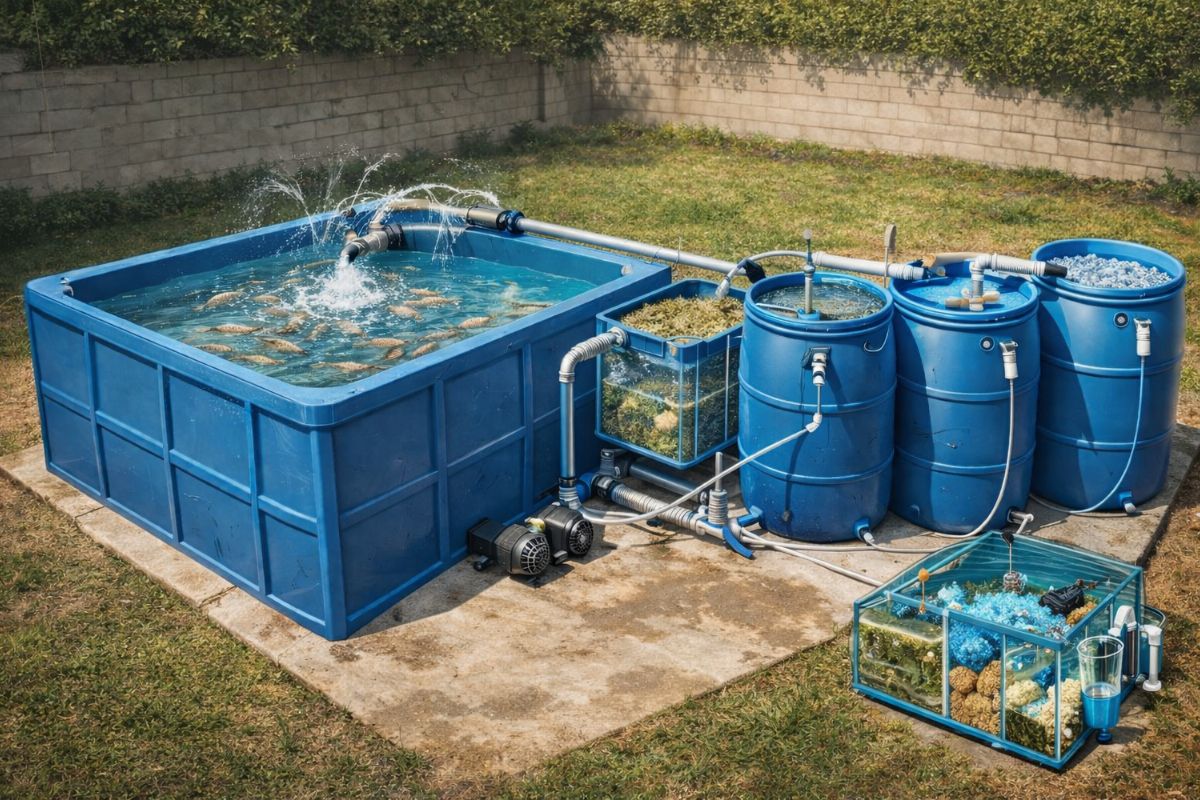
Creating Fish in a 1000-Liter Water Tank in the Backyard, Using Drums, Biological Filter, and Good Aeration Allows for Fresh Protein at Home with Little Space and Low Cost. With the Right System, It Is Possible to Create Fish in a Controlled Environment, Saving Water and Better Utilizing Every Square Meter of the Backyard.
Creating fish has ceased to be something exclusive to those with ponds or large properties. With a well-thought-out project, it is possible to create fish in a water tank in the backyard, in a small space, keeping the water well filtered, oxygenated, and reused. A simple setup with a 1000 L tank and three 120 L drums, forming a decanter, biological filter, and SUMP, ensures continuous circulation, dirt removal, and comfort for species like tilapia and tambaqui.
Why Create Fish in a Water Tank in the Backyard
Creating fish in a water tank in the backyard is a practical way to transform a forgotten space into a source of food.
The structure takes up little ground space, works in both city and rural backyards, and allows for complete control over the water, feed, and stocking density of the tank.
-
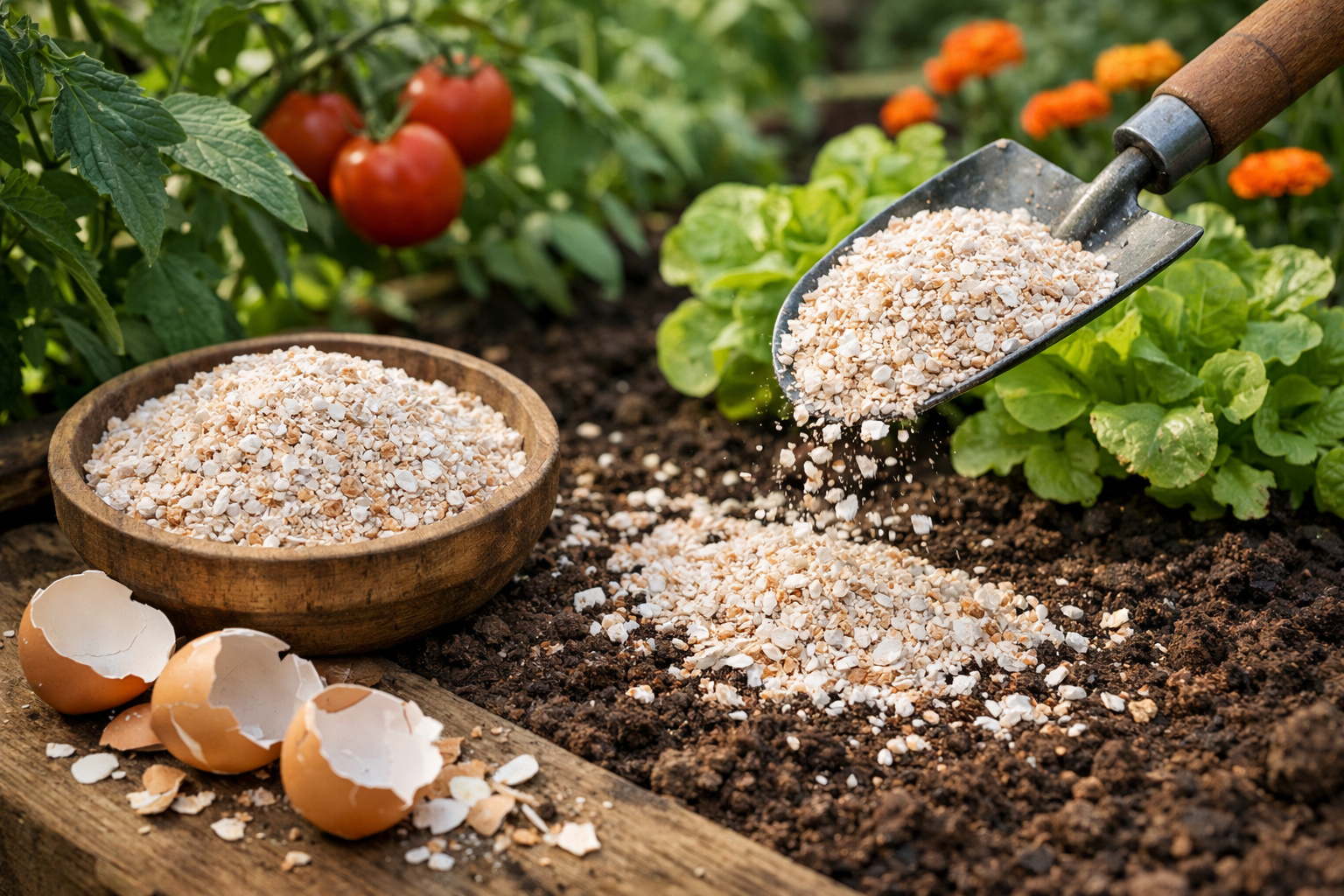
The eggshell that almost everyone throws away is made up of about 95% calcium carbonate and can help enrich the soil when crushed, slowly releasing nutrients and being reused in home gardens and vegetable patches.
-
This farm in the United States does not use sunlight, does not use soil, and produces 500 times more food per square meter than traditional agriculture: the secret lies in 42,000 LEDs, hydroponics, and a system that recycles even the heat from the lamps.

-
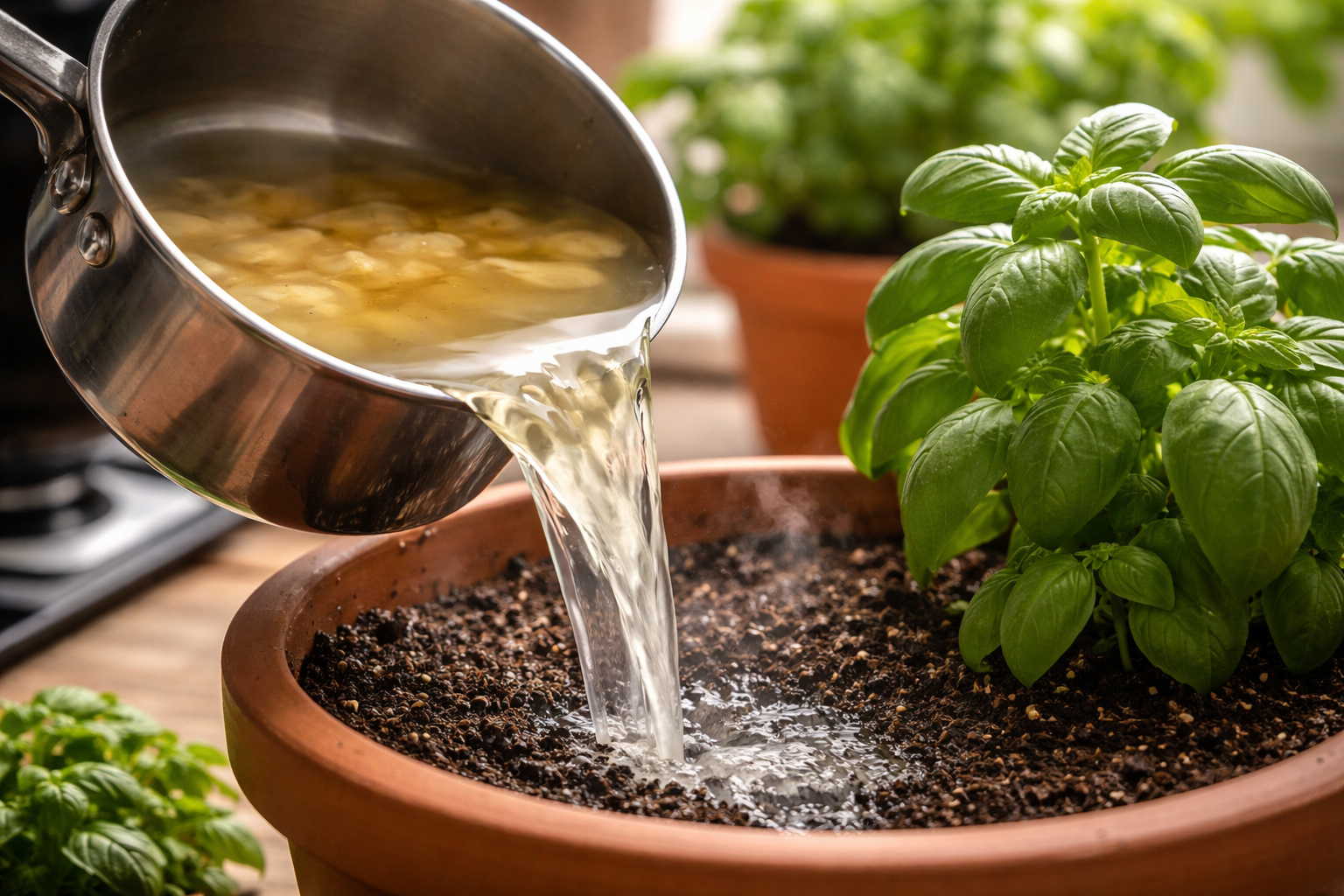
The water that almost everyone throws away after cooking potatoes carries nutrients released during the preparation and can be reused to help in the development of plants when used correctly at the base of gardens and pots, at no additional cost and without changing the routine.
-
The sea water temperature rose from 28 to 34 degrees in Santa Catarina and killed up to 90% of the oysters: producers who planted over 1 million seeds lost practically everything and say that if it happens again, production is doomed to end.


Another advantage is the savings. Creating fish in a closed system consumes much less water than conventional tanks, as the liquid is recirculated all the time through the filters.
With the decanter, biological filter, and SUMP working together, the water remains clean for much longer, reducing changes and waste.
Basic Structure of the System to Create Fish
The system for creating fish shown in the step-by-step process uses a 1000-liter water tank connected to three 120-liter drums.
The main tank is where the fish will live. The drums act as a decanter, biological filter, and SUMP, forming a closed circuit.
The base of the 1000 L tank is built with blocks and cement, forming two circles on the ground. The outer circle receives plaster, while the inner circle is filled with sand, always leveling everything before supporting the tank.
The drums are also placed on small cement bricks, which aids in the finish with gravel and keeps the system stable, ready to create fish without the risk of tipping or collapsing.
Preparing the Water Tank to Create Fish
For the water to circulate properly, the 1000-liter tank receives a 50 mm flange on the side wall.
The hole is made with a hole saw, the flange is placed with the thread facing inward and the smooth part facing outward, and a piece of pipe serves as a guide to align the connection to the decanter.
This exit is the main connection between the tank where you will create fish in the backyard and the set of drums.
From there, the water flows down carrying dirt, passes through the decanter, goes through the biological filter, reaches the SUMP where the pump is located, and returns clean to the fish tank.
Decanter, Biological Filter, and SUMP: The Heart of the Breeding
To create fish safely in a water tank, the filtration needs to be very well designed. The decanter is the first point after the fish tank.
It receives the dirtiest water and concentrates the waste at the bottom. A 40 mm flange at the base, connected to a elbow and pieces of pipe positioned a few millimeters from the bottom, allows the dirt to be easily suctioned during maintenance.
After the decanter, the water goes to the biological filter. There, it passes through a set of media where good bacteria remove ammonia and other toxic residues.
At the bottom, there are fixed media. At the top, floating media move the water. A perforated vertical drain guides the flow to the SUMP, the third drum of the system.
In the SUMP, the water is already much cleaner, ready to be pulled by the pump and returned to the tank where you will create fish.
Intelligent Connections to Facilitate Maintenance

One of the secrets of this fish farming project is how the connections are assembled. Many connections are glued on one side and only fitted on the other.
This way, maintenance becomes much simpler. Between the 1000 L tank and the decanter, for example, the connection is made with a 30 cm piece of pipe and a central coupling.
The side of the tank is glued, while the side of the drum is only fitted. When it’s time to clean the decanter, just pull the connection, remove the drum, and work comfortably.
In sections exposed to tripping hazards, such as sewer outlets and valves, everything is rigidly glued to prevent leaks.
In areas you may need to disassemble frequently, the fitting without glue makes the routine lighter. This way, creating fish at home stops being a maintenance problem and becomes an organized process.
How to Choose the Ideal Pump for Fish Farming
The pump is responsible for keeping the water circulating between the tank and the drums. To create fish in this system, the pump needs to handle both the total volume and the pressure required to feed the biological filter and the Venturi aerator.
In the example, a pump around 40 W is used, with flow control, running 24 hours a day. The estimated monthly cost is around 31 reais, a value compatible with a project that produces food all year round.
For a 1000 L tank with good filtration, a pump between 4,500 and 5,000 L per hour is sufficient. If the goal is to expand the system later and install growing beds for aquaponics, a pump of 6,000 L per hour is already enough.
Choosing the right pump is essential for creating fish without surprises, balancing energy consumption, water flow, and the possibility of expansion.
Venturi Aerator: Oxygen Without an Extra Compressor
Instead of buying a separate air compressor, the system uses the pump’s own pressure line to oxygenate the fish tank.
This is done with a simple Venturi aerator, assembled with a T fitting, pieces of pipe, a washer, and an elbow. When the water passes through this assembly at high speed, it creates a vacuum that pulls air through the upper opening.
The result is a strong jet of water mixed with air entering the breeding tank. Creating fish in a closed system requires constant oxygen, and the Venturi performs this function without extra equipment, air compressor hoses, or porous stones. This way, you reduce costs and simplify installation.
Water Level Control and Waste Drainage

To prevent overflow and facilitate cleaning, the system includes an overflow and drainage points distributed. A piece of 100 mm pipe, cut with “teeth” at the top, acts as a cover that protects the water entrance feeding the decanter.
Within this cover, the 50 mm pipe that leads the water to the next drum passes through. The design prevents small fish from being sucked in, which is essential during the fry phase.
On the side of the 1000 L tank, a 40 mm flange with a valve allows draining accumulated dirt from the bottom and lowering the water level when necessary to capture or transfer the fish. In the drums, the waste outlet is assembled with 50 mm sewage piping.
This nutrient-rich water can be used directly in garden beds, nourishing plants with the natural fertilizer produced by the fish creation system.
Biological Media: The Invisible Base of Water Quality
The visible part of the system draws attention, but what really holds everything together are the biological media. Creating fish in a closed environment means constantly dealing with ammonia, nitrites, and nitrates.
It is the good bacteria that transform these compounds and keep the water stable. The filter uses fixed media like pieces of tile and blocks, inexpensive and easy to obtain materials.
Additionally, the filter receives expanded clay, which is lightweight and offers a huge contact area, and professional white ceramic, which accumulates even more bacteria per volume.
In the upper layer, floating media of the K1 type enter, which move with the water and continually renew the available surface. With this combination, creating fish becomes much safer, with rapid growth and reduced mortality.
How Many Fish to Place in the 1000-Liter Tank
It is of no use to set up the perfect system and make mistakes in stocking density. To create fish responsibly, it is important to respect the bacteria’s time and the filter’s capacity.
In the step-by-step guide, the strategy is gradual. Initially, only two fish are introduced, used to start the water cycling and feeding the bacteria with a small amount of feed and waste.
The system is maintained this way for about five weeks. During this time, the media fill up with good bacteria, water quality stabilizes, and the setup is ready to receive more inhabitants.
Only after this phase does the 1000-liter tank start to accommodate about 50 tilapia, which can reach approximately 800 grams each. With this care, creating fish at home significantly reduces the risk of mass mortality right at the start.
From Creating Fish to Complete Aquaponics
The fish farming project is already designed to grow. In the 32 mm pipe coming from the pump, there is a T fitting with a cap reserved especially for future use.
When you decide to advance, just open this point and connect a growing bed. The nutrient-rich water from the fish tank passes through this plant bed, nourishing vegetables, greens, and herbs, and can return cleaner to the system.
This way, creating fish naturally evolves into aquaponics, with simultaneous production of animal protein and fresh vegetables for the family.
The same system that currently supplies a 1000 L tank with tilapia and tambaqui can turn into a mini backyard farm, producing food practically year-round.
Practical Advantages of Creating Fish in This System
When everything is set up, it becomes clear that creating fish in a 1000 L water tank with three drums has several advantages.
The structure is compact, fits in a small backyard, and can be installed even on urban ground with simple flooring. The water is recirculated, filtered, and reused, reducing consumption and still providing nutrient-rich drainage for the garden.
The Venturi aerator takes advantage of the pump’s pressure, avoiding the need to buy an extra compressor. And the system already opens the door for anyone wanting to set up aquaponics later.
In daily life, this setup transforms the way you look at the backyard. It stops being just an empty space and becomes a point of real production.
Creating fish this way combines simple technology, filtration knowledge, and the desire to produce your own food, all in just a few square meters.
Content adapted from material published by the channel Com a Natureza, which produced the original step-by-step of this system.
And you, if you had this system ready in your backyard, what would be your main objective in creating fish: to ensure food for the family, to test an extra income, or to start a more complete aquaponics project in the future?






-

-

-

-

-

-

26 pessoas reagiram a isso.