





 Portuguese
  English
  Spanish
  3 min of reading
  0 comments


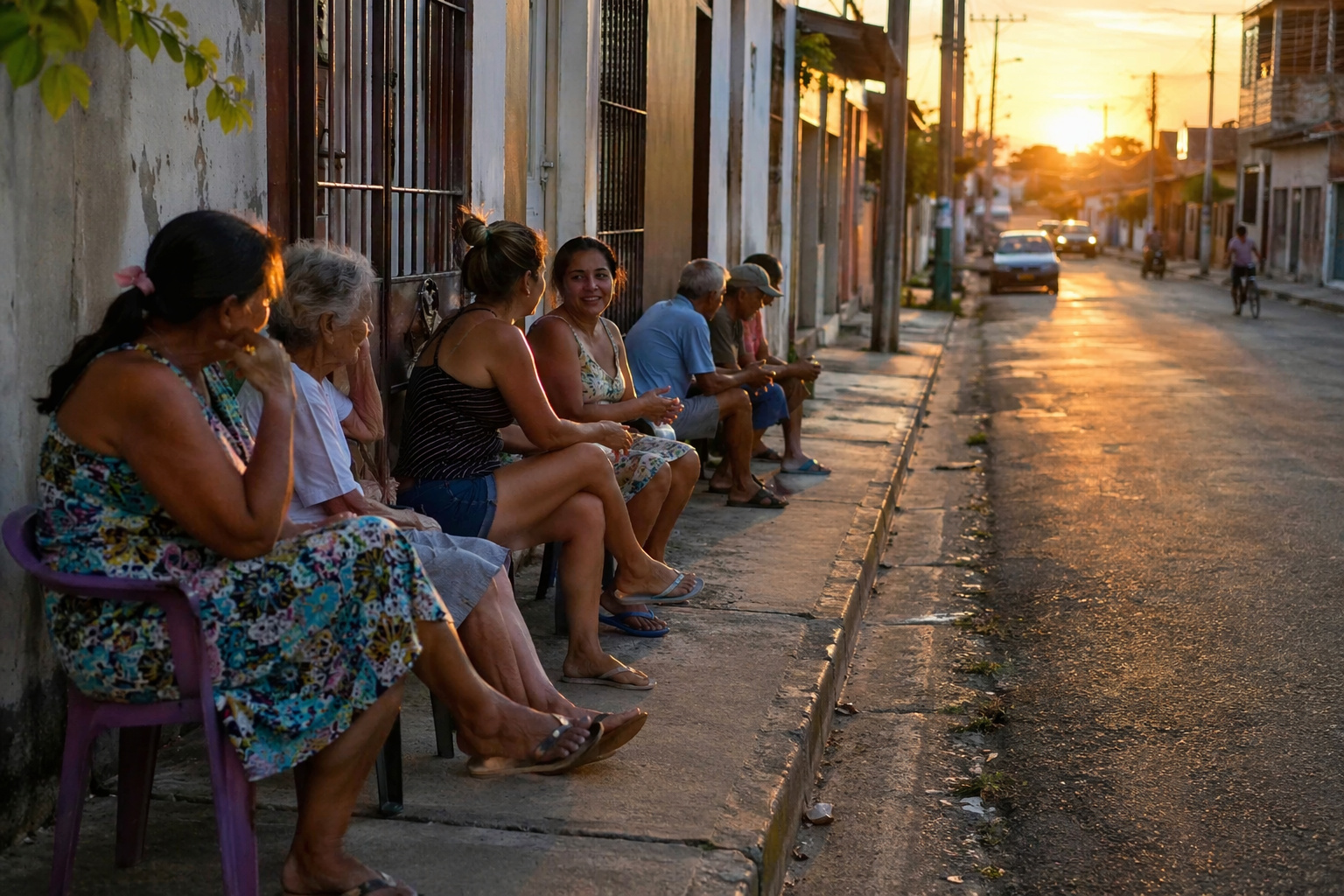
The habit of occupying the sidewalk at dusk shows how face-to-face interaction shaped relationships, brought neighbors closer, and can still influence current daily life
A daily and collective habit marked the lives of millions of Brazilians over the decades.
Sitting on the sidewalk at the end of the afternoon transformed the street into a space for meeting, resting, and socializing.
As the sunlight diminished, neighbors gathered to chat and share simple experiences of the day.
This practice symbolized a slower pace of life, with closer relationships and less rush in daily life.
Records from the IBGE over the decades of the 1980s and 1990s indicate that the collective use of the streets was more frequent.
This behavior consolidated community interaction as an essential part of Brazilian urban routine.
-
Daughter of a public servant, a young woman from MA turns her fight for the environment into a victory and secures a full scholarship at a university in the USA.

-
Psychology explains why the generation that grew up in the 60s and 70s became so tough but still struggles to ask for help even when they are drowning, and the cost of this is extremely high.

-
The lemon that grows alone in Brazilian backyards has powers you can’t even imagine: it lowers high blood pressure, prevents kidney stones, fights cholesterol, and even removes rust from any surface.

-
In the midst of one of the most arid regions on the planet, circles of up to 1 km appear in southeastern Libya as visible marks from space and reveal giant farms that pump fossil water hidden beneath the desert for thousands of years.

The sidewalk as an extension of the home
The street functioned as an extension of the home and a daily meeting point among neighbors.
Families used the sidewalk to talk, observe the movement, and enjoy the end of the afternoon.
Topics such as work, studies, soccer, and neighborhood events were discussed without hurry.
Time seemed to slow down, allowing for more natural and spontaneous interactions.
Simple drinks, like coffee or juice, were shared during conversations.
This habit reinforced the sense of belonging and closeness among residents.
Adults watched over the children playing in the street, creating a collective environment of care.
The constant presence increased the feeling of safety and social integration.
Affective memories built in daily life
Simple elements of everyday life contributed to the formation of lasting memories.
The sound of the ice cream vendor, the smell of food, and the movement of the street marked these experiences.
These stimuli still evoke nostalgia in different generations today.
The habit of sitting on the sidewalk remains a symbol of human connection and simplicity.
Other habits from the past reinforced social interaction
Diverse customs contributed to a lighter and more collective routine.
Before the popularization of the internet in the 2000s, studies from the Getulio Vargas Foundation indicated that leisure was predominantly face-to-face.
Among the main habits, the following stand out:
- Street games, such as hopscotch and tag, which stimulated creativity and social interaction;
- Open doors, which facilitated frequent visits and relationships of trust;
- Occupied balconies and sidewalks, which favored meetings and long conversations;
- Conversation circles after dinner, which strengthened emotional bonds;
- Neighborhood commerce, which brought residents closer through personal service.
Content produced in the 2020s, such as that from the C3N Retrô channel, reinforces the appreciation of these memories.
These references show how nostalgia remains present in the collective imagination.
Changes in lifestyle
The advancement of digital technologies has altered social behavior over the years.
Daily life has become faster and mediated by electronic devices.
Face-to-face interaction has lost ground to virtual interactions.
Even so, the value of these practices is still recognized as essential for social well-being.
Adaptation of habits in the present
Some of these customs can still be adapted to current daily life.
It is not about returning to the past, but about incorporating simple practices into everyday life.
Among the possibilities, the following stand out:
- Setting aside moments for pause and social interaction;
- Encouraging games without the use of screens;
- Stimulating conversations with neighbors;
- Reducing digital distractions at certain times;
- Valuing stories and memories between generations.
These actions allow for the recreation of more meaningful social experiences.
Importance of reclaiming social rituals
Childhood nostalgia invites reflection on current habits.
Recovering simple practices can reduce the feeling of social isolation.
The balance between technology and social interaction allows for the creation of new affective memories.
The spirit of closeness and interaction remains possible in the modern context.
Is there still room in the current routine to reclaim this simple habit that brought people together and strengthened communities?









Seja o primeiro a reagir!