Portuguese
  Spanish


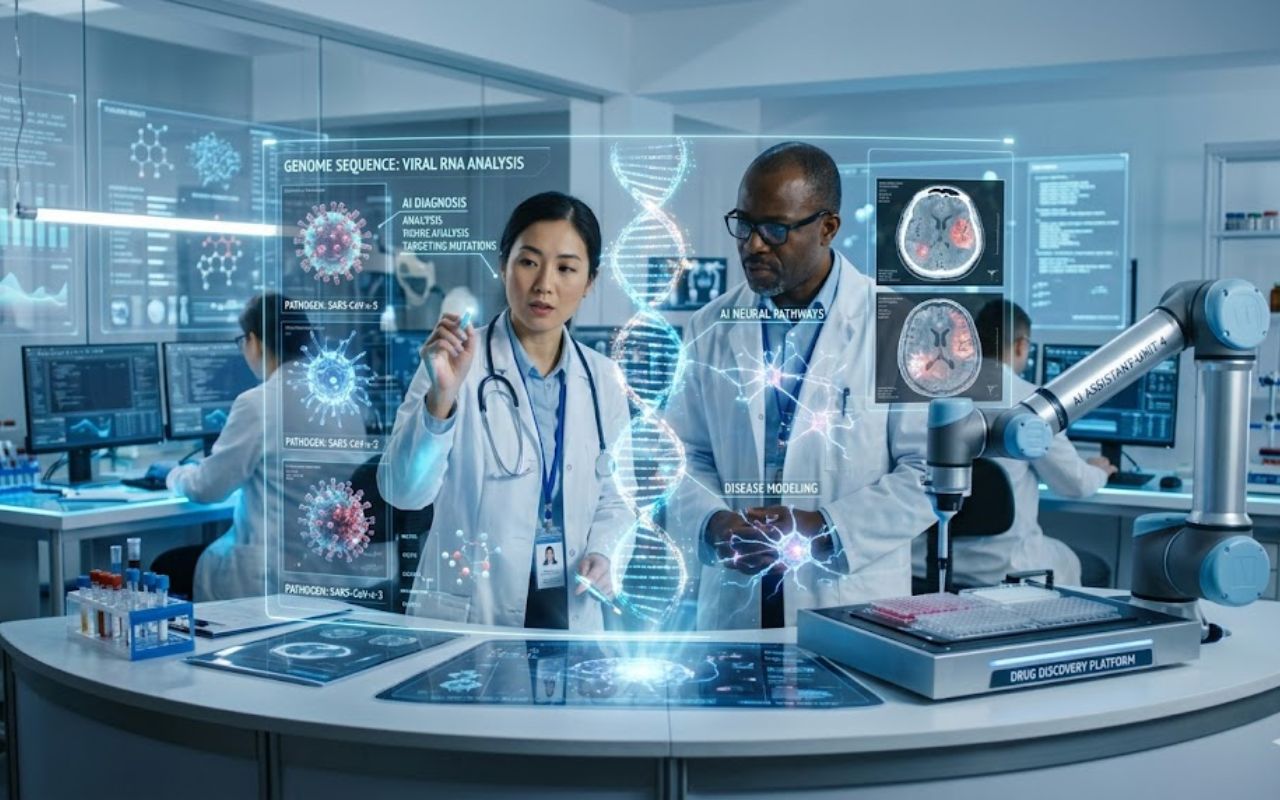

With millions of annual deaths, the advancement of resistant bacteria drives the use of artificial intelligence in the creation of new antibiotics.
The growing difficulty in combating bacterial infections has led scientists to seek innovative solutions. Researchers, including teams from the Massachusetts Institute of Technology, have begun to heavily invest in artificial intelligence to accelerate the discovery of new antibiotics.
This movement occurs against an alarming backdrop: approximately 1.1 million people die each year due to resistant infections, a number that could exceed 8 million by 2050.
This advancement of bacteria occurs because current medications are losing effectiveness, making the search for faster and more efficient alternatives urgent.
-
Polar Air Mass to Hit Brazil: Temperatures to Plummet in Nine States, Near Freezing in the South with Frost Risk Until Monday

-
Chinese “dark factories” produce electric cars 24/7 with minimal human intervention, as Zeekr assembles 800 units daily, raising concerns in Brazil.

-
Spectacular Green Aurora Seen from Space Illuminates International Space Station, Captivates French Astronaut

-
In Tasmania, a Beach Features a Natural Stone Mosaic Formed by Earth’s Cracks Millions of Years Ago



Moreover, the traditional development of antibiotics has proven to be slow and expensive. Therefore, new technological approaches are gaining ground.
Artificial intelligence reduces time and cost in drug discovery
The main advantage of artificial intelligence lies in speed. What used to take months or years can now be done in days.
According to researcher James Collins, “in a matter of days or hours, we can examine vast libraries of chemical compounds to identify which exhibit antibacterial activity.”
This advancement allows for the rapid analysis of millions of possibilities. As a result, the process becomes more efficient.
With the use of technology, scientists have already identified compounds with real potential to combat dangerous bacteria.
Among the targets are Gonorrhea and methicillin-resistant Staphylococcus aureus, both highly resistant.
After analyzing over 45 million chemical structures, researchers selected promising compounds. Two of them stood out for their high efficacy.
Lack of new antibiotics aggravates global scenario
Despite recent advancements, the development of new medications is still limited. This is largely due to a lack of investment.
Between 2017 and 2022, 12 antibiotics were approved. Furthermore, many are similar to those already existing.
Consequently, bacteria continue to evolve. And the available treatments become less effective.
One of the differentiators of the technology is the ability to create entirely new molecules. This represents an important shift in the sector.
AI models analyze chemical structures and suggest modifications. Thus, they increase the chances of finding innovative solutions.
This process allows overcoming the limitations of traditional methods. And it opens new possibilities for medicine.

Applications go beyond antibiotics
The use of artificial intelligence is also advancing in other areas. Complex diseases are coming onto the radar of researchers.
An example is Parkinson’s Disease, which still has no cure. According to Michele Vendruscolo, the lack of consensus on the origin of the disease hinders the development of effective treatments.
Another important strategy is the use of existing medications for new purposes. Artificial intelligence plays a central role in this process.
Doctor David Fajgenbaum demonstrated this potential by treating his own disease with an already approved medication. Since then, initiatives have begun to cross-reference data to find new therapeutic applications.
Limitations still challenge the advancement of technology
Despite the benefits, artificial intelligence still faces obstacles. One of them is restricted access to data.
Much information is under the control of private companies. This limits the development of new solutions.
Moreover, the technology mainly operates in the early stages. The process until it reaches the patient is still long.
Even with challenges, experts believe that AI will play a fundamental role in medicine. The impact is expected to grow in the coming years.
The expectation is that new treatments will be developed more quickly. This could save millions of lives.
Thus, artificial intelligence consolidates itself as one of the main allies in combating the most complex diseases of today.
With information from BBC News