








PRIMA System receives European approval and opens a new possibility for patients with severe central vision loss.
A technology developed to assist people affected by age-related macular degeneration has received authorization for commercialization in Europe.
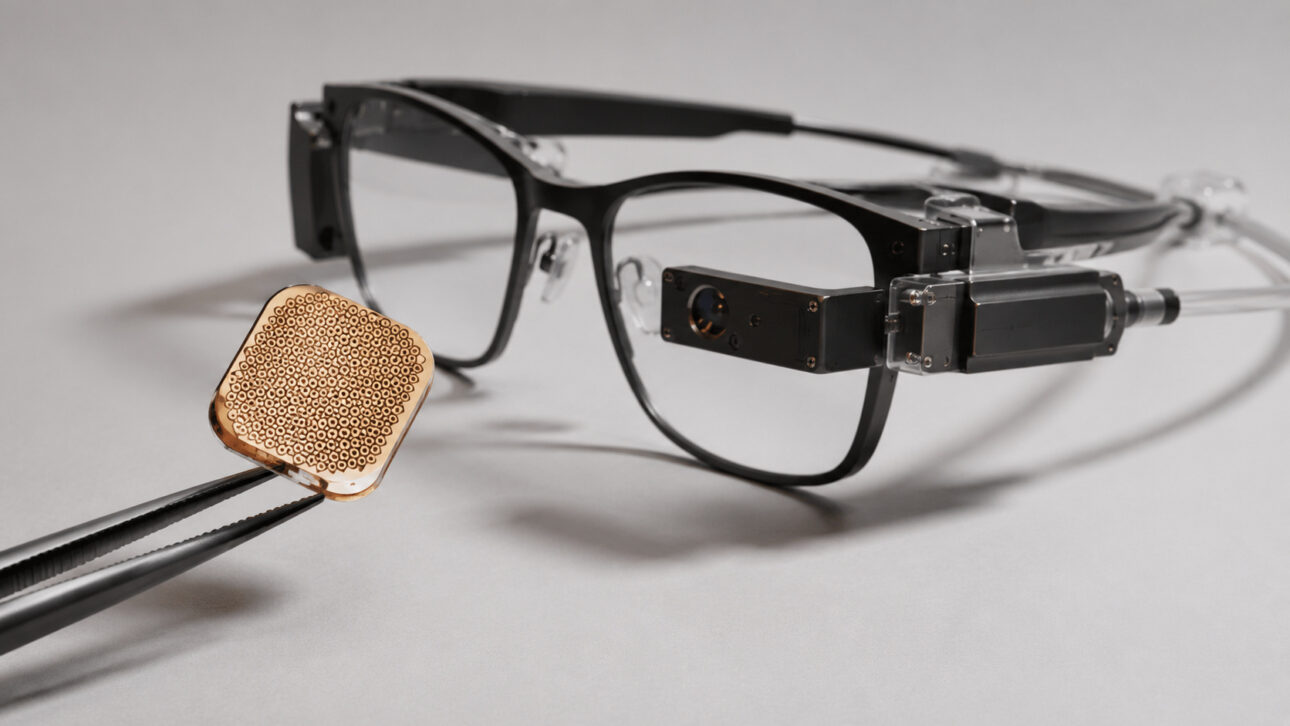
The PRIMA system combines a small chip implanted in the back of the eye with glasses equipped with a camera.
The images captured by the glasses are sent to the implant, which transforms this information into visual stimuli interpreted by the brain.
-
Without a car, an engineering student builds an electric wooden motorcycle from cedar parts equipped with a 2,000 W motor, hydraulic brakes, and lighting, and puts the vehicle to work on the streets.

-
Arctic sea ice experiences the largest annual drop of the winter peak phase since the beginning of satellite measurements, losing 5.8% of its extent between 2024 and 2025, ending the apparent pause that concealed the ongoing reduction in a region crucial for the climate.
-
Scientists discover a surprising “brain” hidden in the heart, formed by neurons capable of controlling the heartbeat and protecting the organ during stressful situations.
-
Singapore sinks into the sea concrete blocks the height of 10-story buildings, erects a 17.7 km underwater megawall, and prepares an automated port the size of 3,000 football fields to handle 65 million containers per year.


Science Corporation, the company responsible for the device, intends to use the technology to recover part of the functional vision of patients with severe retinal damage.
European approval marks progress for the ocular implant
The authorization was granted by the European medical device regulator and allows Science Corporation to prepare the commercialization of PRIMA.
The advancement represents an important step for the company founded by Max Hodak, co-founder and former president of Neuralink.
Hodak left the company created by Elon Musk in 2021 to develop technologies aimed at integrating electronic components and biological structures.
Science Corporation also received an initial designation from the U.S. FDA.
This classification could accelerate future regulatory evaluations related to certain rare types of blindness in the United States.
How the PRIMA ocular chip works
Age-related macular degeneration damages the light-sensitive cells located at the back of the eyes.
This condition primarily compromises central vision and makes tasks such as reading, recognizing faces, and identifying details difficult.
PRIMA was created to partially replace the lost function of these cells through stimuli produced by the chip.
The patient uses glasses with an integrated camera after the equipment is implanted.
The camera captures images of the environment and transmits the information directly to the device installed in the eye.
The chip converts this data into electrical signals, which are interpreted by the brain as visual elements.
The technology does not restore completely natural vision but aims to offer a functional and limited visual capability.
Procedure lasts about an hour
The implant installation is performed through a procedure that lasts approximately one hour.
The surgery can be done on an outpatient basis, without the need for prolonged hospitalization.
The patient starts using the special glasses after the implantation and adaptation period.
The integrated camera becomes responsible for capturing the environment and sending the necessary data to the chip.
The joint operation between glasses, camera, and implant allows the system to produce visual stimuli.
Patients returned to reading and solving games
According to Max Hodak, some test participants were able to perform tasks considered impossible after losing vision.
Patients returned to reading lengthy books, solving crosswords, and completing Sudoku puzzles.
Other participants also managed to identify letters, numbers, words, and certain objects.
These results were presented by Science Corporation as demonstrations of the equipment’s functional potential.
The company emphasizes, however, that the benefits may vary according to the clinical condition and adaptation process of each patient.
Technology was created by Pixium
The PRIMA system was originally developed by Pixium, a French company specializing in technologies for visual recovery.
Science Corporation acquired the company and its assets related to the implant in 2024.
The acquisition allowed the company to incorporate the technology into its own portfolio of bioelectronic interfaces.
The company then began to enhance the regulatory documents, technical processes, and commercial preparation of the device.
The Science Corporation platform was also used to organize the next steps in the equipment’s development.
Treatment should start in Germany
The commercialization of PRIMA should initially be structured in Germany, the country where the European clinical trials took place.
Each unit of the equipment could cost hundreds of thousands of dollars.
Science Corporation and its medical partners are negotiating reimbursement models with European health systems.
These negotiations will be essential to define how patients can access the treatment.
The company is still working on organizing the production, medical care, and distribution of the device.
New chips and glasses are in development
Science Corporation intends to enhance the capabilities of PRIMA with new chips and improved versions of the glasses.
The goal is to bring the equipment closer to the format of augmented reality glasses already available on the market.
Medical technology, however, requires greater processing capacity and higher energy consumption.
The next models should aim for better performance, greater comfort, and more practicality for patients.
The evolution of the equipment could also expand the activities performed with the aid of the system.
Company prepares new brain sensor
Science Corporation is also working in partnership with Murat Günel, head of the Department of Neurosurgery at Yale School of Medicine.
The project involves preparing human trials of a directly implanted bio-hybrid brain sensor.
The company’s strategy, however, begins with building a sustainable business focused on vision recovery.
For Max Hodak, a consolidated commercial operation could finance more advanced bio-hybrid interface projects.
The European approval of PRIMA represents, therefore, an important step for the company and for patients affected by macular degeneration.
Do you believe that technologies like the PRIMA ocular chip could transform the quality of life for people with severe vision loss? Leave your opinion!


