





 Portuguese
  English
  Spanish
 4 min of reading
  0 comments


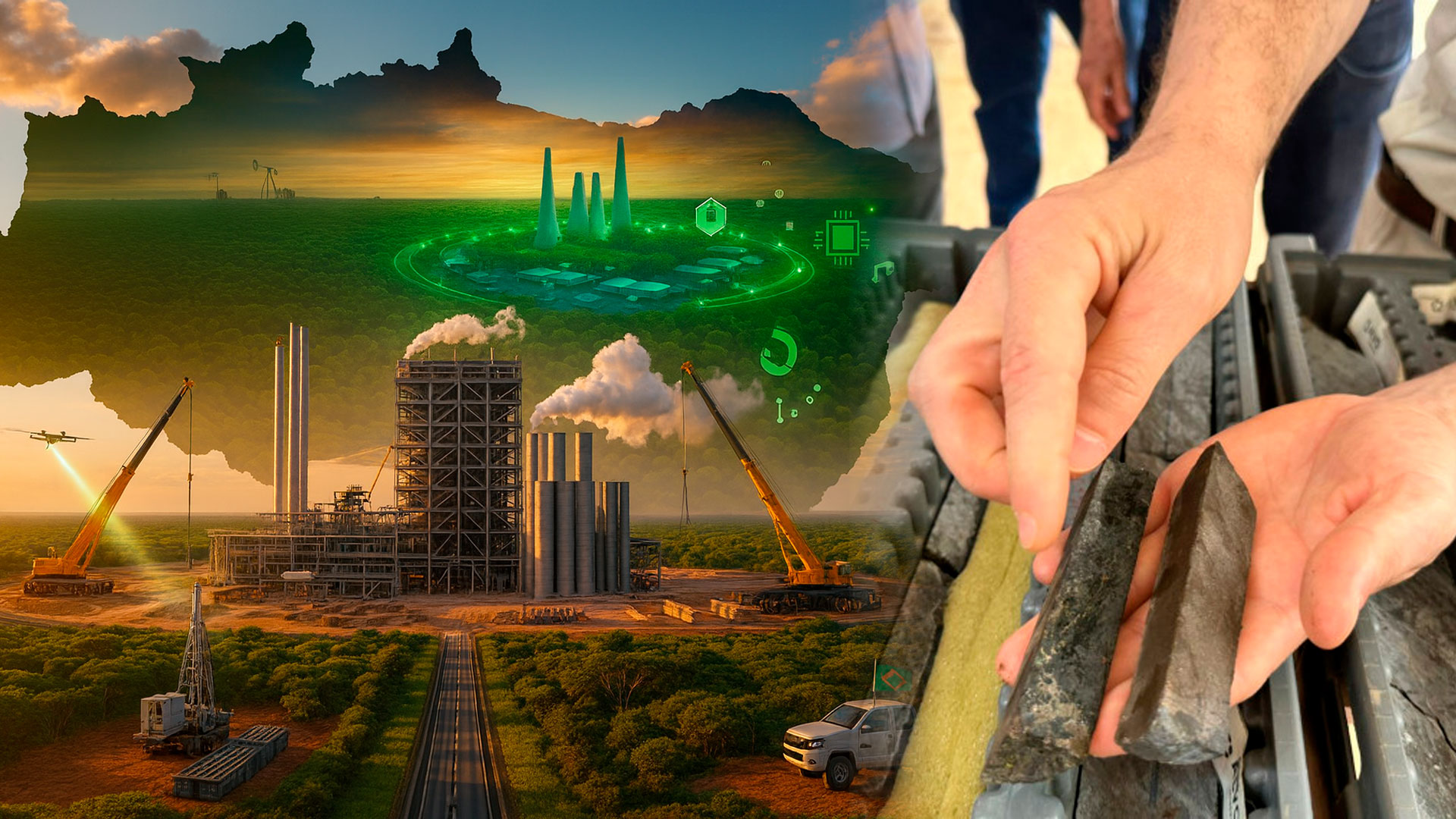
Recent Research Highlights The Potential Of Critical Minerals In The State. In Palmeirópolis, The Palma (Polymetallic) And Bluebush (Rare Earths) Projects Progress With Anticipated Investments Of R$ 255 Million, In A Global Scenario Still Dominated By China.
The Tocantins has entered the radar of critical minerals and rare earth elements (REE), essential inputs for electric cars, wind turbines, and electronics. Updated studies and research fronts indicate a window of opportunity for the state, especially in the Palmeirópolis region, a small town with 7,119 inhabitants in 2024, according to IBGE, where two axes are advancing: the Palma Project (zinc, copper, lead, silver, and gold) and the Bluebush Project (REE, ionic clays).
The backdrop is favorable for Brazil: the country ranks among the global leaders in rare earth reserves, with 21 million tons, only behind China, according to USGS 2025. Nevertheless, the processing chain is still highly concentrated in China, which accounts for close to 85 to 90% of this stage.
Locally, Ameto confirms the monitoring of research and highlights the relevance of critical minerals for the energy transition. According to the director of Geology and Mining, Otton Nunes, the state has promising geological potential for lithium, nickel, copper, cobalt, graphite, and REE.
-
Lula responds directly to Trump and says that Pix is from Brazil and will not change under pressure from anyone, after a report from the United States pointed out the Brazilian payment system as an American trade barrier.

-
Amazon has just announced a new fee on all deliveries, and your online purchases will become more expensive starting April 17, including for those buying from the United States here in Brazil.

-
He sold his share for R$ 4 thousand, saw the company become a giant worth R$ 19 trillion, and missed the opportunity of a lifetime.

-
Elon Musk’s Starship megafrocket puts $8 billion at risk, raises alarms in the market, and could affect technology, mining, and space internet startups in the coming years.


Why Tocantins Has Become A Key Player In Critical Minerals And Rare Earths
The race for secure supply chains has accelerated with the electrification of the global economy. Documents from USGS and analyses from research centers show that, although China has reduced its share of mine production in recent years, it maintains its hegemony in refining and separating REE, a decisive stage for producing oxides and permanent magnets. This keeps prices and global flows under Chinese influence.
In Brazil, the turning point began to take shape with the start of commercial production at Serra Verde in Goiás in 2024, the first large-scale operation of ionic clays outside Asia, aiming for at least 5,000 t/year of oxides in Phase I.
This movement proves the country’s viability in the REE chain and strengthens emerging projects in neighboring areas of the Central-North, such as southern Tocantins.
Palmeirópolis In Focus: Palma (Polymetallic) Project And Bluebush (REE)
In Palmeirópolis, the Palma Project was structured based on assets offered via PPI and includes six mining processes in an area of about 6,050 hectares. The contract provided for investments exceeding R$ 255 million and research goals to reassess resources of Zn-Cu-Pb-Ag-Au, confirming advances in relation to historical investigations by the Geological Service of Brazil (SGB).
In 2024, a report delivered to the SGB reassessed the deposit, indicating 9.5 million tons in situ with average grades of 0.5% Cu, 2.1% Zn, 0.3% Pb, 11 g/t silver, and 0.02 g/t gold, characterizing a small body, but with new exploration targets identified for expansion. The developer also reports 25,000 meters of recent drilling in the region.
In the same municipality, the Bluebush Project has been testing ionic clays of rare earths with encouraging results in total REE and the presence of magnetic elements such as NdPr, in addition to fractions of Dy and Tb, strategic for high-performance magnets. Technical updates from the company highlight intersections with significant grades and confirm the ionic nature of the ore, similar to the model supporting the Chinese industry.
Local sources emphasize that the Palma–Bluebush set operates with active research rights and scheduled investments, consolidating Palmeirópolis as a hub for mineral exploration in southern Tocantins, with ongoing technical support from SGB and Ameto.
Partnerships, Technology, And Responsibility: What Comes Next
The state government signals technical cooperation with SGB for higher resolution geophysical surveys, utilizing magnetometry, gamma spectrometry, and gravimetry, including the use of drones and denser grids, aiming to refine targets and attract investments. This type of data accelerates discovery and reduces exploratory uncertainties.
Ameto states that it will continue to expand geological knowledge of the state in line with the National Mining Plan, highlighting the need for good environmental and social practices. At the same time, the advancement of permits and licenses for rare earths in the country has revived debates about sensitive territories and community consultation, a topic that also integrates Tocantins’ radar and requires robust governance to avoid conflicts and ensure local benefits.
On the international scene, China recently strengthened rules and controls over mining, processing, and exports of REE, raising uncertainty and consequently the strategic value of new production districts outside Asia. For Tocantins, this opens space for commercialization and industrial partnerships, as long as projects progress with licensing, infrastructure, and a connected value chain.
What This Means For The Economy Of Tocantins
If well managed, Palma and Bluebush can place Tocantins on the route of REE and critical minerals, boosting jobs, royalties, and local suppliers. The challenge will be to transform geological potential into competitive production and ensure that more steps of the chain occur in Brazil, reducing dependence on external processing and market volatility in the international market.
For investors and public policies, the message is clear: the governance of sustainability and local content will be crucial to capture long-term value. Meanwhile, for the Tocantins society, participation and transparency will be essential to address environmental impacts and benefit distribution.
From your point of view, should Tocantins prioritize accelerating the production and exporting of rare earth concentrate, even if refining occurs outside the country, or hold the pace until structuring a local processing chain that concentrates more value in the state? Leave your opinion in the comments.





-

-

-

-

-

39 pessoas reagiram a isso.