





 Portuguese
  English
  Spanish
  3 min of reading
  0 comments


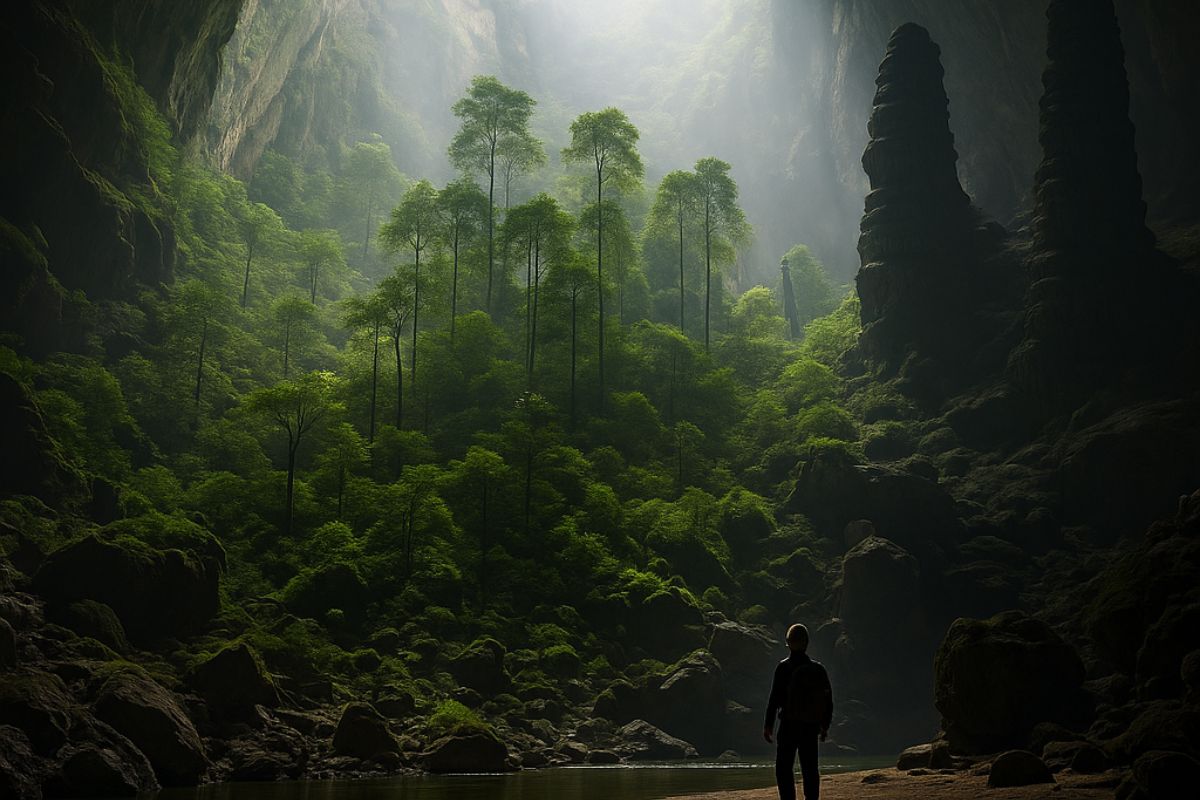
Considered the Largest Cave in the World, Son Doong Houses Rivers, Tropical Forests, Unique Geological Formations, and Even Animal Species Never Seen Before, Revealing an Isolated and Surprising Ecosystem 9 km Deep
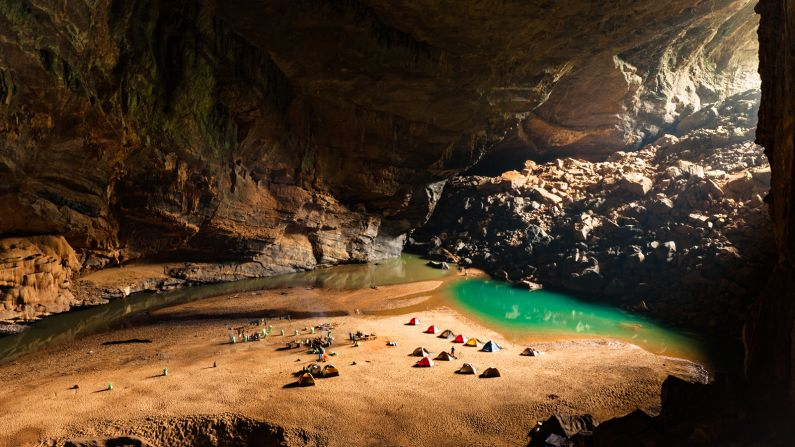
Imagine a Cave so colossal that it could house an entire block of New York, a tropical forest, and still allow the passage of a Boeing 747 without touching the walls. This is Son Doong, located in Vietnam, within Phong Nha-Ke Bang National Park. With a volume of 38.5 million cubic meters, 200 meters wide, and up to 170 meters high, the place remained hidden from humanity for almost 3 million years and was only revealed to the world in 2009, when the host of the Ruhi Çenet channel embarked on an adventure to the site.
Today, Son Doong is one of the most extreme and limited destinations on the planet, with access restricted to a few expeditioners each year. Initially discovered by a local resident and mapped by a British-Vietnamese team, the cave has become a true natural laboratory, where life has developed without external influence for millennia.
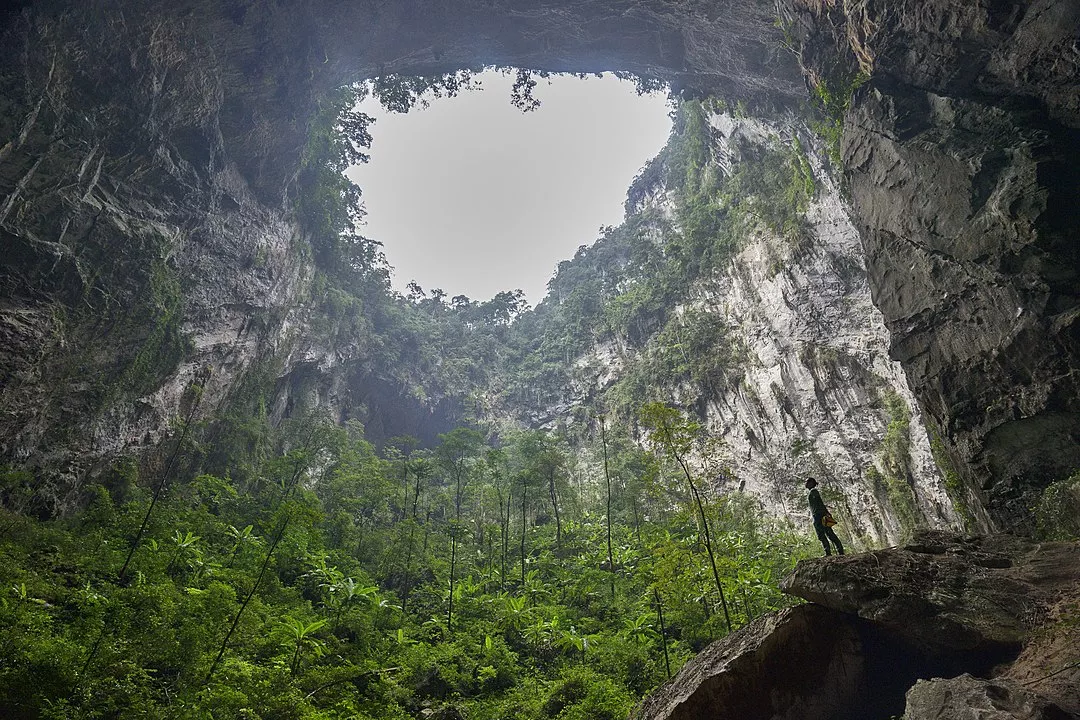
A Subterranean Universe with Its Own Forest, Rivers, and Clouds
Son Doong is not just a cave; it is a complete ecosystem. With a flowing underground river, two sinks (roof collapses) that allow sunlight to enter, and an internal tropical forest, the place houses over 250 unique species of fauna and flora, including transparent fish, blind centipedes, rare mushrooms, and even monkeys living among the humid vegetation.
-
Tourists were poisoned on Everest in a million-dollar fraud scheme involving helicopters that diverted over $19 million and shocked international authorities.

-
Hidden beneath the dense forest of the Sierra Nevada, Betoma emerges in a neighbor of Brazil as the greatest archaeological discovery of the century, revealing a colossal ancestral city covering over 18 km², with 8,334 stone structures and the potential to rewrite the history of South American civilizations.

-
Goodbye iron: new technology from Xiaomi promises to revolutionize the way we iron clothes with 500 kPa steam, continuous flow of 120 g/min, heating in 65 seconds, and six smart modes for different fabrics.

-
Rio Pardo, the most mysterious city in Rio Grande do Sul: untouched Pampas castle, the missing treasure of the Devil Boy, bride’s saint, invisible tunnels, and a 200-year curse today.

The geological formation of the cave began 400 million years ago, based on marine limestone accumulated on the bottom of ancient oceans. The action of acid rain and tectonic movements paved the way for water to sculpt the passages, creating stalagmites of up to 80 meters — the tallest ever recorded in the world.
In areas where light enters, a dense forest has emerged, fueled by the fertile soil of guano accumulated over millions of years. Thin, towering trees compete for sunlight that descends 252 meters from the surface, creating a microclimate worthy of a lost world.
Extreme Expedition: 6 Days Crossing Abysses, Lakes, and Unique Formations
The journey to Son Doong is as extraordinary as its interior. To reach it, adventurers trek for 9 hours through the Vietnamese jungle to reach Hang En, the third largest cave in the world, which serves as the portal to the gigantic Son Doong. The complete crossing takes 6 days and costs an average of 3,000 dollars per person, operated exclusively by the Oxalis Agency.
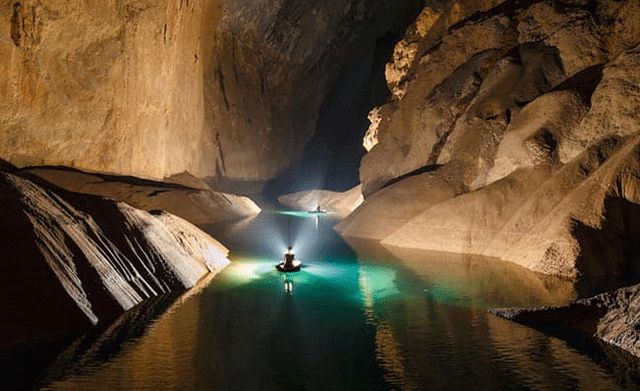
During the crossing, visitors face submerged crossings, stone walls 80 meters high (like the “Great Wall of Vietnam”), and narrow passages surrounded by living formations known as phytokarst — rocks that slowly move toward the light as if they were alive.
The internal climate of the cave is so peculiar that it creates its own clouds and mist, caused by the temperature difference between the outside and the inside. This creates a visually surreal environment, where the sensation is like walking on an alien planet.
Extinct Fossils, Cave Pearls, and Unsolved Mysteries
In addition to natural wonders, Son Doong still conceals relics of the past. In one of the passages, the fossil of an extinct tetracoral was found, dating back more than 300 million years, identified as an ancient marine creature with tentacles. And it doesn’t stop there: rare formations like cave pearls, which take centuries to form, are also present — some the size of tennis balls.
These pearls develop from a grain of sand surrounded by layers of minerals, similar to sea pearls. Another surprise was the discovery of deer bones that are about 500 years old, with predator marks in the subterranean forest, indicating a complete ecological cycle even in the depths of the Earth.
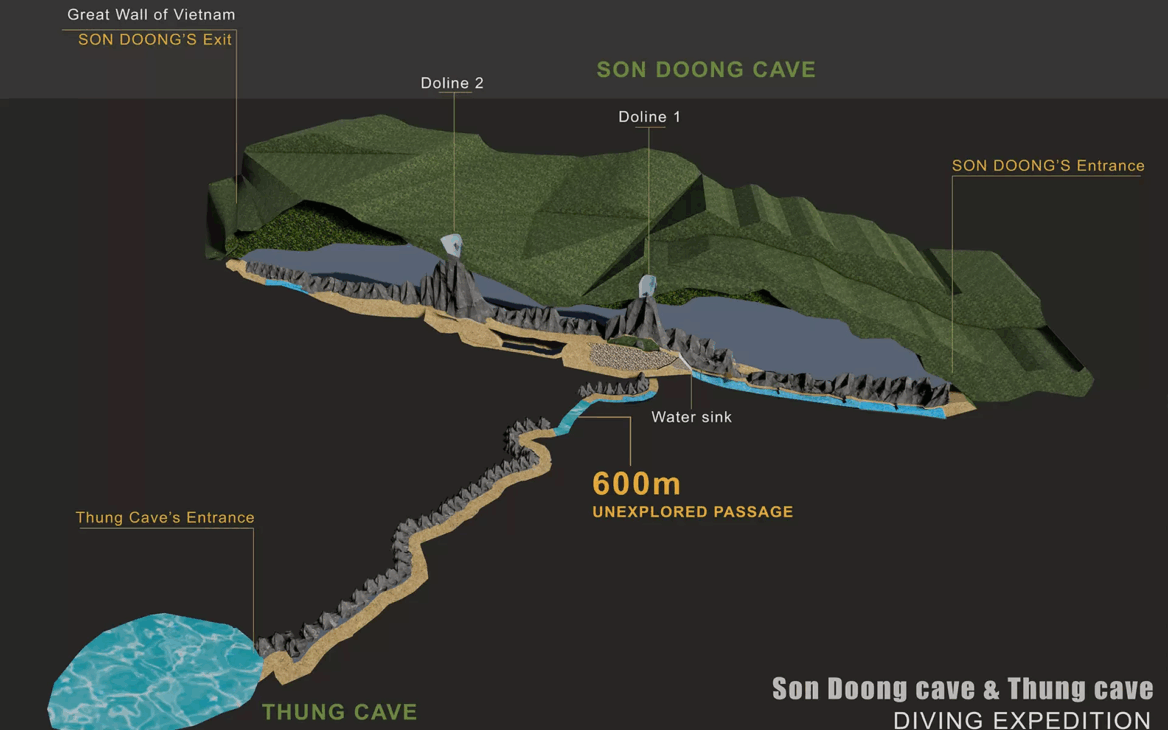
Despite dozens of studies, Son Doong still holds secrets. Only 30% of the limestone massif in the Phong Nha region has been mapped to date, suggesting that other caves or connections may still be discovered.






Seja o primeiro a reagir!