





 Portuguese
  English
  Spanish
  4 min of reading
  0 comments


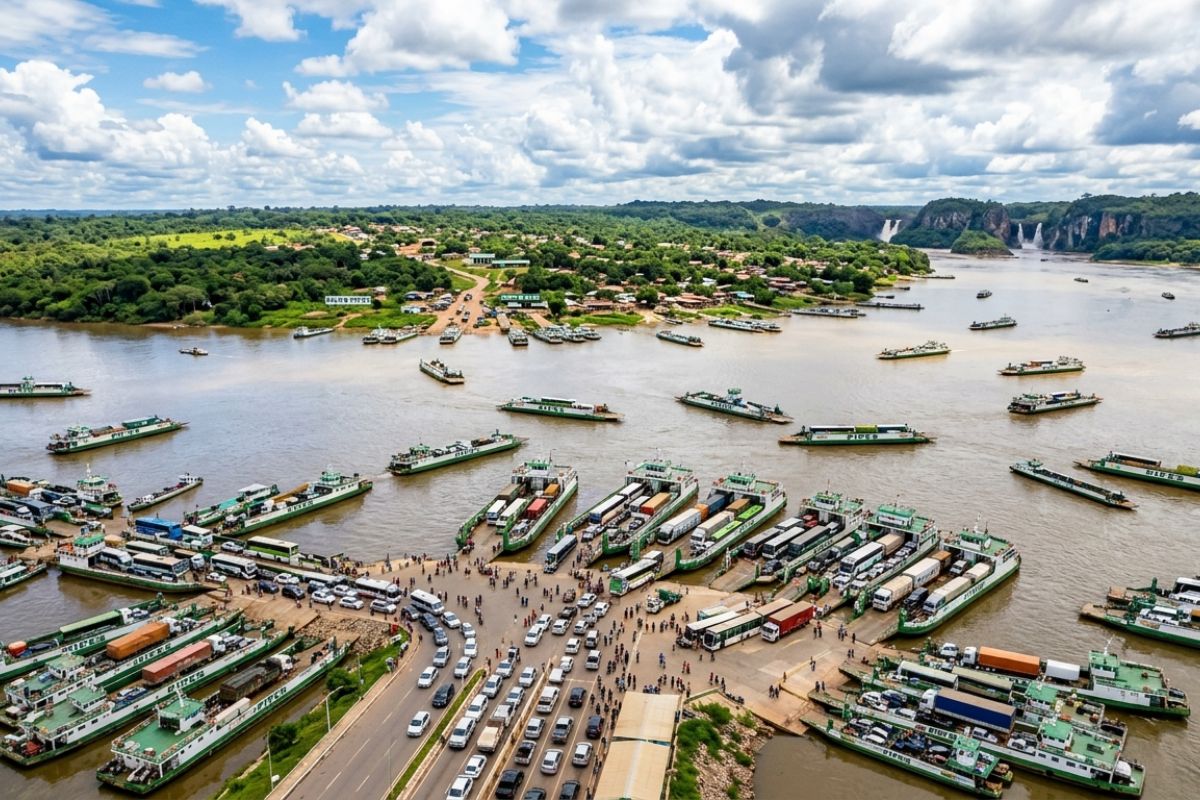
In regions without bridges, the king of ferries built a fleet of between 100 and 300 ferries, connected production routes, and also invested in tourism in Pedra Caída
In the interior of Brazil, rivers separate entire cities. In many stretches, there are no bridges, and without crossings, people, goods, and production do not circulate. It is in this infrastructure void that the story of the king of ferries emerges, a businessman who transformed an essential service into a group with extensive regional operations.
The journey begins with Pedro Irã Pereira Espírito Santo, son of small farmers, raised in the countryside with few opportunities. From simple work in the fields to river transport in Tocantins, he built the Grupo Pipes and became a reference in crossings where the bridge does not reach.
Where there are no bridges, the crossing becomes economy

In several regions, the river is not just a landscape, it is a border. When there is no bridge, the crossing becomes the only way to keep the economic life moving. Without it, what is on one side does not reach the other: people stop circulating, loads do not advance, and production loses rhythm.
-
Russia pressures BRICS for joint food reserves after the crisis in Iran closed Hormuz, threatening fertilizers and halving productivity; warning indicates inflation and hunger affecting 673 million people.
-
A Brazilian city will gain a mega factory from Sany starting in 2026, betting on national production of heavy machinery, job creation, and a billion-dollar expansion that promises to transform the industrial hub of Campinas.
-
The Central Bank of Brazil rejects freezing credit card interest rates, which exceed 400% per year, while Lula demands relief for family debts and the government promises cheaper credit alternatives soon.

-
Amid the war between Iran and the USA, Brazil is already feeling the financial impact: the rise in diesel prices is putting pressure on freight costs, affecting the National Furniture Capital with over 380 industries, and could increase furniture prices by up to 10%.

It was in this scenario that the king of ferries found constant demand. Instead of waiting for infrastructure to arrive, he structured a service capable of meeting needs where the road ends at the riverbank.
From milk seller to the Tocantins river: the origin of the king of ferries
The story of Pedro Irã begins in a simple reality. Son of farmers and born in the 1940s, he grew up working in the fields and, as a young man, began selling milk in Carolina, in southern Maranhão.
At 16, he entered river transport, ferrying people and loads across the Tocantins river. Over time, he acquired the first engine and began to operate in a more structured way. What seemed like a small activity transformed into a business and paved the way for the king of ferries to build his base.
Grupo Pipes: fleet of between 100 and 300 ferries and presence in six states
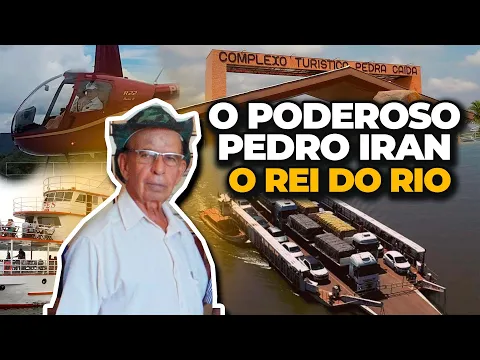

In 1967, the company that would give rise to the Grupo Pipes was founded. Initially focused on waterway transport, the group grew as the demand for crossings in regions without land infrastructure increased.
Over the decades, it expanded operations to different states, including Maranhão, Tocantins, Piauí, Pará, and Mato Grosso. The base indicates an estimated fleet of between 100 and 300 ferries, used to transport vehicles, people, and loads at dozens of crossing points. This scale sustains the title of king of ferries, because it is not just a single river, but a network of connections.
Regional logistics and production: why ferries have become indispensable
With the economic transformation of various areas, places that previously had little movement began to register an increase in agricultural production and greater circulation of goods. Consequently, the need for logistics grew.
In this process, ferries assumed an essential role by ensuring connections between producing regions and commercial routes. The king of ferries grew alongside this advancement, expanding presence as demand increased, especially where the absence of bridges makes crossing a daily necessity rather than an exception.
Diversification beyond the river: farms, complementary livestock, and tourism in Pedra Caída
Beyond transport, the Grupo Pipes diversified. According to the base, Pedro Irã invested in large rural properties, with areas exceeding thousands of hectares, and uses livestock as a complementary activity, within a patrimonial and economic strategy.
Another relevant segment is tourism. The highlight is the Pedra Caída complex, structured as an integrated tourist complex, combining nature and infrastructure. Among the attractions are large waterfalls, ecological trails, guided tours, and adventure activities. The location has accommodation facilities, chalets, a restaurant, and visitor support areas. The logic is clear: the king of ferries did not get stuck in a single sector, he expanded to where there was a concrete opportunity.
Boeing 727 and local politics: influence beyond operations

Among the most striking initiatives mentioned in the base is the acquisition of a Boeing 727 aircraft, with the proposal to transform it into a tourist attraction, with the possibility of accommodation or visitation within the complex.
In the political area, Pedro Irã also had direct involvement: he was mayor of Filadélphia for two terms. Even after leaving public office, he maintained regional influence, especially on issues related to infrastructure and transport. The base also mentions the use of private aircraft, including planes and helicopters, for transportation and management of operations.
Succession: the question mark in the future of the king of ferries
In his personal life, Pedro Irã maintains a discreet profile. And, according to the base, there is currently no clearly defined successor to take over the business. The absence of a structured succession becomes one of the main questions about the future of Grupo Pipes, especially because the operation depends on continuity, management, and quick decision-making at crossing points scattered throughout.
The king of ferries built a company that started simple and gained scale, connecting regions where the bridge does not exist. Now, the challenge is to ensure that this structure continues to function when the command needs to change hands.
Do you think the greatest strength of the king of ferries lies in the fleet, in regional logistics, or in diversification with tourism in Pedra Caída?






Seja o primeiro a reagir!