





 Portuguese
  English
  Spanish
  4 min of reading
  1 comment


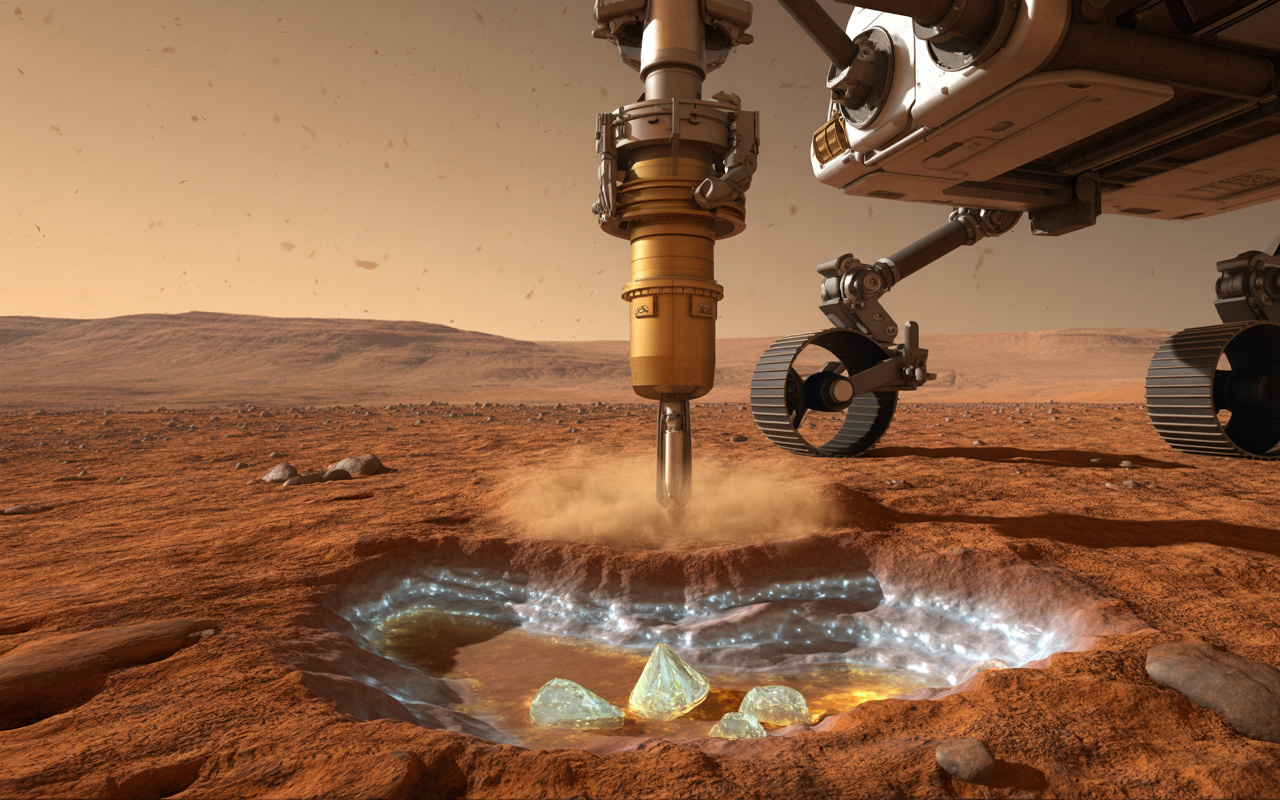


NASA Discovery On Mars Reveals Salts That Allow Liquid Water In Extreme Temperatures And Reignites The Debate On Past And Future Habitability Of The Planet.
The exploration of Mars has just gained a new chapter that has left the scientific community on alert. During a routine investigation searching for underground ice, a NASA probe ended up exposing unexpected material in the Martian soil. What seemed like just another technical drilling revealed the presence of highly hygroscopic salts, capable of retaining moisture and keeping water in liquid state even at temperatures well below zero. For scientists, this is a discovery that changes the way the red planet is understood from geological, chemical, and even biological perspectives.
The mission involved is part of NASA’s ongoing effort to understand whether Mars ever had — or still can have — minimal conditions to sustain some form of microbial life. And the find was not trivial: it occurred almost accidentally when a rock was moved, exposing layers of soil that are usually protected from direct solar radiation. The discovery took place in late 2024 and new data is being revealed.
What Exactly Did The Probe Find Beneath The Martian Surface
By breaking through the surface layer of soil, the sensors detected high concentrations of salts such as perchlorates and chlorates.
-
What if the Sun disappeared suddenly? Simulation shows Earth in darkness within minutes, extreme cold, and rapid collapse of life on the planet.

-
A 2,400-year-old iron foundry has been discovered in Senegal with 100 tons of slag, 35 furnace bases, and signs of nearly eight centuries of continuous metallurgical activity.

-
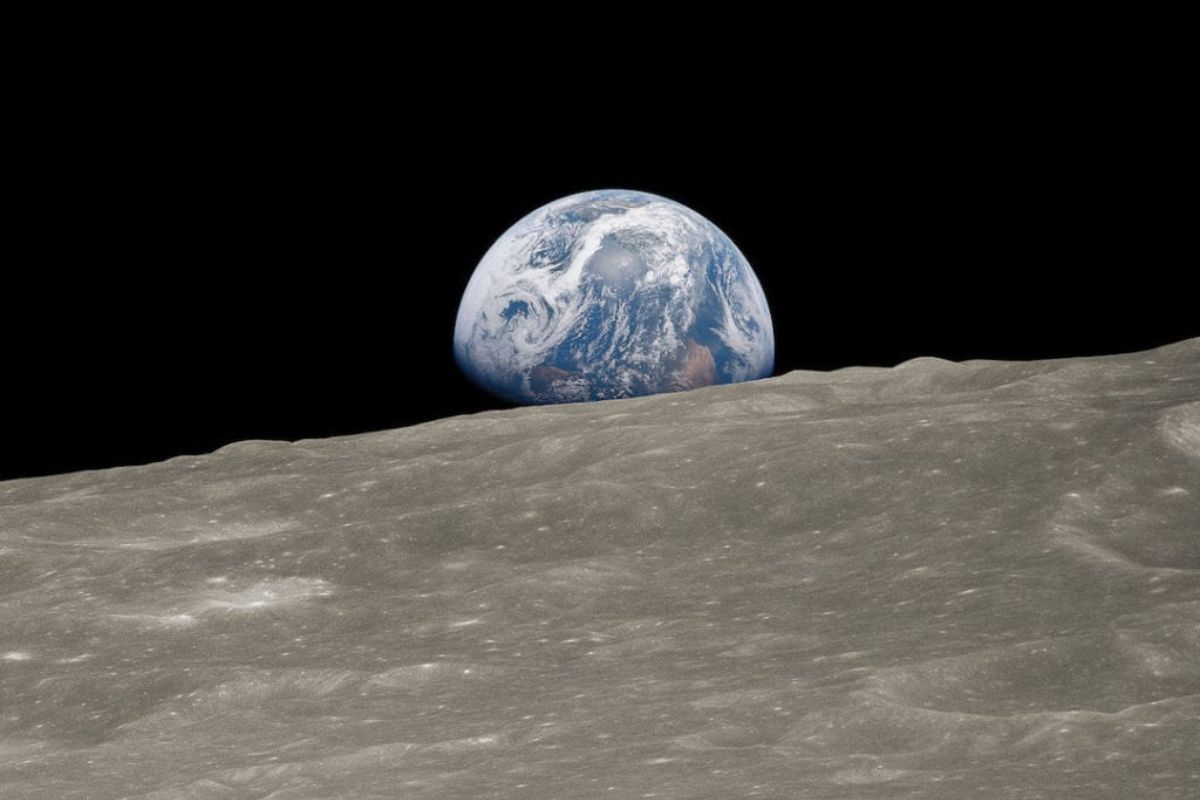
Four humans are flying towards the Moon inside the Orion capsule launched by the SLS rocket, and on April 6, Artemis II will disappear behind the far side of the Moon without communication with Earth for nearly an hour.
-
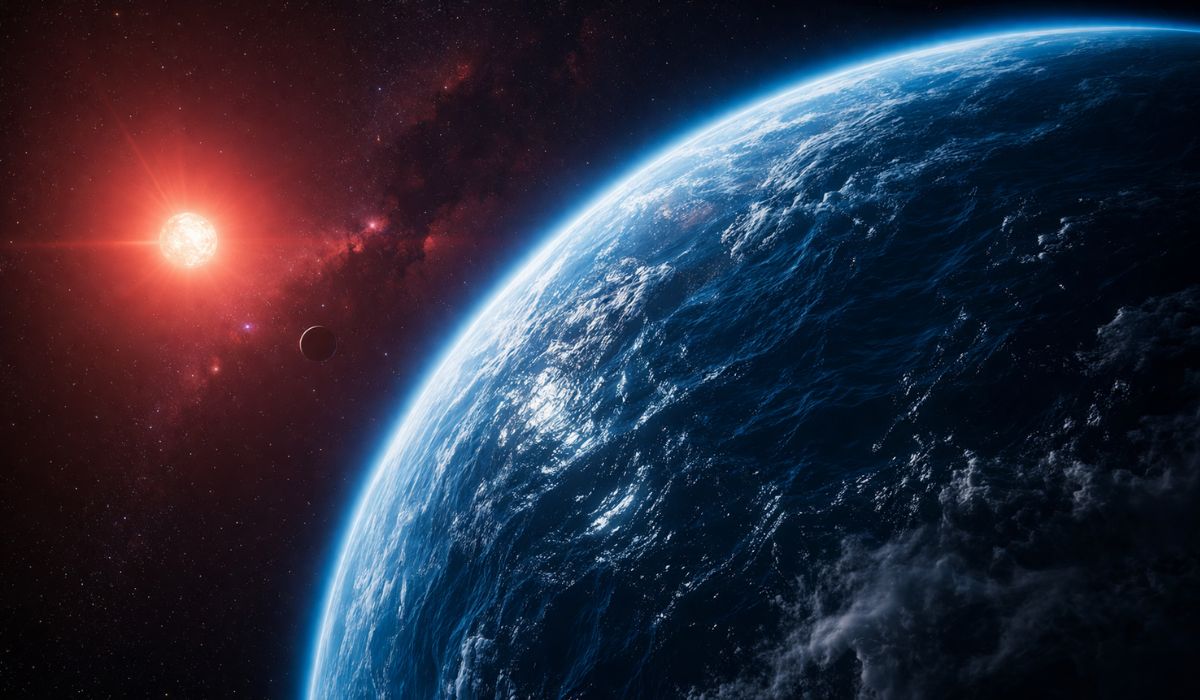
Worlds covered by water, atmospheres filled with hydrogen, and the possibility of life beyond Earth: ocean planets are rewriting the map of cosmic search and forcing scientists to rethink where to look.

In practical terms, this means that small amounts of water can remain liquid on Mars even at temperatures as low as −70 °C.

The data indicate that these salts are not isolated but distributed across strategic regions of the Martian soil, especially in areas of mid-latitude, where there are signs of seasonal underground ice.
The presence of these compounds helps explain previously observed phenomena, such as dark streaks that appear and disappear on slopes during certain times of the Martian year.
Why This Discovery Changes The Understanding Of Water On Mars
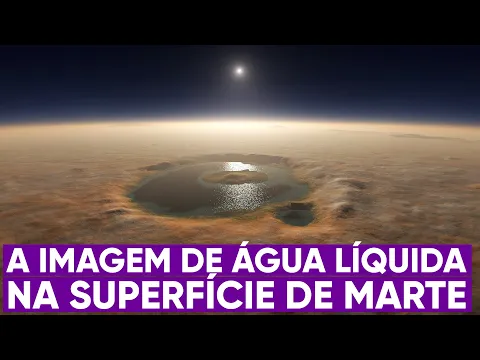
Until recently, the scientific consensus was that water on Mars could only exist in solid or gaseous state under the planet’s current conditions. The identification of salts capable of stabilizing liquid water changes this paradigm. It is not about visible rivers or lakes, but about temporary and protected wet microenvironments that may exist just below the surface.
These environments are considered extremely important from an astrobiological standpoint. On Earth, extremophile microorganisms survive in frozen brine, hypersaline deserts, and polar regions with conditions similar to those now found on Mars. The analogy is not direct, but sufficient to reignite hypotheses that have been dormant.
The Role Of The Discovery In The Search For Life Beyond Earth
The potential presence of liquid water, even on a small scale, puts Mars back at the center of the discussion about extraterrestrial life. Water is considered one of the fundamental pillars for known biological processes.
Even hostile environments can harbor simple forms of life, as long as there is minimal stability, nutrients, and protection from intense radiation.
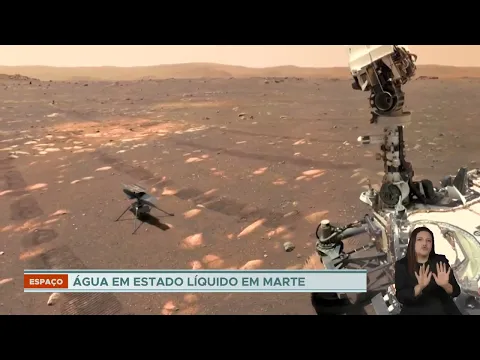
Scientists emphasize that this does not mean that life currently exists on Mars, but that the planet may have maintained favorable conditions for longer periods than previously thought. In addition, these salt-rich regions are now seen as priority targets for future missions, including those that aim to bring soil samples back to Earth.
Direct Implications For Future Crewed Missions
The find also has practical consequences for human exploration plans. Salts that retain water indicate possible accessible reserves for in situ resource acquisition. In a crewed mission scenario, the ability to extract water from Martian soil — even if in the form of brine — could be crucial for oxygen production, fuel, and life support.
Furthermore, understanding the distribution of these compounds helps map risks. Perchlorates, for example, are toxic to humans at high concentrations. Knowing where they are and in what quantity is essential for planning landings, bases, and long-term operations on the planet.
An Accidental Find That Opened New Scientific Questions
Interestingly, the discovery was not the main objective of the drilling. It occurred when the probe moved a rock and exposed a lighter layer of soil that quickly caught the researchers’ attention due to its unusual chemical behavior.
Within a few days, the signals captured began to diverge from expected patterns, leading to more detailed analyses.
This reinforces a recurring characteristic of space exploration: many of the most important advances arise from unexpected events.
Every layer of Martian soil analyzed reveals a planet that is much more dynamic and complex than the arid image that has shaped popular imagination for decades.
What This Discovery Represents For Planetary Science
More than just a curiosity, the find redefines scientific priorities. Mars is no longer seen merely as a frozen desert but as an environment with active chemical processes capable of creating temporary niches of habitability. This influences everything from climatic models of the Martian past to future exploration strategies.
The discovery also strengthens the role of robotic missions as precursors to significant scientific leaps. Each drilling, each analyzed rock expands the understanding of how planets evolve and the real limits of life in the Universe.
In the end, the rock accidentally broken did not only reveal salts in the Martian soil. It opened a crack in human knowledge, showing that the red planet still holds answers — and questions — much greater than previously thought.









Thanks for such a detailed explanation of this. I must say I get astonished with news like those and expect a good explanation for basic. But this text was perfectly understandable and it really get my attention.
Thank you, again.