





 Portuguese
  English
  Spanish
  4 min of reading
  4 comments


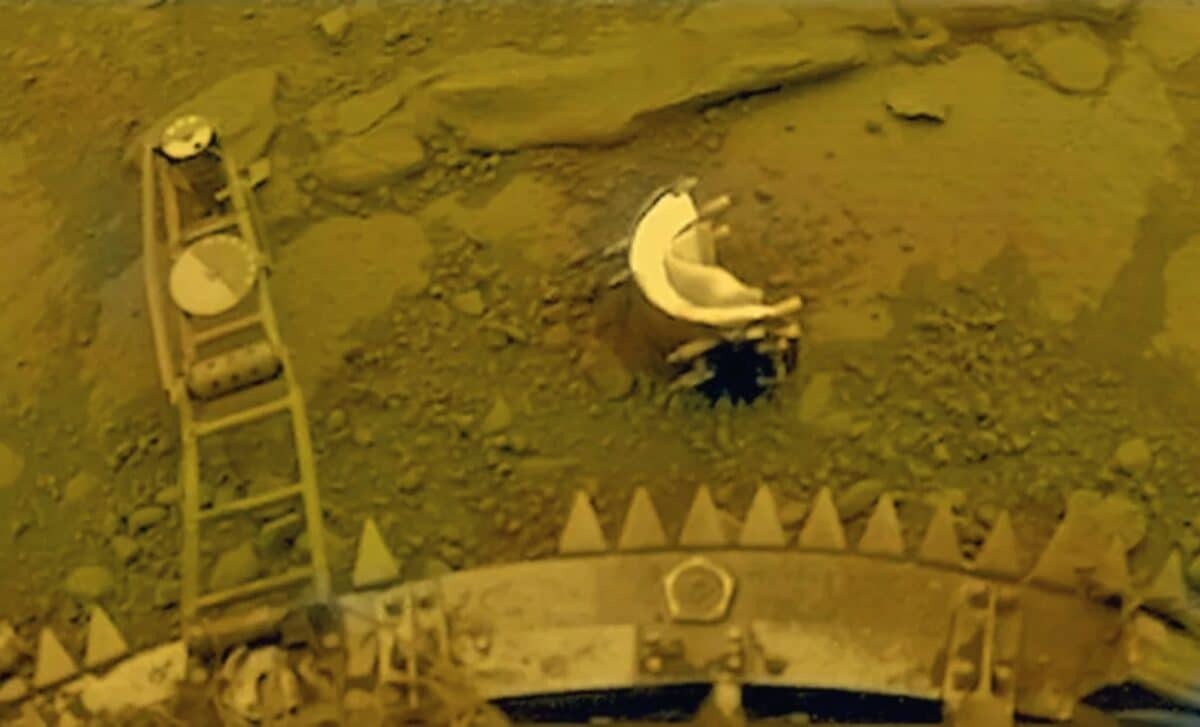


Soviet Probe Venera 9 Faced Extreme Heat and High Pressure on Venus, Lasted 53 Minutes and Recorded Historic Images of the Planet.
In 1975, the Soviet Union achieved what seemed impossible. The lander Venera 9 became the first spacecraft to transmit photographs of the surface of Venus.
The achievement was brief. The module lasted only 53 minutes before succumbing to the planet’s extreme conditions. Even so, that time was enough to change the history of planetary science.
According to records from NASA and the Planetary Society, the images represented humanity’s first direct glimpse of a world shrouded in mystery.
-
They were brilliant! Scientists discover that our ancestors in China were already making super advanced tools 160,000 years ago, changing everything we knew.

-
Scientists unveil 3 million years of climate secrets hidden in the ice of Antarctica.

-
Ancient farmers created “aggressive plants” that changed nature forever.

-
Astronomers find a “backward” solar system that ignores all the rules of space and leaves scientists scratching their heads!


The Harsh Reality of Earth’s Twin
Venus is known as Earth’s twin because of its similar size and composition. However, the similarities stop there.
The planet has a dense atmosphere of carbon dioxide. This factor creates an out-of-control greenhouse effect.
Surface temperatures reach 475 °C. That’s enough to melt lead.
The atmospheric pressure is also crushing. It’s equivalent to being 1.6 kilometers deep in an ocean on Earth.
Additionally, clouds of sulfuric acid make the environment even more hostile.
For decades, believing it would be possible to photograph Venus seemed like an illusion. But Soviet engineers were determined to prove otherwise.
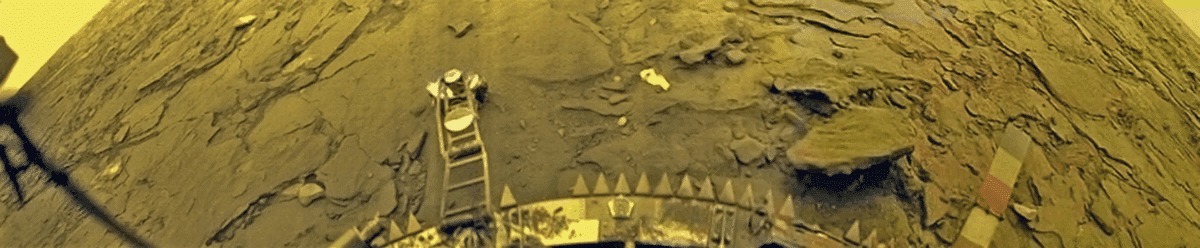
Image: Russian Academy of Sciences / Ted Stryk
From Failure to Advancement
The Venera program started in 1961. The first mission, Venera 1, lost contact en route.
In 1966, Venera 3 became the first spacecraft to impact another planet. However, it failed to send back data.
A real breakthrough came in 1967 with Venera 4. It transmitted atmospheric readings during descent.
Three years later, in 1970, Venera 7 achieved another milestone. It was the first soft landing on another planet. The probe transmitted 23 minutes of surface data.
In 1972, Venera 8 analyzed Venusian rocks. The results suggested similarities to Earth granite.
Each attempt served as preparation for the triumphs that were to come with Venera 9 and 10.
Venera 9: First Images of Venus
Venera 9 was launched in 1975 with a robust design.
Its lander had reinforced shielding, a cooling system, and instruments in a pressurized compartment.
The goal was to withstand, even for a short time, the extreme environment of Venus.
Shortly after landing, the probe activated its camera system.
Light from the surface passed through a viewport, was redirected by a periscope, and was recorded by an internal camera.
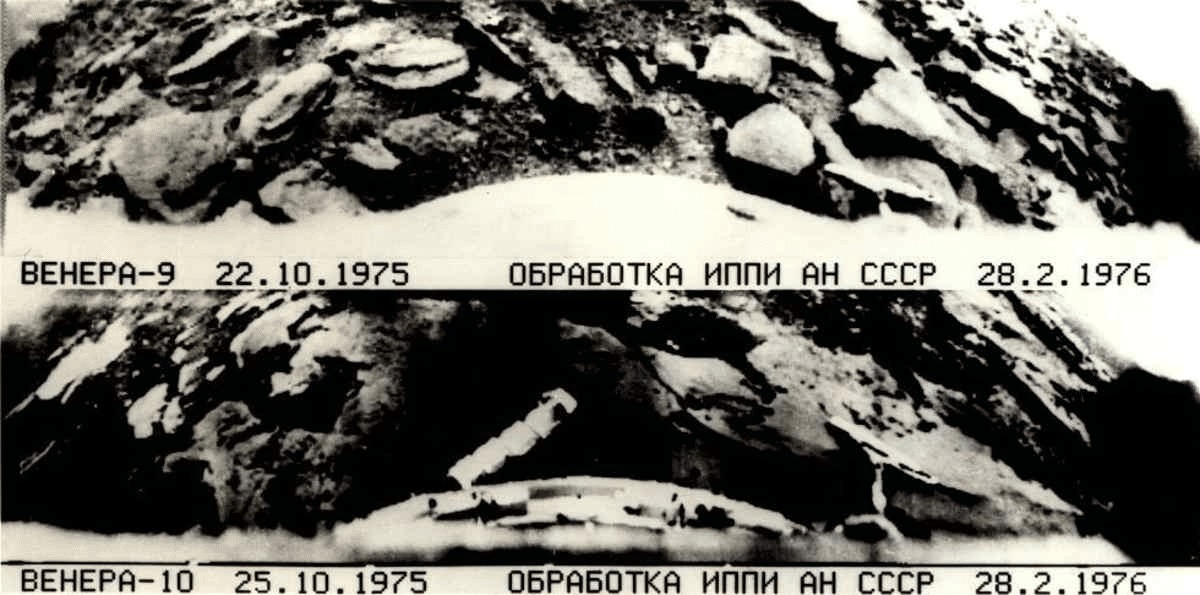
The result: black-and-white panoramas. The first images already captured of the Venusian surface.
The photographs showed fractured rocks, resembling lava. The clarity surprised scientists.
For a long time, it was believed that the atmosphere would completely distort visibility.
Communication lasted only 53 minutes. The heat and pressure were fatal for the spacecraft’s systems.
Venera 10: Confirming the Achievement
Days later, Venera 10 landed on Venus.
It repeated the success, transmitting sharp black-and-white panoramas.
The images showed angular rocks and a desolate surface.
Another detail drew attention: brightness. Scientists compared the light levels to a cloudy day on Earth.
In addition to the images, the mission brought data on pressure, temperature, and surface composition.
Scientific knowledge about Venus transformed from these records.

Subsequent Missions: Color and Radar
The Soviet success in 1975 paved the way for further advancements.
In 1981, the Venera 13 and 14 probes sent the first color panoramas.
The photos showed an orange hue and cracked terrains, resembling basalt.
Two years later, in 1983, came Venera 15 and 16. These missions used high-resolution radar.
The result was the mapping of Venus’s northern hemisphere, through dense clouds.
In 1984, the program reached its peak with the Vega missions. They launched balloons into the atmosphere before heading towards Comet Halley.
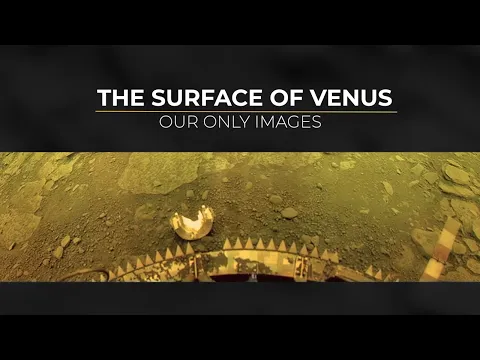
In total, only four probes throughout history have ever photographed the Venusian surface. All were Soviet.
Reconstructing Images Decades Later
Even after the program’s end, the records remained relevant.
Modern researchers revisited the archives to recover details.
Ted Stryk, a professor at Roane State Community College, reconstructed panoramas from the original data.
The images gained new clarity, revealing even more of the rare landscape captured.
Another important name was Don P. Mitchell, an American researcher. His work also helped preserve this legacy.
Nasa itself described the Venera program as a rare example of direct observation on a nearly inaccessible planet.
A Legacy That Remains
The images of the surface of Venus continue to stand as testimonies to courage and innovation.
The program demonstrated that even under almost impossible conditions, it is possible to advance knowledge.
And even though Venera 9 lasted less than an hour, that time was enough to change how humanity views its most hostile neighbor.








O que eu faço com essa informação?
Adquire conhecimento.
Algúm dia ela vai ser útil. Em uma roda de amigos, vc será o único a saber.
Certeza que é da geração Z