





 Portuguese
  English
  Spanish
  6 min of reading
  0 comments


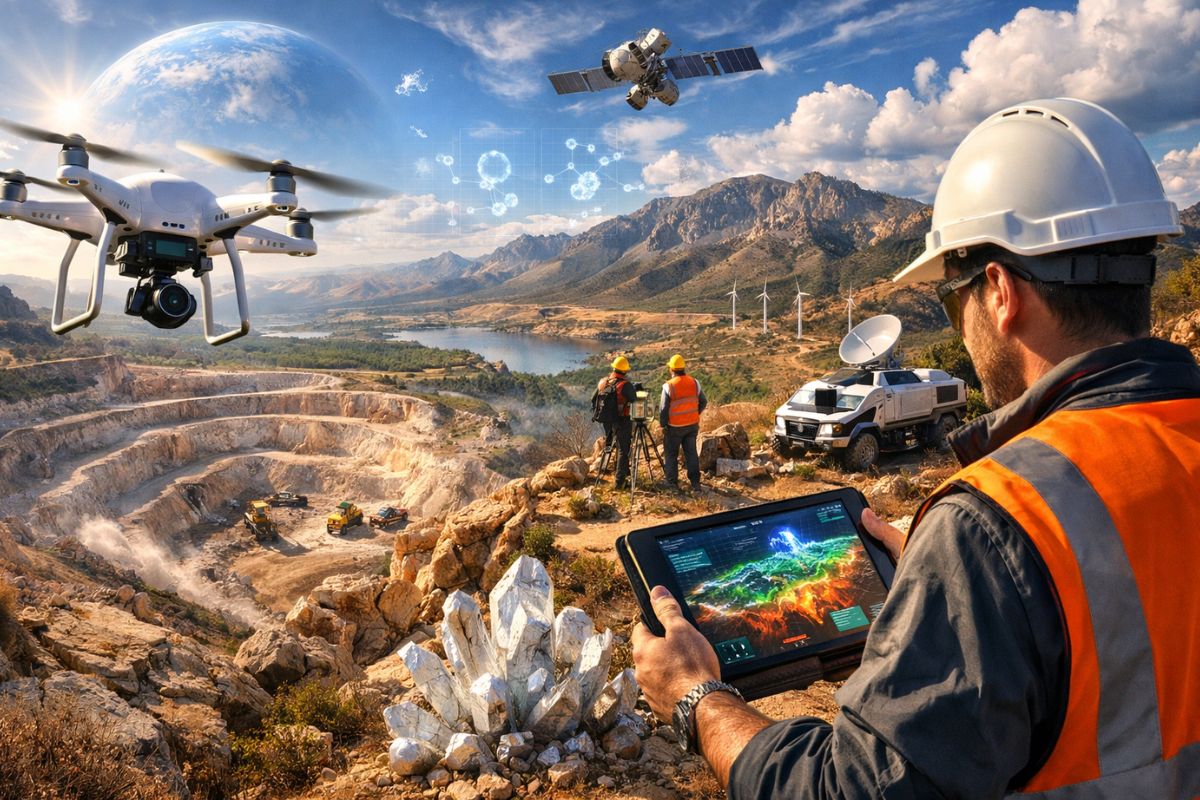
Magnesium has become a symbol of European vulnerability and placed Spain at the center of a plan to map lithium, neodymium, and other critical raw materials in the Iberian Massif in the coming years.
The magnesium consumed by Europe today heavily depends on China, and it is precisely this fragility that drives Spain’s new National Mining Exploration Program. With 197 million euros planned between 2026 and 2030, the government aims to locate and study strategic resources to strengthen the continent’s supply.
The Spanish bet is based on a clear diagnosis: 97% of the magnesium consumed in Europe comes from China, while other raw materials are also concentrated in a few external suppliers. In this scenario, Spanish territory has come to be seen as an important piece to reduce geopolitical, industrial, and technological risks.
At the same time, the plan seeks to balance economic ambition and environmental limits. The strategy includes drones, artificial intelligence, remote sensing, geochemical analyses, and historical data review, but the government emphasizes that the program does not represent automatic authorization to open mines.
-
The Chinese chain that surpassed McDonald’s, Subway, and Starbucks in the number of stores worldwide arrives in Brazil this Saturday with ice cream priced at R$ 3 and a billion-dollar plan to open thousands of units by 2030.

-
Labubu’s owner, the Chinese company Pop Mart, is making a strong entry into Brazil while combating counterfeit versions of the doll that have already become a global craze and led to lawsuits against illegal sales in several countries.

-
India begins to count 1.4 billion people: the census is the most ambitious in the world, mobilizing 3 million enumerators in 640,000 villages and 9,700 cities, with an app and two phases until 2027.

-
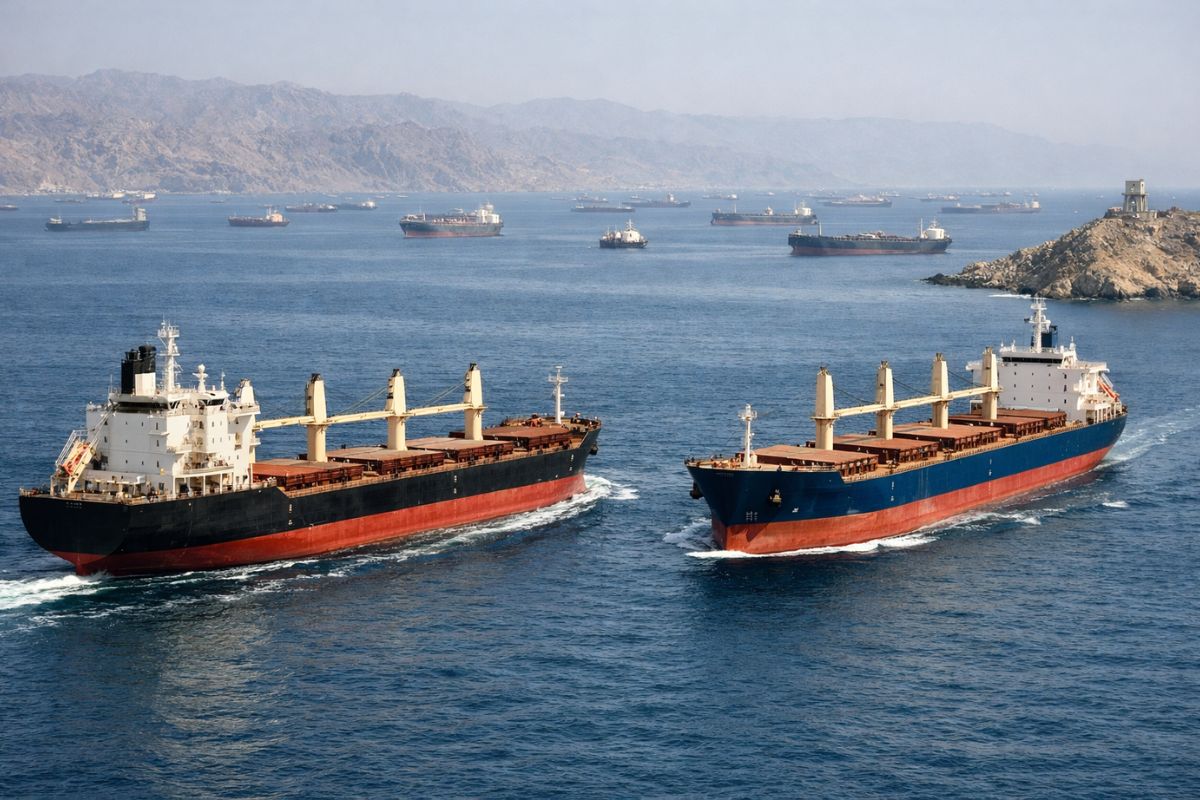
Navios resume transit through Hormuz after ceasefire between Iran, the USA, and Israel: two bulk carriers cross safely, but hundreds remain held in the Persian Gulf, in a strategic corridor through which 20% of the world’s oil passes.
Magnesium has become a warning for Europe
The race for critical minerals has ceased to be a topic restricted to mining and has come to occupy the center of the global technological dispute. Phones, electric cars, wind turbines, and defense systems increasingly depend on these materials, which increases pressure on countries that still import almost everything.
That is why magnesium has gained strategic weight in the European debate. When Europe depends on China for 97% of an essential input, the risk goes far beyond price. Vulnerability begins to affect industry, energy, innovation, and supply security.
What does Spain’s plan foresee until 2030
The new National Mining Exploration Program 2026-2030 identifies the Iberian Peninsula as a relevant resource base. According to the plan, 20 of the 34 raw materials considered essential by the European Union have already been detected in the region, and 17 of them are treated as strategic due to their technological and defense impact.
To advance this mapping, Spain plans to invest 197 million euros over five years, combining public funding, subsidies, and private capital that can be mobilized throughout the period.
The proposal does not only target Spanish territory, but also aims to contribute to a more secure supply for all of Europe.
Iberian Massif concentrates the main bet
The focus of exploration is on the so-called Iberian Massif or Variscan Massif, an extensive geological belt that crosses the western portion of the Iberian Peninsula. The plan highlights areas that include regions such as Galicia, Asturias, Cantabria, Castile and León, Extremadura, and Andalusia.
Within this geological corridor, areas such as Central Iberia, Ossa-Morena, and Southern Portugal appear as priority zones for general exploration. The logic is simple: if Europe wants to reduce external dependence on critical minerals, it first needs to know precisely what it has beneath its own soil.
Drones and AI enter the center of mineral exploration
Technology will be one of the foundations of the Spanish program. The plan foresees a combination of historical data review, geoscientific reports, detailed geological maps, geochemical prospecting campaigns, and isotopic analyses to identify anomalies in the terrain.
After this stage, the most advanced resources come into play. Spain wants to use airplanes, drones, gravimetry, magnetometry, hyperspectral imaging, satellites from the European Space Agency, algorithms, artificial intelligence, and machine learning to build predictive models of mineralization. The goal is to locate lithium, neodymium, and other critical materials more accurately and with less improvisation.
Europe wants more autonomy in critical raw materials
The pressure for autonomy did not arise from nowhere. The European Union has already made it clear, through the Critical Raw Materials Act, that it intends to ensure a more secure, diversified, and less concentrated supply in a few countries.
By 2030, the European goal is to extract at least 10%, process 40%, and recycle 25% of the internal demand for these materials. In this context, Spain is trying to position itself as a relevant player, especially since it already stands out as the only strontium producer in Europe and the second largest copper producer on the continent.
The private sector is already starting to move
The public strategy is already connecting with ongoing projects. In Extremadura, a license has been granted for exploration in an area of 49,500 hectares in the districts of Los Ibores and Campo de Arañuelo, in Cáceres.
In Andalusia, in Jaén, the Australian company Osmond Resources will develop the Orion project in an area of 228 square kilometers in the former mining region of Linares-La Carolina, focusing on materials such as rutile, zircon, and rare earths, including neodymium.
Additionally, the European Commission has already approved seven strategic projects in Spain aimed at supplying these minerals in areas such as Ciudad Real, Ourense, Cáceres, Badajoz, Huelva, and Seville.
The plan does not authorize automatic mining
Despite the political and economic weight of the program, the Spanish government emphasizes that the document does not equate to a general release for mineral extraction. The official objective is to identify resources, organize data, and expand geological knowledge about the territory.
This point is important because the environmental debate is already emerging strongly. In Campo de Montiel, in Ciudad Real, a project focused on monazite for rare earth extraction faces local resistance due to high water consumption and the potential impact on the habitat of the Iberian lynx. The tension between mining and biodiversity is already present even before the advanced exploration phase.
The “dump” also counts in the new mineral race
Spain is not only betting on untouched underground. The program dedicates an important line to the so-called secondary mining, based on recovering materials from old tailings and abandoned structures.
In the 1980s, an inventory was created with 21,673 tailings structures scattered throughout the country. Now, the proposal is to review this catalog and study the economic potential of materials that were previously discarded or technically difficult to recover. The logic is to transform old waste into a strategic source of raw materials.
Recycling can be as important as extracting
The circular economy appears as another strong axis of the strategy. One example is the RC-Metals project, led by the National Metallurgical Research Center, which works with a pilot plant aimed at recovering valuable elements present in electronic waste and discarded batteries.
The process uses special furnaces and metallic solvents to separate and purify high-value materials. It is a more complex path, but it avoids part of the impact associated with traditional mining. In other words, the future of critical minerals may depend as much on recycling as on discovering new reserves.
Spain tries to transform dependency into opportunity
The Spanish plan arises from a geopolitical urgency but also from an industrial window. If it can map resources, attract investment, and advance with environmental responsibility, the country could gain weight in the reorganization of Europe’s productive chains.
At the same time, the challenge is enormous. It is not enough to find critical minerals in the territory. The central issue will be to prove that it is possible to explore, process, or recycle these resources without exacerbating social and environmental conflicts. This is where the dispute over magnesium ceases to be merely mineral and becomes also political, technological, and strategic.
And in your opinion, should Spain accelerate this plan to reduce external dependency, or does the environmental risk still weigh too heavily in this race for critical minerals?



Seja o primeiro a reagir!