





 Portuguese
  English
  Spanish
  5 min of reading
  0 comments


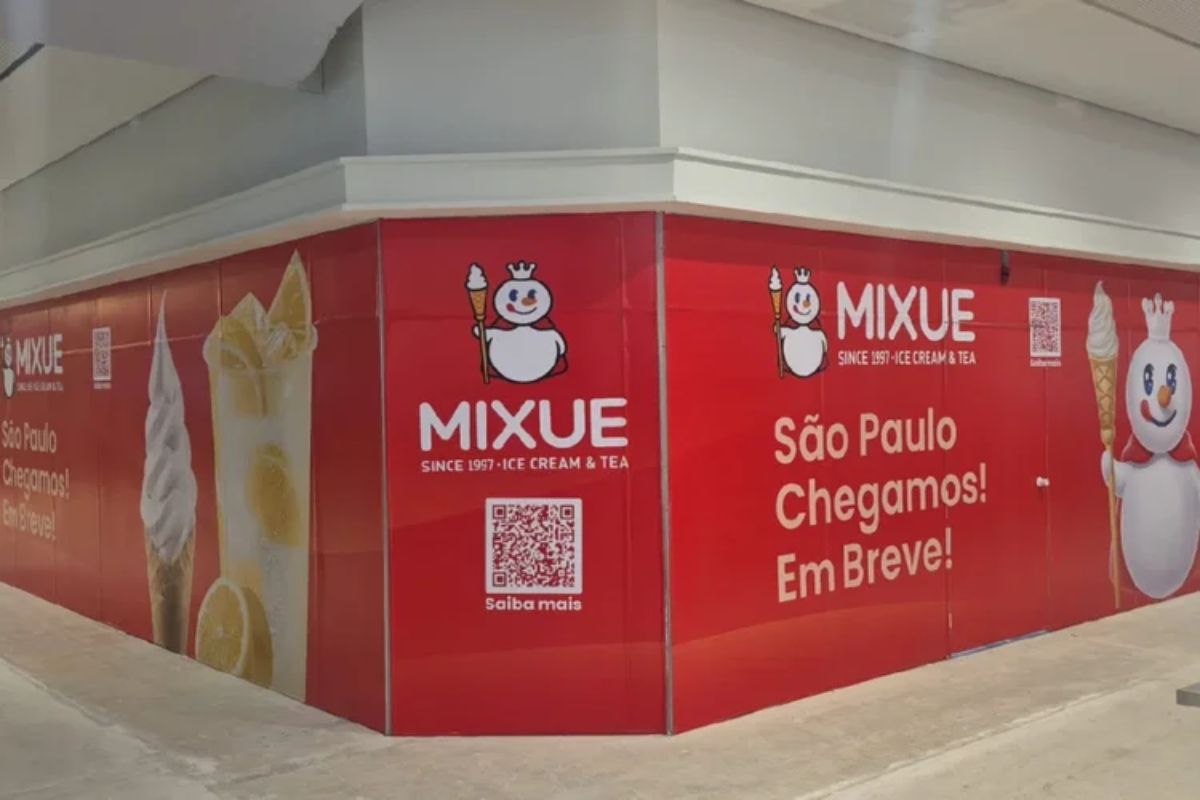
The Chinese Mixue Ice Cream and Tea already has over 45,000 stores in 12 countries and opens its first unit at Shopping Cidade in São Paulo with a menu that starts at R$ 3 for a cone and goes up to R$ 15 in a low-price strategy that conquered Asia and now wants to repeat the feat in Brazil.
The largest fast-food chain in the world is not McDonald’s, not Subway, and not Starbucks; it is a Chinese tea and ice cream brand that most Brazilians have never heard of. Mixue Ice Cream and Tea, with over 45,000 stores spread across 12 countries, opens its first unit in Brazil this Saturday (11) at Shopping Cidade in São Paulo. The ice cream cone costs R$ 3 and the lemonade is R$ 6, prices that seem from another era, but are part of the strategy that made this Chinese brand the one with the most points of sale on the planet.
The plan for Brazil is not modest. Mixue wants to invest R$ 3.2 billion in the country and generate 25,000 jobs by 2030, in a move that is part of a larger package of R$ 27 billion in Chinese investments in the Brazilian market. For a Chinese chain that started as a snow cone stand in a small town in China in 1997, arriving in Brazil as the largest fast-food chain in the world is the latest chapter in a journey that has challenged all the giants in the sector.
How a Chinese snow cone stand surpassed McDonald’s and Starbucks
The story of Mixue begins in 1997, in Henan province, when Zhang Hongchao was 21 years old and opened a small snow cone stand in the city of Zhengzhou. The audience was simple: students and local residents who wanted something cold and cheap.
-
The largest highway concession company in Brazil already belongs to an Italian group, and now the railway sector may be next to receive billions in investments from Italy amid the progress of the Mercosur and European Union agreement.

-
Work less and earn the same? PEC discussed by Lula and Hugo Motta affects the 6×1 schedule and reignites the debate on working hours, days off, and salary in Brazil.

-
Companies from Ceará generate billions and dominate Brazil without many people noticing, with giants born in the state such as Hapvida, Pague Menos, M. Dias Branco, and Três Corações totaling almost R$ 104 billion in revenue just in 2024.
-
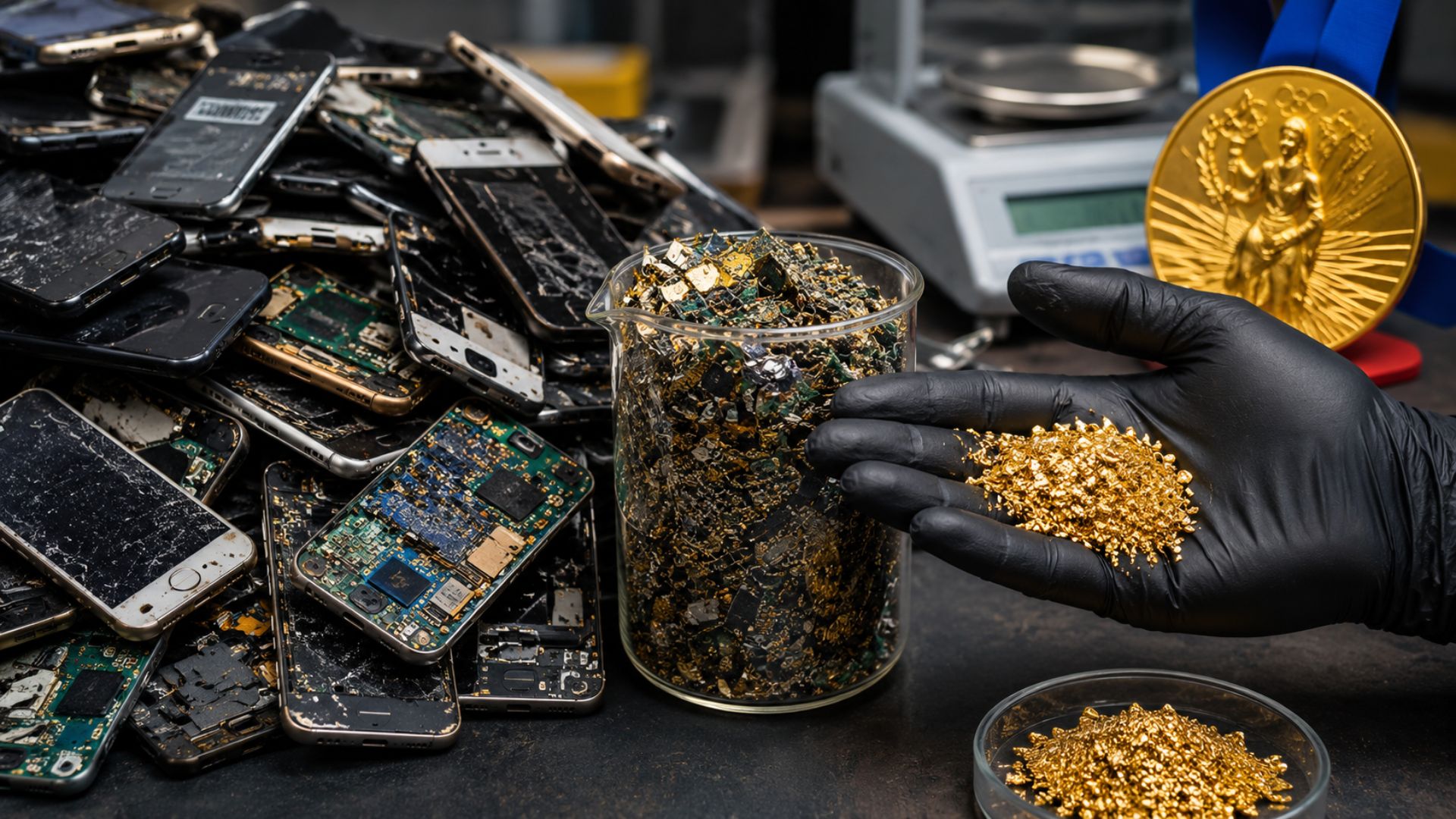
A ton of old cell phones can contain up to 800 times more gold than a ton of ore extracted from a mine, according to the UN, and it is this hidden wealth in drawers that drives so-called urban mining, which can even be turned into Olympic medals.
The formula that worked at the stand is the same one that the Chinese brand uses today in 45,000 stores: extremely low prices, a simple menu, and an accessible franchise model that allows for rapid expansion.
From the mid-2000s, Mixue began to expand beyond China, reaching Vietnam, Indonesia, Malaysia, Thailand, and other Asian markets. The growth was explosive because the Chinese chain does not try to compete on sophistication; it competes on price and volume.
While a drink at Starbucks costs the equivalent of R$ 25 or more, Mixue offers teas, ice creams, and milkshakes for a fraction of that price. The result: more stores than any other food chain on the planet.
What the Chinese chain will sell in Brazil and how much the products cost
According to information from the portal ndmais, the Brazilian menu of Mixue was presented to influencers at a pre-launch that has already generated buzz on social media.
The Mixue cone costs R$ 3, the lemonade is R$ 6, the Milk Tea with tapioca pearls is R$ 10, the strawberry milkshake is R$ 12, and the Passion Fruit Explosion is R$ 15. These prices position the Chinese brand in a market segment where practically no international chain operates in Brazil.
In addition to drinks and ice creams, the store will sell branded products such as mugs, cups, plush toys of the mascot, and games as part of the branding strategy that the Chinese uses to attract the young audience.
The strong visual appeal of Mixue, with its snowman mascot and vibrant color identity, is already a phenomenon on social media in Asia and will now be tested in the Brazilian market. Among the most popular products globally are the Super Boba Sundae, black tea with lemon, and the lemonade that has made the chain one of the largest buyers of lemons in China.
The R$ 3.2 billion that the Chinese wants to invest in Brazil by 2030
The investment plan of Mixue for Brazil is part of a package of R$ 27 billion in Chinese investments in the country.
The R$ 3.2 billion that the Chinese intends to invest includes the opening of thousands of units, generating 25,000 jobs, and building a local supply chain necessary to maintain the low prices that are the brand’s reason for existence.
The Chinese bet on Brazil makes sense when looking at the numbers: a country with over 200 million inhabitants, a young population, warm weather for most of the year, and a strong culture of consuming cold drinks and ice creams.
If Mixue can replicate here the model that made it the largest fast-food chain in the world in Asia—unbeatable prices, accessible franchise, and simple menu—the growth potential is enormous. The question is whether the Brazilian consumer will embrace a Chinese tea and ice cream brand with the same intensity that they adopted American burger and coffee chains.
What the arrival of the Chinese means for the fast-food market in Brazil
The inauguration of Mixue in São Paulo is not just another store opening in a shopping mall; it is the first move of a Chinese chain that has already proven capable of dethroning the biggest brands on the planet in terms of number of units.
With 45,000 stores, Mixue has more points of sale than McDonald’s, Subway, and Starbucks individually, demonstrating that the high-volume, low-price model works on a global scale.
For the chains already operating in Brazil, the arrival of the Chinese with ice cream at R$ 3 and billion-dollar investment is a warning sign. The fast food market in Brazil is already competitive, but no international chain offers products at prices as aggressive as Mixue promises.
If the execution follows the plan, the country may be facing the same transformation that Asia experienced in the last decade when a snow cone stand became the largest fast-food chain in the world without selling a single hamburger.
Will you try Mixue’s products? Do you think a Chinese ice cream and tea chain has a chance to conquer Brazil? Let us know in the comments.





Be the first to react!