





 Portuguese
  English
  Spanish
  6 min of reading
  0 comments



Spring of 2026 will have high risk of extreme rains with El Niño and MCS in Southern Brazil, possibly reaching São Paulo and Mato Grosso do Sul
In 2026, according to an analysis by meteorologist Vinicius Lucyrio from Climatempo, published by Revista Cultivar in January, spring in Southern Brazil is expected to present a high risk of extreme rainfall events associated with the El Niño phenomenon and the intensification of Mesoscale Convective Complexes. This assessment is corroborated by MetSul Meteorologia, which points to a scenario of worsening climatic risk between September and November, with potential impacts extending beyond the Southern Region, reaching areas of São Paulo and Mato Grosso do Sul.
According to Lucyrio, spring 2026 will not be a typical season, with a significant increase in intense rains, floods, and severe storms. The central factor of this scenario is the combination of the peak of El Niño and the recurring formation of large-scale convective systems, capable of causing extreme accumulations in short periods.
Mesoscale Convective Complexes and El Niño explain the risk of extreme rains in spring 2026
According to meteorologist Vinicius Lucyrio from Climatempo, the largest meteorological consulting company in Latin America, in an analysis published by Revista Cultivar in January 2026, spring 2026 will not be a season like others in Southern Brazil.
-
With the wingspan of a Boeing 747 and 160 times lighter, a solar drone flies for 90 days without landing, without fuel, and without a pilot, carrying 17,248 photovoltaic panels, a 200 km radar with AI, and has already crossed storms in the Gulf of Mexico during tests for the U.S. Navy.

-
Butantan Institute will produce pembrolizumab for the SUS and could change everything in cancer treatment by expanding access to innovative immunotherapy that strengthens the body and reduces high costs.

-
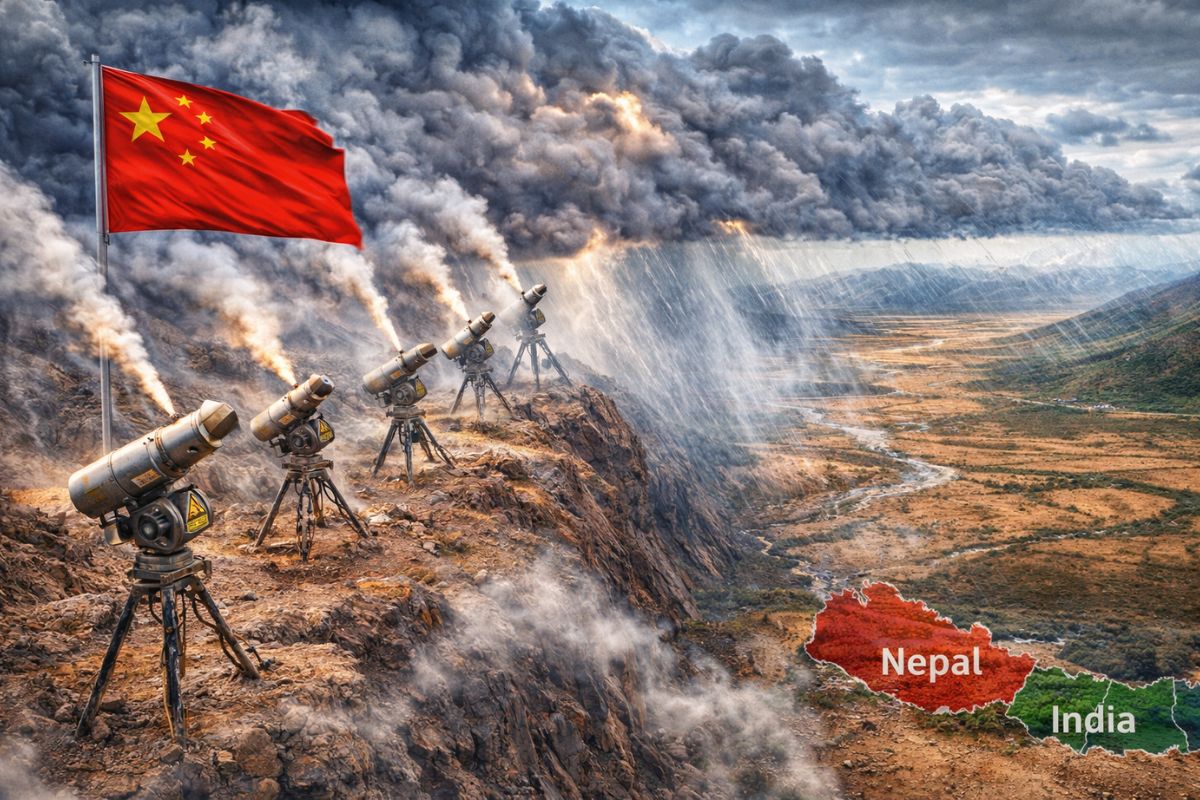
China wants to divert rivers through the sky using thousands of generators installed in the mountains of the Tibetan plateau to make it rain in dry regions, and neighboring countries like India and Nepal are already beginning to worry about the effects of this technology.
-
A highly powerful solar explosion is heading towards Earth and could jeopardize the historic launch of NASA’s Artemis II mission in April 2026.


“In spring, the risk of more widespread rains, floods, intense storms, and the occurrence of Mesoscale Convective Complexes increases significantly,” said Lucyrio. “Part of this instability may also reach Mato Grosso do Sul and areas of the state of São Paulo.”
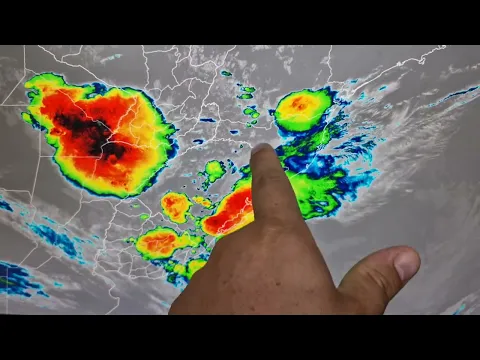

MetSul Meteorologia, in a separate analysis signed by meteorologists Estael Sias and Luiz Fernando Nachtigall, reached the same conclusion through a different path: “The eventual occurrence of El Niño next year does not imply that there will be a repetition of the disaster of 2024, but an aggravation of the risk of it repeating.”
Two of the most respected meteorological centers in Brazil, using distinct models and methodologies, arrived at the same diagnosis for spring 2026: the risk is real, greater than normal, and begins to manifest earlier than most people expect, as early as August.
This convergence of independent analyses reinforces the robustness of the projected climatic scenario for the period.
What are Mesoscale Convective Complexes and why do they increase flood risk
To understand the alert from Climatempo and MetSul, it is necessary to comprehend the role of Mesoscale Convective Complexes, known as MCS.
These systems are atmospheric structures organized on a regional scale, significantly larger than isolated storms. While a common storm may affect a few kilometers and last a few hours, an MCS can cover hundreds of thousands of square kilometers and persist for up to 24 hours.
The mechanism of formation of these systems is directly linked to El Niño. The anomalous warming of the Equatorial Pacific alters atmospheric circulation, favoring the formation of persistent low-pressure areas over Southern Brazil.
When these areas encounter the thermal contrast between warm, humid air masses coming from the north and incursions of cold air from the south, conditions become ideal for the formation of MCS. These systems are responsible for the largest volumes of rain ever recorded in the region, capable of dumping between 200 and 400 millimeters in just a few hours over entire watersheds.
Historical floods in Rio Grande do Sul in 2024 show impact of MCS
“El Niño tends to enhance severe storms, with short-lived convective cores, but capable of dumping large amounts of water in just a few hours,” explains MetSul.
It was precisely this mechanism that produced the disaster in May 2024 in Rio Grande do Sul. A persistent system fed by a moisture corridor associated with El Niño caused historic accumulations in the basins of the Taquari, Jacuí, and Gravataí rivers.
The level of Guaíba reached 5.33 meters, the highest recorded since 1941. This event became a reference for understanding the destructive potential of the systems forecasted for 2026.
El Niño 2026: evolution of climatic risk between August and November
Climatempo and MetSul detail the evolution of risk over the months. In August, El Niño begins to consolidate, with rising temperatures and the first signs of atmospheric instability. Heat waves may exceed historical averages by up to 5°C.

In September, the phenomenon reaches its greatest influence, with irregular returns of rain in the South and Southeast. This behavior may induce misinterpretations in the agricultural sector.
In October and November, the risk peaks. It is during this period that thermal contrast and high humidity favor the formation of the most intense systems, significantly increasing the probability of extreme events.
Most vulnerable regions to floods in Southern Brazil in 2026
Meteorologist Piter Scheuer, in an interview with ND Mais in February 2026, highlighted critical areas in Santa Catarina, such as the Itajaí Valley, Médio Vale, and the Rio Uruguai region.
These regions have a recurring history of floods and were severely affected in recent events. The repetition of these patterns in a moderate to strong El Niño scenario increases the risk of new extreme episodes.
MetSul highlights a critical factor: Rio Grande do Sul has not yet fully recovered from the floods of 2024. More than 422,000 homes were affected, along with thousands of kilometers of highways and hundreds of water supply systems.
Even without El Niño, in June 2025, the Jacuí River reached historic levels again. This indicates that extreme events can occur even under neutral conditions.
With El Niño active in 2026, the risk is amplified over already fragile infrastructure, increasing the region’s vulnerability.
Impact of El Niño 2026 on wheat production in Paraná
Spring 2026 also represents a direct risk to agribusiness, especially wheat production in Paraná. According to meteorologist Celso Oliveira, from Tempo OK, excess rain and high temperatures hinder the development of the crop.
Paraná accounts for over 60% of national production. The wheat cycle coincides exactly with the period of greatest climatic instability.
Diseases such as fusarium can compromise grain quality, while rain during harvest increases costs and reduces productivity. This scenario jeopardizes not only production but also the profitability of the agricultural sector.
Intense rains may reach São Paulo and Mato Grosso do Sul in 2026
One of Climatempo’s most relevant projections is the extension of risk beyond the Southern Region. The MCS may shift northward, affecting Santa Catarina, Paraná, São Paulo, and Mato Grosso do Sul.
Inland cities in São Paulo, such as Itapeva, Itararé, and Ourinhos, have already been impacted by similar systems in recent years. With greater frequency and intensity of systems in 2026, the probability of new events increases significantly.
Spring 2026 begins on September 22, but signs of risk emerge earlier. There is a critical window for preparation for municipalities and productive sectors.
- For previously affected regions, it is essential to prioritize containment works and infrastructure reinforcement.
- For agribusiness, the focus should be on preventive management.
- For vulnerable populations, evacuation plans and alert systems need to be updated.
Climatempo summarizes the scenario: “There is a higher risk of extreme rainfall events starting in September, with the risk increasing in October and November. In addition to rain, severe storms are forecasted, with winds and hail.”
The available data points to a spring of high risk, with a limited preparation window and potentially significant impact across various regions of Brazil.










Seja o primeiro a reagir!