





 Portuguese
  English
  Spanish
  3 min of reading
  0 comments


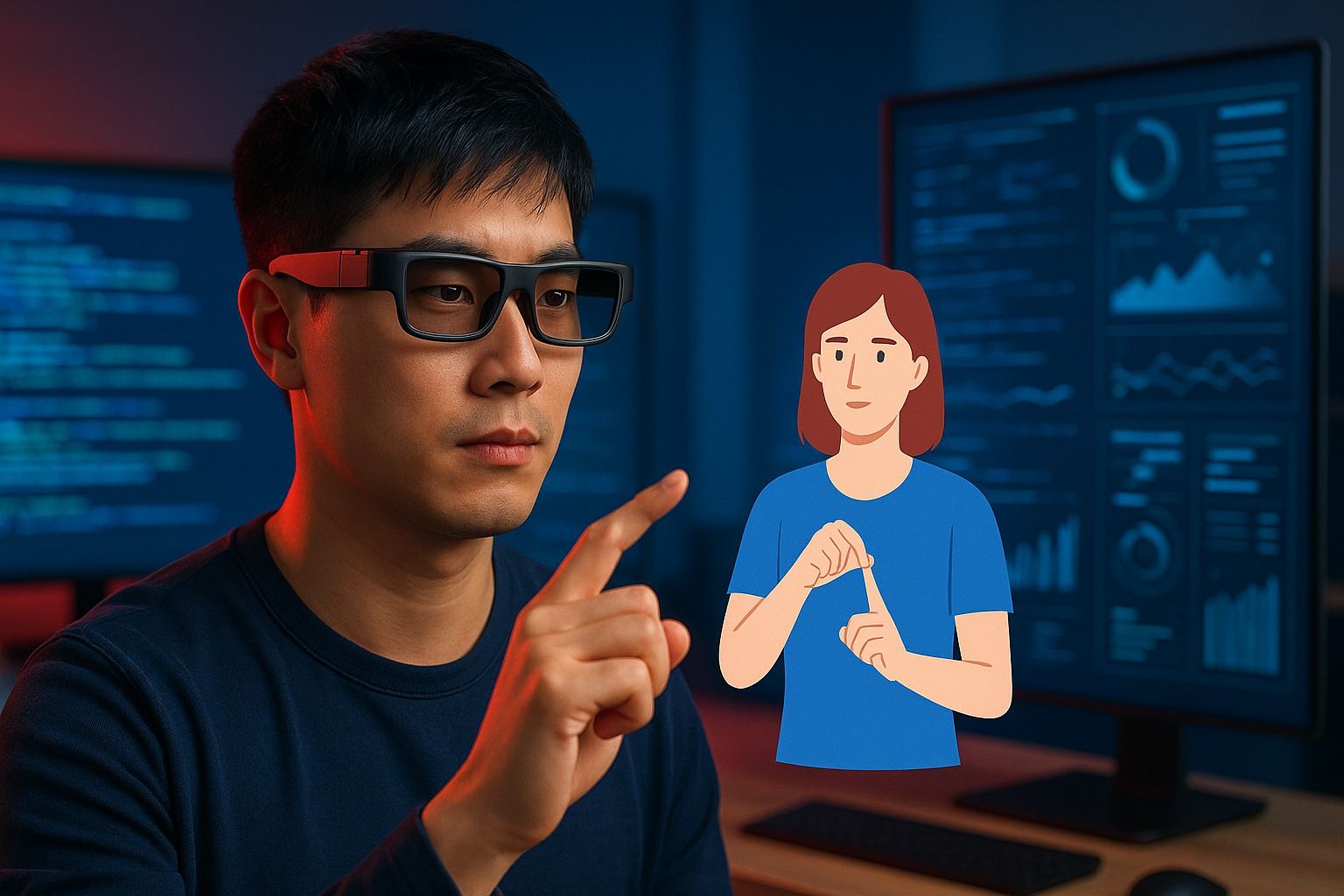
The Technology Created By Chinese Researchers Promises To Transform Social Inclusion By Translating Texts And Speech Into Sign Language In Real-Time. With Smart Glasses And Virtual Avatars, The Innovation Has Already Caught The Interest Of Governments And Industrial Parks
The Artificial Intelligence Sector In China Continues To Expand, Driving Economic Growth And Transforming Entire Industries. In This Context Of Technological Advances, A Group Of Researchers Decided To Focus On The Social Impact Of AI.
Among Them Is Su Jionglong, Vice President Of The School Of AI And Advanced Computing At Xian Jiaotong-Liverpool University, Who Studies Ways To Reduce Discrimination, Provide Emotional Support, And Accelerate Medical Diagnoses.
Together With His Students, Su Created The Startup Limitless Mind, Responsible For Developing A Platform Powered By Artificial Intelligence Capable Of Translating Written Text To Sign Language And Vice-Versa. The Goal Is To Fill Communication Gaps And Promote Inclusion For People With Hearing Impairments.
-
After 10 months of work and six months of almost total dedication, a student creates a wind turbine that exceeds 500 revolutions per minute and could help lower electricity prices in urban areas.
-
Brazil exposes critical fragility in air defense, says site. With few Gepard, Igla-S, and RBS 70 systems, the country does not cover medium altitude and remains vulnerable to drones, missiles, and attacks that cause billions in recent wars.

-
The truce after the last cyclone is over: a new cold front is hitting five states between Saturday and Sunday with up to 100 millimeters of rain, risk of hail, and wind gusts that could cause damage from Rio Grande do Sul to São Paulo.

-
Robots already operate oil rigs without humans, connect pipelines on their own, and inspect platforms in the dark, and the world’s largest drilling company plans to cut 75% of the crew at each well.

Smart Glasses And Avatars Bring Technology Into Daily Life
The Team Designed A Lightweight Proprietary AI Model That Can Be Run On Mobile Devices Or Integrated Into Smart Glasses.
In Them, Virtual Avatars Translate Speech Into Sign Language Or Display Text In Real-Time, Facilitating Interaction Between The Deaf And Hearing Individuals.
Local Governments And Industrial Parks Have Already Shown Interest In The Project And Are Discussing Ways To Commercially Enable It. According To Su, The Goal Goes Beyond Innovation: The Idea Is To Create Technologies With Concrete Social Impact.
With This Tool, Students With Hearing Impairments Could Learn More Effectively, Patients Would Have Greater Clarity When Communicating With Doctors, And Discrimination In The Workplace Would Be Reduced.
The Team Is Also Researching Advanced Assistive Technologies, Such As Platforms Capable Of Translating Lip Movements Into Text And Brain-Computer Interfaces That Transform Brainwaves Into Written Language. These Innovations Could, In The Future, Help Control Autonomous Vehicles And Expand Accessibility For People With Disabilities.
The Urgency For Accessible Solutions
The Demand For Solutions Of This Kind Is Expected To Grow. A Study Published In The Chinese Medical Journal In January Predicts That By 2060, More Than 240 Million Chinese Will Experience Moderate To Complete Hearing Loss—Almost Double The Number Recorded In 2015.
Su Claims That His Background In Mathematics, Statistics, And Engineering Provides The Necessary Foundation To Tackle The Complex Challenges Of Artificial Intelligence, Such As Data Analysis, Pattern Recognition, And Modeling.
Big Data Accelerates Advances In Health And Emotional Support
A Competitive Advantage For China In AI Development Is The Availability Of Large High-Quality Datasets, Especially From Hospitals, Which Frequently Share Medical Information For Research. This Access Accelerates The Creation Of Tools In Areas Such As Health And Emotional Support.
Su’s Team Collaborates With Mind With Heart Robotics, A Company Based In Shenzhen That Develops Electronic Pets And Humanoid Robots Aimed At Psychological Support.
These Robots Assist Autistic Children With Emotional Communication Difficulties And, Through Machine Learning, Analyze Facial Expressions To Classify Emotional States In Real-Time, Allowing More Effective Responses From Caregivers.
Additionally, Su’s Research Extends To Medical Imaging. AI Models Trained On Large Datasets Can Identify Subtle Symptoms, Such As Facial Swelling Or Discoloration, That May Indicate Early-Stage Diseases.
With The Combination Of Technological Innovation, Big Data, And Social Focus, The Team Aims To Transform Artificial Intelligence Into A Powerful Tool For Inclusion And Wellbeing.








-

Uma pessoa reagiu a isso.