





 English
  Francês
  Alemão
  Italiano
  Japonês
  Norueguês
  Portuguese
  Spanish
  2 min of reading


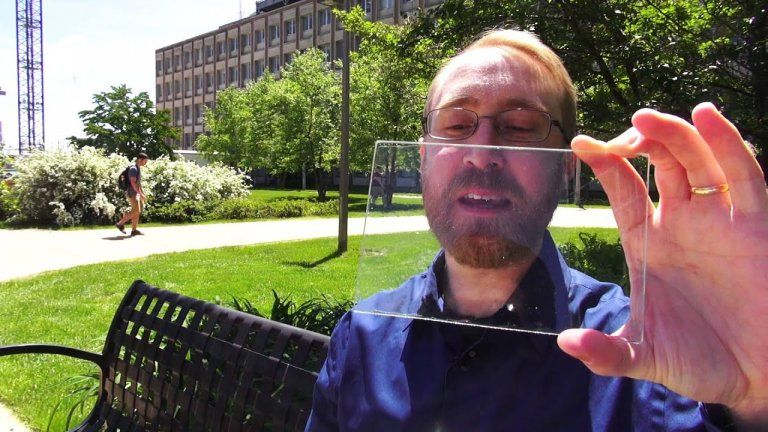
What If All the Windows in Your Home Could Generate Solar Power? A Startup from Redwood City, California, Believes Its Technology Can Achieve This by Transforming How Solar Energy Is Collected and Harnessed Through Transparent Solar Panels
Ubiquitous Energy has developed transparent solar panels to create its ClearView Power windows, a type of “solar glass” that can convert sunlight into energy without the need for the grayish-blue opaque panels that these cells are usually associated with. Founded at the Massachusetts Institute of Technology in 2012, the company hopes to use this technology to turn virtually any ordinary glass surface into a solar energy source.
Read Also:
- Total Invests R$ 15 Million to Develop Innovative Technology in Brazil
- Siemens Develops Technology for Energy Transmission and Distribution Networks
- The Price of Solar Energy Panels Has Decreased by 90% Since 2010, Making Technology Attractive in the Market
- Wind Turbine Producer Vestas to Produce Wind Turbines for Casa dos Ventos in Bahia
While several companies are working on similar products, the technology is still in relatively early stages. It is one of several emerging products that harness solar energy. This also includes others like irrigation pumps and a “solar oven” that can be used to make cement and steel. Additionally, Ubiquitous Energy’s home state of California is one of the first to require that each new home incorporate some form of solar technology.
Explainer Video of the Transparent Solar Panels


The Core of the Product Is an Organic Dye That Can Be Used to Coat Glass Surfaces
The dye allows the passage of visible sunlight, similar to regular windows, but captures the invisible infrared rays from that sunlight.”Light-absorbing dyes are found all around us. They are in paints, in clothing pigments, and even in electronic devices”, Barr said.
-
Rio Grande do Sul accelerates energy transition: State invests in renewable technologies and consolidates decarbonization strategies and pathways to attract billions in new industrial investments.

-
With 160,000 m² of collectors, an area larger than 20 football fields, Silkeborg, in Denmark, hosts a solar thermal plant that heats 19,500 homes and could become the largest solar heating plant in the world.

-
A study reveals the expansion of renewable energy procurement in Brazil and shows how companies are taking advantage of opportunities to reduce expenses, ensure energy efficiency, and strengthen strategic environmental commitments.

-
Mato Grosso do Sul excels in the sugar-energy sector: the state reaches a milestone of 22 operating mills and accelerates the production of clean energy in MS with a focus on sustainability.


“Undeniably, what we’ve done is design these dyes to selectively absorb infrared light and also convert it into electricity”.
What Is the Drawback of This Process in Solar Energy?
“The basic drawback is the relatively low efficiency”, said Anne Grete Hestnes, a professor of architecture at the Norwegian University of Science and Technology, specializing in solar energy. “However, it’s all a matter of price. If the transparent cells are cheaper and cover a relatively large area … it could be the best solution”, she added.
Ultimately, Barr said that Ubiquitous Energy’s transparent panels could produce up to two-thirds of the energy that traditional panels produce. And he stated that they cost about 20% more to install than a regular window, a cost he claims is offset by the electricity they generate.










Seja o primeiro a reagir!