





 Portuguese
  English
  Spanish
  6 min of reading
  7 comments


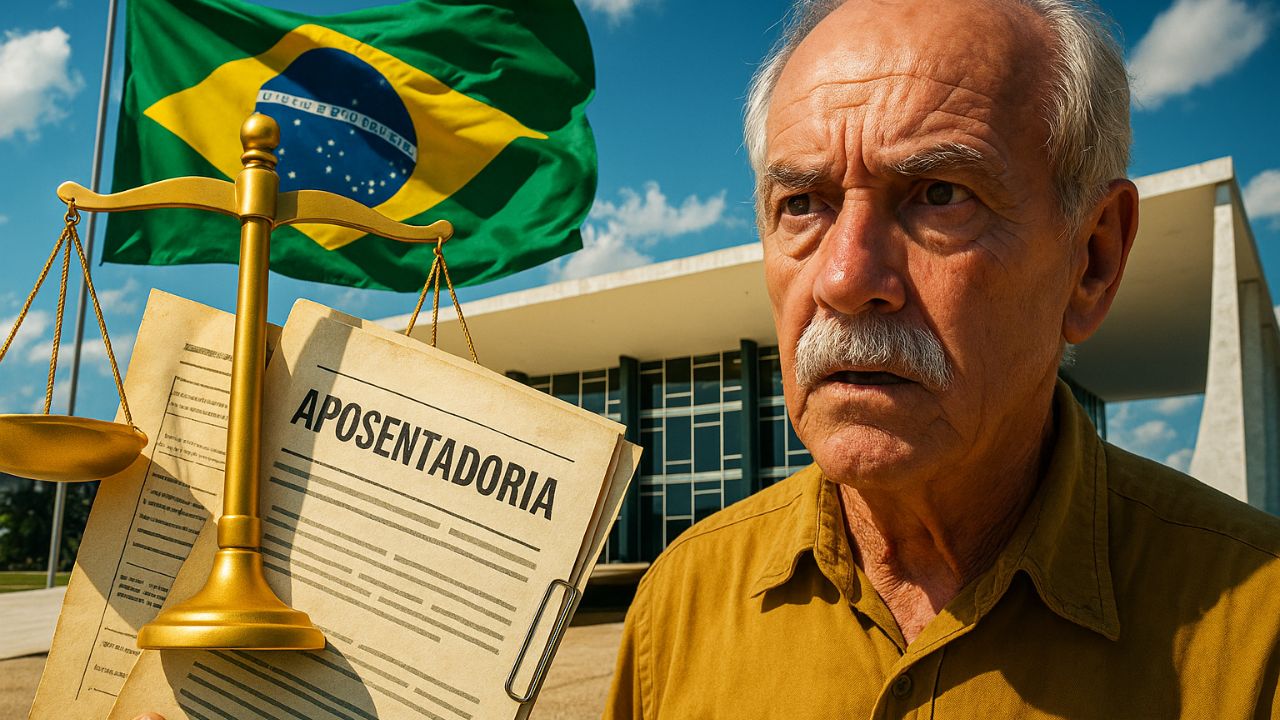


Two Ongoing Cases in the Supreme Federal Court Put at Stake Full Retirement, Minimum Age, and Conversion of Special Time into Common Time, Directly Impacting the Lives of Active Workers and Those Already Retired Today.
The Supreme Court is speeding up two rulings that could profoundly change the rules of full retirement in Brazil, involving both those receiving disability retirement and those who worked in special activity and were affected by the 2019 pension reform. The discussions touch on sensitive points: reduction from 100% to 60% of the average salary, minimum age requirement for special activity, and the end of conversion of special time into common time.
Since the reform, many insured individuals started receiving less, needed to work longer, and lost the right to combine special time with an increase. Now, the Supreme Court is examining whether these changes are constitutional and opens the possibility of restoring full retirement and reclaiming rights that had been cut by legislation.
Supreme Court Discusses Two Fronts at the Same Time
To understand what is happening, it is crucial to clearly separate the processes. The first ruling addresses full retirement due to disability, in the so-called theme 1300 of the Supreme Court. The second pertains to special retirement, involving the end of the minimum age, the return to 100% of the average calculation, and the conversion of special time into common time.
-
The Chamber opens a debate on driver’s licenses at 16 years old as part of a reform that includes around 270 proposals to change the Brazilian Traffic Code and may redesign rules for licensing, enforcement, and circulation in the country.

-
The new Civil Code could revolutionize marriages in Brazil with “express divorce” and changes that could exclude spouses from inheritance.
-
Banco do Brasil sues famous influencer for million-dollar debt and intensifies debate on delinquency, risks of seizure, and direct impact on Gkay’s credibility.

-
The Senate approves a bill that criminalizes misogyny, hatred, or aversion towards women, and includes the crime in the Racism Law with a penalty of up to 5 years.


The two cases were set to be judged together, which generated confusion among many. One trial has already begun, received important votes, but was suspended to await ministers who were not present. The other is in virtual session, in the model where each minister casts their vote electronically, without debate in a physical plenary.
Theme 1300: Disability Retirement May Return to Being Full
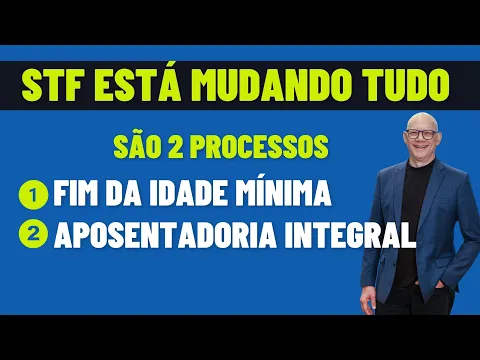

In the first process, the Supreme Court analyzes whether it was constitutional to reduce disability retirement from 100% to 60% of the average salary after the 2019 pension reform, with an increase of 2% for each additional year in some cases.
Before the reform, those retiring due to disability had the right to full retirement, calculated at 100% of the average. After the change, the rule became much stricter for most insured individuals, especially for freelancers, domestic workers, and employees who did not suffer work-related accidents or occupational diseases.
Today, only those who had work-related accidents or occupational diseases continue with the calculation at 100%. For the others, the amount was reduced to 60% of the average, with small increases per year of contribution, which significantly decreased the income of many who became unable to work.
In the ruling on theme 1300, there is already a partial majority in favor of full disability retirement: so far, five ministers have voted saying that the reduction to 60% is unconstitutional, while four ministers defended maintaining the lower rule. Two votes are still needed to finalize the score.
If at least one of the ministers who have not yet voted supports the thesis of unconstitutionality, the Supreme Court forms a majority and full disability retirement returns to being the general rule, rather than an exception.
In one of the votes already cast, it was indicated that, in case of victory for the thesis, the INSS would have to review disability retirements, correct the amounts to full retirement, and pay any back amounts within six months, automatically, without the need for a court warrant and without the insured having to go to court.
In other words, if the majority for unconstitutionality is confirmed, those currently receiving less than 100% may have their full retirement restored and still receive accumulated differences in a single payment, within the timeframe that will be set.
Action on Special Retirement: Minimum Age and Conversion in Dispute
The second ruling is a direct action of unconstitutionality that discusses three central points of special retirement after the reform:
- minimum age requirement for retirement, even with special time
- change in calculation, which ceased to be full retirement in several cases
- end of the conversion of special time into common time to increase contribution time
After the reform, those who worked 15, 20, or 25 years in unhealthy, dangerous, or exhausting activities began, as a rule, to require minimum age (such as 60 years) to retire, even if they had already met all the special time required.
In addition, the calculation has practically ceased to be a full retirement, and the conversion of special time into common time was halted starting in 2019, preventing insured individuals from using risky time to improve transition rules or complete other types of retirement.
The action at the Supreme Court argues that these changes violate the special protection for workers who exposed their health or physical integrity. The thesis is simple: if a person worked in a risky activity, that time needs to count more and ensure a more advantageous retirement, without rigid minimum ages and with the possibility of conversion.
Currently, the score is tied: two ministers voted in favor of the thesis that benefits the worker and two voted against, maintaining the current rules. As the ruling is virtual, seven votes are still missing, which can be cast at any moment within the session’s timeframe.
If the majority of the Supreme Court finds the current rules unconstitutional, the possible scenario is:
- elimination of the minimum age for special retirement
- restoration of calculations closer to full retirement for those who worked exposed to harmful agents
- return of the conversion of special time into common time, allowing that time to push the insured towards more favorable transition rules or for early retirement
Who May Be Impacted by the Changes
If the winning thesis prevails in both rulings, the effects may reach:
- those already receiving disability retirement calculated at 60% of the average, who would then be entitled to full retirement, with a value adjustment
- workers who have worked or still work in special activities (unhealthy, dangerous, exhausting) and were forced to meet a minimum age even though they had the required time
- people who lost the right to convert special time into common time starting in 2019 and, as a result, were stuck with less advantageous rules
- insured individuals who could have the right to better transition rules if special time returns to being multiplied and added to common time
In all these cases, the combination of full retirement, the end of the minimum age, and the return of the conversion of special time could mean an expedited benefit, increased value, and correction of situations considered unfair by the very logic of social security protection.
What to Do While the Supreme Court Does Not Conclude the Votes
While the ministers do not conclude the rulings, the most important step is to organize your documentation and understand which scenario you fit into. This includes:
- checking whether your disability retirement was calculated at 60% or 100% of the average
- verifying if you have special activity time, with exposure to harmful agents or risky situations
- gathering PPP, assessments, work card, and other documents that prove special time
- reviewing if the minimum age prevented or delayed your retirement, even though you had sufficient time in special activity
Even if the Supreme Court has not yet finished the ruling, being prepared helps you act quickly when the decision is published, whether to check for automatic adjustments or to assess the need for technical guidance in specific cases.
It is important to remember that, until the votes are completed, everything is still a possibility, not a guarantee. However, the Supreme Court’s movement to discuss full retirement, the end of the minimum age, and the return of the conversion of special time shows that the topic has returned to the center of legal debate and may reconstruct rights that were cut in 2019.
And you, if you could choose only one change, what would be the most important in your life today: recovering full retirement, ending the minimum age in special retirement, or returning to using conversion of special time to expedite your benefit?









acabar com a idade mínima
As Duas sao essencial: a primeira é que pagar para uma pessoa que trabalhou mais de 20 anos ou mais uma aposentadoria por invalidez de 60% , é um absurdo. Segunda, negar a conversão de períodos trabalhado com periculosidade para o tempo normal não tem cabimento haja vista o risco e o desgaste que sofre o trabalhador, exposto a eles.
tenho 60 Anos e 26 trabalhado. tendo que esperar a idade para se aposentar. continuo pagando a contribuição ao INSS